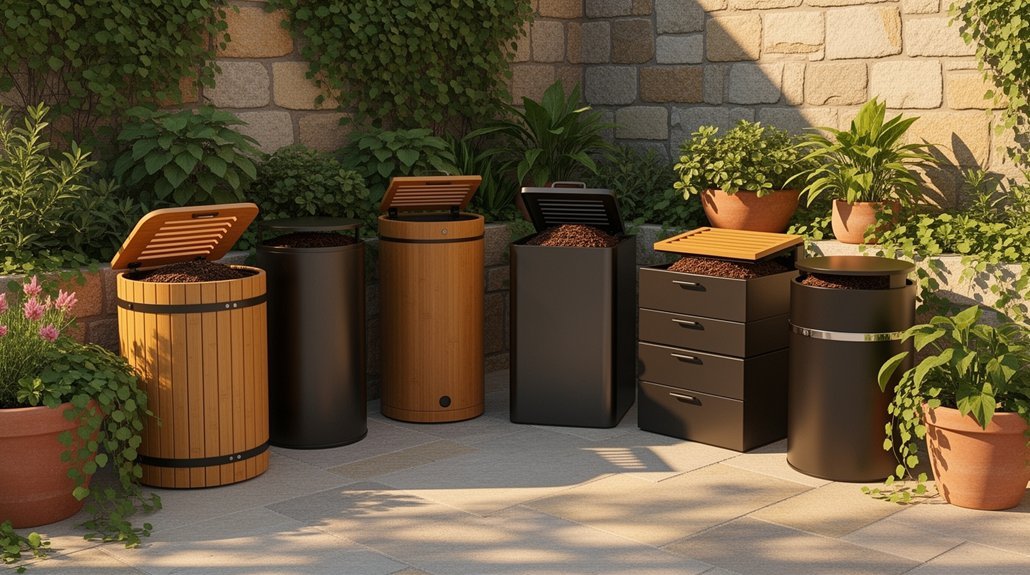
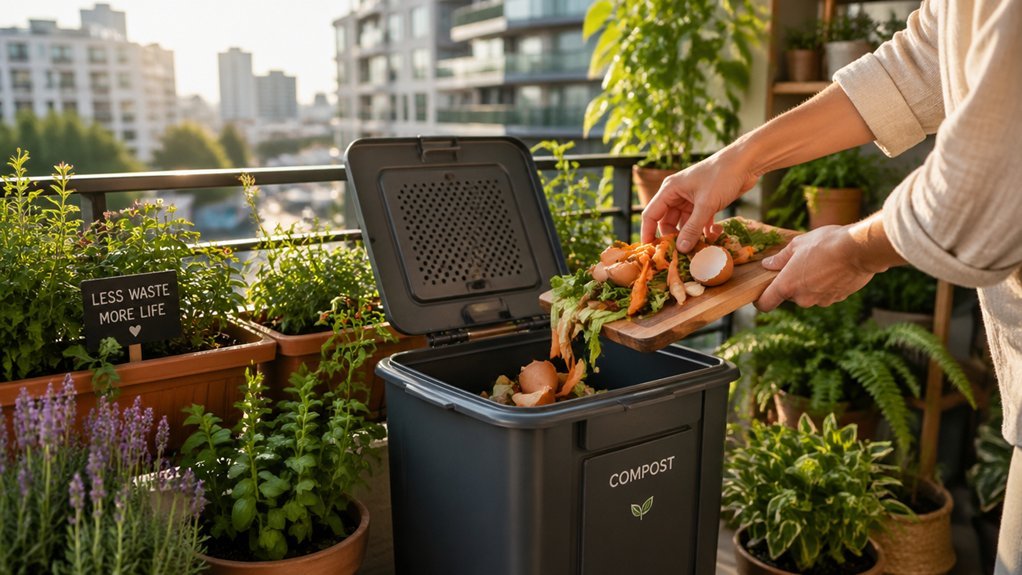
First, verify your building’s fire‑safety and code rules—use fire‑rated, non‑combustible containers, keep clear egress, and ensure any electric aeration meets electrical code. Check local ordinances for sealed, vented bins and HOA or management approval. Choose a state‑approved compost bin that meets size, ventilation, and pest‑proof specs, then secure any required permits or exemptions. Keep a log of dates, volumes, materials, and incidents for compliance. Continue to discover the exact steps for permits, contacts, and record‑keeping.
Check Fire‑Safety & Building‑Code Rules for Home Composting
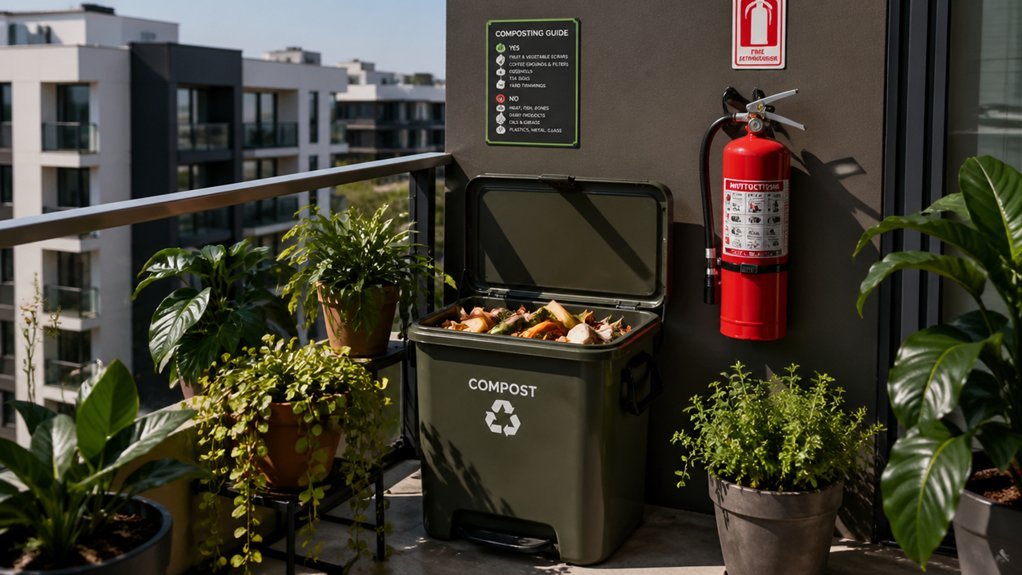
Ever wondered how to keep your apartment compost safe and legal? You’ll need to follow fire safety and building codes that demand proper ventilation, spark protection, and clear space away from combustibles. Keep a minimum clearance around the compost bin so egress routes stay open and sprinkler coverage isn’t blocked. Use fire‑rated containers or place them inside non‑combustible, fire‑resistant enclosures as required. If you add electric aeration or heating, verify the equipment meets electrical code, with arc‑fault and GFCI protection. Check occupancy‑type restrictions—high‑rise or mixed‑use towers often limit indoor or balcony composting. By respecting these rules, you protect yourself, neighbors, and the building while staying compliant. Odor control
Identify Local Ordinances That Govern Apartment Composting
When you start looking for the rules that apply to composting in your building, you’ll quickly discover that local ordinances differ by city and state, often specifying containment methods, odor‑control measures, and nuisance‑mitigation requirements for multi‑unit dwellings. First, check your municipality’s solid‑waste code; many cities ban open‑air composting in apartments but permit sealed, vented units with lids. Look for clauses that demand clear labeling and dedicated bins to keep pests out. Some housing codes require a written waste‑management plan or HOA approval before you can set up any system. Note the enforcement section—non‑compliance can trigger fines, abatements, or mandatory remediation. By mapping these apartment ordinances, you’ll ensure your apartment composting stays legal and neighbor‑friendly. As you assess options, consider choosing a ceramic compost bin with odor‑control features to help meet typical city requirements odor control features.
Determine Which Composting Methods Are Allowed in Your Unit
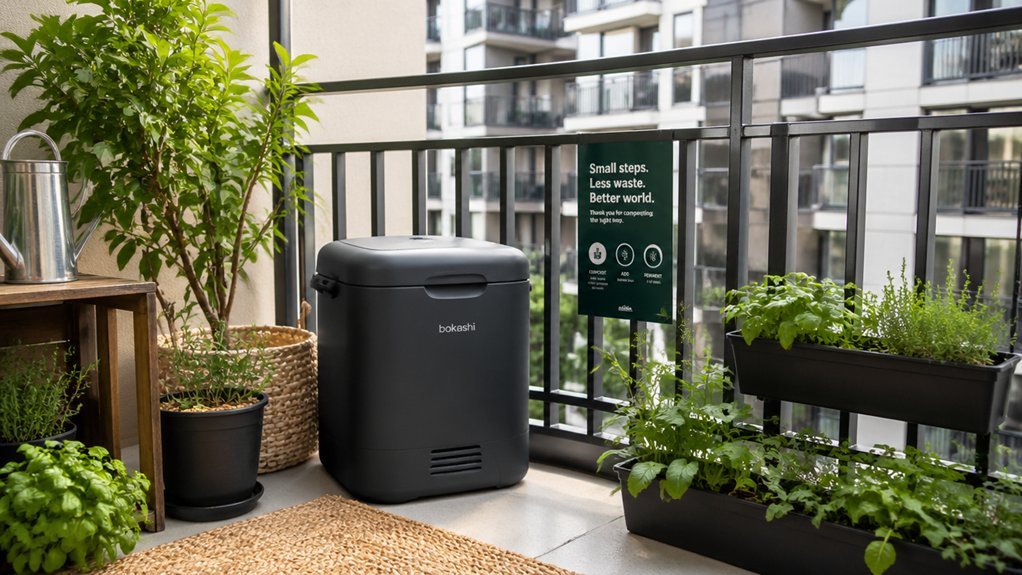
First, check your local ordinances to see which composting systems the city permits. Then, review your building’s policies or HOA rules to confirm they allow the specific method you’re considering. Finally, pick a composting unit that’s officially approved, odor‑controlled, and compatible with your ventilation and plumbing. Additionally, verify that the chosen method aligns with the environmental considerations described in durable, responsibly sourced options like FSC certified materials and recyclable components environmental features to ensure sustainable practices throughout your setup.
Assess Local Ordinances
Start by digging into your building’s municipal code and housing‑authority rules to see whether on‑site or in‑unit composting is permitted, restricted, or outright prohibited. A local ordinance will spell out if you need a closed countertop bin, an enclosed cabinet system, or a sink‑disposal unit, and it will list odor‑control, pest‑management, and cleaning standards you must follow. Check whether the ordinance requires a permit, registration, or notification for multi‑unit buildings, and note any separate rules for shared composting spaces. Identify allowed feedstocks—typically fruit, vegetable scraps, and coffee grounds—and any bans on meat, dairy, or trash. Understand enforcement expectations, fines, or eviction risk, and see if management offers a designated composting program. To ensure you stay compliant, verify the unit’s installation instructions and maintenance guidelines align with the local requirements municipal compliance.
Verify Building Policies
Wondering which composting approach your building actually permits?
First, contact your management office or HOA and ask directly about the composting rules that apply to your lease or ownership agreement. Clarify whether general composting, in‑unit devices, or community green bins are allowed, and note any restrictions on container size, odor‑control measures, or pest‑management expectations. Ask where you can place a bin—balcony, inside the unit, or a designated exterior spot—and whether sealed containers or odor‑impervious lids are required. If electric appliances are permitted, confirm whether you may use a countertop unit or an in‑sink disposal. For multi‑unit buildings, review shared‑space guidelines, maintenance duties, and any inspection or approval process before you start composting. You may also want to verify whether odor control methods like charcoal filters or sealed lids are considered essential by building management as part of compliant setups odor control considerations.
Choose Approved Composters
Which composting methods does your building actually allow? Check the lease, HOA rules, and any local ordinances to pinpoint approved options—whether it’s a sealed countertop unit, an in‑wall system, or a designated community bin. You’ll need written confirmation from management that lists permissible composting facilities and any maintenance schedule. Choose a system that meets health and safety standards, controls odor, prevents pests, and handles moisture. For multi‑unit structures, prioritize options that keep the space tidy and neighbors happy.
- Sealed countertop composters – compact, odor‑tight, easy to empty.
- In‑wall units – integrated, hidden, with built‑in ventilation.
- Community composting bins – shared, managed by the building’s facilities team.
Stick to these approved methods, and your in‑unit composting will stay compliant and hassle‑free.
Select a State‑Approved Compost Bin for Multi‑Unit Buildings
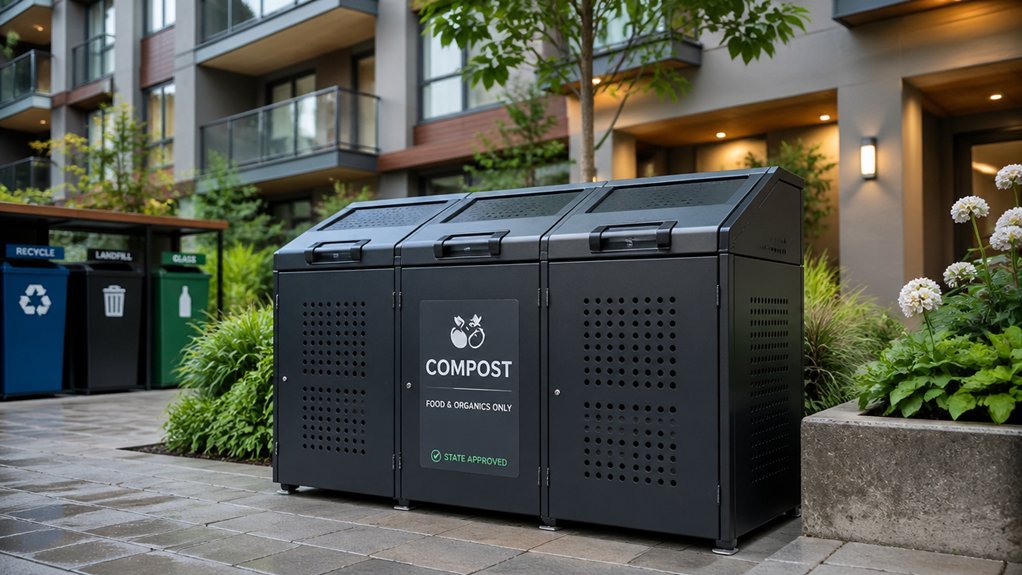
How do you choose a state‑approved compost bin for a multi‑unit building? Start by checking the relevant state framework—California’s Title 14, Division 7, Chapter 3.1 and CalRecycle permitting page, or Colorado’s CDPHE Class I/II certificate rules. Identify which bin types each agency lists as acceptable for multi‑unit sites, then match those options to your building’s source‑separation plan. In states like Alabama, Alaska, Arizona, Arkansas, and Colorado, consult the specific regulatory pages (ADEM, Alaska DEC, ADEQ, Arkansas DEE, DPHE) for any additional criteria that affect compost bin selection. Ensure the bin’s size, material, and ventilation meet the local ordinance and that it can be securely placed in a common area without violating fire or health codes. This alignment guarantees compliance and smooth operation. Regulatory standards ensure that the bin types you consider are recognized as acceptable for multi‑unit sites and help you verify that chosen models align with official guidance.
Where to Purchase or Build a Compliant Home Compost Bin?
You can buy a compliant bin at your local garden center, hardware store, or online, but make sure it meets any municipal specs for aeration, moisture control, and pest resistance. If you prefer a DIY route, follow simple construction guidelines that use sturdy, breathable materials and include a secure lid to keep odors contained. Before you finalize either option, verify the bin aligns with your local ordinance’s requirements for organic waste separation and odor mitigation.
Local Compliant Bins
Looking for a bin that meets local rules and fits a balcony or backyard? In Colorado, you can buy compliant bins from garden centers, home‑improvement stores, or online kits that follow state solid‑waste guidelines. Verify that the product’s ventilation, drainage, and secure lid match HOA policies and municipal standards for home composting. Choose a model that balances size, aeration, and odor control so you stay within community expectations.
- Tumblers with built‑in airflow vents
- Worm bins that include moisture‑regulating trays
- Static piles equipped with removable drainage panels
When you select a bin, confirm it offers proper aeration, leachate control, and pest‑proof sealing. This ensures your compost stays sanitary, odor‑free, and legally compliant in any multi‑unit building. Ventilation design supports pest prevention and effective airflow within compact indoor systems.
DIY Construction Guidelines
If you’re ready to create a compost bin that fits a balcony or kitchen counter, start by choosing a compact, sealed unit with built‑in aeration and drainage, then gather food‑grade plastic or metal components from a reputable hardware store or online supplier that meet local waste‑management rules.
Select a design that lets you layer Organic Waste and brown material, and ensure the lid seals tightly to control odor during Indoor Composting.
For DIY, use a sturdy plastic tote or metal drum, drill ½‑inch holes near the top for airflow, and add a lower tray for drainage.
Install a removable inner basket for easy turning, and place a moisture‑absorbing sponge inside.
Follow the manufacturer’s assembly guide, check that all parts are food‑grade, and keep the bin under your balcony’s weight limit.
This setup stays compliant, safe, and efficient.
Local Ordinance Verification
Before you buy or build a compost bin, check your city or county code to confirm which systems are approved, whether registration is required, and what placement or odor‑control rules apply. Local ordinances often dictate that only sealed, pest‑proof containers are allowed in multi‑unit buildings, and they may require a permit or a declaration of use. Verify with your planning department, state agency (e.g., CalRecycle, ADEM, DEC), and any homeowner association before you spend money.
- Look up approved models on the municipal website or ask the building department for a list.
- Confirm whether registration, a permit, or a simple notification is needed.
- Ask about required siting distances from vents, windows, and shared spaces to meet odor‑control standards.
Following these steps keeps your home composting legal and hassle‑free.
Notify Your Property Management of Your Compost Setup (When Required)
Ever wondered whether you need to tell your property manager before installing a compost system? First, check local regulations; many jurisdictions require you to notify management when the setup occupies shared spaces. Draft a brief, written request that outlines the type of bin or compact unit you’ll use, its location, and how it meets waste‑diversion goals. Include a maintenance plan that names who’ll handle troubleshooting, waste pickup, sanitation, pest control, and spill response. Attach any permits or regulatory citations that prove compliance. Request written consent from the property manager or HOA, clarifying approved containment and odor‑control measures. By documenting responsibilities and providing clear evidence of safety, you reduce liability and keep the compost project on track.
Control Odor & Moisture So Neighbors Stay Happy
Wondering how to keep your building’s compost from stinking up the hallway? Good odor control and moisture management start with the right mix and airflow. Keep a 2:1–3:1 brown‑to‑green ratio, layer dry leaves or straw over kitchen scraps, and aim for 50‑60 % moisture. Turn the pile every 1–2 weeks, especially when it warms up, to stay aerobic and curb smells. Seal the bin, use a vented lid or carbon filter, and always cover fresh additions so odors don’t escape into corridors.
- Use dry browns to absorb excess liquid.
- Turn regularly to introduce oxygen and keep temperatures stable.
- Seal the container and add a deodorizing filter for extra protection.
These steps keep neighbors happy and your compost compliant.
Follow Waste‑Segregation Standards for Compostable Materials
Keeping your compost odor‑free is only half the battle; the next step is sorting the right materials into the right bin. You must follow waste segregation rules that require source‑level separation of organics from recyclables and trash. Place food scraps, coffee grounds, and compostable packaging into the organics/compost stream, not the regular bin. Use clearly labeled containers—often green or brown for organics, blue for recyclables, black for trash—to avoid cross‑contamination. Install signage at each disposal station and keep it visible. Provide brief, regular reminders and post quick‑reference guides so residents remember the proper categories. Monitor the bins periodically, give feedback on any mistakes, and adjust signage if needed. Consistent compliance keeps the compost high‑quality and meets local regulations.
Know Permit Exemptions for Apartment Home Composting
Where do you stand on permit requirements for composting in your apartment building? In Colorado, small‑scale operations often qualify for composting exemptions, meaning you can launch Apartment composting without a full facility permit. Class III sites need a design and operations plan, but Class IV and V—typical for building‑level bins—are exempt. To confirm eligibility, contact Jace Driver, Waste Diversion Specialist, at (303) 691‑4059 or jace.driver@state.co.us. Review the language in 6 CCR 1007‑2 and the state’s Solid Waste Regulations to ensure your setup fits the exemption criteria.
- Verify your system aligns with Class IV/V definitions
- Secure a design plan only if you fall under Class III
- Use state resources (CDPHE website) for up‑to‑date guidance
State Rules for Beneficial Soil Use of Compost
Now that you’ve confirmed whether a permit is required, the next step is to understand each state’s rules for using compost on soil. In California, composting regulations are codified in Title 14, Division 7, Chapter 3.1; you must follow CalRecycle’s permitting guidelines for any beneficial use. Colorado’s Solid Waste Regulations (6 CCR 1007‑2) classify facilities I‑V, with Class III‑V exempt from permits but still subject to reporting. Alaska mandates prior approval under 18 AAC 60.007 before any beneficial use, requiring a detailed proposal. Arkansas governs composting through Rule No. 22, Title 8 CAR pt. 60, and the DEQ reviews all soil applications. Arizona requires a 30‑day notice to the DEQ, and if groundwater discharge is possible, additional APP permits may apply.
Contact the Appropriate State Agency for Guidance
You should reach out to your state’s designated agency—like Alabama’s ADEM or California’s CalRecycle—to get precise permit guidance and resource links. Their contact lists include phone numbers and emails for quick answers. These agencies also point you to the relevant regulatory portals and citation codes for composting.
State Agency Contact
If you’re unsure which agency to approach, start by contacting the state’s solid‑waste office for composting guidance. Each state designates a specific point person who can answer Waste and Composting questions, confirm local rules, and direct you to any required forms. Reach out early to avoid delays and keep a record of the conversation for future reference.
- Alabama: Jason Wilson, Solid Waste Engineering Section – (334) 271‑7755, JWilson@adem.alabama.gov (ADEM).
- Alaska: Rebecca Colvin, Solid Waste Program Coordinator – (907) 269‑7802, rebecca.colvin@alaska.gov (DEC).
- Arizona: Michelle Ogburn, Solid Waste Unit Manager – (602) 771‑6623, ogburn.michelle@azdeq.gov (AZDEQ).
These contacts will clarify jurisdiction, outline any reporting obligations, and help you stay compliant while you set up your home composting system.
Permit Guidance Resources
Ever wondered which state agency can walk you through the composting permit process? You’ll find clear Compostiting and Composting guidance when you contact the right office, and each state’s contact details are summarized below.
| State | Agency / Contact | Key Reference |
|---|---|---|
| Alabama | Jason Wilson, ADEM Solid Waste Engineering (334‑271‑7755) | https://adem.alabama.gov/ |
| Alaska | Rebecca Colvin, AK DEC Solid Waste Program (907) 269‑7802) | 18 AAC 60.007 |
| Arizona | Michelle Ogburn, ADEQ (602) 771‑6623) | Groundwater discharge considerations |
| Arkansas | Annette Cusher, PE, ADEQ (501) 682‑0841) | Rule No. 22, Title 8 CAR pt. 60 |
| California | CalRecycle (permits page) | Cal. Admin. Code tit. 14, § 17854 |
Reach out, ask specific questions, and follow the agency’s steps to secure your permit quickly. This targeted Composting guidance streamlines compliance and keeps your building’s composting project on track.
Document Your Composting Practices to Protect Against Liability
A well‑kept log of every compost batch—date, volume, material type, and exact location—serves as your strongest defense when regulators or neighbors raise concerns. By treating each entry as part of a broader Waste Diversion strategy, you prove compliance and reduce liability. Your Recordkeeping should also capture SOPs, training receipts, signage photos, and resident communications, creating a transparent trail that showcases due diligence and quick corrective actions.
- Date, volume, material, location – basic traceability for inspections.
- Standard operating procedures – aeration, moisture, turning schedules, and safety checks.
- Incident reports – odors, pests, or safety issues, with timelines and responsible parties.
These three elements give you a solid evidentiary foundation, keeping your building’s compost program legally sound and community‑friendly.
Frequently Asked Questions
What to Do With Compost if I Live in an Apartment?
You should use a sealed, carbon‑filtered bin or compact electric composter, keep it away from living spaces, check building rules, and if prohibited, drop scraps at a community or local compost site.
What States Are Legal for Human Composting?
You can legally compost bodies in Colorado, Washington, Oregon, Vermont, and California; each state has specific permitting or facility requirements, so you’ll need to follow their regulations before starting.
What Are the Rules of Composting?
You must separate organics, keep moisture balanced, turn the pile regularly, avoid meat or dairy, use a covered bin, follow local permit rules, and dispose of any contaminants to stay compliant.
Can You Compost Inside Your House?
Yes, you can compost inside your house if you use a sealed, odor‑controlled unit, keep it well‑ventilated, follow moisture and temperature guidelines, and verify building policies before installing anything.
In Summary
By checking fire‑safety codes, local ordinances, and building regulations, you’ll ensure your composting setup is legal and safe. Choose a state‑approved bin, verify any permit exemptions, and follow soil‑use rules to avoid liability. Keep documentation of your practices and stay in touch with the relevant agency for updates. With these steps, you can compost responsibly in your apartment while protecting yourself and your neighbors.