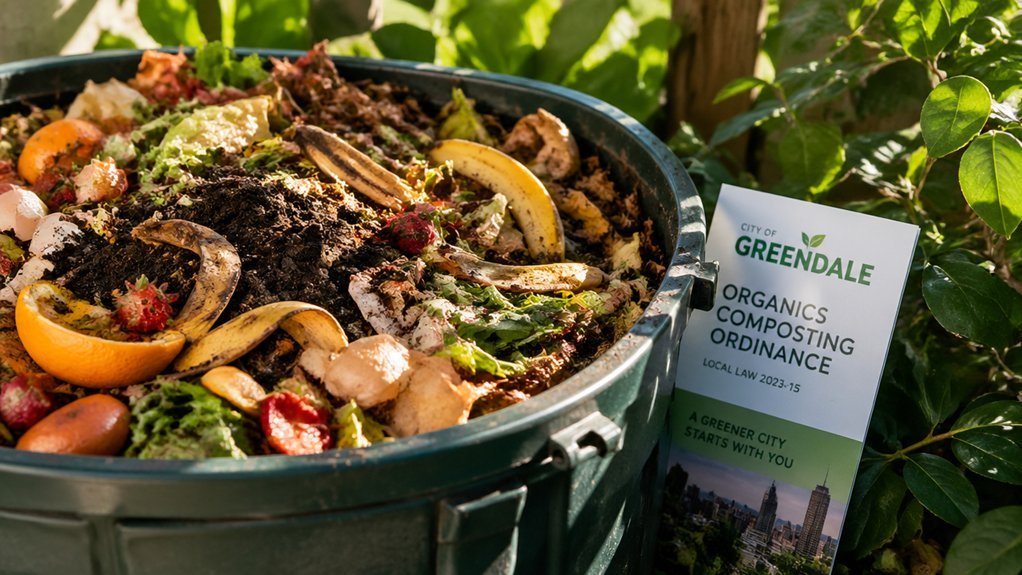
You should check local composting laws first because they tell you exactly what you can and can’t put in your bin, preventing costly fines and contamination that could shut down service. They also ensure you follow California SB 1383’s color‑coding and labeling rules, keeping your apartment’s waste stream compliant and your neighbors happy. Ignoring these rules can lead to penalties, service suspensions, or extra fees. Keep reading to discover how to stay compliant and avoid those pitfalls.
Local Composting Laws: What Apartments Can Compost
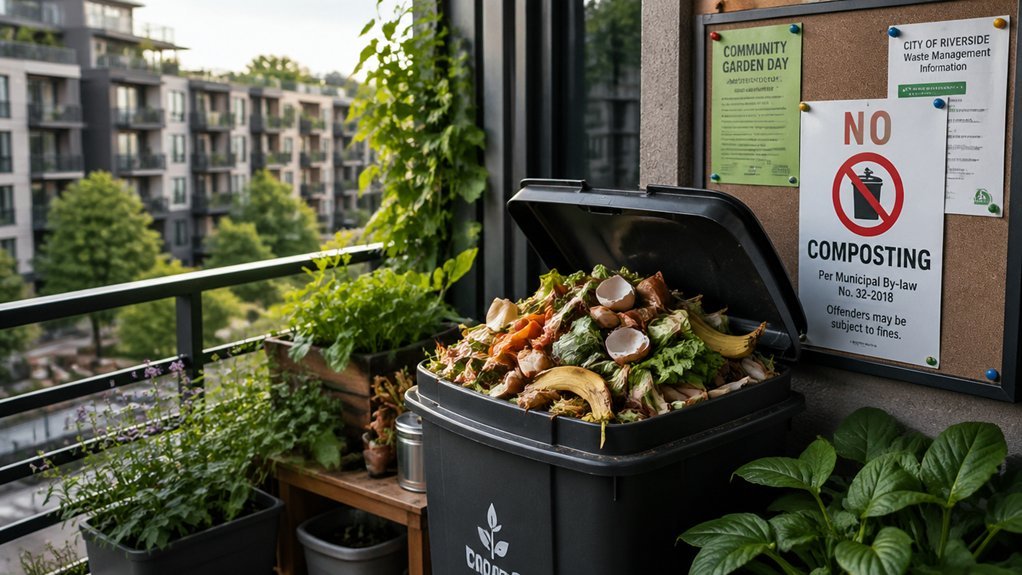
What can you actually compost in an apartment building? You can start with fruit scraps, vegetable peels, coffee grounds, tea bags, and eggshells, as long as local laws permit them. In many cities, complexes with fewer than five units must follow specific program rules, while five‑plus units join curbside organics collection or arrange self‑haul to a facility. Property owners must supply clearly labeled containers and educate tenants at least annually. California’s SB 1383 pushes for consistent bin colors and signage, shaping how apartments set up their systems. Keep an eye on contamination penalties—failure to separate organics from trash can trigger fines. By checking the rules first, you’ll avoid violations and make your compost effort both legal and effective. Local compliance standards help guide what materials can be accepted and how to properly segregate waste to minimize contamination and fines.
Most Common Forbidden Items in Curbside Compost Bins
Ever wondered why your curbside compost bin keeps getting rejected? You’re likely slipping forbidden items into the mix. First, keep all bio‑degradable plastics, bags, cups, and utensils out of compostables—most programs ban them outright. Waxed cardboard also falls under the no‑go list, even though it’s paper‑based. Grease and oils belong in the trash unless you add only a tiny drizzle with dry material; large piles will foul the pile. Plastic wrap, claimable compostable plastics, and any non‑compostable packaging are off‑limits for curbside organics. Because local regulations differ, always consult your city’s recycling guidance before you load the bin. Following these rules prevents rejections and keeps your compost program running smoothly. Regulatory guidance helps ensure you’re aligned with local rules and avoid unnecessary contamination.
Decode Your City’s Compost Bin Colors and Labels
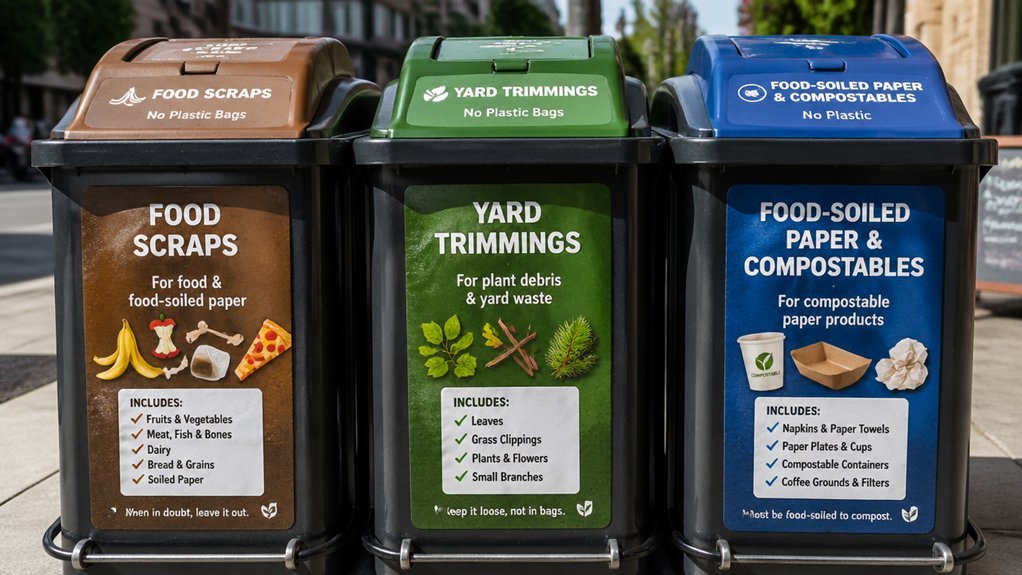
You’ll notice that each bin’s color tells you exactly which waste stream it belongs to, so follow the hue to avoid cross‑contamination. In many programs, you’ll also find that a certification label (such as BPI, OK compost HOME/INDUSTRIAL, CMA, EN 13432, or TÜV SEEDLING) confirms that the bag is suited for the intended disposal stream and composting facility. municipal guidelines can vary by city, so it’s smart to verify which colors and labels align with your local program before you discard any material.
Bin Color Meaning
How can you tell which bin holds your kitchen scraps when the colors differ from one neighborhood to the next? Look for the standard bin colors that most California municipalities adopt: green or brown usually signals the organics cart, while blue or gray indicates recyclables, and black or red marks trash. Check the local signage on each container; it often lists accepted items like food scraps, yard waste, and certain paper, and explicitly bans biodegradable plastics. Under SB 1383, jurisdictions monitor contamination closely, and mismatched colors can trigger penalties. If you’re unsure, consult your town’s website or contact the waste‑management office to confirm the exact meaning of each hue and avoid costly contamination penalties. SB 1383
Label Placement Rules
Knowing which color bin holds your kitchen scraps is only half the battle; the next step is to read the labels that tell you exactly what belongs inside. SB 1383 requires clear labeling, so you’ll see a bold “Organic Waste” tag placed at eye level on the front of the bin. Follow the bin guidance printed on the lid or side panel; it lists accepted foods and warns about contamination. Your curbside program may use a color‑coded label strip that aligns with state guidance, making it easy to spot prohibited items. If you ignore these cues, cross‑contamination spikes, and the municipality can issue notices or fines. Keep the label visible, read it every time you toss a scrap, and you’ll stay compliant. Regular maintenance and timely emptying also help maintain odor control and ensure the bin remains compliant with local rules label guidance and practices.
Penalties and Fines for Not Following Compost Rules
You’ll notice the enforcement clock starts ticking as soon as the local program launches, so the first few weeks are critical for getting your habits right. Also, fines and containment measures can scale quickly if you repeatedly disregard guidelines, so consistent compliance is essential for avoiding penalties compost regulations. If you mix trash with the compost, you’ll face a contamination fee that starts around $50–$100 and climbs with repeat offenses.
Both residents and businesses must stay on top of the schedule, because penalties can vary by city and increase sharply if you ignore the rules.
Fine Enforcement Timeline
Ever wondered when those fines actually hit your wallet? You’ll see the timeline unfold as soon as your municipality’s startup dates kick in. SB 1383 enforcement kicks in 2024, and local jurisdictions start issuing contamination fines right away. If you miss the organics separation deadline, the first penalty lands between $50 and $100, then climbs with each repeat offense. Here’s how it typically rolls out:
- Initial notice – a warning and a $50‑$100 fine for the first violation.
- Second breach – a higher fine, often $150‑$300, plus possible service suspension.
- Persistent non‑compliance – escalating penalties, court fees, and mandatory education sessions. Regulatory compliance is increasingly emphasized in local programs to help residents understand specifics like allowed materials and proper bin separation.
Stay ahead by checking your city’s specific startup dates and compliance requirements.
Contamination Fee Structure
The fine schedule spikes once you miss a separation deadline, and the costs climb quickly with each repeat offense. Under SB 1383, contamination penalties start at $50–$100 for a first slip, then jump to $150–$300 for a second, and exceed $500 for third‑time offenders. Local penalties vary, but every jurisdiction enforces compliance rules that treat edible food as non‑organic waste, so a single mis‑sorted bag can trigger a hefty bill. Stay alert to bin colors and labeling; the more you follow the system, the less you’ll pay.
| Offense | First Penalty | Subsequent Penalty |
|---|---|---|
| 1st | $50–$100 | – |
| 2nd | – | $150–$300 |
| 3rd+ | – | $500+ |
| 4th+ | – | $750+ |
How to Stay Within Local Composting Laws and Avoid Fines?
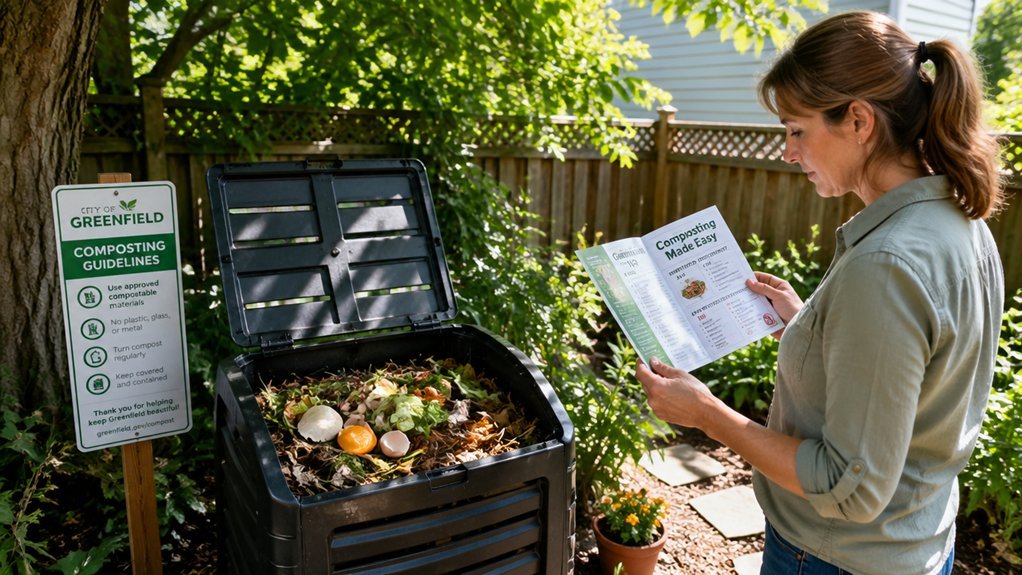
Where can you find the exact rules that keep your compost from becoming a costly violation? Start by checking your municipality’s website or contacting the waste‑management department; they post the latest rollout schedule for SB 1383 and the specific color‑coded bins you must use. Keep an eye on local rules that ban biodegradable plastics and demand proper labeling—ignoring these triggers contamination penalties and fines.
Check your municipality’s website or waste‑management office for SB 1383 rules, color‑coded bins, and labeling requirements.
1. Read the official guide, note the collection days, and verify which items qualify as organic waste.
2. Separate food scraps, yard trimmings, and approved compostables from recyclables and trash.
3. Label your bin correctly, avoid prohibited plastics, and report any confusion to the authority before the next pickup.
Legal, Low‑Odor Compost Set‑Up for Small Apartments
Can you set up a legal, low‑odor compost system in a small apartment without breaking local rules? Start by checking whether your building participates in a curbside organics or composting program, as many multifamily housing complexes must offer one. Use a sealed, odor‑tight pail for organic waste, and keep it on a balcony or under the sink where it stays cool. Layer food scraps with yard waste or a thin sheet of dry newspaper to absorb moisture and mask smells. Label the container clearly to avoid mixing non‑compostables, which can trigger contamination fines under California SB 1383. Follow any tenant‑education notices from your property manager, and empty the pail into the provided bin before it overfills. This routine keeps your apartment compliant and odor‑free.
Where to Drop Off Compost Near You (Apartment‑Friendly Options)
If your sealed pail fills up faster than you can empty it, head to a nearby apartment‑friendly drop‑off point. Most municipalities design drop‑off sites that fit multi‑unit living, so you can stay compliant with local laws while keeping your kitchen tidy. Look for community compost bins, building‑partner programs, or curbside programs that accept organic waste collection in a convenient bag or container.
- Community drop‑off sites – usually located at parks or recycling centers; they often have extended hours for busy renters.
- Apartment building partnerships – some complexes provide a shared compost cart or a designated bin that a hauler empties weekly.
- Curbside programs – many cities, especially in California, deliver green compostable carts to multi‑unit buildings under SB 1383, allowing you to place bags at the curb on collection days.
Check your city or county guidance to confirm accepted materials and schedule.
Find Up‑to‑Date Compost Ordinances and Helpful Resources
Wondering which rules actually apply to your kitchen scraps? Start by visiting your city’s public works or environmental services website; they usually post the current local ordinance and a PDF of the composting laws. Search for “organic waste” or “SB 1383” to locate state‑mandated guidelines and any local color‑coding or labeling requirements. Use CalRecycle’s model signage and implementation tools as a reference, then compare them with your municipality’s rules on curbside programs, self‑haul options, and exemptions. Check the enforcement and penalties section to see fines for contamination and how monitoring works. Finally, bookmark the county’s contact page or call the waste‑management office for updates, ensuring you stay compliant and avoid penalties.
Frequently Asked Questions
What Are the Benefits of Local Composting?
You’ll cut landfill waste, lower methane emissions, enrich soil, save money on fertilizers, support community recycling, and meet regulations that avoid fines while promoting sustainable, circular‑economy practices.
What Are the Common Composting Mistakes?
You often add non‑compostable plastics, overload with meat or dairy, let moisture swing too far, neglect turning for aeration, and mix chemically treated yard waste, all of which stall decomposition and attract pests.
What Are Some Reasons Local Governments Might Encourage Residents to Compost?
You’ll benefit because composting cuts landfill methane, lowers waste‑management costs, creates renewable energy, earns tax credits, improves soil health, and helps you meet state mandates while avoiding fines.
What 12 States Have Legalized Human Composting?
You’ll find human composting legal in Colorado, Washington, Oregon, California, Maine, Vermont, New York, Illinois, Nevada, New Mexico, Texas, and Arizona, though each state imposes its own licensing and safety requirements.
In Summary
By checking your local composting laws first, you’ll avoid fines, keep your building smelling fresh, and make sure you’re actually helping the environment. Knowing which items are allowed, what your bin’s colors mean, and where to drop off waste lets you compost confidently and responsibly. Stay informed, follow the rules, and enjoy the benefits of a clean, odor‑free apartment compost system.