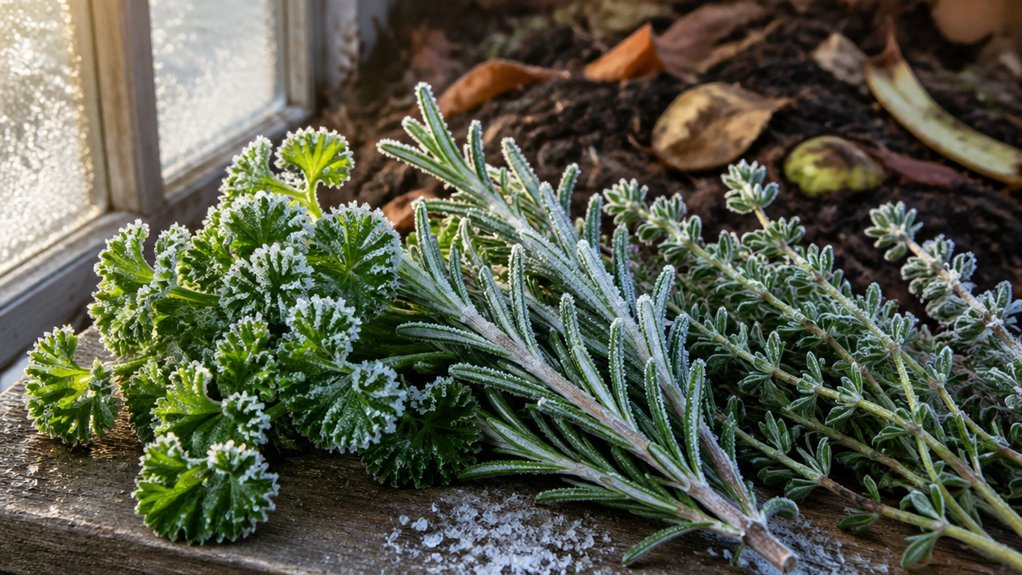
You can compost most low‑salt, fresh‑green frozen herbs—think parsley, cilantro, dill, chives, and mint—once you thaw, squeeze out excess liquid, and chop or crush them to increase surface area. Avoid anything with added salt, preservatives, or heavy seasoning, and balance the greens with plenty of dry, carbon‑rich browns like shredded paper or straw to keep the pile aerated. If you follow these steps, you’ll keep microbes happy and odor low, and the next section shows how to optimize the bin setup and moisture control.
Are Frozen Herbs Safe for Compost?
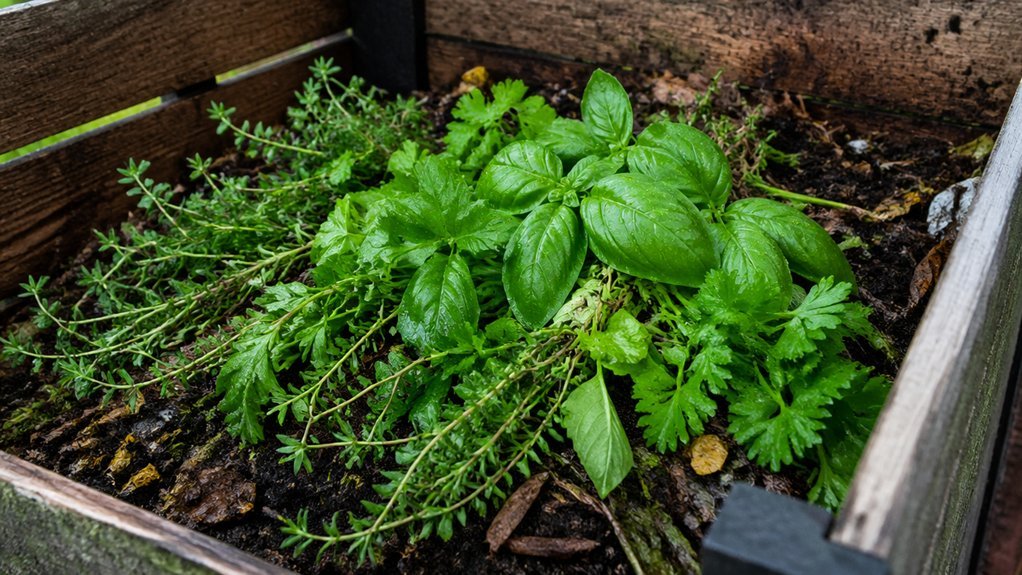
Can frozen herbs go straight into your compost pile? Yes, you can safely add them, but treat them like any other plant waste. When you thaw the herbs first, microbes spring to life and break them down faster. If the herbs are plain, without salt or seasoning, they act as a fresh green source, mixing well with browns in moderate amounts. Garden‑grown herbs count as regular plant material, so you can toss a handful into the bin without worry. Avoid any herb that carries heavy salt, preservatives, or seasoning—those compounds can damage the microbial community. Think of your compost as a new account for organic matter: you’ll keep it healthy by feeding it only clean, salt‑free ingredients, and containers like the 0.5‑ to 1‑gallon indoor bins with odor control can help manage scraps odor control features effectively.
Thaw and Drain Moisture Before Adding
First, let the herbs fully thaw so they’re no longer frozen solid. Then give them a gentle squeeze or press to wring out excess liquid, and drain that water away from the dry compost layers. This keeps the pile aerated, prevents soggy spots, and avoids foul odors or methane buildup. air circulation enhances overall decomposition by helping moisture balance and odor control during composting.
Thaw Properly Before Adding
Ever wonder why thawed herbs can sabotage your compost if you’re not careful? You need to thaw them completely before they hit the pile. A full thaw lets the ice melt, but it also releases a lot of water that can drown the microbes. After the herb is liquid, squeeze or drain the excess liquid. This step cuts down sogginess and stops anaerobic pockets from forming. Add a thin, even layer to prevent moisture buildup thick mulch benefits and maintain airflow to support aerobic composting. Then, spread the damp clumps in thin layers rather than dumping a big chunk all at once. Thin layers let air circulate and moisture evaporate evenly, speeding up breakdown. Treat thawed herbs like fresh greens, but give them extra moisture control to keep your compost aerobic and healthy.
Remove Excess Moisture Efficiently
How can you keep your compost from turning into a soggy mess when you add thawed herbs? First, thaw the herbs completely, then place them in a colander or sieve. Let gravity do the work—give the herbs a minute or two to drip away excess water. For stubborn moisture, press the leaves gently with clean hands or a kitchen towel, squeezing out as much liquid as you can. After draining, pat the herbs dry with a clean towel to remove any remaining droplets. If you still have a wet batch, balance it by tossing in dry material like shredded paper, cardboard, or dry leaves. Avoid dumping large wet loads at once; instead, mix the herbs with dry or partially dry compost ingredients to keep the pile aerated and prevent anaerobic pockets. To further improve efficiency, consider using a compact grinder or electric compost bin to expedite turning moist food scraps into a more stable pre-compost odor control during processing.
Choose Low‑Salt Herbs for Your Pile
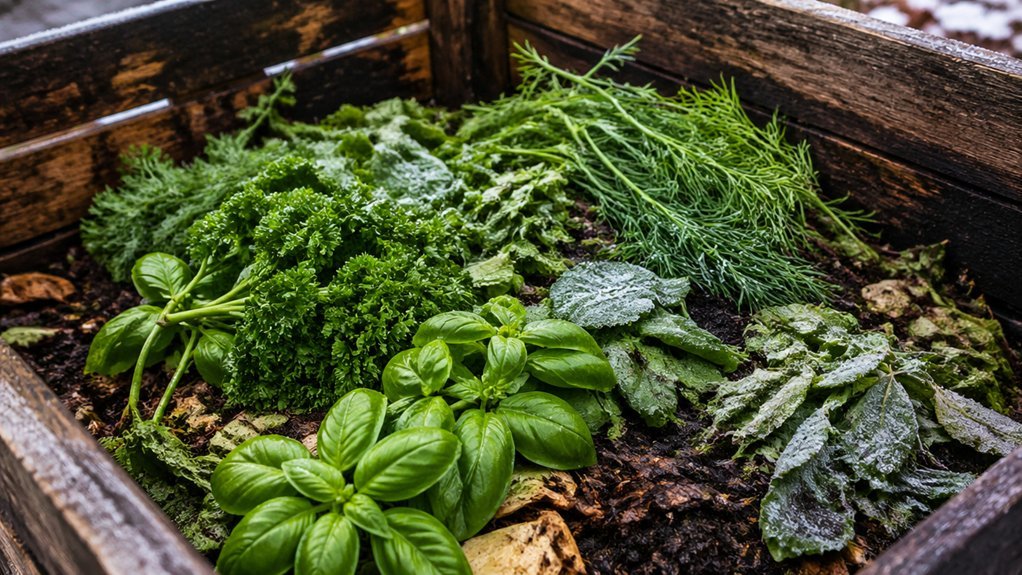
Why risk upsetting your soil microbes with salty waste? Choose low‑salt frozen herbs for your pile to keep the ecosystem balanced. Parsley, cilantro, dill, chives, and mint stay salt‑free, so they decompose without harming microbes or plant roots. When you freeze these herbs, you preserve their organic matter while avoiding the salt buildup that comes from seasoned blends like Old Bay or taco seasoning. If you’re unsure, stick to fresh or dried salt‑free varieties—they behave the same in compost. By erring on the side of salt‑free herbs, you maintain a healthy nutrient ratio and prevent the pile from becoming a hostile environment for the tiny organisms that turn waste into fertile soil. Odor control is also easier to manage when your inputs are consistently salt‑free and balanced.
Avoid High‑Salt or Processed Herb Blends
You should stick to salt‑free herb blends and skip any processed seasonings that contain salt. When you’re unsure, just use plain frozen or fresh herbs without added salt. Keeping herbs separate from meat and dairy waste helps maintain balanced compost bacteria and prevents salt buildup that can stress plants. salt-free blends provide a safer option for your compost mix.
Salt‑Free Herb Blends
Ever wonder if your frozen herb blends are safe for compost? You can toss any salt‑free mix without worrying about harming microbes. Check the label—if it lists only herbs and no sea salt, potassium chloride, or saline additives, it’s good to go. Even processed blends are fine when their salt content is zero. When in doubt, break the blend into individual herbs like parsley, dill, or chives and compost them separately. This habit guarantees you won’t inadvertently introduce salt into your pile. Using compact, efficient apartment composting systems can help maintain steady aerobic conditions for these additions, supporting consistent decomposition. Salt-free labeling practices and careful material selection contribute to healthier indoor composting workflows.
Skip Processed Seasonings
How can you keep your compost healthy while still enjoying flavorful herbs? You should skip processed seasonings that are loaded with salt. Even if you freeze them, the salt stays, and it will inhibit microbial activity just like over‑salting soil. Stick to plain, salt‑free herbs and spices; they break down quickly and feed beneficial microbes. High‑salt blends such as Old Bay, taco seasoning, or pre‑mixed herb mixes can leach sodium into your pile, slowing decomposition and harming plant growth. By avoiding these, you keep the nutrient balance right and your compost stays lively.
- No Old Bay, taco seasoning, or similar salty mixes
- Skip any herb blend that lists salt as an ingredient
- Use only fresh or frozen herbs without added salt
- Treat salt like you’d any contaminant—keep it out of the pile
Chop or Crush Herbs for Faster Breakdown
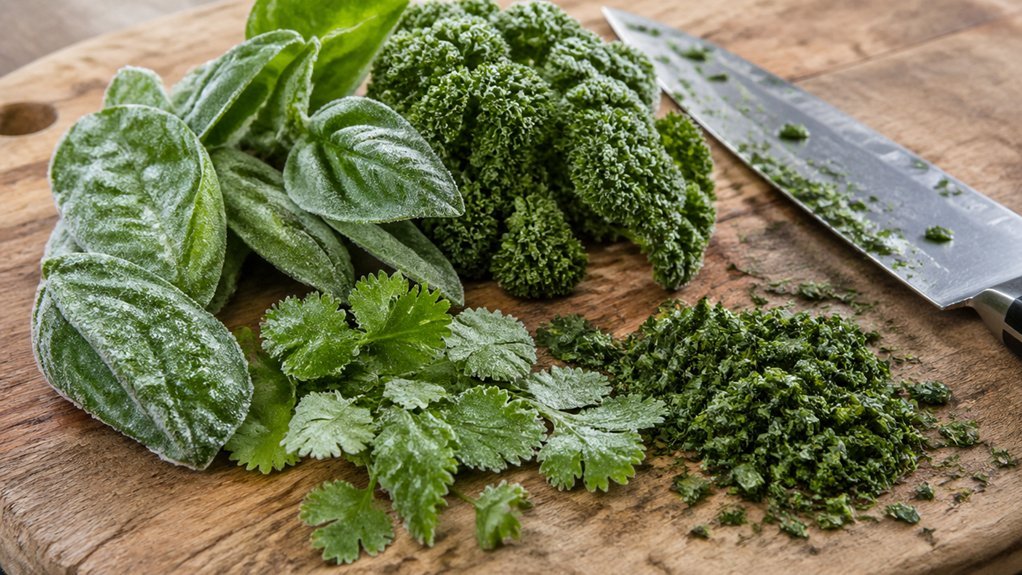
Chop or crush frozen herbs into small, shreddy pieces before tossing them into the pile, and the increased surface area lets microbes get to work faster once the herbs thaw. When you lightly crush stems and leaves, you release extra moisture and nutrients that microbes love, accelerating decomposition. The freeze‑thaw cycle already ruptures cell walls, so a quick chop makes those nutrients even more accessible. Aim for bite‑size shreds rather than a puree; over‑chopping can create dense mats that slow airflow and trap excess water. If your herbs are especially juicy, blend them with dry carbon materials like shredded newspaper or straw to keep the pile balanced. This simple step speeds up breakdown while keeping the compost healthy and well‑aerated.
Balance Greens and Browns When Adding Herbs
You’ll want to keep a good mix of greens and browns, so pair moisture‑rich frozen herbs with carbon‑rich straw, shredded leaves, or paper.
Aim for roughly a 2:1 or 1:1 ratio, and watch for slimy, smelly piles—those signal you need more browns and a turn.
Balance Browns With Greens
Ever wondered why your compost smells fresh instead of sour when you toss in frozen herbs? You keep it thriving by balancing browns with greens. Frozen herbs are high‑nitrogen greens, so you must offset them with dry, carbon‑rich browns. Aim for a 1:2 to 1:3 green‑to‑brown ratio, adjusting as the pile heats or dries. Chop the herbs first; this speeds breakdown and lets the browns weave through the moisture. Watch the water level—frozen herbs release liquid as they thaw, and the browns will soak it up, preserving airflow and preventing compaction.
- Use shredded newspaper, dry leaves, straw, or cardboard as browns.
- Keep the pile crumbly; turn it weekly.
- Add browns immediately after frozen herbs to balance moisture.
- Adjust the ratio if the pile feels soggy or smells sour.
Mind Salt‑Free Additions
Why worry about salt when you add frozen herbs to your compost? You’ll keep your pile healthy by steering clear of seasoned blends like Old Bay or taco seasoning, which can raise salinity and hurt seed viability. Stick to unsalted herbs and spices, then pair them with carbon‑rich browns—shredded paper, dried leaves, or straw—to preserve a balanced C:N ratio. Layer a handful of frozen greens, then sprinkle a generous amount of dry material; repeat to maintain moisture without drowning the microbes. Avoid any salty add‑ons, even in curbside bins, because excess sodium leaches into the soil and disrupts microbial activity. By minding salt‑free additions, you protect soil health, nurture beneficial microbes, and ensure your compost produces nutrient‑rich, seed‑friendly humus.
Manage Moisture Levels After Adding Frozen Herbs
Since frozen herbs release meltwater as they thaw, you should let that liquid drain before mixing them into the pile and then check the compost’s moisture. Once the water is gone, feel the heap; it should be damp like a wrung‑out sponge, not soggy. If it feels too wet, sprinkle dry, carbon‑rich material—dry leaves, straw, shredded newspaper, or cardboard—to rebalance the browns‑to‑greens ratio. Keep the pile aerated by turning it regularly, preventing compact, waterlogged zones that slow down decomposition. Monitoring moisture daily lets you adjust quickly, ensuring the compost stays healthy and active.
- Drain meltwater completely before adding herbs.
- Test moisture by squeezing a handful; aim for a damp sponge feel.
- Add dry carbon sources if the pile feels soggy.
- Turn the pile often to maintain airflow and prevent wet pockets.
Spot and Prevent Seed Spread When Composting Frozen Herbs (Borage)
How can you keep borage from turning your compost into a seed‑blowout? First, trim off any flowers and seed heads before you freeze the herb. When you add the frozen pieces, use the drop‑method in‑bed decomposition and let the roots mingle with soil microbes; this reduces seed survival. If you spot tiny green specks while turning the pile, remove them promptly. A simple table helps you remember each step.
| Action | Why | Tip |
|---|---|---|
| Remove flowers & seeds | Cuts seed source | Snap stems before freezing |
| Use drop‑method | Roots feed microbes | Sprinkle frozen bits on top |
| Turn pile regularly | Exposes seeds to heat | Check for green specks |
| Sift compost before use | Eliminates leftovers | Use a fine mesh |
| Store finished compost in sealed bag | Prevents stray seed germination | Label clearly |
Follow these steps and your compost stays seed‑free.
Frozen Herbs: Choosing the Right Compost Bin for Your Space
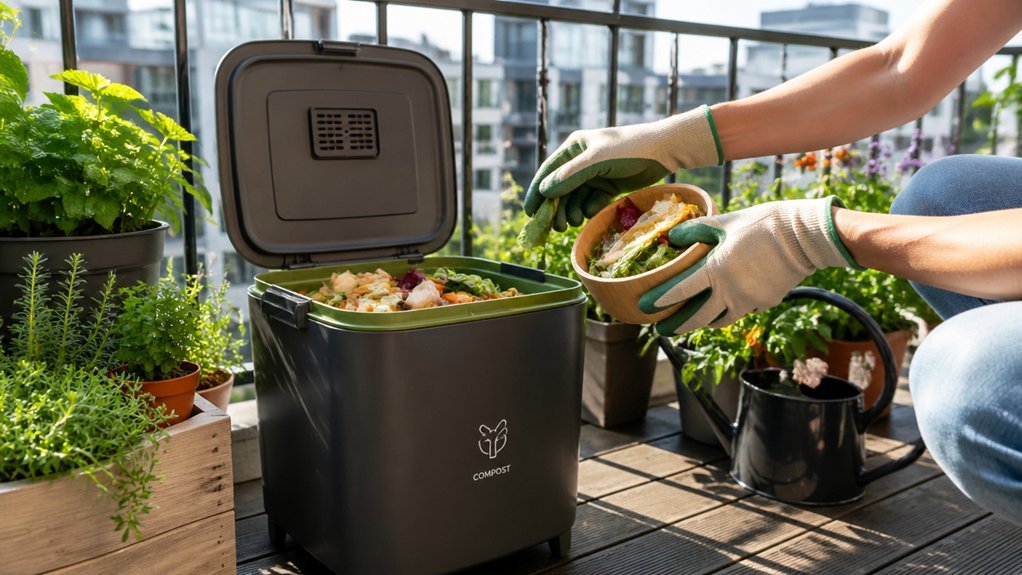
After clearing borage seeds, the next step is matching your compost bin to the space you have. If you’re limited to a balcony or a small kitchen nook, a compact, airtight container works best; it keeps moisture from frozen herbs in check and prevents odors. For a backyard garden, a larger tumbling bin offers easy turning, which speeds up decomposition of chopped herbs. Consider a bin with a removable tray so you can separate finished compost from fresh material. Finally, choose a bin with a sturdy lid to keep pests out while you balance salty‑free herbs with dry, carbon‑rich scraps.
- Compact airtight container for tight indoor spaces
- Large tumbling bin for easy turning in the yard
- Removable tray for separating finished compost
- Sturdy lid to deter pests and retain moisture balance
Frozen Herbs: Applying the ‘Drop’ Method for In‑Place Root Decomposition
Ever wondered how to turn frozen herb roots into a soil‑boosting asset without hauling them to a compost bin? Cut the herb at ground level, then let the frozen roots stay in the bed. The drop method lets roots decompose in place, feeding microbes and releasing nutrients right where you need them. You avoid the extra trip to a compost pile and keep soil disturbance low. For borage, leave the tap roots underground; they’ll mine nutrients and enrich the soil as they break down. If you also have flowering stems, drop them with the roots, but watch for seed spread. This simple chop‑and‑drop routine turns waste into a living fertilizer, keeping your garden cycle efficient and healthy.
Watch for Over‑Loading, Odor, and Pests
Ever notice the pile swelling and smelling off after you dump a batch of frozen herbs? That usually means you’ve overloaded it, created too much moisture, or invited unwanted guests. Add herbs gradually and balance each load with brown material—dry leaves, straw, or shredded paper—to keep the carbon‑to‑nitrogen ratio steady. Keep the pile aerated; turn it every few days so oxygen reaches the microbes and prevents sour, anaerobic odors. Cover the surface with a layer of mulch or a tarp, and place the pile on a pallet or raised bed to keep rodents and insects from burrowing in. If you detect a foul smell, sprinkle more dry material and turn the heap to restore balance.
- Add herbs in small batches, not all at once.
- Mix each green addition with dry browns to absorb excess moisture.
- Turn the compost regularly to introduce oxygen and avoid anaerobic conditions.
- Shield the pile with mulch or a cover and elevate it off the soil to deter pests.
Run This Quick Checklist Before Tossing Frozen Herbs
If you’ve just balanced moisture and pests, give your frozen herbs a quick sanity check before they hit the bin. First, sniff for excess salt or seasoning; discard any herb that’s heavily seasoned, as salt hinders microbes. Next, look for flowers or seeds—if you see borage buds or peppercorn specks, decide whether you want those plants to sprout later; otherwise, remove them. Then, assess volume: a handful of leaves is fine, but a mound may overwhelm the pile and slow decomposition. Finally, pair the herbs with brown material like shredded newspaper or straw to keep the carbon‑to‑nitrogen ratio balanced and maintain a damp, not soggy, texture. Follow these steps, and your frozen greens will turn into rich, nutrient‑dense compost.
Frequently Asked Questions
What Should Not Be Added to Compost?
You shouldn’t add anything salty—high‑salt seasonings, salty herbs, or any salt‑laden foods—because the salt harms microbes and prevents proper decomposition in your compost.
How Do the Amish Make Compost?
You make compost by chopping plant residues, spreading them on beds, and letting roots decompose in place or piling material for aerobic breakdown, while keeping seeds and aggressive weeds under control.
Can I Put Rosemary in My Compost Bin?
Yes, you can add rosemary to your compost bin as long as it’s fresh or frozen without salt. It will break down, enrich the mix, and improve soil nutrients once the pile matures.
Can I Put Toilet Paper Rolls in My Compost?
Yes, you can compost toilet paper rolls if they’re plain, uninked, and free of plastic or metal cores. Tear or shred them, mix with greens and browns, and avoid glossy or coated varieties.
In Summary
So, when you’ve thawed and drained your herbs, toss them into a well‑aerated bin, keep the salt low, and break them up for quick decay. Watch for excess moisture, odors, or pests, and adjust your pile as needed. Follow the quick checklist, and those frozen leftovers will turn into nutrient‑rich compost without a hitch.

Leave a Reply