
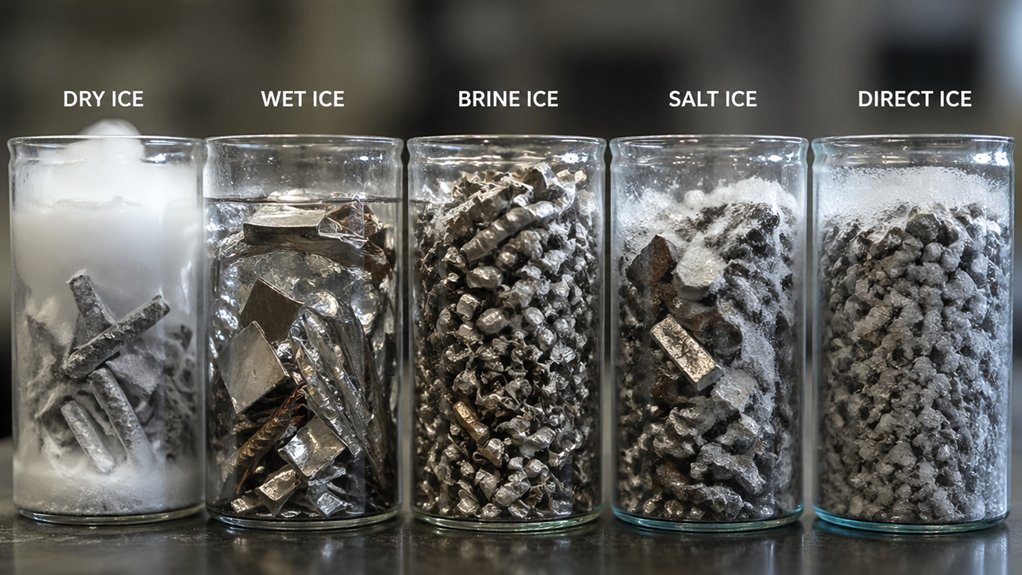
Set up a moisture‑proof dry‑scrap zone with labeled bins, non‑porous surfaces, and silicone mats for quick clean‑up, then weigh, log, and dry items separately from wet curing. Install thermo‑hygrometers and dehumidifiers to keep humidity low and odors at bay, and keep dry and wet zones distinct with good ventilation. Portion wet bags into half‑to‑one‑cup sizes, seal tightly, label with contents, allergens, and a 2‑3‑month use‑by date, and store flat in the freezer. Snap‑freeze herbs in a dry‑ice bath, avoid skin contact, and move them straight into airtight containers or freezer bags, storing upright when possible. Rotate stock using FIFO, label every container, and keep dry and wet items on separate shelves for easy access—continue and you’ll discover more detailed tips.
Dry & Wet Scrap Freezing: Set Up a Dedicated Dry‑Scrap Zone
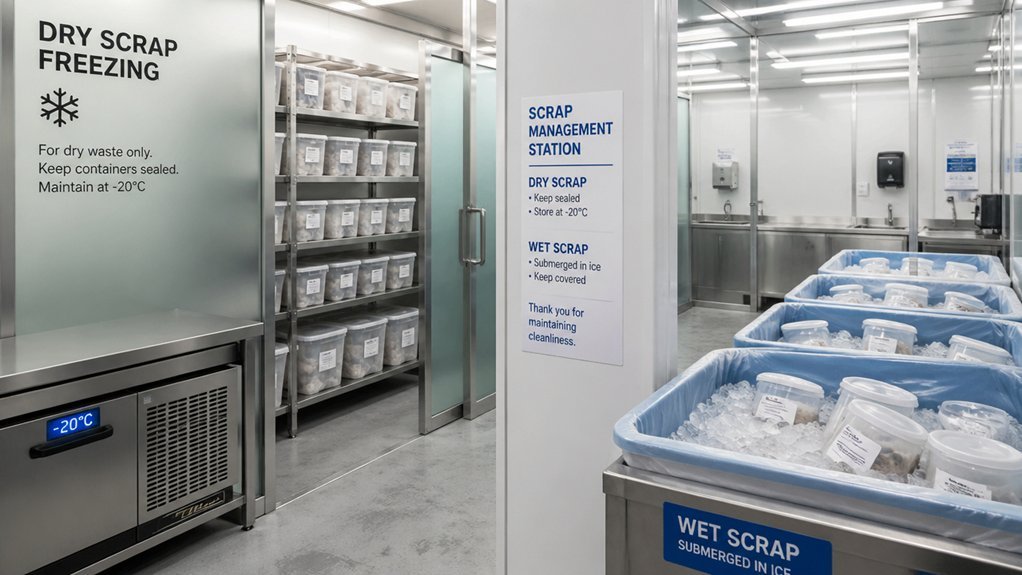
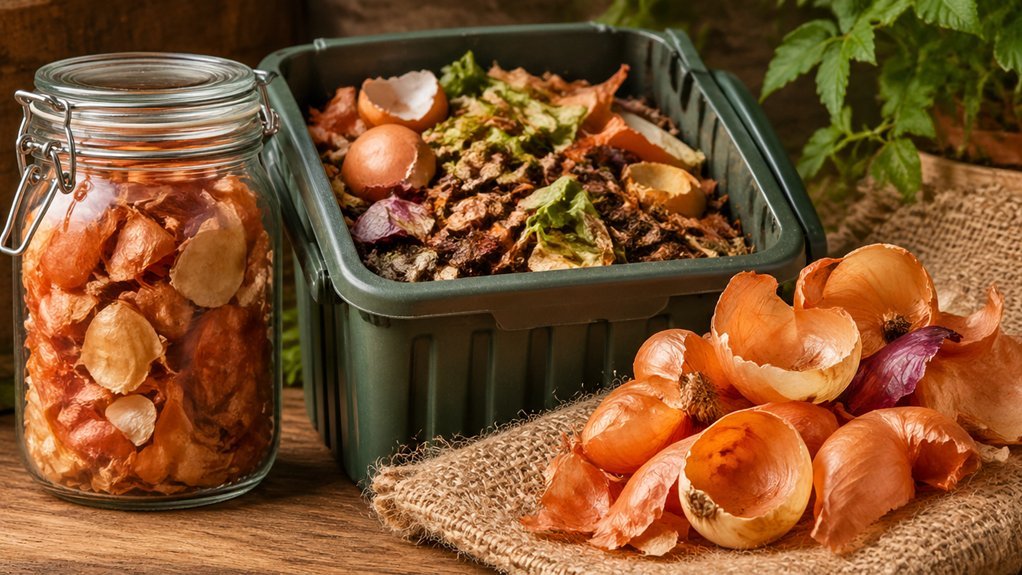
How do you keep dry scraps truly dry? You set up a dedicated dry‑scrap zone with clearly labeled, moisture‑proof bins and non‑porous surfaces. Silicone mats make cleanup fast, supporting sanitation between runs.
Your workflow starts with collection, weighing, and logging, then moves scraps straight to the drying area before any storage or processing.
Keep air‑drying steps separate from wet curing zones, using a well‑ventilated workspace to block humidity transfer.
Install climate control tools—thermo‑hygrometers and dehumidifiers—to lock in stable conditions, curbing odor, mold, and moisture spread.
Dry & Wet Scrap Freezing: Portion‑Size and Label Wet Bags
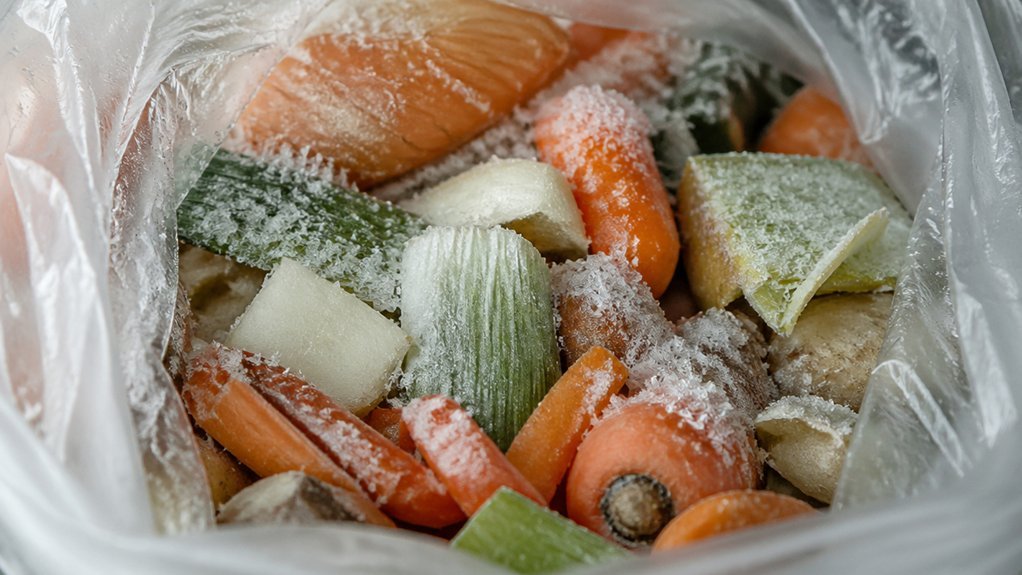
After securing a dry‑scrap zone, you’ll want to focus on the wet side—portioning and labeling bags so each batch stays separate, traceable, and ready to use. Aim for a consistent portion size, roughly half‑to‑one cup per wet bag; this keeps freezing even and thawing quick. Seal each bag tightly, then label it with the contents, any allergen notes, and a use‑by date—typically two to three months out. Store the bags flat in the freezer; flat storage maximizes space and lets you pull a single bag without disturbing the rest.
Portion, seal, label, and store wet bags flat for consistent, traceable, and quick‑thawing results.
- Uniform portion size – ½‑1 cup per bag for even freezing.
- Clear labeling – contents, allergen warnings, and use‑by date.
- Flat storage – lay bags flat to save space and speed thawing.
In addition, consider keeping a small, labeled archive of frozen batches to help track waste and optimize future portioning. Portion control helps maintain consistent freezing performance across batches.
Dry & Wet Scrap Freezing: Snap‑Freeze Herbs With a Dry‑Ice Bath
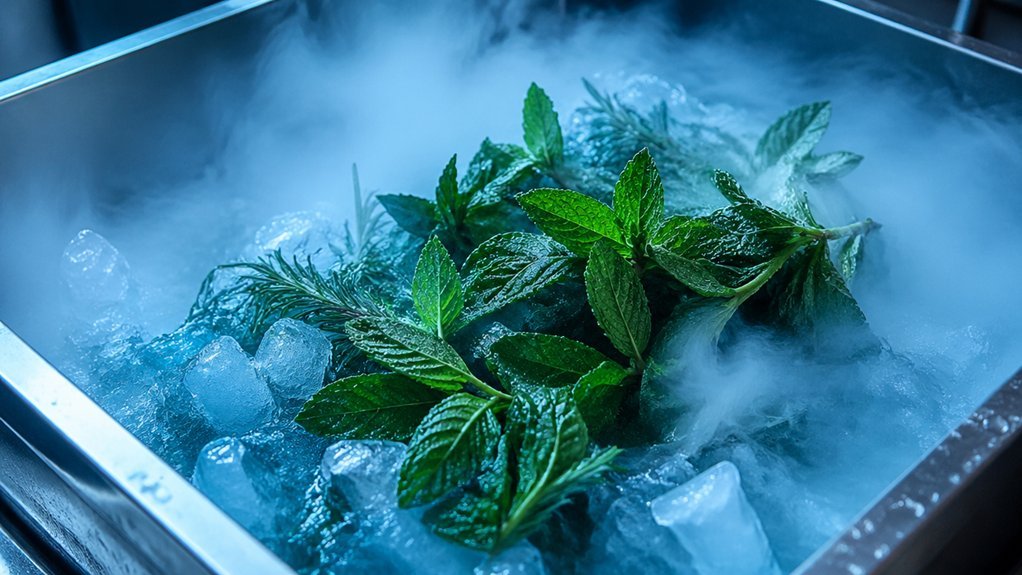
A dry‑ice bath snap freezes herbs in seconds, locking in aroma, color, and volatile oils while minimizing moisture loss. You’ll sub a bowl of crushed dry ice, then briefly submerge the herbs or spread them on ice pellets—never let the dry ice touch skin, so wear gloves. The solid CO2 drives surface temperature down instantly, preserving essential oils and vibrant hue. After the snap‑freeze, move the herbs straight into airtight containers or freezer‑grade bags to keep moisture out and prevent ice crystals. Store them upright if possible, and keep the containers sealed until you’re ready to use. Working in a well‑ventilated space avoids CO2 buildup, and the whole process takes just a few seconds per batch. Regular use of a compact bokashi kit can help with composting kitchen waste to support plant care, including herbs, when you’re ready to recycle leftovers odor-control and manage waste effectively.
Dry & Wet Scrap Freezing: Store Frozen Scraps in Airtight Containers
Once the herbs are snap‑frozen, the next step is to keep them locked in their fresh state by storing them in airtight containers. Choose freezer‑safe, BPA‑free jars or bags that snap into an airtight seal, then pat any wet scraps dry before they to keep excess moisture from forming ice crystals. Portion the scraps into single‑use sizes; this cuts thaw time and limits repeated air exposure. Finally, label each container with its content and date so you can track freshness and aim to use everything within 3‑6 months for optimal flavor.
Store snap‑frozen herbs airtight airtight, BPA‑free containers, portioned, labeled, and used within 3‑6 months.
- Use freezer‑safe, airtight containers with a tight seal.
- Store in portioned sizes for quick thawing.
- Add a clear label/date for inventory control.
Dry & Wet Scrap Freezing: Rotate and Label Your Stock for Maximum Efficiency
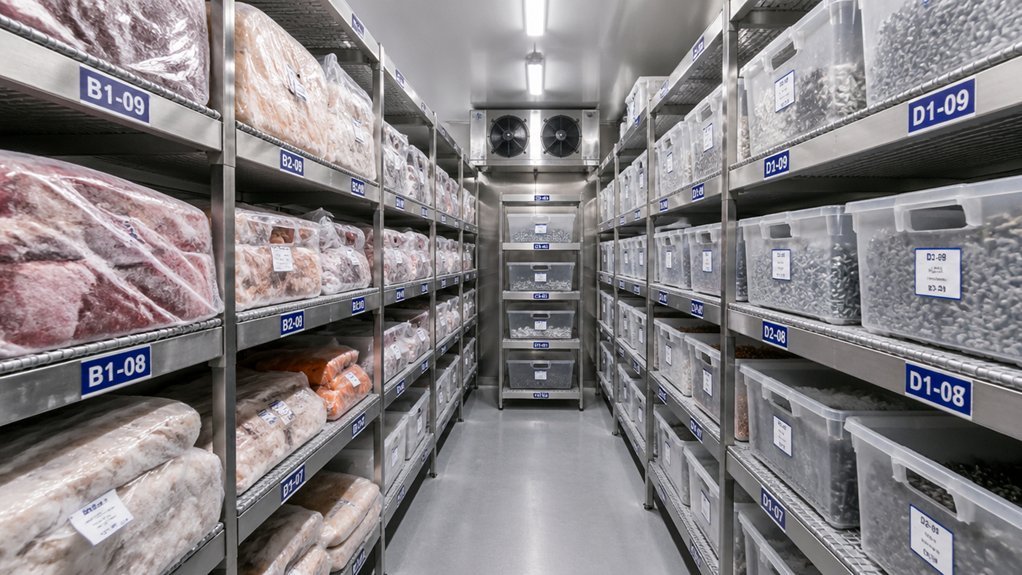
How do you keep your frozen herbs and spices at peak freshness? You rotate stock by pulling the oldest‑made items first, preventing freezer burn and keeping flavor consistent. Label each bag or container with the content, date, and whether it’s a dry or wet scrap; this streamlines retrieval and supports solid stock management. Set up clear storage zones—dry scraps on one shelf, wet on another—to improve freezer organization and avoid cross‑contamination. Follow a FIFO system so scraps move out within 3–6 months, preserving texture and aroma. Practice portion control by cutting scraps into uniform sizes; this speeds freezing, speeds thawing, and ensures you always have the right amount on hand. These steps maximize efficiency and keep your inventory ready for use. For composting worm food, verify the specific storage guidance for dry blends versus fresh scraps to maintain worm health and nutrient balance. Stock labeling supports clear identification of content type and compatibility with different worm species.
Frequently Asked Questions
What Is the Best Drying Method?
You should use a high‑spin cycle then hang the items in a well‑ventilated space at 15‑21 °C and 45‑55 % RH, rotating them for even drying and preventing mold.
How to Cure Buds Like a Pro?
You should transfer dried buds into airtight jars, add a humidity pack targeting 58‑62% RH, burp the jars daily for two weeks, then store them in a cool, dark place for optimum aroma and potency.
How Often Do Japanese Do Laundry?
You’ll find Japanese households typically wash clothes two to three times weekly, often using quick‑dry cycles and spin‑drying, then hanging items on indoor racks or balconies to finish drying promptly.
How Do Amish Dry Their Clothes in the Winter?
You’ll hang laundry on indoor racks or peg rails, near a wood‑burning stove or well‑ventilated shed, wring out excess water, and let the crisp air circulate to speed drying.
In Summary
By setting up a dedicated dry‑scrap zone, portioning and labeling wet bags, snap‑freezing herbs in a dry‑ice bath, storing everything in airtight containers, and rotating stock with clear labels, you’ll keep your scraps fresh, organized, and ready for use. This streamlined workflow cuts waste, speeds up retrieval, and ensures consistent quality across all your frozen ingredients.

Leave a Reply