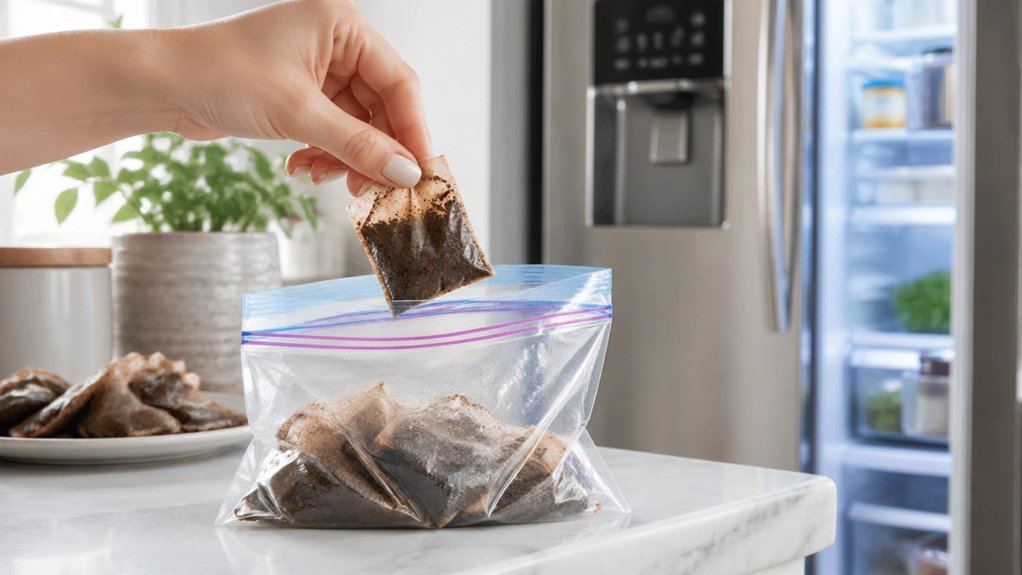
Squeeze each tea bag to get rid of excess liquid, pat it dry, and pull out any staples, plastic linings or glue. Slip the bags into an airtight, opaque container or freezer‑grade zip bag, squeeze out the air, and seal tightly to block odors. Portion the bags in ½‑cup groups, label with the date, and store them in a dark spot of the freezer. When you’re ready to compost, thaw a batch for 20‑30 minutes at room temperature, then drop the bags into your bin—continue for to discover how to preserve nutrients and avoid ice crystals.
Freeze Tea Bags for Compost: Quick Answer & Why It Works
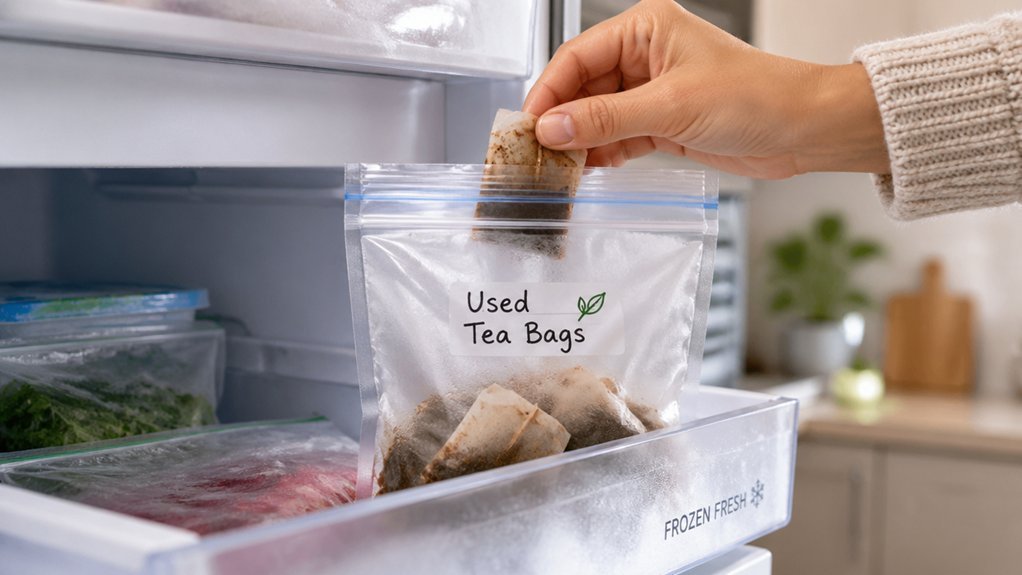
Freezing tea bags is a simple way to keep them fresh and moist until you’re ready to compost, and it works because the low temperature halts microbial activity without altering the bag’s material. You’ll notice that the tea leaves stay hydrated, and the paper or biodegradable sealant doesn’t degrade, so the bag remains compostable after thawing. Store the bags in airtight containers to prevent condensation and odor transfer, and label each batch with the date and material type. Avoid repeated thaw‑freeze cycles, because they can compromise the bag’s integrity and compostable quality. Remember, freezing isn’t a sterilization step; it merely pauses decomposition, letting you preserve the tea bags until you’re set to add them to your compost pile. Moisture control helps maintain stable conditions for fermentation when you eventually compost.
Prep Tea Bags Before Freezing: Squeeze, Dry & Remove Non‑Compostables
After you’ve stopped the tea bags from decomposing by freezing them, the next step is to prep them for storage. First, squeeze each tea bag firmly to expel excess liquid; this cuts moisture, prevents ice crystals, and protects the bag’s integrity. Then, pat the bag dry with a clean towel until no damp spots remain, minimizing condensation inside the freezer. Next, strip away any non‑compostable parts—remove staples, peel off plastic linings, and discard glue residues. If the bag is paper‑based, you can even tear it open to expose the leaves, which speeds up later composting. Finally, label each frozen batch with the date and tea type so you can track how long it’s been stored and ensure compatibility with your compost system. This method helps maintain the quality of your tea leaves while reducing freezer odors and buildup storing method.
Choose the Right Freezer Container for Freezing Tea Bags
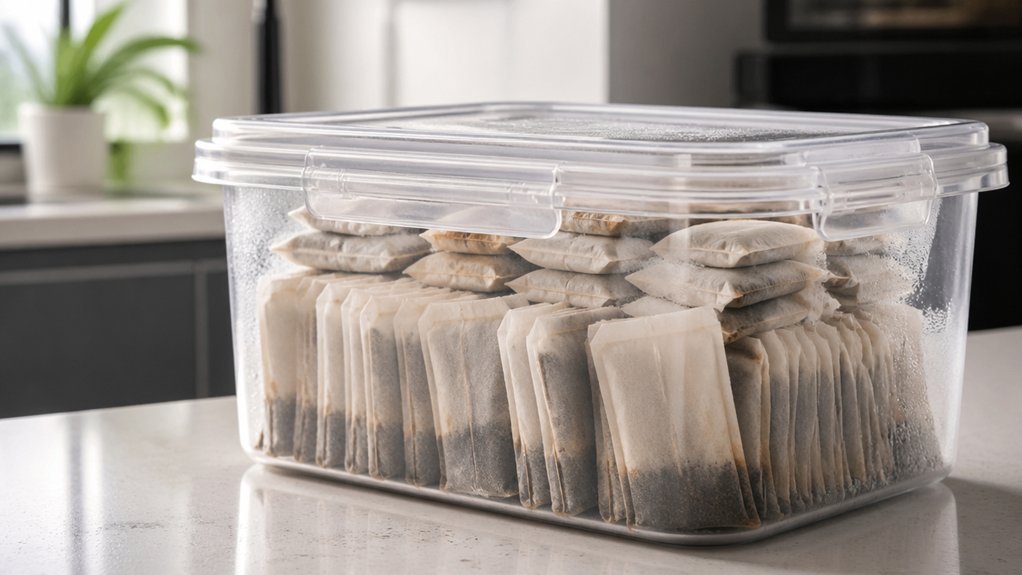
Choosing the right freezer container is essential for preserving tea‑bag flavor and preventing moisture problems. You’ll want airtight containers that block air and light, keeping tea fresh and free of freezer burn. Opt for opaque, watertight jars or heavy‑duty freezer bags, and squeeze out excess air before sealing. Label each portion clearly so you never thaw more than you need, and keep containers away from strong‑smelling foods. Store them in a dim, cool spot inside the freezer to avoid odor absorption and light‑induced flavor shifts. UV-stabilized materials and durable construction can help maintain quality over time.
| Container Type | Light Protection | Air‑Seal Quality |
|---|---|---|
| Opaque freezer bag | Yes | Excellent |
| Dark glass jar | Yes | Good |
| Plastic airtight container | No | Moderate |
Batch Tea Bags for Easy Thaw‑and‑Add During Composting
Ever wonder how to keep your tea bags ready for compost without wasting time thawing the whole stash? You can pre‑portion them into small, labeled batches so you only pull out what you need for each compost tea session. Store each batch in an airtight, dark container inside a stable freezer to preserve flavor and microbes. When it’s time to use them, let a batch sit 20–30 minutes at room temperature, then toss it straight into the compost pile. This routine cuts waste, keeps your freezer organized, and ensures every bag stays potent for the next compost tea brew.
- Divide the total stash into 5‑bag groups.
- Place each group in a zip‑top freezer bag, squeezing out air.
- Label with date and “compost tea” tag.
- Keep the bags in a dark, opaque drawer to avoid light exposure.
Thaw Frozen Tea Bags Without Losing Nutrients or Creating Mess
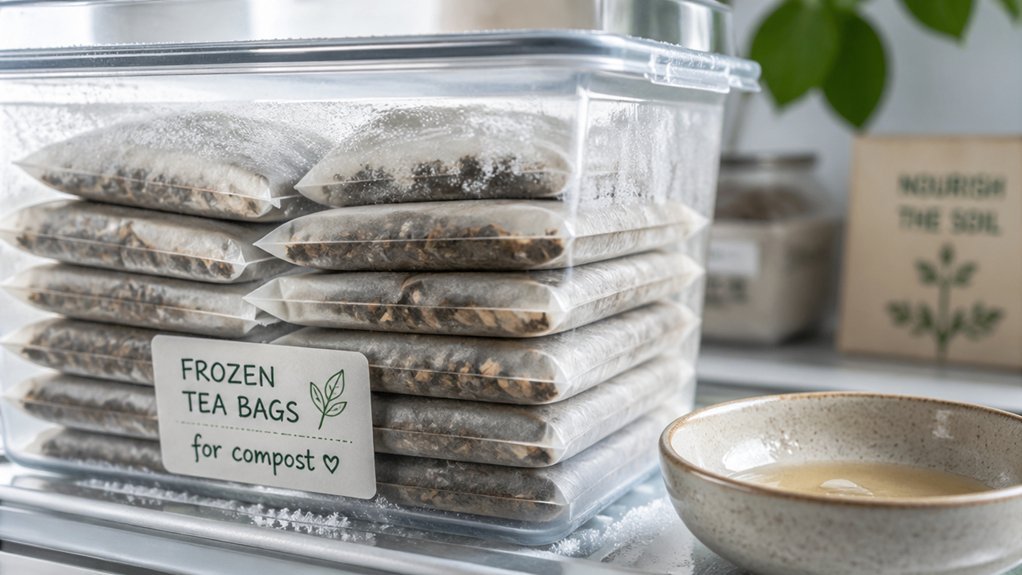
A quick, room‑temperature thaw of about 20 minutes lets you pull frozen tea bags straight from the freezer without sacrificing nutrients. This approach aligns with best practices for maintaining compost-friendly inputs in apartment setups, such as Bokashi-based or worm-based systems that emphasize controlled odor and minimal maintenance daily input management.
What Freezing Does to the Nutrient Value of Tea Bags?
After you’ve thawed the bags, you might wonder how the freezing step itself affects the nutrients that make tea such a great compost additive. Freezing locks in moisture, so the leaves stay juicy and ready to release nitrogen, phosphorus, and potassium when they break down. It also slows microbes, preserving the N‑P‑K balance. The caffeine content, which drops after brewing, stays largely unchanged in used leaves, but its contribution to compost is minimal. The biggest factor is the bag material—paper works, plastic or staples hinder decomposition. Store frozen portions in airtight, moisture‑proof containers to keep the nutrient profile intact. Weight-bearing considerations also matter when selecting storage options to prevent leaks and maintain integrity during freezing.
Troubleshooting Ice Crystals, Sticks & Odor Transfer
You’ll keep ice crystals at bay by sealing each bag in a watertight container and breaking bulk into smaller portions. Use freezer‑grade bags or airtight jars to block strong smells from seeping in, and store them away from pungent foods. Check the seals regularly to make sure the bags stay intact and don’t stick together. Stainless steel containers can provide durable, easy-to-clean storage that resists odor absorption in the freezer when used with proper seals stainless steel durability.
Crystal Formation Prevention
Most of the time, ice crystals appear when moisture migrates from the tea bag into the freezer air, causing freezer burn and a gritty texture that ruins brewing. To keep your bags crystal‑free, seal them tightly in a moisture‑proof container and keep the freezer temperature steady. Avoid opening the pack frequently; each exposure adds humidity that sparks new crystals. Store the bags in a dark, cool spot to curb oxidation that can weaken the leaf structure and invite texture changes. Use zip‑lock bags with a double‑seal to ensure a tight seal and protect against moisture exchange moisture control.
Odor Transfer Barriers
If you store tea bags near strong‑smelling foods or cleaners, odors can seep into the leaves, so you’ll need airtight, odor‑sealed containers to keep the freezer from becoming a cross‑contamination zone. Choose a rigid, watertight bin that snaps shut with a gasket; this blocks odor transfer and prevents ice crystals from breaching the bag. Before sealing, wrap each bag in absorbent paper or slip it into a secondary airtight pouch to mop up any condensation that could cause stickiness.
Avoid transparent containers, because light can trigger chemical shifts that amplify unwanted aromas. Label each batch with date and contents, then rotate stock so older bags leave first, minimizing the chance of odor‑related quality loss while you wait for compost readiness.
Bag Integrity Management
When ice crystals form inside frozen tea bags, they can burst the seams and trap moisture, leading to sticky, odor‑laden leaves. To keep your tea bags intact during freezer storage, you need to control moisture, limit odor exposure, and avoid repeated thaw cycles. Use airtight, watertight containers or freezer bags—never cardboard—to stop water ingress. Break large batches into smaller portions, label each, and keep them away from strong‑smelling foods. This approach minimizes ice crystal growth, prevents sticks, and preserves flavor until composting.
- Seal bags in zip‑top freezer bags, removing excess air.
- Store containers in an opaque, light‑tight section of the freezer.
- Divide bulk tea into ½‑cup portions to reduce thaw‑refreeze stress.
- Rotate stock by date, discarding anything older than six months.
Integrate Frozen Tea Bags Into Your Apartment Compost Routine
Ever wondered how to keep your tea‑bag waste fresh without stinking up the kitchen?
First, pull a container from the freezer, open it, and drop a handful of frozen tea bags into your kitchen bin. Since they’re already chilled, they won’t release odor while you wait for the weekly compost day.
When it’s time, take out one labeled batch, let it thaw completely on the counter, and separate any non‑compostable parts. Toss the fully thawed tea bags into your indoor compost bin, and if the bag material isn’t compostable, strip the leaves and discard the wrapper according to local rules.
Frequently Asked Questions
Why Do You Not Put Tea Bags in Compost?
You shouldn’t compost tea bags because many contain plastic, glue, or synthetic fibers that won’t break down, can pollute the compost, and may introduce harmful chemicals into your garden soil.
What Is the Lazy Compost Method?
You follow the lazy compost method by tossing kitchen scraps and browns into a hidden bin, keeping it moist, and letting microbes work slowly without precise ratios, frequent turns, or special equipment.
Can You Freeze Tea Bags to Make Them Last Longer?
Yes, you can freeze tea bags to extend their shelf life, but keep them dry, sealed in airtight bags, and avoid plastic‑lined or scented containers, because those can affect compostability later.
What Three Items Should Not Be Placed in a Compost Pile?
You should keep meat, dairy, and oily foods out of your compost, because they attract pests, cause odors, and slow decomposition. Also avoid treated wood, chemicals, and synthetic plastics, which can poison the pile.
In Summary
Now you’ve got a hassle‑free way to keep tea bags fresh until you’re ready to compost. Just squeeze, dry, and freeze them, then toss them straight into your bin when you’re set. The freezer locks in nutrients, prevents mold, and makes batching a breeze. No mess, no waste, and your compost gets a nutrient boost every time you thaw and add. Happy composting!

Leave a Reply