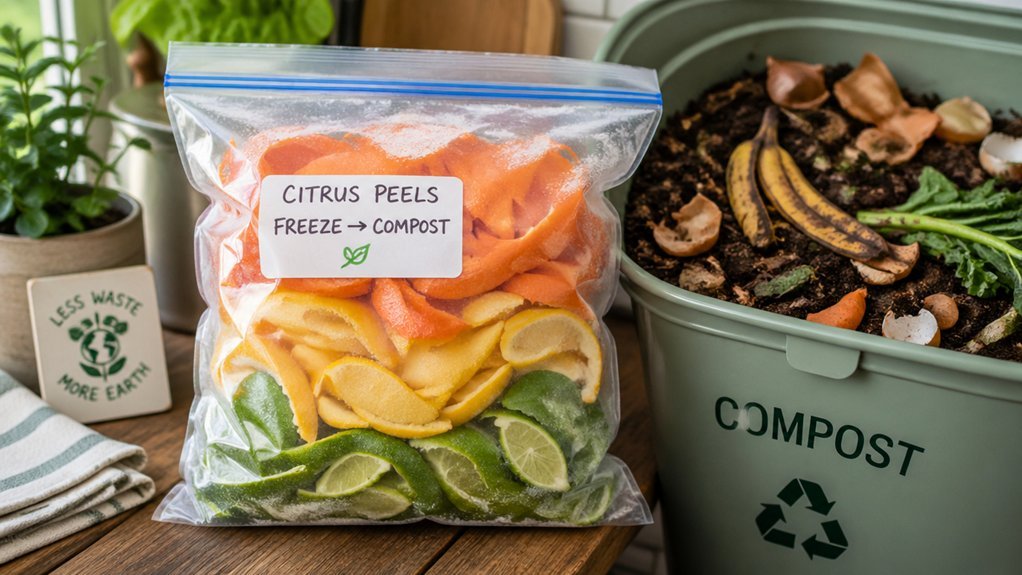
Trim the colorful zest with a vegetable peeler, leaving the white pith behind, then slice the ribbons into thin strips. Lay the strips in a single layer on a parchment‑lined tray, spacing them so they don’t touch, and freeze until solid. Pack the frozen zest into a tight‑fitting bag, press out the air, and label it. When you need it, thaw a few ribbons, crumble them, and toss the zest into your indoor compost, balancing it with plenty of carbon‑rich browns. Keep going for more tips on troubleshooting and quick recipes.
Trim Pith and Slice Citrus Peels for Quick Freezing
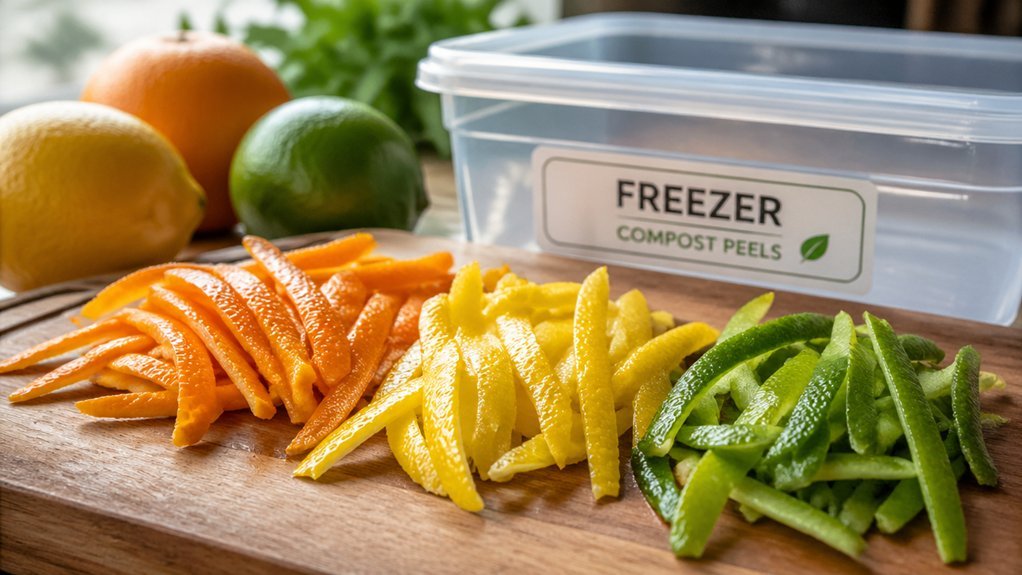
Ever wondered how to keep citrus zest fresh and fragrant for later use? Grab your favorite vegetable peeler and run it over the fruit, aiming to lift only the colorful outer layer while leaving the bitter white pith behind. After you’ve harvested the peels, set aside a separate step to trim off any remaining pith—this extra effort protects flavor during freezing. Then slice the peeled strips lengthwise into thin ribbons, perfect for flash‑freezing. For best results, slice the zest thinly first, then later you can cut across the frozen ribbons to mince as needed. Pack the sliced peels into a half‑pint container, keeping them organized and preventing them from sticking together in the freezer. The frozen peels lock in citrus oils, so you can toss them straight into drinks or recipes without thawing first. When storing, consider labeling with the date to track freshness and ensure you rotate your citrus peels for best flavor retention. Citrus Flavors help brighten winter recipes and beverages.
Spread Peel Pieces on a Tray to Freeze Without Clumping
How can you keep citrus strips separate so they don’t stick together later? Lay the sliced citrus peels in a single, non‑overlapping layer on a flat tray. Use a parchment or silicone mat to stop sticking and to make cleanup easy. Space each piece just enough that they won’t touch; this maximizes surface exposure and speeds freezing. Put the tray in the freezer uncovered, letting the peels solidify for several hours. When they’re firm, you’ll see distinct pieces that won’t clump. Transfer the frozen strips to a container only after they’re completely solid, keeping them separate for later use. This method preserves aroma and ensures quick, hassle‑free retrieval when you need zest. Citrus packaging helps indicate how to store peels properly for later use.
Pack Frozen Citrus Zest in Airtight Bags and Remove Air
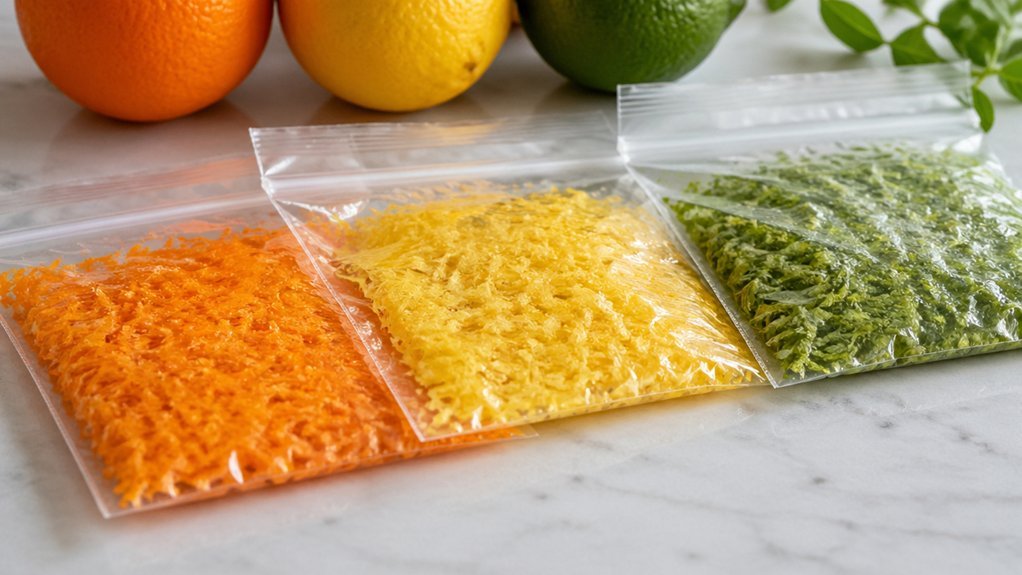
You’ll want to seal the zest in a tight‑fitting bag to keep it fresh. Press the bag flat or use a vacuum sealer to squeeze out as much air as possible, preventing freezer burn.
Label the bag with the citrus type and date, then store it away from strong odors.
Seal‑Tight Bag Storage
Wondering how to keep your citrus zest fresh and aromatic? Use a freezer bag for each batch, spreading the zest flat in a single layer. Press the bag gently to squeeze out excess air, then seal it tightly—this blocks freezer burn and locks in essential oils. Label each bag with the citrus type and the freezing date so you can track freshness and avoid flavor cross‑contamination. Store the bags upright or neatly stacked in the freezer; this minimizes peeking and keeps the temperature uniform. When you need zest, pull out a thin, lengthwise swath and mince it directly, leaving the rest frozen. This method preserves aroma, flavor, and texture for months.
Air Removal Techniques
After sealing the zest in a freezer bag, the next step is to eliminate as much air as possible. Start by wrapping the zest in a single layer of plastic wrap; this creates a secondary barrier that cuts down on freezer burn. Place the wrapped zest into a half‑pint container or a small airtight bag, then press the bag flat to force out trapped pockets. Squeeze the bag firmly, pushing the air toward the opening, and seal it while still applying pressure. For containers, tap the side gently to release bubbles before snapping the lid shut. Label each package with the date and citrus type, and store the flat, layered bags in the freezer. This air removal method keeps oxidation low, preserving aroma and oils for three to six months. Activated charcoal can be useful in odor control if you’re composting citrus, helping to minimize odors around the storage area.
Thaw Frozen Citrus Zest and Add It to Your Indoor Compost Bin
Ever wondered how a pinch of thawed citrus zest can jump‑start your indoor compost? You’ll notice the bright aroma and oily splash that wakes up microbes. First, place the frozen zest in a sealed container or on a plate; let it melt gently so no extra moisture drips into the bin. When it’s softened, crumble or chop it just enough to expose more surface area. Waste Sorting Accuracy This helps ensure the zest is treated as a permitted compost input and integrated smoothly with browns like shredded paper and dry leaves to maintain the balance. Sprinkle a small tablespoon—maybe a few teaspoons—into each batch, avoiding an overload of acidity. Mix the zest with carbon‑rich browns like shredded paper, dry leaves, or even bits of orange peels to keep the C:N ratio balanced. This quick step fuels microbial activity and speeds decomposition without upsetting your compost chemistry.
Balance Frozen Citrus Peels With Other Compost Scraps
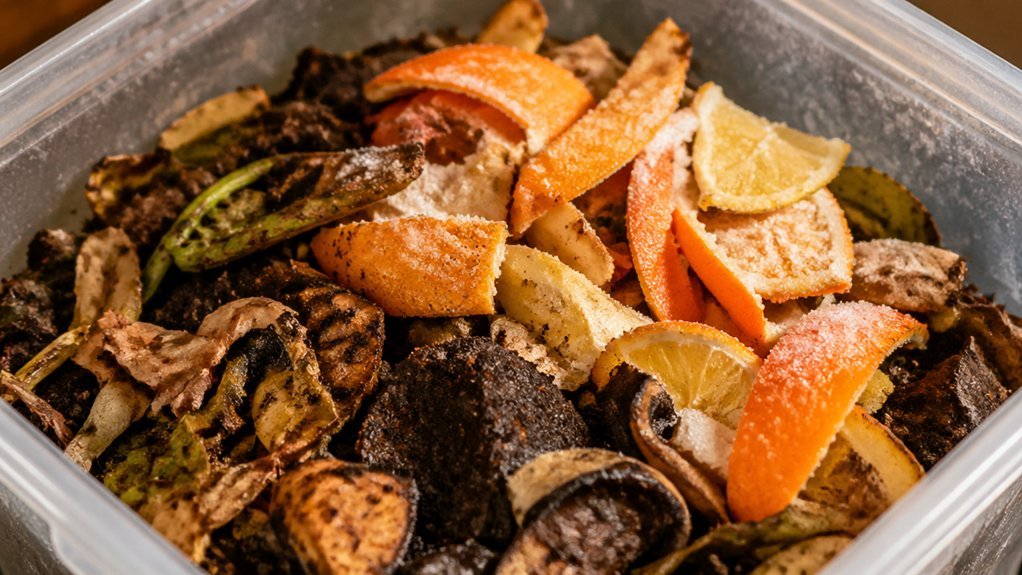
A handful of frozen citrus peels can boost your indoor compost, but they need to be balanced with high‑carbon scraps. Start by chopping the peels into minc‑sized pieces before you toss them in; this prevents clumps and helps them mix with dry leaves, shredded paper, or straw. For every cup of frozen peels, add two to three cups of carbon-rich material to neutralize the acidic oils and keep microbes happy. Sprinkle the peels throughout the pile rather than dumping a single blob, then turn the bin to distribute moisture evenly. If the mix feels dry, thaw a few peels, crumble them to release oils, and blend them back in before refreezing any leftovers. This rhythm of high‑carbon and citrus maintains a lively, balanced compost. High‑carbon balance
Troubleshoot Freezer Burn, Odor, and Slow Breakdown of Frozen Citrus Peels
Balancing citrus peels with carbon‑rich scraps keeps your indoor compost healthy, but the peels can still suffer from freezer burn, odor, or sluggish breakdown. Freeze thin slices in a half‑pint container, then chop them into mince before adding to the bin. If you notice freezer burn or a sour smell, transfer the peels to an airtight bag, label them, and discard any that are dehydrated or off‑smelling. Speed breakdown by grating the peels finely and mixing them with balanced browns and greens.
| Issue | Quick Fix |
|---|---|
| Freezer burn | Wrap tightly, use small container |
| Odor | Re‑wrap, label, discard bad pieces |
| Slow breakdown | Mince/grate, blend with carbon‑rich material |
| Air exposure | Vacuum‑seal or use zip‑lock bag |
| Dehydration | Keep container sealed, limit freezer time |
Quick Recipes Using Thawed Citrus Zest While Composting
Thawed citrus zest lets you boost flavors in minutes, so you can sprinkle it into cakes, muffins, or quick‑pickled veggies without waiting for fresh peel. You’ll notice the bright oil release instantly, letting you fold a teaspoon of lemon zest into butter‑sugar creaming or stir it into a vinaigrette for a zingy finish. Keep the thawed zest in an airtight container and use it within a couple of days for peak aroma. It’s perfect for compost‑friendly cooking that reduces waste while delivering punchy citrus notes.
- A lemon‑zest‑infused buttercream for a vanilla cake, swirled in seconds.
- Muffin batter lifted with a pinch of thawed zest, creating airy, fragrant crumbs.
- Quick‑pickled carrots tossed with zest, vinegar, and sugar for a bright side.
- Simple salad dressing blended with zest, olive oil, and lemon juice for a fresh burst.
Frequently Asked Questions
How to Freeze Citrus Peels?
You slice the zest thin, wrap it tightly in plastic, then place it in a zip‑top bag. Store the bag in a half‑pint container in the freezer, sealing out air to keep the oils fresh.
Why Shouldn’t You Put Citrus Peels in Compost?
You shouldn’t put citrus peels in compost because their oils and acidity can inhibit microbes, slow decomposition, upset the carbon‑nitrogen balance, and lower worm activity, leading to a sluggish, smelly pile.
Is Lemon Peel Good for Diabetes?
You can include lemon peel in a diabetic diet, but keep portions small; its fiber and polyphenols may modestly slow glucose spikes, yet added sugars or large amounts could negate any benefit.
What Is the Frozen Lemon Trick?
You freeze citrus peels by slicing or zesting them thin, packing the pieces tightly in a container, and storing them in the freezer. Then you can drop the frozen zest straight into drinks or recipes for instant flavor.
In Summary
Now you’ve got a simple, low‑effort way to keep citrus peels from turning your compost bin into a soggy mess. Freezing them preserves the zest, cuts down odor, and lets you toss them in whenever you’re ready. Just remember to balance them with browns and greens, and you’ll enjoy faster breakdown and a fresher‑smelling indoor compost. Happy composting!



Leave a Reply