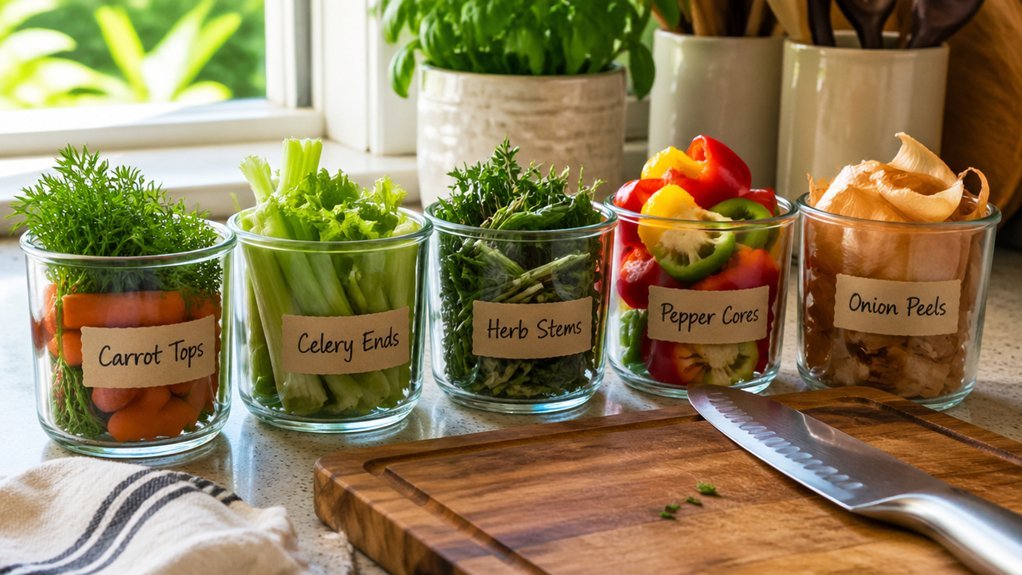
Separate meat and veggie scraps into different freezer bags, rinse the veggies, then pat‑dry everything to cut ice crystals. Slip the dried pieces into zip‑top bags, squeeze out the air, and label each bag with the freeze date. Lay the bags flat so they thaw quickly, and keep them in a dedicated freezer zone. Rotate the oldest bags first and track shelf life on a simple note pad. Keep going and you’ll discover even more tips.
Separate Meat and Vegetable Scraps Before Freezing
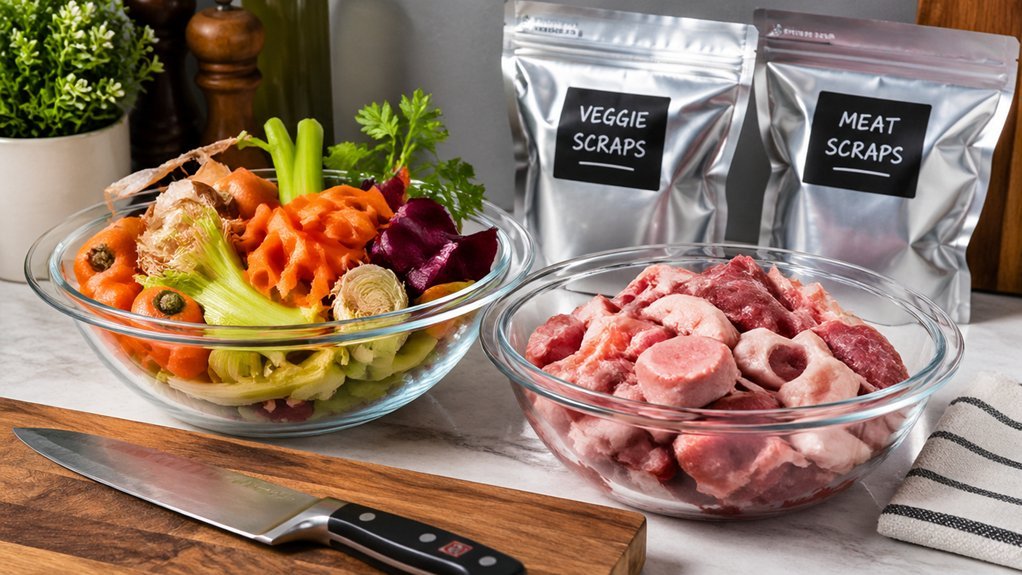
Ever wonder why your homemade stock sometimes tastes off? You can fix that by separating meat scraps from vegetable scraps before they hit the freezer. Toss meat scraps into a dedicated freezer bag, squeeze out excess air, and label it with the start date so you know when to use it—usually a full bag every 2–4 weeks.
Do the same with vegetable scraps, but rinse them first to strip dirt and preserve cleaner flavors. Keeping the two bags distinct prevents cross‑contamination and lets each component shine in the final stock.
Use freezer‑safe containers if you prefer, and always label each batch. This simple split gives you consistent, flavorful broth every time.
Trim, Rinse, and Pat‑Dry Scraps for Freezing
After you’ve sorted meat and vegetable scraps into separate bags, give each piece a quick rinse to wash away cooking residue and any lingering grit. A gentle rinse removes excess fat and bits that could cloud your stock. Then, pat‑dry the scraps with a clean towel to eliminate surface moisture that would otherwise turn into ice crystals. The drier the scraps, the less chance of freezer burn, and the better they’ll store in freezer bags. Slip the dried pieces into zip‑top freezer bags, squeeze out air, and seal tightly. Finally, label each bag with the date you froze it so you can track storage time and avoid using spoiled scraps later. Thorough initial prep supports more efficient freezing and aligns with practical kitchen waste management practices freezing efficiency.
Flat‑Pack Scraps in Labeled Bags for Quick Thawing
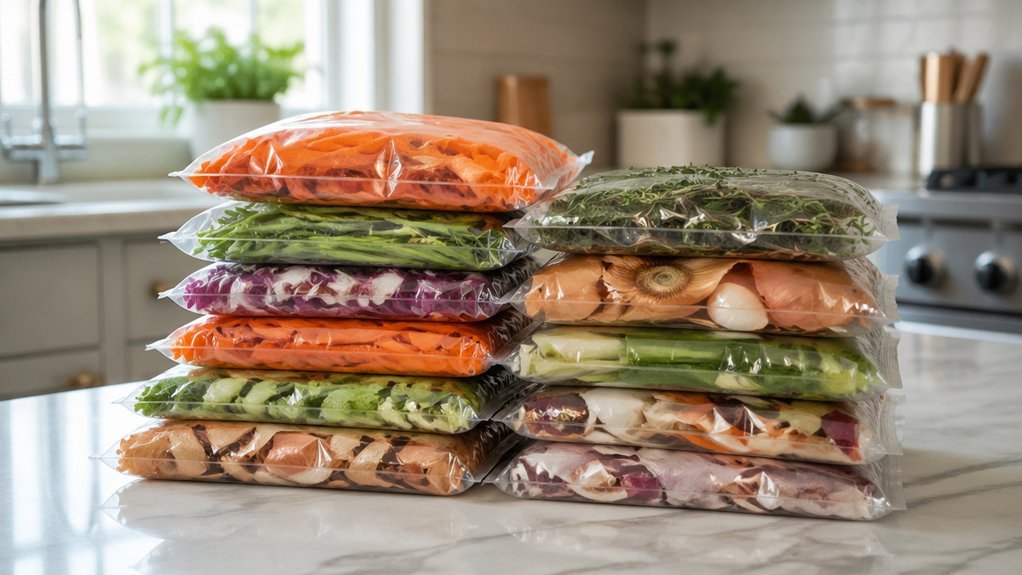
How can you make thawing scraps as fast as possible? Use freezer‑safe bags, rinse the veggie scraps, then spread them flat in a single layer. Label each bag with the start date so you know when it’s ready for a stock day. When you need dump‑and‑go stock, just toss the flat‑pack scraps straight into the pot—no thawing required. Sustainable material source Coconut coir is presented as a renewable byproduct derived from transforming coconut husks into premium worm bedding.
Designate a Freezer Zone for Scraps and Rotate Regularly
Flat-pack bags make thawing a non‑issue, but keeping them organized is where the real time‑saver lies. You’ll want a dedicated freezer zone for scraps, so you can spot the next batch at a glance and avoid freezer burn. Label each bag with the date you froze it, then practice rotation by using the oldest scraps first. Keeping a consistent routine ensures you have ready‑to‑go material for stock day. Use a simple inventory note pad or app to track batch contents for easier retrieval rotation system and improve long‑term efficiency.
Store and Track Shelf Life of Frozen Scraps
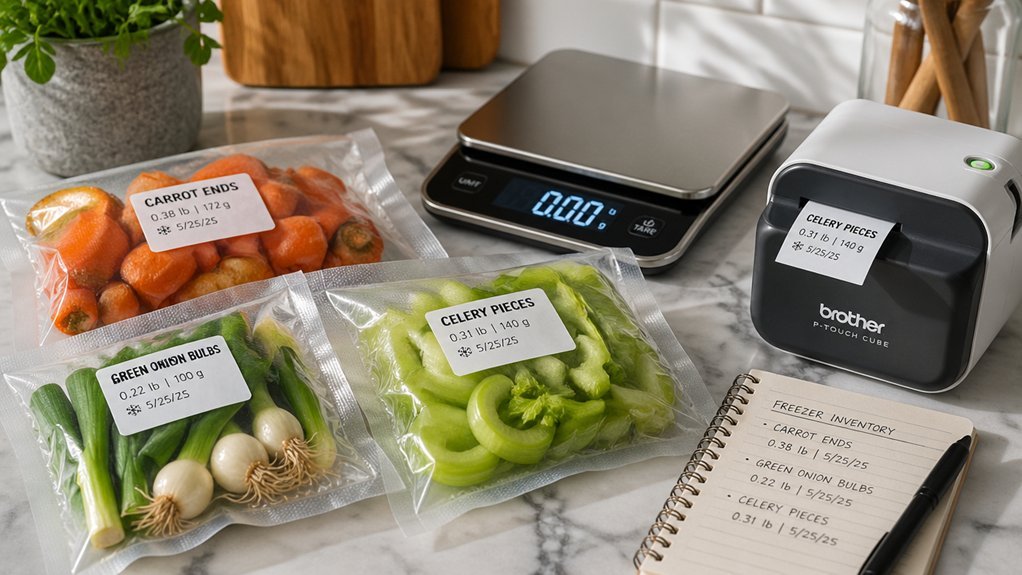
Wondering how to keep your frozen scraps fresh and ready for stock? Use a gallon freezer bag, rinse veggies before packing, and squeeze out air to avoid burn. Label each bag with the date you freeze it, then track the shelf life in a simple table. Rotate a full bag every 2–4 weeks for consistent stock‑making, and discard past prime scraps before they spoil.
Avoid thawing before cooking; add the frozen scraps straight to the pot. If a bag looks discolored or smells off, discard it. This system keeps your scraps organized, your stock flavorful, and waste to. Storage duration
Frequently Asked Questions
What Fresh Vegetables Can You Freeze Without Blanching?
You can freeze peppers, onions, mushrooms, celery, carrots, leeks, kale, and chard without blanching; just rinse, pat dry, and store them in airtight bags, squeezing out the air before labeling.
How to Freeze Vegetable Scraps?
You’ll rinse, pat dry, then toss scraps into zip‑top bags, squeezing out air. Label each bag with the date, store flat in the freezer, and add them straight to soups or stocks.
Which Vegetables Are Not Good for Freezing?
You should skip freezing cruciferous vegetables like broccoli, cauliflower, cabbage, Brussels sprouts, beet scraps, starchy potato or sweet‑potato peels, and citrus zest, because they turn bitter, pink, gluey, or overpowering in stock.
What Are Common Mistakes When Freezing Meals?
You’ll over‑pack, forget to label dates, let air sit in bags, thaw before cooking, and store spoiled or bitter scraps—each mistake causes freezer burn, waste, and off‑flavors in your meals.
In Summary
By following these steps, you’ll keep your scraps organized, fresh, and ready to use. Separate meat from veggies, trim and dry them, then flat‑pack in labeled bags. Designate a freezer zone and rotate stock regularly, and always track shelf life. This simple system saves time, reduces waste, and guarantees you always have handy ingredients on hand for your next meal.



Leave a Reply