
You need microbes because they’re the engines that turn kitchen scraps into fertile humus. Mesophilic bacteria start breaking down greens at room temperature, then thermophilic microbes heat the pile to 130‑140 °F, sanitizing it and speeding up decomposition. Fungi and actinomycetes handle tougher fibers, keeping the process going as the pile cools. Without this balanced microbial crew, your compost stays smelly, sluggish, and nutrient‑poor—keep reading to discover how to nurture them.
Start Composting in Your Apartment: The Microbial Edge
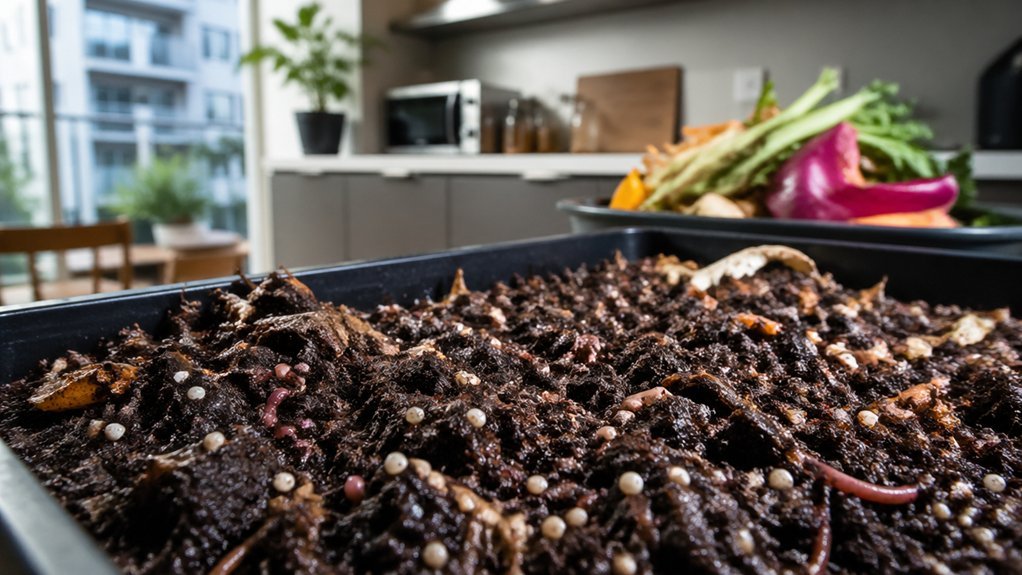
Ever wondered how a tiny apartment kitchen can become a thriving compost hub? You start by choosing a sealed bin or bokashi kit, which locks in odors while letting composting microbes work. First, you add a mix of kitchen scraps and a balanced C:N ratio (25:1–30:1) to feed mesophilic bacteria, which kick off aerobic decomposition at room temperature. As the pile warms, thermophilic bacteria join, accelerating breakdown and raising the temperature to 130–140 °F. Keep moisture at a wrung‑out sponge feel and turn the bin weekly to maintain aeration and prevent anaerobic pockets. This simple routine creates a vibrant microbial community, turning everyday waste into rich soil right in your apartment odor control.
Control Temperature & Moisture for Peak Microbial Activity
How do you keep your compost humming at its fastest? Master aerobic composting by balancing temperature control and moisture management. Aim for a compost pile temperature of 130‑140 °F; that’s where thermophilic bacteria thrive, generating heat and accelerating breakdown. Keep the mix like a wrung‑out sponge—moisture balance is critical; too dry stalls microbial activity, too wet invites odor‑producing anaerobes. Turn the pile regularly for aeration, especially in summer, to maintain oxygen flow and steady heat. Follow a green‑brown ratio of roughly 1 part greens to 2‑4 parts browns; this supports airflow and prevents temperature dips. Airtight Storage can help you organize your composting tools and dry ingredients for smarter prep and storage while you work outdoors.
Boost Your Bin’s Microbial Community With These Simple Hacks
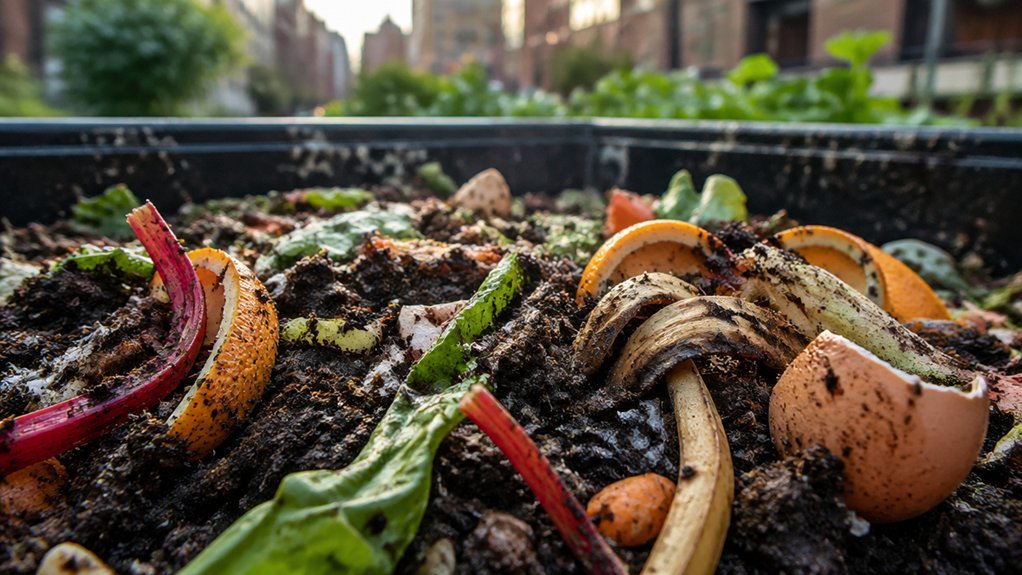
Diversity is the engine that powers a thriving compost bin, and a few simple tweaks can supercharge the microbial crew. Keep mesophilic microbes happy early on by adding fresh greens and a splash of water until the pile feels like a wrung‑out sponge. Then, as the temperature climbs, feed thermophilic bacteria with a balanced carbon‑to‑nitrogen ratio (25:1‑30:1) and turn the heap to maintain aerobic conditions and aeration. Actinomycetes and fungi will later break down tough fibers, boosting the compost microbiome and raising the decomposition temperature to 130‑140 °F. A quick, at‑a‑glance reference like the 69‑inch Organic Waste chart can help ensure you’re sorting inputs correctly as you adjust the microbial mix organic waste chart.
- Add a thin layer of shredded newspaper for carbon.
- Sprinkle a handful of garden soil for inoculation.
- Mist with water after each turn.
- Rotate the bin weekly in summer, every 3‑4 weeks in winter.
Avoid These Microbe‑Killing Pitfalls in Your Urban Compost
Why do your compost microbes die off? You’re probably over‑watering or letting the pile dry out, which chokes aerobic conditions and stalls thermophilic bacteria. Keep moisture like a wrung‑out sponge—damp but not soggy—and turn the compost pile regularly for proper aeration.
Balance browns and greens; too many browns or too few greens slows microbial activity, creates foul odors, and invites pests. Watch for contaminants—plastics, metals, and even biodegradable plastics—that poison the community and ruin odor control.
Avoid overheating by not stacking too much material at once; extreme heat kills sensitive microbes and reduces diversity. By managing moisture, aeration, and feedstock ratios, you sustain a thriving, odor‑free compost that supports robust microbial activity. Odor/Filter/Performance Emphasis Across Models
What Bacteria, Fungi, and Actinomycetes Do to Your Apartment Compost Scraps
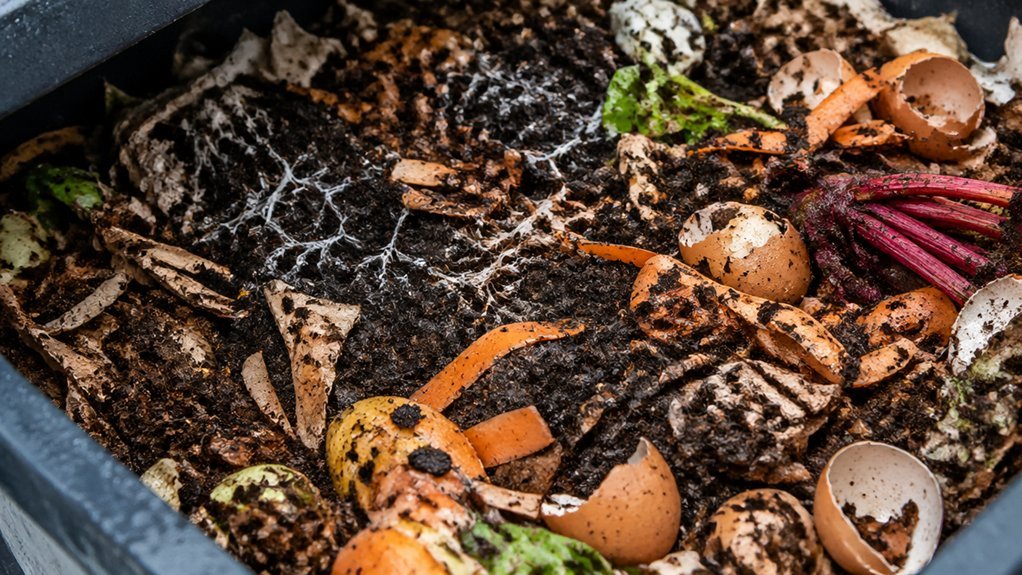
Keeping your compost moist and well‑aerated sets the stage for the microbial cast that actually does the heavy lifting. Bacteria, fungi, and actinomycetes each play distinct roles in turning apartment scraps into dark, crumbly soil.
1. Mesophiles – these bacteria kick off decomposition at room temperature, breaking down sugars and proteins while warming the pile.
22. Thermophiles – once temperatures rise, thermophilic bacteria dominate, speeding up breakdown and sanitizing the mix.
3. Fungi – molds and yeasts tackle tough cellulose and lignin, creating pathways for bacteria to keep working.
4. Actinomycetes – filamentous microbes shred stubborn fibers during the cooling phase, ensuring complete composting.
Together they sustain microbial activity, keep urban composting efficient, and transform your kitchen waste into nutrient‑rich amendment.
Apply Your Compost for Maximum Urban Garden Gains
Apply your fresh compost to garden beds when it’s cool and moist, then water it in gently to let the microbial community continue breaking down organic matter in the soil. You’ll want to mix compost with existing soil at a 1:4 ratio, ensuring aeration so oxygen reaches the thermophilic bacteria that thrive during curing. Keep the C:N ratio balanced—about 25:1—by adding the right mix of greens and browns before you spread the amendment. Proper moisture management, like a wrung‑out sponge, prevents drying out and encourages microbes to stay active.
After a few months of curing, the finished compost becomes a stable soil amendment, boosting nutrient availability, improving structure, and delivering the full benefits of compost for your urban garden. Spring-loaded
Frequently Asked Questions
Why Are Microorganisms Important in Composting?
You need microorganisms because they break down organic matter, generate heat, and recycle nutrients; without them, the pile stalls, smells, and never turns into usable compost.
Can I Put Toilet Rolls in Compost?
Yes, you can add toilet paper rolls to compost if they’re plain, unsoiled, and shredded. Mix them with greens and moisture, avoid inked or contaminated rolls, and keep the pile aerated for faster breakdown.
What Is the Best Bacteria for Composting?
You’ll get the fastest breakdown with Bacillus subtilis and Bacillus megaterium; they dominate the thermophilic phase, crush organic matter, and thrive at high temperatures, speeding up urban compost.
How Do Microorganisms Make Compost?
You break down organic matter by releasing enzymes that dissolve sugars, proteins, and fibers, turning them into simpler compounds, generating heat, and creating a nutrient‑rich, stable humus you can use.
In Summary
By now you’ve seen how microbes are the real power behind a thriving urban compost. Keep the temperature right, maintain moisture, and feed the bacteria, fungi, and actinomycetes with diverse scraps. Avoid chemicals and over‑drying, and your bin will stay alive and efficient. When you finally spread that nutrient‑rich humus in your balcony garden, you’ll reap healthier plants, less waste, and a greener city—thanks to the microscopic heroes you’ve nurtured.