
You’ll see a mini tumbler finish in 2‑6 weeks because rapid aeration injects oxygen, sparking thermophilic microbes that generate heat. A balanced 40‑50 % green to 50‑60 % brown mix with shredded material creates the right carbon‑nitrogen ratio and porosity, while moisture held at a wrung‑out sponge level keeps microbes active. Regular turning spreads oxygen and heat evenly, and insulating the drum retains that temperature, preventing stalls. Keep these steps steady and you’ll discover even faster tricks.
How Mini Tumblers Generate Heat (and Why It Takes 2‑6 Weeks)
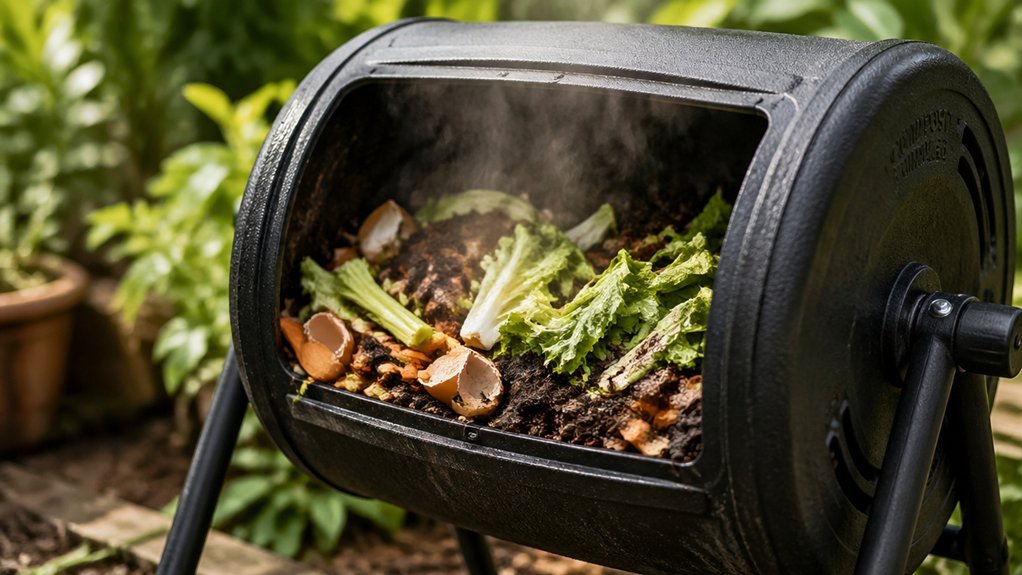
How do mini tumblers get hot enough to compost in just a few weeks? You load a mini tumbler with a balanced mix, then tumble it often. Rapid aeration injects oxygen, spurring microbial metabolism. Thermophilic bacteria thrive, releasing heat as they break down greens and soft organics. The heat‑up period spans days to two weeks, depending on moisture balance and carbon‑nitrogen ratio. Proper moisture keeps microbes active without drowning them, while the right C‑N ratio fuels vigorous digestion. The closed, insulated drum retains that heat, preventing loss and keeping temperatures high enough for pathogen kill and seed destruction. Uniform particle size and frequent mixing spread heat evenly, ensuring the entire batch reaches the thermophilic stage within the 2–6‑week window. Filtration and maintenance considerations, including regular filter checks and prompt replacement when odors or clogs appear, help maintain optimal airflow and temperature stability.
What Green‑to‑Brown Mix Gives the Fastest Compost?
The heat you generate in a mini tumbler hinges on the right green‑to‑brown ratio, and the fastest compost comes from a mix that’s roughly 40‑50 % nitrogen‑rich greens and 50‑60 % carbon-rich browns. Including properly shredded greens helps them blend with the carbon material, keeping moisture at a wrung‑out sponge level. Bulky browns like shredded cardboard, straw, or wood chips create pockets for aeration and prevent compaction, which fuels rapid heating. Layering different particle sizes further boosts airflow and microbial activity, keeping the process aerobic and swift. Shred greens to fine pieces for even moisture distribution, add bulky browns to improve aeration and structural stability, and mix varied particle sizes to enhance airflow and speed decomposition. For best results, align your setup with a balanced system that emphasizes ventilation and regular turning. Aeration can significantly impact how quickly your pile heats and breaks down.
Turning Frequency for Mini‑Tumbler Composting
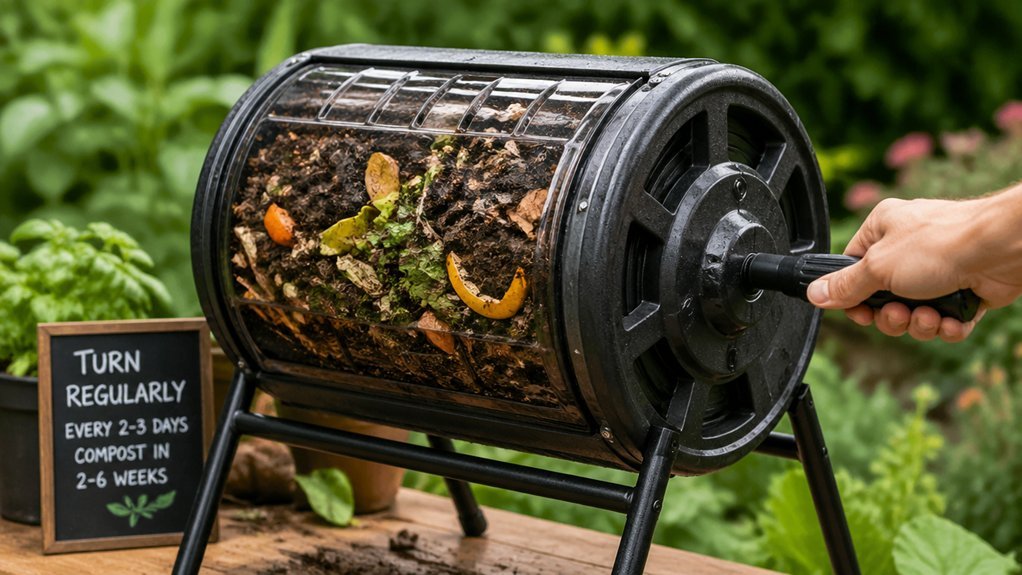
Why turn your mini‑tumbler more often? You’ll boost aeration, mix feedstock, and keep heat alive, so composting speed spikes.
A twice‑weekly turning frequency—often called biweekly turning—delivers the same benefit as weekly turning in a larger drum, but in a compact mini‑tumbler you need that extra push. Each turn pulls oxygen in, breaks up clumps, and spreads heat, preventing cold spots that slow breakdown. In addition, using coir-based moisture management concepts from sustainable bedding practices helps maintain consistent moisture and aeration within smaller systems, supporting faster decomposition sustainable sourcing. Pair the schedule with a balanced feedstock; too much nitrogen or carbon will waste the heat you’ve retained. While some critics note limited heat retention in tiny tumblers, a consistent turning routine generally yields usable compost in about two weeks, assuming proper material balance and ambient conditions.
Moisture Management: Keep the Pile Like a Wring‑Out Sponge
You’ll want the compost to feel like a wrung‑out sponge, roughly 40‑60% moisture, so check it by squeezing a handful of material.
If it’s soggy, toss in dry browns like shredded cardboard to restore aeration and stop foul smells.
If it feels dry, spray a little water or add fresh greens until the sponge‑like texture returns, then monitor every few days. aeration benefits
Moisture Balance Tips
Ever wonder how to keep your mini tumbler’s compost as moist as a wrung‑out sponge without turning it into a soggy mess? Aim for a moisture level that feels like a well‑squeezed sponge: damp but not dripping. When the pile feels too wet, sprinkle in carbon‑rich browns—dry leaves, straw, shredded cardboard—to boost porosity and soak excess water. Coarse browns/tools improve drainage while regular turning supplies aeration, spreading moisture evenly and preventing pockets of stagnation. Keep an eye on the bottom for puddling; adjust with more browns or a quick turn to restore balance. Porosity
Sponge‑Like Consistency Check
How do you tell if your mini tumbler’s moisture is just right? You squeeze a handful of compost; it should feel sponge‑like, dripping only a few drops. If it’s soggy, add brown materials to soak excess water and boost aeration. If it’s dry, mist lightly or toss in green materials to fire up microbial activity. Regular moisture checks keep the pile airy and prevent compaction, ensuring steady aerobic decomposition. Moisture balance is a key driver of consistent heat and breakdown in compact tumbler systems.
| Condition | Action | Result |
|---|---|---|
| Too wet | Add brown materials, mix well | Restores aeration, reduces pooling |
| Too dry | Mist water, add green materials | Increases microbial activity |
| Ideal | Squeeze like a wrung‑out sponge | Balanced moisture, optimal heat |
| Ongoing | Perform weekly moisture check | Consistent composting performance |
Cold Weather? Insulating Your Mini‑Tumbler for Speed
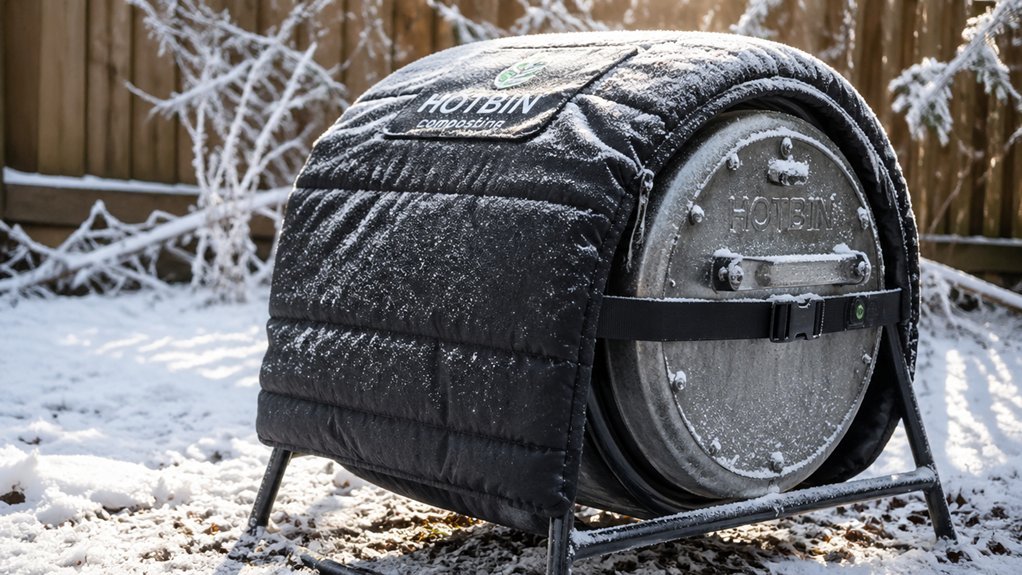
Why does composting slow down in winter? Cold weather drops the temperature inside your mini tumbler, slowing microbial metabolism and extending turnover time. Insulation becomes your secret weapon: a foam sleeve, reflective blanket, or insulated drum traps the heat microbes generate, keeping the mix near thermophilic temperatures. Pair that with a snug lid to preserve moisture balance, and you maintain a lively greens‑to‑browns ratio that mimics a well‑run sponge. The result is faster decomposition and better weed‑seed kill. Use a fitted foam or reflective wrap for maximum heat retention. Heat retention benefits Seal the lid tightly to prevent moisture loss and temperature swings. Adjust greens‑to‑browns and add water sparingly to keep the pile damp but not soggy.
Common Mini‑Tumbler Mistakes & Quick Fixes
You might notice the compost’s smell or texture changing when the moisture’s off, the airflow’s blocked, or you’re not turning often enough. Fix the moisture by aiming for a wrung‑out‑sponge feel and add dry carbon like shredded cardboard to boost aeration. Then, keep the drum rotating regularly to maintain oxygen flow and heat buildup.
Moisture Balance
A balanced moisture level—think of a wrung‑out sponge—is essential for a mini tumbler to compost efficiently. You want about 40–60 % moisture by weight; the mix should feel cool and damp, squeezing out a few drops, not a puddle. Too much moisture creates anaerobic pockets and odor, while too little stalls bacterial heat. Adding greens without enough browns raises moisture and slows the process; carbon‑rich browns absorb excess liquid and boost aeration. Regular tumbler turning spreads moisture evenly, preventing hotspots and keeping the microbial crew active.
- Check moisture content daily; aim for a wrung‑out sponge feel.
- Balance greens and browns to maintain moisture balance.
- Rotate the tumbler often for even distribution and better aeration.
Airflow Optimization
Ever wonder why a mini tumbler sometimes smells sour or stalls? You’re probably choking airflow. Overloading the drum or using clumpy scraps blocks aeration, creating anaerobic pockets that slow composting efficiency. Fix it by adding coarse bulking agents—shredded cardboard, straw, or wood chips—to boost porosity. Keep the mix loose, then turn the tumbler regularly; each turn injects fresh oxygen and breaks up compacted zones.
Watch moisture: a wrung‑out sponge feel lets air slip through, while soggy material seals the drum. If you notice a drop in temperature, insulate the tumbler to keep microbes active. By maintaining steady airflow and proper aeration, you’ll keep oxygen flowing, avoid odors, and keep the composting process on track.
Turning Frequency
Why does turning frequency matter so much? In a mini tumbler, each turn injects fresh air, spikes the aerobic process, and accelerates decomposition pace. If you turn too rarely, the pile suffocates, smells, and slows composting speed; turn too often, and you dry out the mix, hurting moisture management and microbial activity. Aim for a steady turning schedule—daily or every other day—to keep aeration high without over‑cooling.
- Consistent turns keep oxygen flowing, boosting the aerobic process.
- Balanced moisture prevents clumping and maintains a healthy microbial community.
- Avoid extremes: under‑turning stalls breakdown, over‑turning dries the material.
Following these quick fixes lets your mini tumbler hit the 2‑6‑week window reliably.
Frequently Asked Questions
How Long Does Tumbler Compost Take?
You’ll see finished compost in roughly two to six weeks, depending on how well you keep the tumbler insulated, moist, and balanced with carbon‑nitrogen, and how often you turn it.
How to Speed up Composting in Tumbler?
You speed up tumbler compost by turning it every day, adding balanced greens‑to‑browns, keeping it moist but not soggy, using a heated or insulated unit, and loading smaller batches for quicker turnover.
Are Tumbling Composters Faster?
You’ll find tumbling composters usually work faster because you constantly mix, aerate, and retain heat, but results depend on moisture, balance, and turning frequency, so speed isn’t guaranteed.
What Are Common Composting Mistakes?
You often over‑ or under‑water, add too many greens, neglect shredding, skip turning, overfill the tumbler, or toss meat and dairy, all of which create soggy, anaerobic piles and slow decomposition.
In Summary
By keeping your tumbler’s green‑to‑brown ratio balanced, turning it regularly, and maintaining that damp‑but‑not‑soggy texture, you’ll generate steady heat that breaks down material in just 2‑6 weeks. Insulate it in cold snaps, avoid over‑loading, and you’ll see dark, crumbly compost ready to enrich your garden faster than a static pile.