
Start with a solid 3 : 1 brown‑to‑green mix—dry leaves, cardboard, straw, or wood chips paired with fresh grass clippings, veggie scraps, or coffee grounds. Keep the pile moist, about 40‑60 % water, so microbes stay active without getting soggy. Turn the tumbler every 2‑5 days, adjusting for weather, to supply oxygen and spread heat evenly. Adding a compost activator a few times a year boosts microbial activity and controls temperature, helping you avoid odors and speed up breakdown. Keep these basics in mind and you’ll discover even more tricks for perfect compost.
Choose Materials & Set a 3 : 1 Brown‑to‑Green Ratio for Tumbler Compost
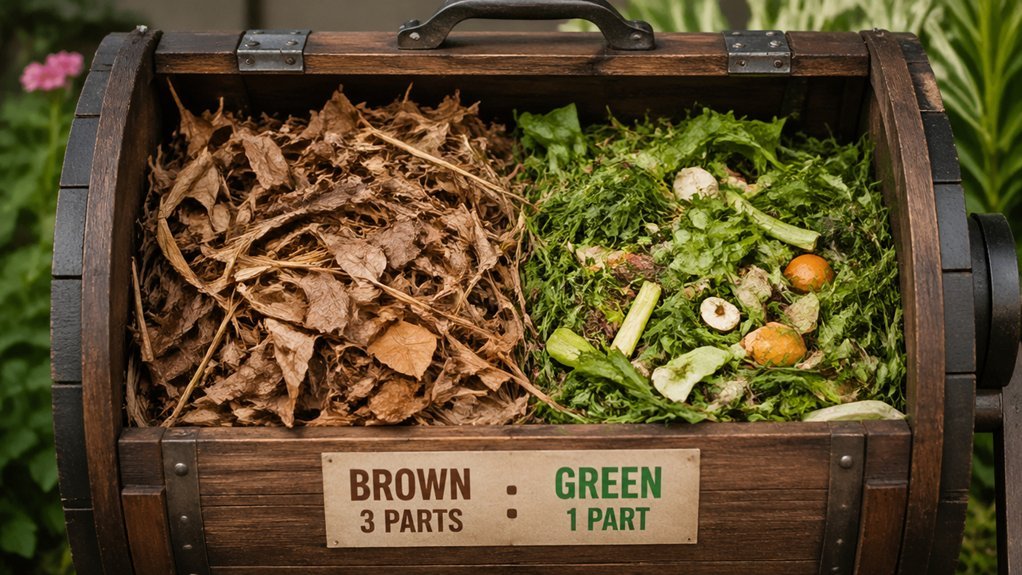
A solid start for tumbler compost hinges on a 3:1 brown-to-green ratio, ensuring carbon-rich browns like dry leaves, cardboard, straw, and wood chips balance nitrogen-rich greens such as fresh grass clippings, vegetable scraps, coffee grounds, and yard waste. You’ll collect brown materials and green materials, then cut bulky material down to bite-size pieces for faster breakdown. Maintaining moisture management around 40-60% keeps microbes active without waterlogging. The 3:1 ratio creates a carbon nitrogen balance that curbs odor and speeds decomposition. As you load the tumbler, mix the compost ingredients thoroughly, then practice regular turning to boost aeration. This routine keeps the pile lively, prevents clumping, and ensures steady, efficient tumbler composting. Regular monitoring of moisture and aeration helps prevent odors and encourages steady microbial activity moisture management.
How Often Should I Turn My Tumbler for Best Aeration?
Keeping the 3 : 1 brown‑to‑green balance in place, you’ll notice that regular turning is what truly fuels the compost’s oxygen supply. In a compost tumbler, turning frequency drives aeration, heat distribution, and moisture control, keeping aerobic microbial activity humming. Aim for a spin every 2‑5 days, adjusting for climate and material density. If the pile feels soggy or smells sour, crank up the turns and add dry browns. In hot weather shorten intervals to avoid overheating; in cooler months, turn a bit more often to sustain decomposition. Rotate 5‑15 minutes each session, mixing all browns and greens. Watch moisture balance; add dry material if it gets too wet. Monitor heat and odor to fine‑tune turning frequency. Aeration and the balance between greens and browns are essential to maintain active decomposition and prevent odor issues.
Use an Activator to Control Heat and Speed Tumbler Compost
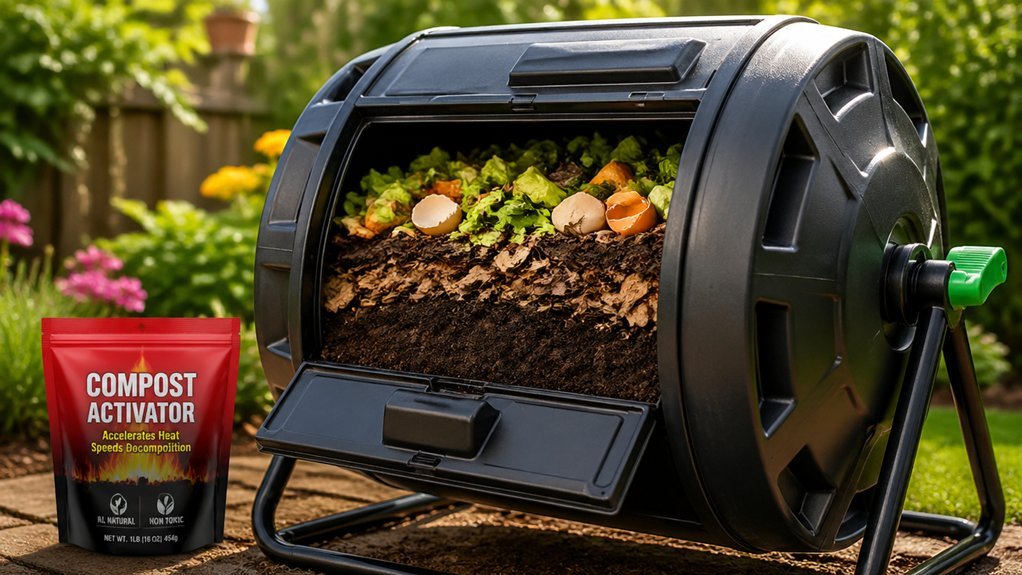
Add a compost activator to your tumbler and you’ll jump‑start microbial activity, pushing temperatures higher and speeding up breakdown. Sprinkle the activator evenly over fresh greens and browns, then mix thoroughly while maintaining moisture at 40–60 %. Regular turning remains essential to distribute heat, oxygen, and moisture evenly, and using a lightweight, durable bin helps with maintenance and odor control Removable inner buckets. The added nutrients boost microbes, raising heat and accelerating composting speed. Apply the activator about two to three times a year to keep the microbial activity steady, but never skip regular turning—each turn distributes heat, oxygen, and moisture evenly. Watch the temperature climb; a hotter tumbler means faster breakdown and fewer odors. Balance your greens‑to‑browns ratio, keep moisture in the sweet spot, and turn often enough to aerate. With these steps, you’ll control heat, increase speed, and produce rich compost consistently.
Frequently Asked Questions
What Are the Key Ingredients for Successful Composting?
You need a mix of nitrogen‑rich greens and carbon‑rich browns, about three parts browns to one green, plus moisture around 40‑60%, regular turning, and occasional kitchen scraps to keep microbes thriving.
What Should I Add to My Compost Tumbler?
Add shredded veggies, fruit scraps, coffee grounds, yard clippings, dry leaves, cardboard, straw, wood chips, and crushed eggshells. Keep it moist, turn regularly, and avoid meat, dairy, oils, and excess citrus.
What Not to Put in a Compost Tumbler?
Don’t put meat, dairy, fatty foods, large woody branches, plastic, metal, treated wood, pet carnivore waste, or untreated manure in your tumbler; these cause odor, pests, slow breakdown, and health risks.
How to Make the Best Compost in a Tumbler?
You’ll combine one part greens with three parts browns, keep it damp like a wrung‑out sponge, turn it every few days, and watch the temperature stay between 130‑160 °F for fast, odor‑free compost.
In Summary
You’ve got the basics down: pick the right materials, keep a steady 3 : 1 brown‑to‑green mix, turn your tumbler regularly for oxygen, and add an activator to boost heat and speed. Follow these steps, and your tumbler will churn out rich, fast compost without hassle. Happy composting!