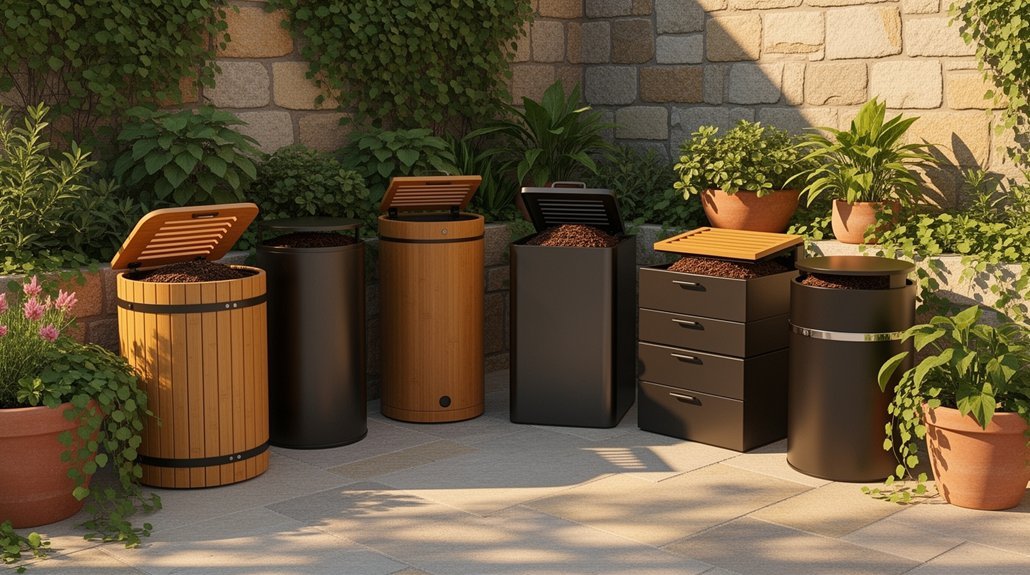

You rotate your batch composter every third day to keep it aerobic, which fuels the microbes that heat the pile and break down material quickly. Turning at this interval prevents anaerobic pockets that cause odors, redistributes moisture, and mixes browns with greens to maintain a balanced C:N ratio. It also aligns with the active (100‑130 °F) and hot (130‑160 °F) temperature zones, ensuring steady heat without spikes. Keep reading to discover how to fine‑tune timing and moisture for optimal results.
Why Turn Every Third Day?
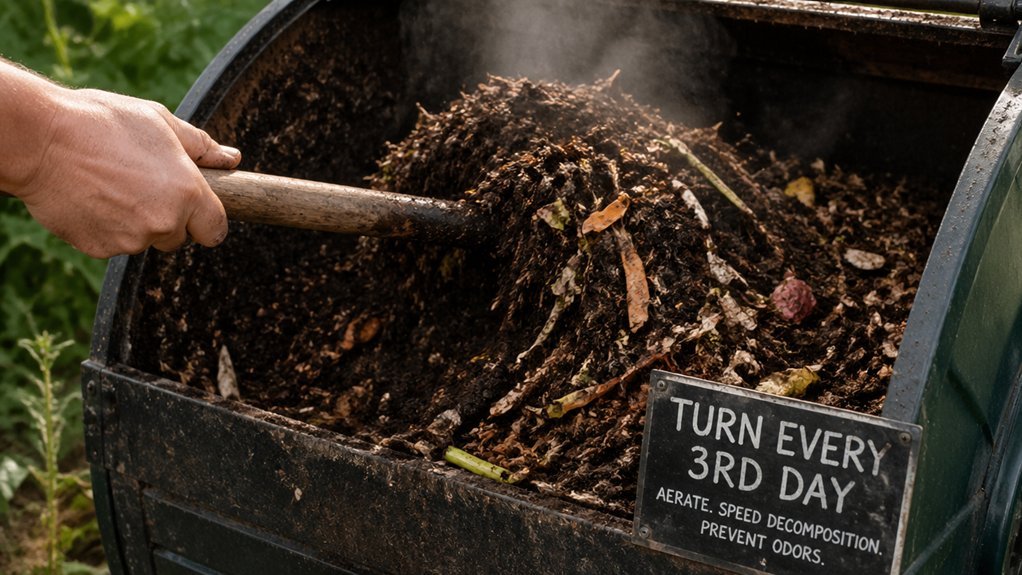
Why turn your batch composter every third day? You keep composting aerobic by replenishing oxygen as microbes consume it during decomposition. Turning every third day aligns with peak microbial activity, preventing anaerobic pockets that cause odors. Regular moisture management and proper ventilation further support rapid heating cycles and efficient breakdown, especially when paired with dual-chamber designs that maintain steady conditions moisture control.
What Temperature Tells You It’s Time to Turn on a Third‑Day Rotation?
How do you know when it’s time to turn your batch composter on a third‑day schedule? You watch the temperature. If the center temperature sits in the Active Zone (100–130 °F) or Hot Zone (130–160 °F), keep the aerobic conditions alive with a third‑day turn. When it slides toward the Steady Zone (80–100 °F), you need to turn to reignite heating. Never let it exceed 160 °F; a long‑stem thermometer will catch a peak before microbes suffer. Zone ranges help you gauge when to adjust turning cadence and maintain pile health.
| Zone | Temperature (°F) |
|---|---|
| Active | 100‑130 |
| Hot | 130‑160 |
| Steady | 80‑100 |
| Danger | >160 |
A consistent rise between turns confirms a proper turning cadence. If heating stalls, delay the turn to avoid unnecessary aeration. This temperature‑guided approach keeps your pile healthy and efficient.
How to Balance Moisture & C:N Ratio on Each Turn
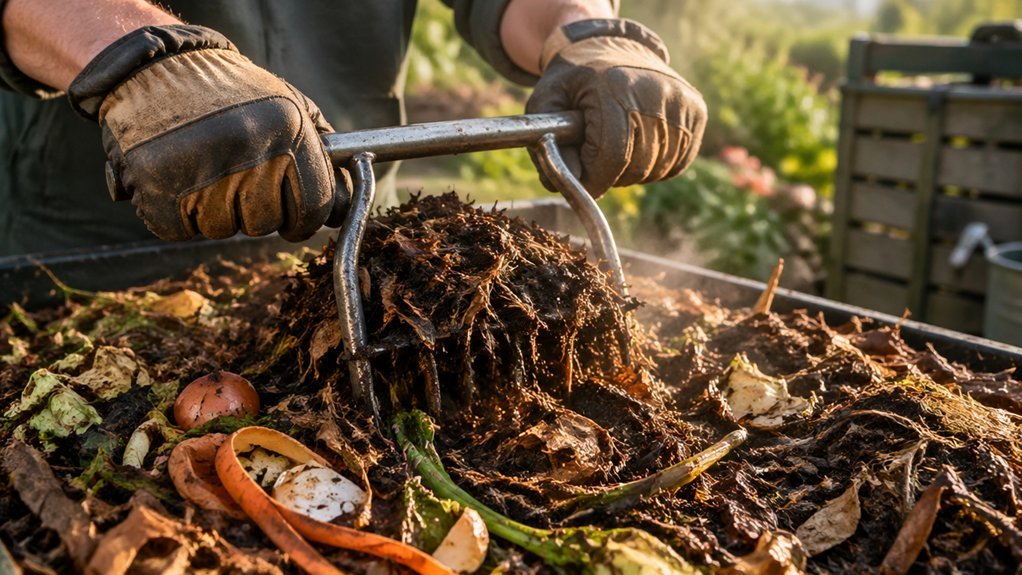
Ever notice your compost feels soggy after a turn, or conversely, bone‑dry in the core? When you turn, you’re redistributing moisture and mixing browns with greens, which restores the C:N ratio and improves aeration. First, feel the pile’s heat. If it’s cooling, the mix is likely too wet or lacking oxygen; add dry browns and turn vigorously to inject air. If it’s still warm but dry, sprinkle a little water and toss in more greens to raise moisture. To minimize odors during turning and keep processing efficient, ensure your system’s odor-control filtration is functioning and sized for the load, especially on larger batches 3-layer filter system. Aim for a 1:1–3:1 brown‑to‑green ratio, adjusting each turn based on heat management cues. By balancing moisture and C:N ratio on every turn, you keep microbes thriving, speed decomposition, and keep your compost on track.
How to Rotate Small‑Space Tumblers Every Three Days
A small‑space tumbler benefits from a three‑day rotation schedule because it keeps oxygen flowing, prevents anaerobic pockets, and speeds up decomposition. You should rotate the tumbler every three days, giving each batch fresh aeration and even temperature distribution. When you turn the drum, mix greens and browns to avoid odor and keep microbial activity high. Check the compost temperature after each turning; if it spikes, a quick mix will disperse heat and prevent stagnation. For better long‑term performance, ensure the rotation plan accommodates a two‑chamber system so no batch sits idle, maintaining even airflow and moisture control across both chambers airflow management.
How to Fix Common Issues on a 3‑Day Turn
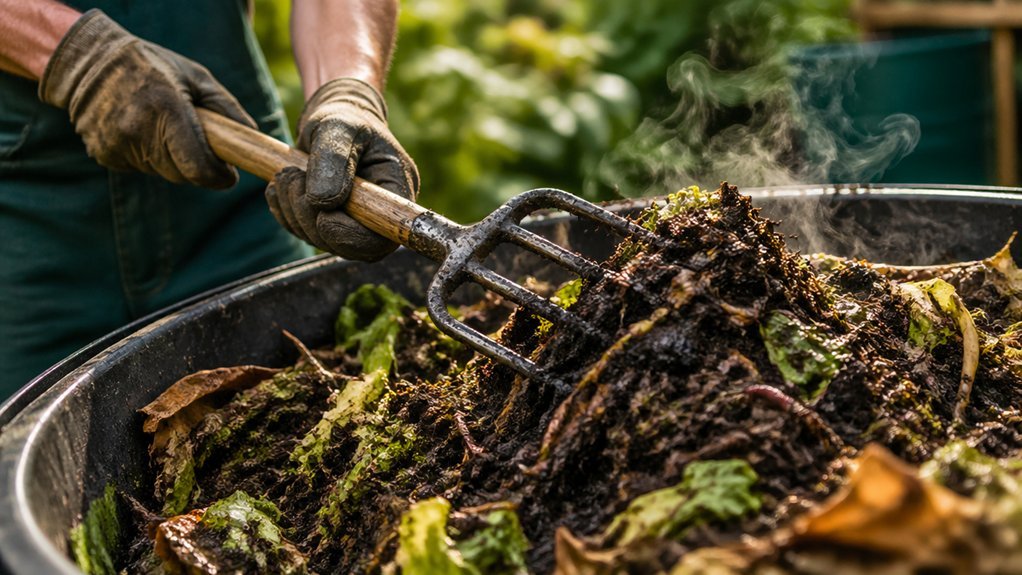
Even with a solid three‑day rotation routine, you may still hit hiccups like sluggish heating, foul smells, or soggy material. Temperature should be monitored; if it’s stuck below 100°F, cut back turning frequency and let compost heat build. Balance moisture—add dry browns if it’s too wet, or spray water if it’s bone dry—to keep aerobic conditions alive. When odor appears, increase aeration by mixing in fresh greens and turning a little more aggressively, but avoid over‑turning that kills compost heat. Adjust the 3‑day schedule based on pile density: dense piles need a longer rest between turns, while loose piles can handle a quicker turn. Monitor each turn, keep temperature in the active zone, and you’ll restore fast, odor‑free decomposition. Odor control
Frequently Asked Questions
How Often Should I Rotate My Compost Bin?
You should rotate your compost bin every two to three days while it’s heating, then stretch to about once a week once the temperature stabilizes, keeping oxygen high without wasting heat.
Are Rotating Composters Better?
Yes, rotating composters are better because you introduce oxygen, speed up decomposition, and prevent odor‑producing anaerobic zones; the regular mixing keeps microbes active and yields richer, faster‑finished compost.
What Are Common Composting Mistakes?
You often under‑turn, over‑turn, add too many greens, ignore moisture, toss large chunks, and skip temperature checks—each mistake cuts oxygen, slows microbes, and creates odors or uneven decomposition.
Can Compost Be Turned Too Often?
Yes, you can turn it too often; frequent rotations over‑aerate the pile, strip moisture and collapse heat zones, which slows microbial activity and reduces overall decomposition efficiency.
In Summary
By turning your batch composter every third day, you keep the microbes humming, maintain optimal temperature, and prevent odors. Regular rotations balance moisture and C:N ratios, ensuring fast, even breakdown. Even in tight spaces, a three‑day schedule works for tumblers, keeping the pile aerobic and productive. If you notice soggy spots or slow heating, adjust moisture or add brown material, then stick to the routine—your compost will stay healthy and ready to feed the garden.