Winter-proofing your balcony compost tumbler now keeps the microbes warm and active, so waste still breaks down when temperatures plunge. Insulated walls and sealed lids trap heat, while a sturdy frame lifts the drum off cold surfaces to prevent chill loss. Managing moisture at a sponge‑like level avoids soggy, smelly piles, and regular turning supplies oxygen and spreads any snow‑melt evenly. A quick insulation hack—wrapping with straw or bubble wrap—adds extra warmth. Keep going and you’ll discover the exact steps to set it up and maintain it.
How Insulated Tumblers Keep Your Compost Alive All Winter
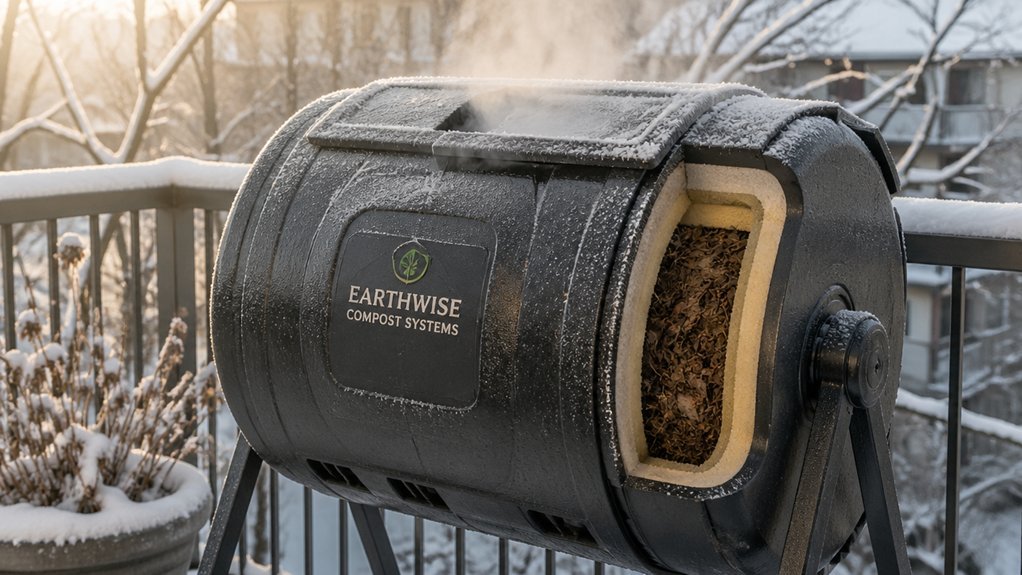
Even when temperatures plunge, an insulated compost tumbler keeps the microbes humming by trapping heat inside the double‑wall chamber. You’ll notice the insulation does more than block the wind; it creates a micro‑climate where aerobic microbes stay active despite frosty nights. The sealed lids lock in the warm air, preventing heat loss and keeping the interior temperature steady enough for decomposition to continue. In addition, many models include a sturdy frame or stand that elevates the drum to further reduce heat loss to cold surfaces insulation effectiveness.
Managing Moisture in a Balcony Compost Tumbler to Prevent Soggy, Smelly Piles
How can you keep winter moisture from turning your balcony tumbler into a soggy, smelly mess? First, aim for compost moisture that feels like a wrung‑out sponge, not a soaking wet slurry. When rain or snow falls, cover the tumbler with a tarp or place it under a sheltered balcony rail to limit precipitation. Add dry browns—shredded newspaper, cardboard, or straw—to absorb excess water and restore balance. Rotate the tumbler every few days; this aeration mixes in the drier material, supplies oxygen, and prevents anaerobic pockets that cause odor. Position the tumbler near a wall or use a thin insulated sleeve to slow temperature swings and reduce condensation. By monitoring moisture, adjusting the brown‑to‑green ratio, and keeping aeration steady, you’ll avoid a soggy pile and keep your winter tumblers healthy. Moisture management also helps prevent mold growth and supports steady aerobic decomposition, even through colder months.
Turning Your Balcony Compost Tumbler in Freezing Weather
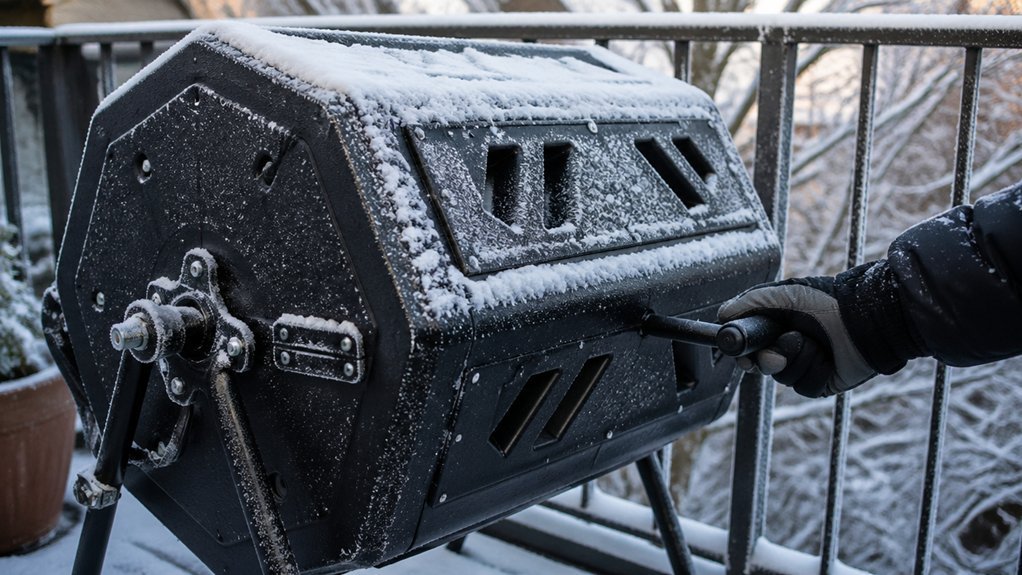
Wondering if you can still turn your balcony compost tumbler when temperatures dip below freezing? You can, and it actually helps keep aeration and heat buildup alive during winter. Turning mixes fresh scraps with seasoned material, giving mesophilic and psychrophilic bacteria better access to oxygen and substrate. Even though microbial activity slows, regular rotation prevents soggy, anaerobic pockets and spreads moisture from snowmelt evenly. A sealed tumbler and a consistent turning schedule let you maintain decomposition, though batch times will lengthen. Regular turning also supports odor control by promoting balanced moisture levels and aerobic conditions within the chamber odor control.
DIY Insulation Hacks for a Balcony Compost Tumbler
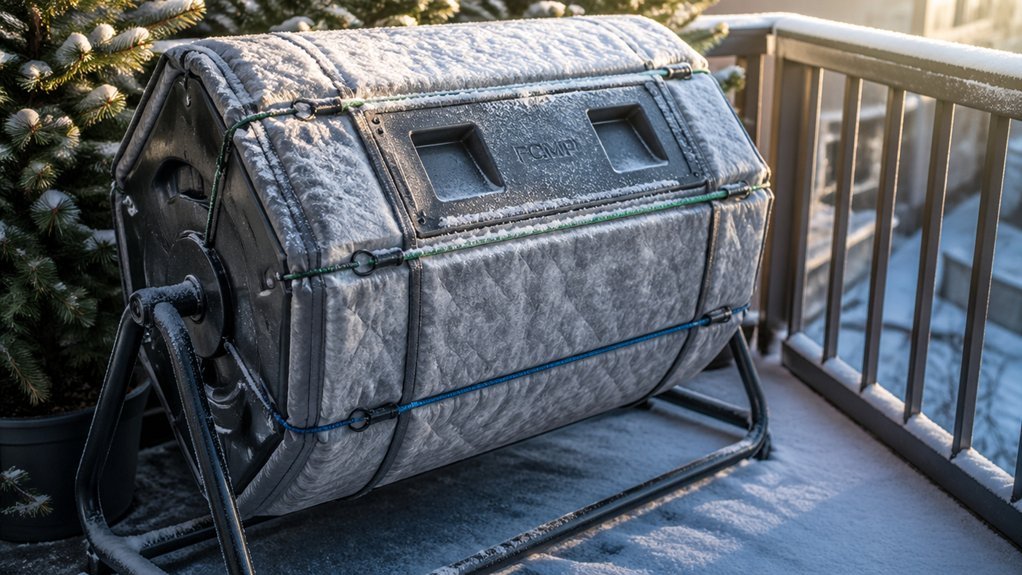
You can wrap straw, bubble wrap, or old blankets around the tumbler to trap heat, then seal any gaps with weather‑proof tape so cold air can’t sneak in. Position the unit where it catches the most winter sunshine, and consider a reflective panel to bounce extra rays onto the drum. These simple steps keep the interior warm enough for active composting all season. Regular maintenance, such as rinsing after use and storing in a dry location, can help extend the lifespan of your equipment maintenance tips.
Wrap Insulation Materials
Ever wondered how a simple layer of straw bales, dry leaves, or reclaimed wood pallets can turn your balcony compost tumbler into a winter‑proof powerhouse? You can boost insulation and heat retention by wrapping the drum with cheap, effective materials. Start with a winter kit that includes a breathable tarp, bubble‑wrap inserts, and a moisture‑retaining blanket. Elevate the tumbler on a pallet to keep cold ground from sapping warmth. The combination of natural and synthetic layers creates a cozy micro‑climate for active microbes. Straw bale wrap around the drum can enhance insulation and is compatible with multi‑layer ventilation strategies multi‑level airflow design.
Seal Gaps Effectively
After wrapping the drum with straw bales, bubble‑wrap, and a pallet base, the next step is sealing every crack and seam that lets cold air slip in. Apply weather‑stripping or foam tape around lid edges and any drum seams; this low‑profile barrier blocks air leaks while letting the tumbler rotate freely. For pipe or hardware penetrations, push silicone caulk or expandable foam into the gaps, smoothing it flat for a weather‑proof seal.
Cover any remaining openings with a tight‑fitting tarp or bubble wrap, securing it with clips or zip ties so you can still access the compost. Finally, verify that ventilation holes stay just large enough for aeration but small enough to limit heat escape, completing your tumbler insulation.
Optimize Sun Exposure
Wondering how to squeeze every ounce of warmth from a winter balcony? You can boost sun exposure and solar gain by positioning the tumbler where daylight hits longest, then layer insulation tricks that turn a chilly balcony into a mini‑greenhouse.
Additionally, ensure the tumbler remains within the anaerobic zone by keeping the lid tightly sealed during cold spells to minimize heat loss through gaps. solar gain
What to Look for When Buying a Balcony Compost Tumbler
| Feature | Why It Matters |
|---|---|
| Heavy construction | Guarantees durability and winter‑proof resilience |
| Simple turning mechanism | Ensures reliable aeration and low maintenance |
| Sealed design | Keeps pests out, controls odor, and protects against frost |
A robust, weather‑ready design also reduces the need for frequent maintenance, helping you keep the composting process efficient winter-proof durability.
Winter Maintenance Checklist for Your Balcony Compost Tumbler
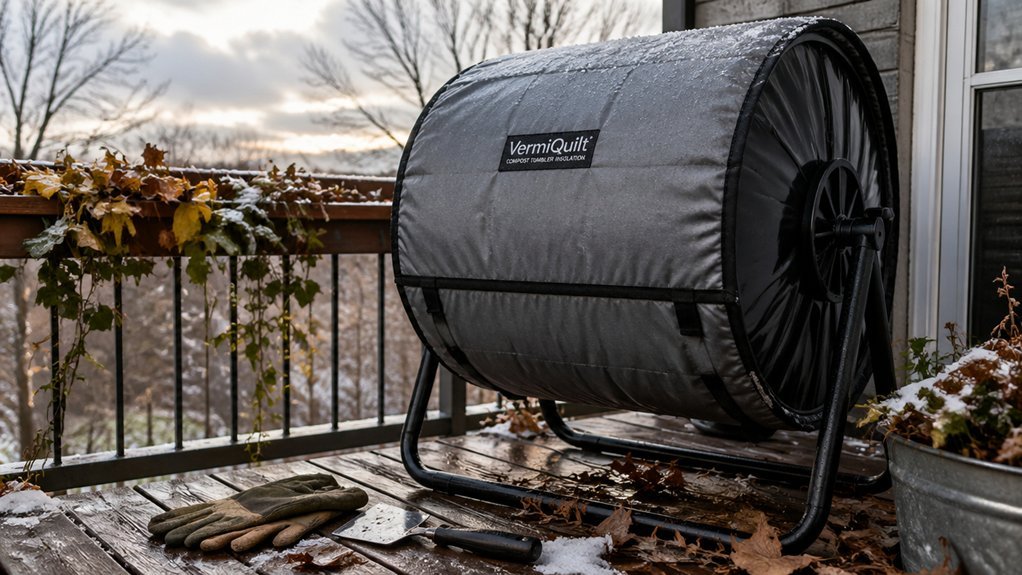
Heavy construction and a sealed design keep your tumbler sturdy and frost‑proof, but winter still demands extra care. You’ll want to keep the compost tumbler active, protect moisture balance, and ensure aeration throughout the cold months. Wrap the unit in a tarp or blanket to trap heat, and stockpile browns like leaves and shredded paper to mix with greens for extra insulation. When frost threatens, rotate the tumbler every few days to stir the microbes and prevent heat loss.
- Insulate – drape a weather‑resistant blanket, securing it with bungee cords.
- Moisture‑check – add a splash of water if the mix feels dry, but avoid soggy clumps.
- Turn regularly – rotate the tumbler at least twice a week to maintain aeration and keep the compost lively.
Frequently Asked Questions
Do Compost Tumblers Work in Winter?
Yes, compost tumblers still work in winter, but the cold slows microbial activity. You’ll need to keep them insulated, turn regularly, and maintain proper moisture so decomposition continues, albeit at a reduced pace.
Do Potato Peelings in Compost Attract Rats?
Yes, they can. If you dump fresh potato peels into an open or moist compost, you’ll create a sweet, smelly snack that draws rats. Seal the tumbler, dry or chop the peels, and keep moisture balanced.
Can I Put Toilet Paper Rolls in Compost?
Yes, you can toss shredded toilet‑paper rolls into your compost. Just strip off any plastic cores, avoid glossy or inked cardboard, and balance them with greens and other browns for proper moisture and aeration.
What Is the Disadvantage of a Compost Tumbler?
You’ll spend more upfront because tumblers cost roughly 30% more than bins, and they can over‑heat or become too moist if you overfill or neglect turning, reducing decomposition efficiency.
In Summary
By insulating, monitoring moisture, and rotating your tumbler regularly, you’ll keep microbes thriving and odors at bay all winter. Simple DIY hacks and smart purchasing choices make it easy to protect your balcony compost from freezing temperatures. Stick to the maintenance checklist, and you’ll harvest rich, healthy soil come spring—no soggy, smelly piles, no dead compost. Your balcony stays productive year‑round, even when the weather turns cold.