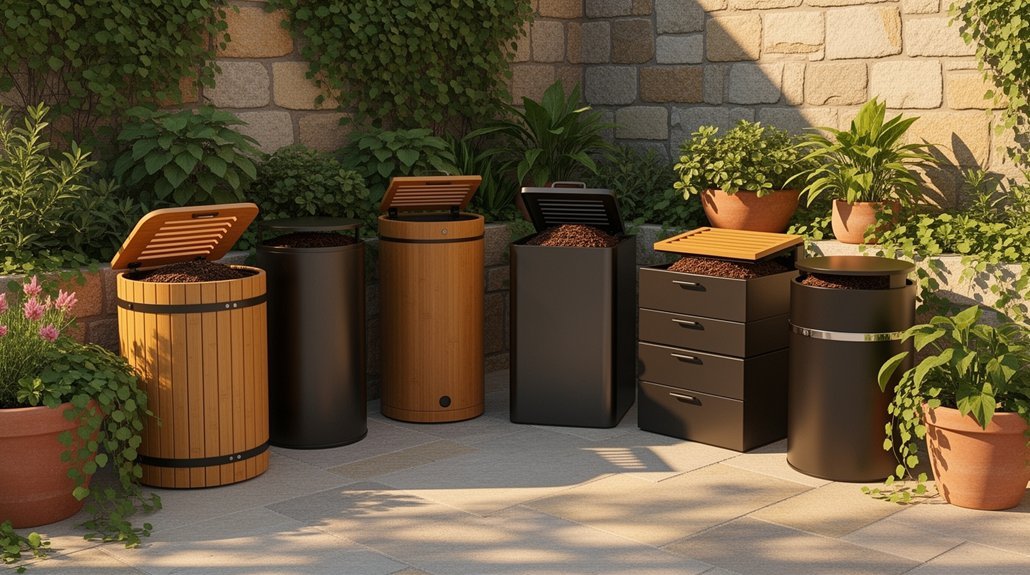

You can stop compost smells by using seven natural microbe treatments: sprinkle a compost‑safe inoculant or KNF LABS‑type product, add plenty of carbon‑rich browns, keep moisture at 50‑55%, turn the pile regularly for oxygen, apply mycorrhizal fungi early, use enzyme‑based amendments, and introduce phosphorus‑solubilizing bacteria with a living biofilter cap. These steps balance C:N, boost aerobic microbes and suppress odor‑causing pockets. Keep going and you’ll discover the details for each treatment.
Apply Seven Natural Microbe Treatments to Eliminate Compost Smors
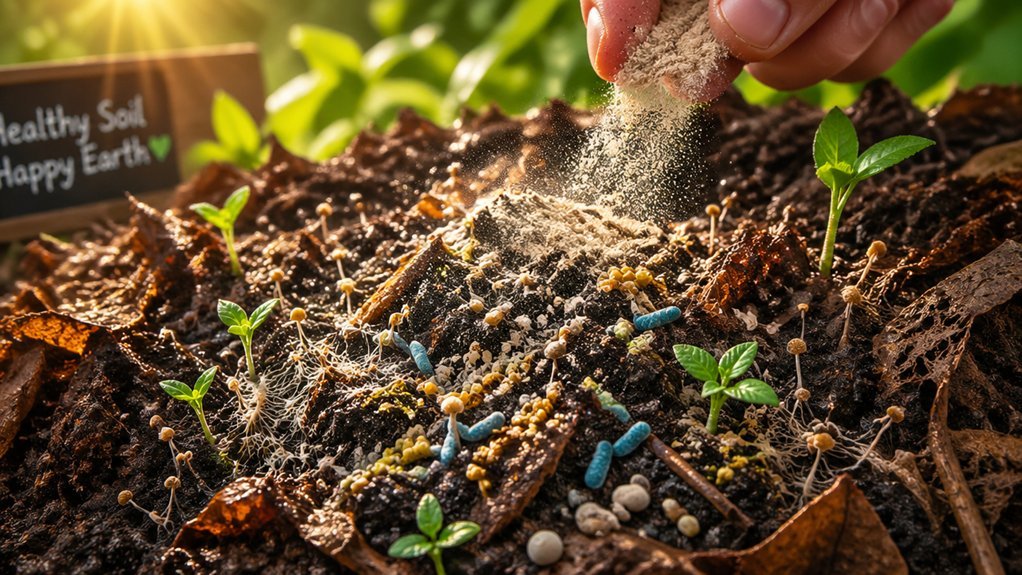
Ever wondered how a handful of targeted microbes can wipe out those nasty compost smells? You can apply seven natural microbe treatments that boost aerobic microbes and give you reliable odor control. Start by sprinkling a compost‑safe inoculant or a KNF LABS‑type product over the pile, then mix in plenty of browns to supply carbon. Keep moisture in the sweet spot—damp but not soggy—so microbes stay active. Turn the pile regularly to introduce oxygen and break up anaerobic pockets. As the microbes accelerate decomposition, nitrogen balances naturally, and ammonia fizzles away. Regular monitoring of temperature and moisture helps you adjust turning frequency if the pile dries or heats too fast. This routine keeps your composting system fresh, fast, and free of foul odors. Key concept You can also optimize with a monitored blend of microbial products to sustain ongoing odor control.
Activate Aerobic Microbes (And Stop Compost Smells) With a Carbon‑Boosting “Brown” Mix
After applying the seven microbe treatments, the next step is to feed the aerobic crew with a carbon‑rich “brown” mix. You’ll want a carbon-to-nitrogen ratio around 25:1‑30:1, using brown materials like dried leaves, straw, or wood chips. These browns boost porosity, soak up excess moisture, and keep the pile fluffy so aerobic microbes can thrive and suppress compost smells. Mix in a generous layer after each green addition, then turn the pile to distribute air and restore the browns‑to greens balance. Watch for a lighter, crumbly interior as a sign you’ve re‑established the right structure and odor‑free conditions. A spigot‑free, odor‑reducing approach can further help manage leachate and maintain aerobic conditions odor control.
Boost Oxygen‑Driven Decomposition With Microbial Inoculants
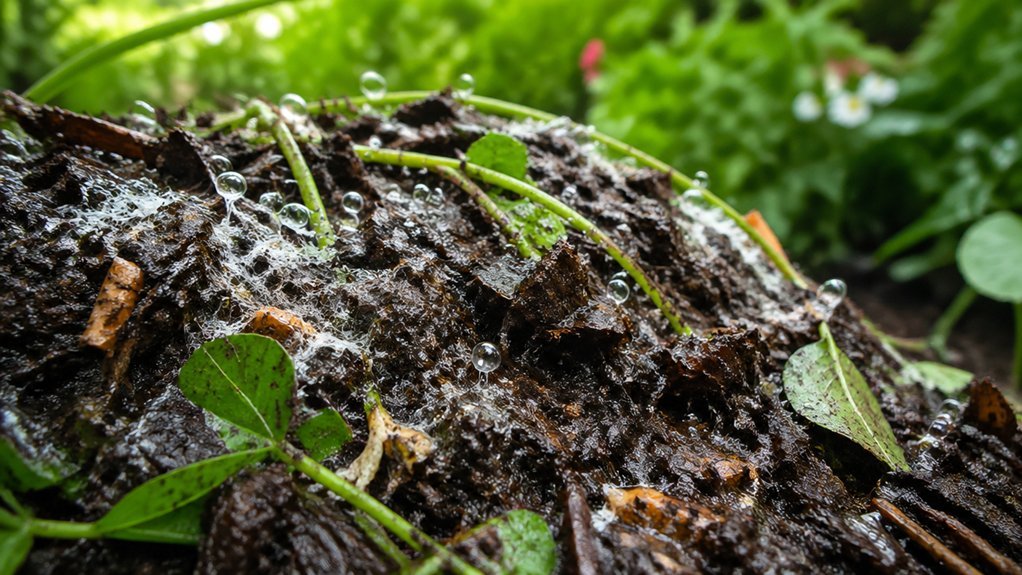
How can you supercharge aerobic breakdown and silence those foul odors? Add microbial inoculants to your pile and watch oxygen‑driven decomposition surge. The inoculants boost aerobic microbes, speeding up carbon breakdown while balancing the C:N ratio, which curbs ammonia spikes and odor. Keep moisture at 50–55 % and ensure strong oxygenation; this prevents anaerobic pockets that would otherwise release stench. Monitor temperature and moisture daily—healthy airflow and proper moisture management let the inoculants thrive, delivering rapid odor reduction. Endotoxin‑free formulas, like those from Reencle, revitalize beneficial communities, neutralizing odor‑causing compounds. By pairing inoculants with diligent aeration and moisture control, you create a fast, clean, and odor‑free compost system. Odor Control Champion
Leverage Mycorrhizal Fungi for Fast‑Turning, Smell‑Free Piles
You’ll find that different mycorrhizal types form distinct fungal networks that accelerate decomposition and improve pile structure. Those networks release soil enzymes that suppress odor-causing microbes while boosting nutrient cycling. By mixing the inoculant early, you let the fungi colonize the material, giving you a fast-turning, smell-free compost pile odor control methods.
Mycorrhizal Types Role
When you add mycorrhizal fungi to your compost, they instantly boost aerobic activity and microbial diversity, speeding up decomposition while cutting the sour smells that come from anaerobic pockets. This synergy works alongside BPI, CMA, OK compost HOME certified bags to maintain a stable, odor-reduced composting environment.
Fast‑Turning Fungal Networks
Mycorrhizal fungi that boost aerobic activity also lay the groundwork for fast‑turning fungal networks, which keep piles odor‑free even during aggressive mixing. You’ll notice that these fast‑turning networks quickly re‑establish oxygen pathways, so aerobic decomposition outpaces the anaerobic stage that creates stink. Inoculants packed with mycorrhizal fungi or a handful of untreated forest soil seed the pile with mycelium that binds fragments, opens pores, and stabilizes structure. The expanding mycelial web encourages microbial cooperation, letting beneficial bacteria and fungi exchange nutrients and keep the environment hostile to sulfurous or ammonia smells. Pair this with regular, vigorous turning and you shorten odor‑prone phases, maintaining a resilient, smell‑free compost system that works faster and cleaner.
Smell‑Suppressing Soil Enzymes
Ever wondered why some compost piles stay fresh‑smelling while others turn stinky? You can boost odor suppression by adding compost enzymes that accelerate aerobic activity. The enzymes break down nitrogen compounds, curbing ammonia and sour smells, while mycorrhizal fungi enrich microbial diversity and improve air flow. This combo speeds up decomposition, keeps the pile aerobic, and prevents the stagnant zones that generate foul odors. Regular maintenance, including monitoring temperature and C:N ratio, supports sustained odor control.
Apply enzyme‑based amendments to the brown‑green mix weekly. Mycorrhizal inoculant to foster fungal networks. Keep moisture at 50‑60 % for optimal aerobic respiration. Turn the pile regularly to maintain air flow and oxygen diffusion. Monitor temperature and C:N ratio to ensure balanced microbial activity.
Carbon‑Based Digesters for Sulfur & Ammonia Odor Control
You’ll notice that adding carbon‑rich feedstocks like dried leaves or shredded newspaper pulls excess nitrogen out of the pile, cutting down ammonia and stabilizing sulfur odors. The presence of activated carbon in the surrounding environment can further enhance adsorption of volatile compounds, improving overall odor control cut-to-fit
Carbon‑Rich Feedstocks
A well‑balanced carbon‑rich feedstock is the backbone of odor control, as it soaks up excess nitrogen and fuels aerobic microbes that keep sulfur and ammonia from turning your compost into a sour, rotten‑egg mess. By mixing browns like dried leaves, straw, sawdust, and shredded newspaper, you hit a C/N ratio of 25:1‑30:1, which curbs ammonia spikes and sulfur‑rich volatiles. The added bulk improves aeration, preventing anaerobic pockets that generate foul smells. Regularly tossing in bulking agents—hay, shredded cardboard, wood chips—keeps the pile porous and temperature stable, giving you reliable odor control.
- Use a 25:1‑30:1 C/N ratio
- Add diverse browns for structure
- Sprinkle bulking agents each turn
- Maintain moisture for aerobic microbes
- Monitor temperature for odor reduction
Sulfur‑Binding Microbial Consortia
By adding sulfur‑binding microbial consortia to your compost, you introduce carbon‑based digesters that actively convert hydrogen sulfide and other reduced sulfur compounds into harmless or inert products. These inoculants seed aerobic microorganisms that accelerate sulfide degradation, sharpening odor control throughout composting.
Keep moisture around 50‑55 %, maintain good porosity, and mix regularly to avoid anaerobic pockets that stall the consortia. Pair the treatment with a balanced C/N ratio and sufficient aeration, and you’ll see a noticeable drop in rotten‑egg smells compared with carbon additives alone.
The microbes thrive in well‑ventilated piles, breaking down sulfur compounds into sulfate and water, while the resulting inert gases keep your garden air fresh. This approach delivers reliable, low‑cost odor control for any compost operation.
Add Phosphorus‑Solubilizing Bacteria to Reduce Sour Compost Odors
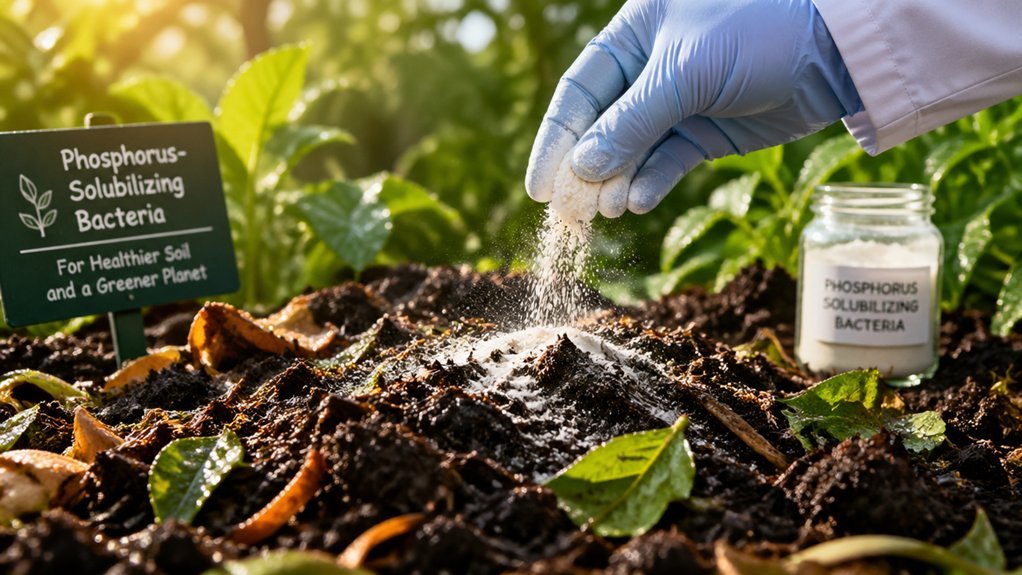
Adding phosphorus‑solubilizing bacteria (PSB) to your compost can quickly cut the sour, sulfur‑like smells that develop when nutrient bottlenecks create anaerobic pockets. PSB act as bioaugmentation agents, turning insoluble phosphorus into bio‑available forms that boost aerobic decomposition. When you keep a proper C:N balance, maintain 50‑55% moisture, and ensure regular compost aeration, the microbes stay active and the odor reduction becomes noticeable. Use a commercial PSB inoculant or mix a cultured slurry into the pile, then turn the compost to distribute the bacteria evenly.
- Choose a PSB product compatible with your existing microbial mix.
- Apply 1–2 % by volume of inoculant to the dry material.
- Turn the pile every 3–4 days for optimal aeration.
- Monitor temperature; aim for 55–65 °C to sustain aerobic activity.
- Pair PSB with balanced browns and greens for lasting odor control.
Create a Living Biofilter: Layered Microbe‑Rich Compost Caps for Odor Management
Ever wondered how a simple layer on top of your pile can turn a stinky mess into a fresh‑smelling biofilter? A compost cap of 3–4 inches, made from finished compost mixed with carbon‑rich browns, creates a porous, oxygen‑rich surface where aerobic microbes thrive. These microbes break down ammonia and sulfur compounds, providing effective odor management. Keep the cap moist—about 50–55 %—but not soggy, and ensure at least 40 % free air space for optimal moisture control. Refresh or add a thin layer every few weeks to maintain the biofilm and prevent anaerobic pockets. By layering this living biofilter, you turn the pile’s top into a self‑sustaining, odor‑neutralizing shield.
Frequently Asked Questions
How to Neutralize Compost Smell?
You neutralize compost smell by adding carbon‑rich browns, turning the pile regularly, keeping moisture sponge‑like, and, if needed, sprinkling a microbial inoculant to boost aerobic activity.
How to Neutralize Manure Smell?
You neutralize manure smell by turning the pile, adding carbon‑rich browns, balancing C/N to 25‑30:1, keeping moisture sponge‑like, and using natural biofilter inoculants or deeper burial for fresh manure.
How Long Does It Take for Compost Smell to Go Away?
You’ll usually notice the smell fading within one to two days after you turn the pile, add brown material, and boost aeration, though stubborn odors may need a few extra adjustments.
What Kills Compost Bacteria?
You kill compost bacteria by over‑watering, creating anaerobic zones, adding too much nitrogen, heating the pile excessively, or using harsh chemicals—each disrupts oxygen flow and pH, wiping out beneficial microbes.
In Summary
By harnessing these seven natural microbe treatments, you’ll keep your compost pile healthy, fast‑moving, and odor‑free. Boost aerobic action with a carbon‑rich brown mix, add targeted inoculants, and enlist mycorrhizal fungi for rapid breakdown. Use carbon‑based digesters and phosphorus‑solubilizing bacteria to neutralize sulfur and ammonia smells, then cap the pile with a living biofilter. The result? A thriving, smell‑free compost system that works efficiently and sustainably.