
You don’t need a bin to compost in your apartment. Try curbside pickup programs or drop-off stations available in many cities—they’ll handle your scraps for you. If you’ve got meat and dairy, bokashi fermentation works in a sealed container for just 7–14 days. For compact spaces, vermicomposting with red wigglers under your sink produces minimal odor. Each method suits different lifestyles, and you’ll discover which one fits yours best by exploring further.
Why Apartment Composting Works Without a Bin
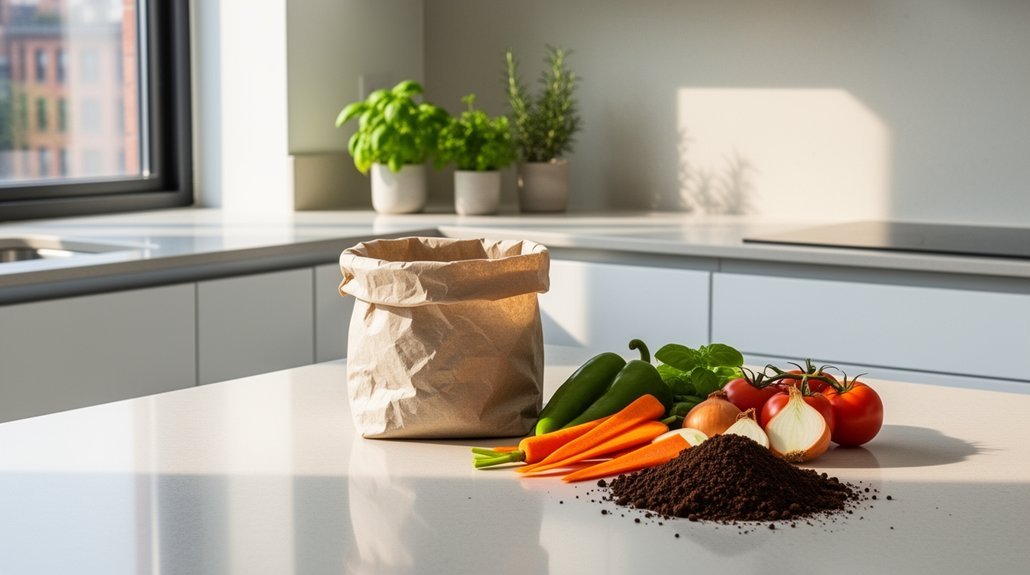
Why does apartment composting work without a dedicated bin? You don’t actually need a bin—you need microbial activity and oxygen. These two factors drive decomposition regardless of your container choice.
Apartment composting succeeds through microbial activity and oxygen, not the bin itself. Your container choice matters far less than these two essential factors.
You can use any household vessel: a bucket, plastic container, or sealed vessel. The key is ensuring airflow. Drill holes in lids, use porous covers, or stir your mixture every few days to keep oxygen circulating through the materials.
By balancing nitrogen-rich green matter (fruit scraps, coffee grounds) with carbon-rich brown matter (dry leaves, shredded paper), you’ll accelerate breakdown and reduce odors. Covering food scraps with brown materials prevents pest problems and smell issues. Unlike bokashi systems that use anaerobic fermentation, your aerobic approach relies on oxygen exposure to break down materials naturally. With frequent mixing, your wormless system can complete a full batch in anywhere from six weeks to a year depending on conditions.
This simple approach works because decomposition happens anywhere microbial conditions are right—not because of the bin itself.
Apartment Composting via Curbside and Drop-Off Programs
If you’re renting in a major city, you mightn’t need to compost at home at all. Many cities offer curbside composting programs that collect organics directly from your building or nearby drop-off stations. In Austin, for example, multifamily properties with five or more units must provide commercial composting access, with containers placed within 25 feet of trash bins and weekly removal by licensed haulers.
Drop-off stations work well when building pickup isn’t available. You collect scraps at home, then deposit them at a designated location. Municipal or private haulers then transport everything to industrial composting facilities, where high heat breaks down materials efficiently. These shared-service models expand access for apartment residents without requiring personal bins or yard space, while diverting significant amounts of food waste from landfills that would otherwise contribute to greenhouse gas emissions. By participating in these programs, you’re supporting circular economy practices that transform organic waste into valuable resources for indoor and outdoor gardening.
Bokashi Fermentation for Meat and Dairy

While curbside and drop-off programs handle most food scraps efficiently, they won’t accept meat, dairy, and cooked foods—items that sit in your kitchen trash otherwise. Bokashi fermentation solves this problem through anaerobic fermentation in a sealed bucket with inoculated bran.
| Feature | Benefit |
|---|---|
| Sealed, oxygen-free | Eliminates odor and pest attraction |
| Accepts meat, dairy, fish | Handles what standard composting can’t |
| 7–14 day fermentation | Quick pre-compost stage |
| Produces leachate | Usable soil drench when diluted |
You layer scraps with bokashi bran, drain liquid regularly, and keep the bucket sealed. After fermentation, you’ll need a second stage—burying material in soil or mixing it into compost. The bokashi material is a fermented pre-compost and must be mixed with soil to finish decomposition. For apartment dwellers with limited space, stackable airtight containers can organize the bokashi bran and other dry fermentation materials between composting sessions. This compact system works perfectly for apartments while processing kitchen waste most programs reject.
Vermicomposting: Compact Worm Bins for Small Spaces
How can you process food scraps in an apartment without dedicating precious floor space to a bulky compost system? Vermicomposting offers a compact solution. You can set up a small worm bin under your kitchen sink or in a closet using just a square foot of space.
Red wigglers are your ideal worms—they feed near the surface and thrive in shallow containers. Start with 500 to 1,000 worms or 1 to 2 pounds per 10-gallon bin. Layer shredded newspaper or cardboard as bedding, kept moist but not waterlogged. Many worm farms arrive with coconut peat included as a convenient bedding alternative.
Feed your worms fruit and vegetable scraps every two to three weeks. Avoid meat and dairy. Properly managed bins produce virtually no odor, making them perfect for apartment living. Replace activated charcoal filters every 3-6 months to maintain optimal conditions if your worm bin includes ventilation features. Over time, you’ll harvest nutrient-rich vermicast for your houseplants.
Pick the Right System for Your Space and Lifestyle

Not every apartment dweller has the same space or lifestyle, so choosing the right composting system depends on what you’re willing to manage and where you can put it.
Apartment composting success hinges on matching your system to your available space and personal commitment level.
If you’re limited to indoor spaces, sealed systems like bokashi or electric composters eliminate odor concerns. Bokashi works well if you can handle fermentation before final composting, while electric units offer speed—reducing waste by 90% in hours—though they cost more upfront. With bokashi systems, the fermented pre-compost pickle typically finishes in 2-4 weeks before you bury it in soil for final decomposition.
For balconies or small patios, tumbling composters shine. Their rotating drums require minimal effort, and compact designs fit tight spaces while processing meaningful volumes quickly. Consider countertop options like the OXO Good Grips compact bin if your outdoor space is extremely limited.
Stackable composters suit growing needs. They expand upward without consuming floor space, letting you scale capacity gradually as your waste volume increases.
Match your choice to your patience level and available space.
Frequently Asked Questions
How Long Does It Take to See Finished Compost From a DIY Apartment System?
You’ll typically see finished compost in three to twelve months, depending on your method. Well-maintained systems produce results in three to five months, while worm bins often yield harvestable compost within three to six months.
Can I Compost Cooked Foods, Oils, and Processed Items in My Apartment?
You can compost cooked vegetables in small amounts, but you’ll want to avoid oils, fats, and heavily processed foods in standard apartment bins. Sealed systems or bokashi handle these items better than open indoor composters.
What Should I Do if My Composting Method Starts Smelling Bad?
You should add dry brown materials to absorb moisture, stir your bin more often for better airflow, and reduce food scraps temporarily. If odors persist, consider switching to curbside composting instead.
How Do I Know if My Local Area Has Composting Collection Services Available?
You’ll start by checking your city’s official website for organic waste disposal pages. Then search for local compost pickup companies online, explore drop-off centers near you, and confirm their service areas and current availability.
Can Apartment Composting Work Year-Round in Cold Climates?
Yes, you can compost year-round in cold climates by using indoor systems like vermicomposting or bokashi. You’ll keep your bins inside, maintain stable temperatures and moisture, and continue processing kitchen scraps throughout winter.
In Summary
You don’t need a traditional bin to start composting in your apartment. Whether you’re dropping off scraps at a local program, fermenting food waste with bokashi, or raising worms in a compact vermicomposting setup, you’ve got solid options. Pick the system that fits your space and lifestyle best. You’ll reduce waste, help the environment, and feel good about making a difference—all without cluttering your small living space.