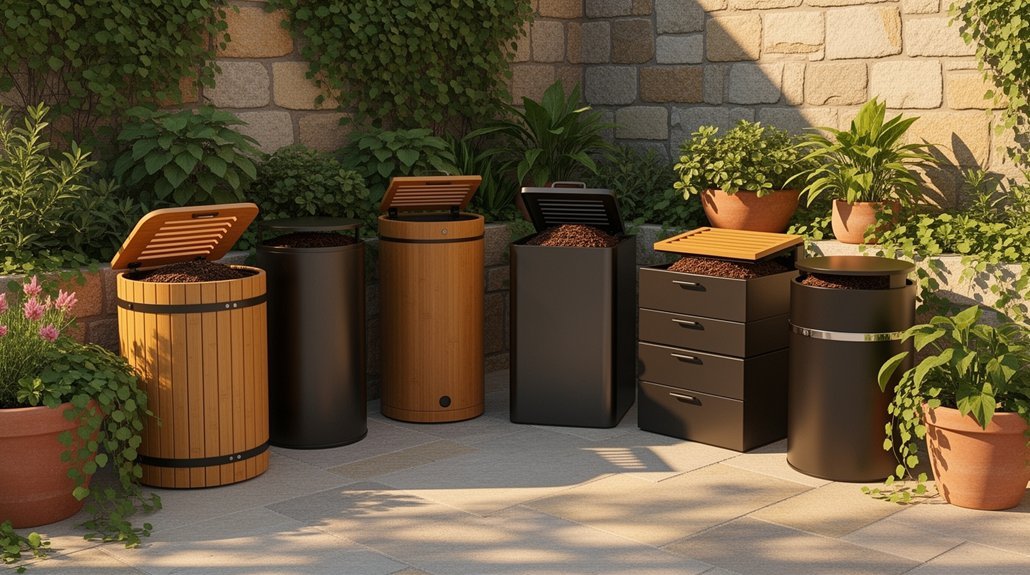
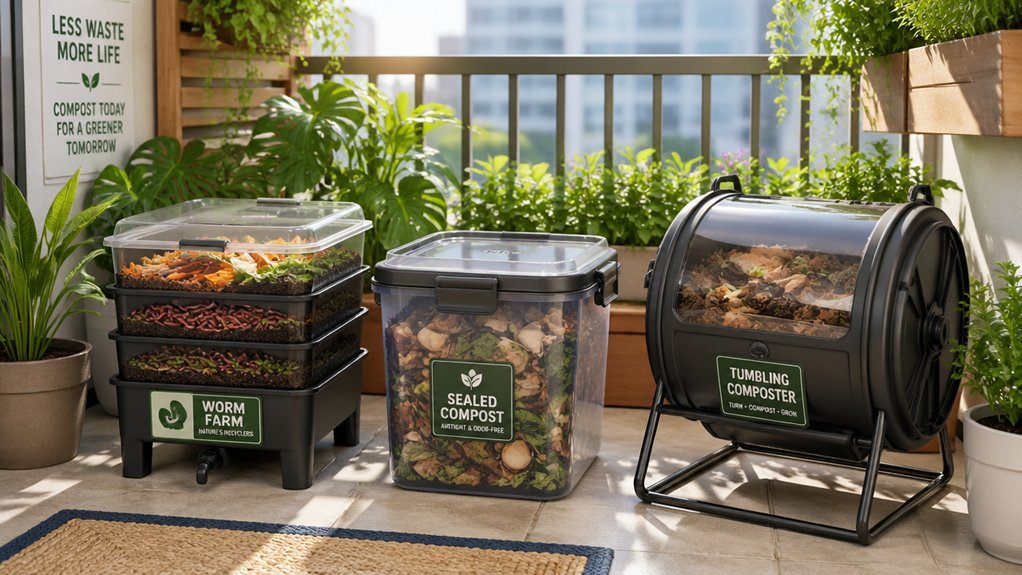
Pick a shady nook behind a lattice or tall railing where the sun barely reaches, and keep the bin on a raised tray to boost airflow and drainage. Another spot is a low bench with a hollow interior; slide the sealed container inside and let the bench conceal it while the tray prevents moisture wicking. Finally, tuck the bin against an exterior wall or beside a planter bed, using a tight‑fit lid, charcoal filter, and mesh‑covered aeration holes to block pests and odors. Keep exploring for more details on each setup.
Find a Shady, Hidden Corner for Balcony Composting
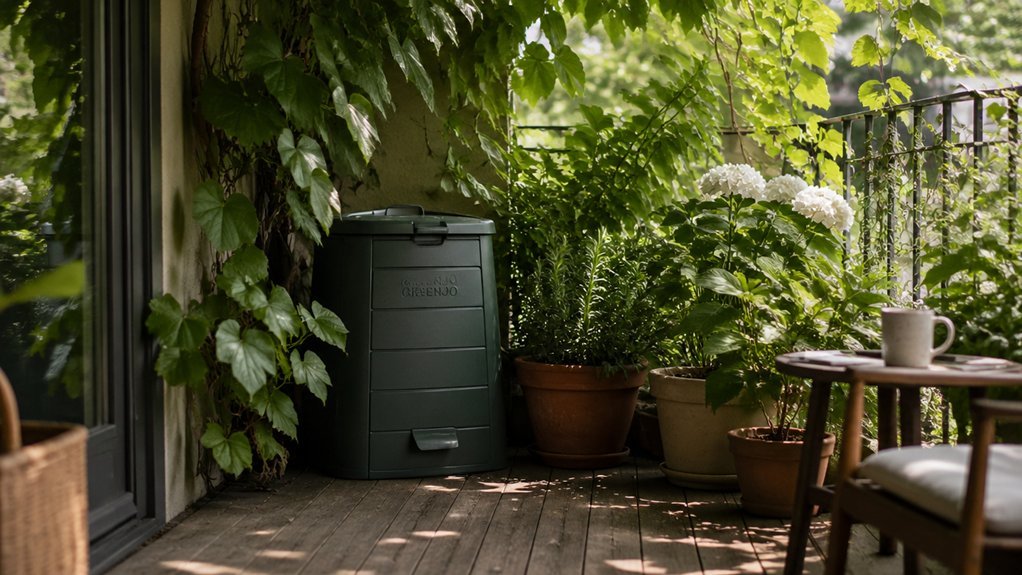
Looking for a spot that stays cool and stays out of sight? Choose a shady corner on your small balcony, preferably behind a lattice or tall railing, where direct sun won’t heat the compost. Position the bin on concrete or tiles, slightly raised to aid airflow and pest prevention. Hide it in a low bench with a hollow interior or a buried bucket‑in‑mortar trough, turning the area into a hidden corner that blends with the décor. Use an airtight container with a snug lid and sides; seal any gaps with charcoal sachets or polyfill for odor control. Keep the setup near an exterior wall or planter bed to block vermin and drainage toward living spaces while preserving discreet access for monitoring. This arrangement gives you a near‑invisible, odor‑free balcony composting solution. To maintain proper odor management, regularly replace the charcoal filter in the lid every 4–6 months charcoal filter maintenance.
Add a Raised Tray to Improve Airflow and Drainage for Balcony Composting
After securing a hidden, shady spot, boost the system’s efficiency by placing the compost bin on a raised tray. A raised tray lifts the bin off concrete, preventing moisture wicking and mold while creating a gap for airflow and drainage. Choose a tray with a perforated bottom; the slits let excess moisture escape, enhancing ventilation and humidity management. This simple layer improves odor control by keeping the compost dry and discouraging pests. A raised tray also supports under-sink and balcony setups by providing a stable, ventilated base that can accommodate different bin sizes under-sink mounting.
Cover the Bin With a Tight‑Fit Lid, Add a Drainage Layer, and Block Pests to Keep Balcony Composting Odor‑Free
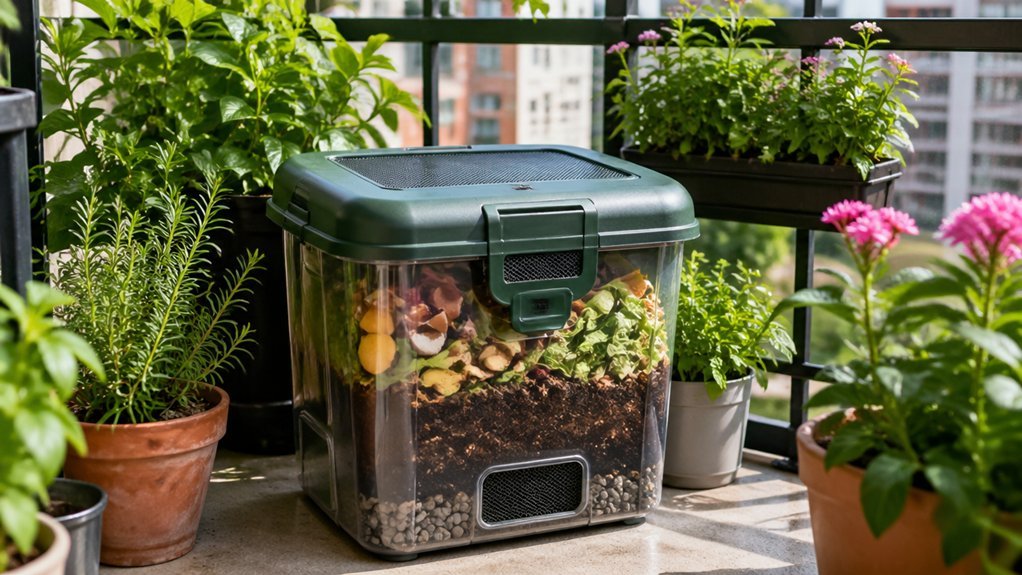
A tight‑fit lid is your first line of defense against odors and pests, sealing the bin to keep smells in and critters out while still allowing the limited airflow needed for healthy decomposition. Choose a lid that clicks shut and adds a thin polyfill gasket for extra seal.
Then, line the bottom of your compost bin with a drainage layer of coarse gravel or perlite; this drains excess moisture, prevents anaerobic pockets, and stops foul odor from building up on your balcony.
Drill a few tiny holes for aeration, then cover each opening with fine mesh to block flies, gnats, and other pests without choking airflow.
With this setup you’ll enjoy vermicomposting that stays odor‑free, even in tight urban spaces. drainage layer
Frequently Asked Questions
How Do I Compost on My Balcony?
You’ll set up a compact, lidded bin with drill holes or a Bokashi bucket on your balcony, layer greens and browns, keep it moist but not soggy, turn it every few days, and avoid meat or dairy.
How to Keep an Outdoor Compost Bin From Smelling?
You keep your outdoor bin odor‑free by sealing it tightly, adding plenty of carbon material, turning it regularly, maintaining a damp‑but‑not‑wet balance, and placing it in a shaded, ventilated balcony corner.
What Three Items Should Not Be Placed in a Compost Pile?
You should keep meat, dairy, and oily foods out of the pile, avoid citrus peels in worm bins, and skip large amounts of onions or strong‑smelling veggies, because they cause odor and attract pests.
How to Compost With No Smell?
You keep it odor‑free by balancing greens and browns, keeping the mix moist but not soggy, turning it weekly, covering food scraps with brown material, and avoiding meat, dairy, and oily foods.
In Summary
By picking a shady, hidden corner, adding a raised tray for airflow and drainage, and sealing the bin with a tight‑fit lid plus a pest‑blocking layer, you’ll keep your balcony compost odor‑free. These simple steps let you recycle kitchen waste without disturbing neighbors or attracting bugs. Enjoy fresh, sustainable gardening while maintaining a clean, fragrant outdoor space.