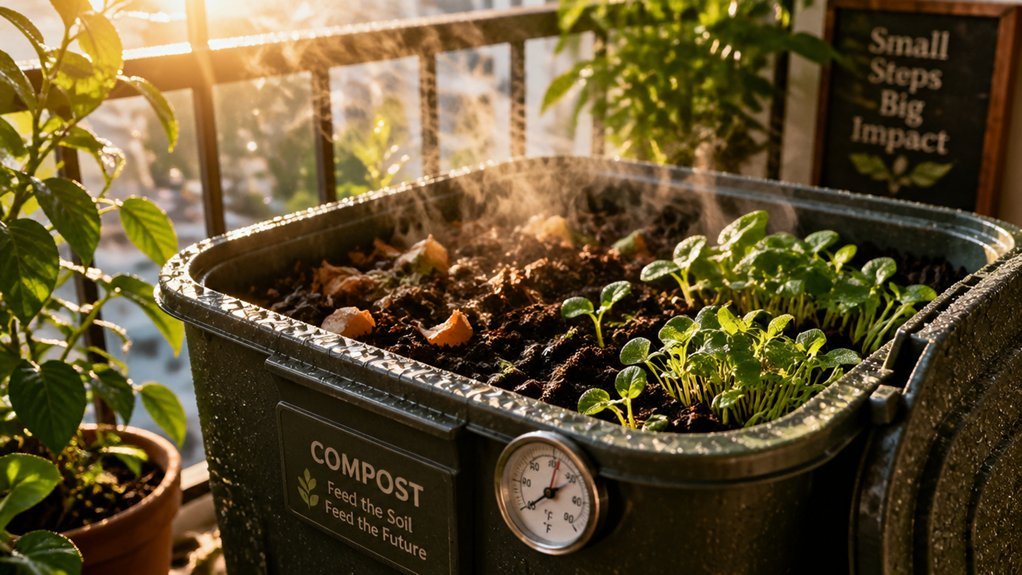
You need perfect temperatures on your balcony compost because the right heat (around 150 °F) drives rapid breakdown, kills pathogens, and fuels the thermophilic microbes that turn scraps into safe, nutrient‑rich soil, while staying below 160 °F protects beneficial organisms. A stable core temperature ensures steady decomposition, prevents odor, and keeps the pile from drying out or overheating. Monitoring the core with a long‑stem thermometer and adjusting aeration, moisture, and turning will keep you in the sweet spot, and the next sections show exactly how.
How to Keep Your Balcony Compost in the Right Temperature Range
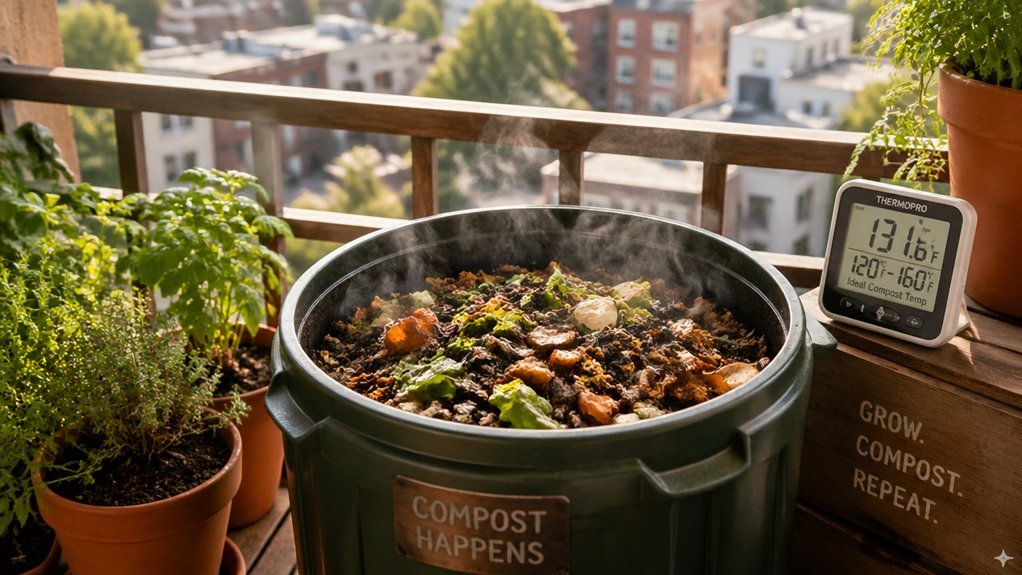
When you’re managing a balcony compost, keep the core temperature around 150 °F (65 °C) to speed decomposition while killing pathogens, but don’t let it stay above 160 °F (71 °C) or you’ll damage the beneficial microbes.
Use a long‑stem thermometer for daily Temperature and record min/max values so you spot trends before they become problems.
If the reading spikes toward 160 °F, practice Turning Aeration—lift and mix the pile to introduce oxygen and disperse heat.
Keep the brown‑to‑green ratio near 4:1 and check Moisture/Water content; a damp but not soggy mix raises core heat without drying out.
Shield the pile from direct sun to avoid surface heating that can mislead your readings and cause uneven moisture loss.
This routine maintains a stable Temperature range and fuels efficient composting.
Airflow balance can help optimize heat distribution and odor control in compact balcony setups.
Ideal Balcony Compost Temperature and Its Microbial Benefits
What temperature should you aim for in a balcony compost, and why does it matter? You should target roughly 150 °F (65 °C), the sweet spot where thermophilic microbes thrive and break down organic matter quickly while killing pathogens and weed seeds. Keep the temperature within the 115–160 °F thermophilic window; if it climbs above 160 °F, turn or aerate to prevent overheating and protect the microbes. Monitoring and adjusting moisture helps sustain steady heat and microbial activity, supporting a faster, healthier compost process in balcony conditions. BPI-certified
Measuring Balcony Compost Temperature Accurately
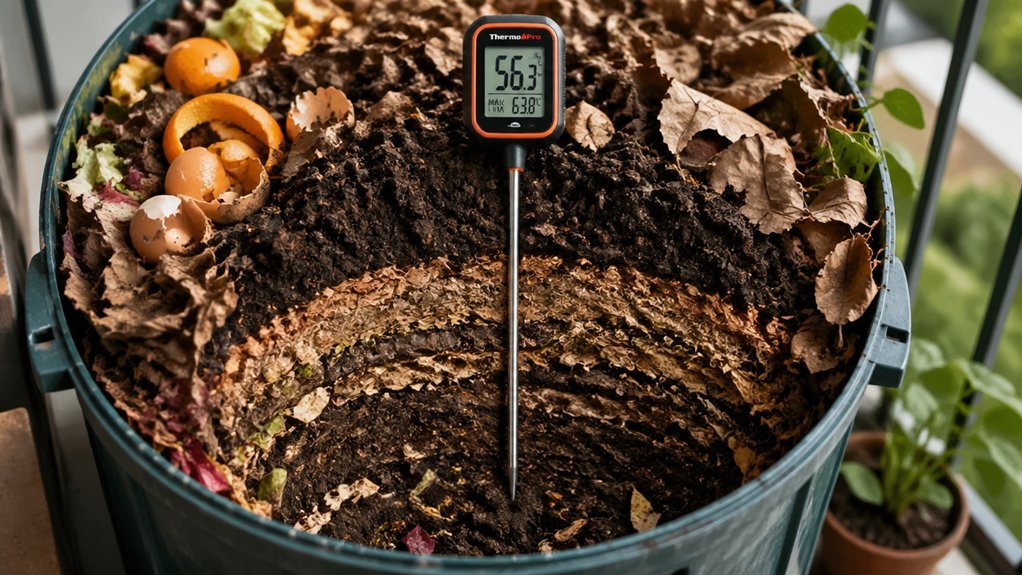
You’ve already set the target temperature, now you need to keep an eye on it. Accurate monitoring of your balcony compost pile hinges on consistent, core‑focused readings. Use a long‑stem, T‑handle thermometer like the RT610B, and insert it straight into the center of the pile each day. Track both minimum and maximum values to catch drops below 70 °F (21 °C) or spikes above 160 °F (71 °C). Remember, surface heat under the sun can mislead you; the thermophilic phase thrives on steady core temperature around 150 °F (65–70 °C).
Monitor core temperature daily with a long‑stem T‑handle thermometer; keep it steady around 150 °F for optimal composting.
- Insert the probe at the same depth each time.
- Record daily highs and lows in a simple log.
- Compare readings to the thermophilic range and adjust aeration or moisture accordingly.
To prevent temperature fluctuations, ensure your system maintains proper drainage and steady fermentation conditions, especially if you’re using a compact two‑bucket or stackable setup. Temperature management helps sustain the thermophilic phase and optimize microbial activity.
How to Raise Heat When Your Pile Is Cool
Ever notice your compost pile feels more like a lukewarm salad than a hot furnace? To crank up the temperature, start by adding nitrogen‑rich greens—grass clippings, veggie scraps, coffee grounds—and keep a 4:1 brown‑to‑green ratio. Moisture is your ally; a damp but not soggy pile lets bacteria thrive, pushing heat higher. Next, break up the mass and give it a good turning compost session; this introduces oxygen, fuels thermophilic microbes, and spreads warmth evenly. If the heat still lags, toss in extra greens and a splash of water, then turn again to reactivate the microbes. Keep an eye on the thermometer and aim for about 150 °F (65 °C). With the right balance of nitrogen, moisture, and aeration, your balcony compost will quickly shift from cool to scorching. The use of a sturdy potting bench or outdoor work surface can help keep tools and inputs organized during the process weather-ready surface and make turning and adding materials easier.
Cooling Strategies for Over‑Hot Balcony Compost
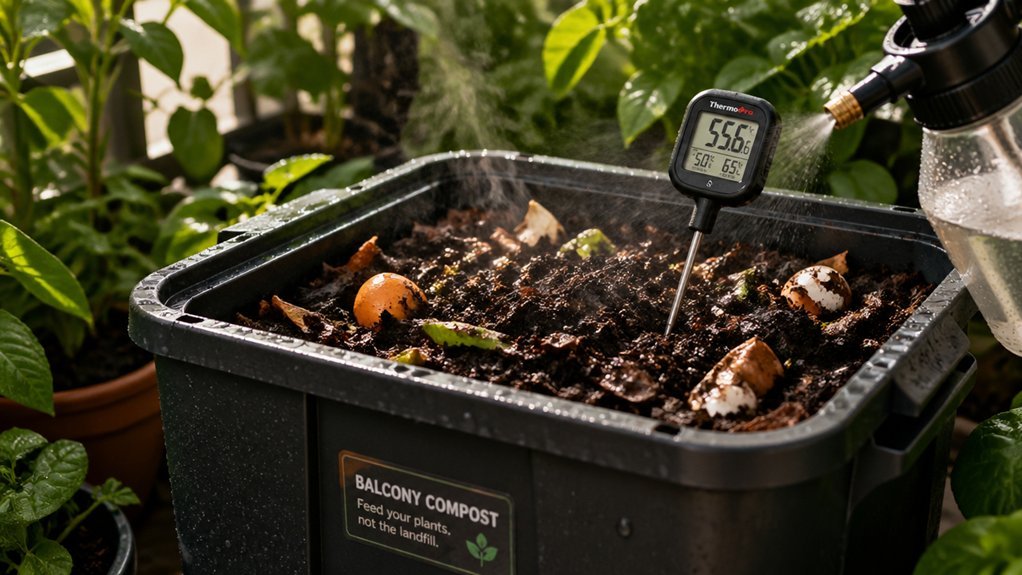
Feeling the heat rise too fast in your balcony compost? You can bring the temperature down quickly by adjusting aeration, moisture content, and turning frequency. Keep a long‑stem thermometer handy; when it reads above 160 °F, act now. Regular venting and using a tray with proper drainage can further help manage moisture and heat buildup Maximum ventilation design to promote cooling and prevent hotspots.
Balancing Moisture and C/N Ratio to Stabilize Temperature
How can you keep your balcony compost from swinging between scorching heat and sluggish cool‑down? Keep moisture levels at 50‑60% and watch the carbon‑to‑nitrogen ratio stay near 4:1. When you add enough green, nitrogen‑rich scraps, microbial activity spikes, pushing the pile into thermophilic temperatures that hold steady. If the pile cools, sprinkle a handful of fresh greens and mist lightly to revive the microbes. Too much water will drown them, while dry material stalls heat production. Balance browns and greens, aerate gently, and you’ll maintain a consistent temperature without overheating or stalling. This steady micro‑environment lets the compost break down efficiently, keeping your balcony pile healthy and productive. Bin Capacity
Optimal Turning Schedule for Small Compost Bins
A small balcony compost stays healthiest when you turn it right as the core temperature hits the 160 °F (71 °C) mark. You’ll keep aerobic conditions strong, avoid overheating, and preserve the microbes that drive decomposition. Use a long‑stem thermometer to watch the temperature and act the moment it nears 160 °F. Then, after each turn, check that the pile rebounds to 140‑150 °F before waiting again. During peak thermophilic activity, aim for a turning rhythm of every 2–3 days to sustain heat and pathogen reduction without drying out the mix. Thermophilic activity can guide the optimum turning cadence for small bins with plant-based compost bags.
Temperature‑Based Signs Your Balcony Compost Is Ready for Use
When the core temperature finally drops below 150 °F and stays steady for a day or two, you know the thermophilic surge has ended and the compost is moving into the mesophilic maturation stage.
At this point, you should feel the pile cool to room temperature and notice a faint, earthy smell instead of a hot, sour odor.
A quick temperature check with a long‑stemmer will show consistent readings around 70‑80 °F, indicating the microbes have settled.
If the material feels dry, crumbly, and no longer steams when you turn it, the compost has reached maturity.
Regular monitoring during the thermophilic phase helped you avoid overheating; now the stable temperature signals it’s ready for use on your balcony garden.
Frequently Asked Questions
How to Compost on Your Balcony?
You start by layering brown and green scraps, aiming for a 4:1 carbon‑to‑nitrogen mix, keep the pile moist, turn it regularly, and monitor temperature with a thermometer to stay within the ideal range.
What Is the Optimal Temperature for Compost?
You should aim for about 130‑140°F (55‑60°C) as your optimal compost temperature; that range kills pathogens and seeds while keeping beneficial microbes thriving, so monitor and adjust to stay within it.
Do Potato Peelings in Compost Attract Rats?
You’ll attract rats if you pile moist potato peels without enough air or a brown cover; they smell the nitrogen‑rich food, but turning, drying, and layering the scraps prevents rodent problems.
Can I Put Toilet Paper Rolls in My Compost?
Yes, you can add toilet‑paper rolls to your compost; just strip off any plastic or ink, tear the cardboard into strips, and mix them with brown material to keep aeration and speed decomposition.
In Summary
By keeping your balcony compost within the sweet spot—roughly 55‑65 °C—you’ll fuel the microbes that break down waste fast and efficiently. Monitor the heat, adjust moisture, and turn the pile on schedule, and you’ll avoid the sluggish, smelly stalls that come from being too cold or too hot. When the temperature steadies and the material darkens, you know it’s ready to enrich your plants and close the loop on your kitchen scraps.



Leave a Reply