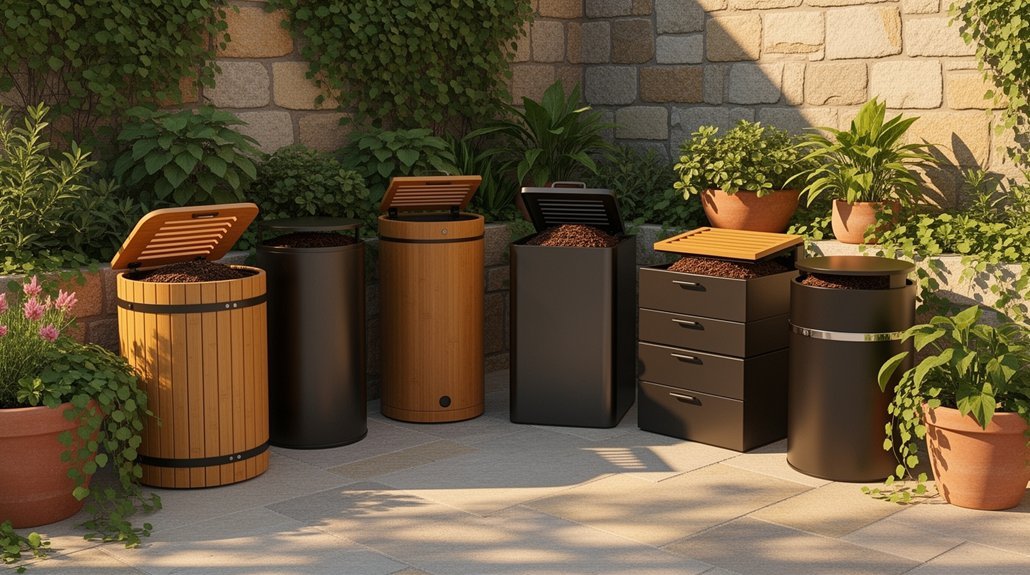

You can keep your indoor compost fresh using five easy, natural deodorizers: place activated‑charcoal packets around the bin to absorb smells, spray a 1:4 vinegar‑water solution for instant relief, sprinkle baking‑soda on nearby surfaces or make scented pods, simmer a pot of water with lemon zest, rosemary, and a pinch of baking‑soda for fragrant steam, and rotate fresh charcoal and baking‑soda layers every few weeks. Follow these steps and you’ll discover even more tricks for a clean‑smelling compost.
Pick the Most Effective DIY Indoor Compost Deodorizer

Looking for the most effective DIY indoor compost deodorizer? Try activated charcoal packets placed around the bin; they adsorb odors and keep the space fresh. Pair them with a vinegar‑and‑water spray (1:4) to neutralize lingering smells—just mist the area and let the vinegar evaporate. Sprinkle baking soda on nearby carpets or shelves; it absorbs compost odors and you can vacuum it up after 30 minutes. If you prefer a fragrant touch, set up a simmer potpourri with lemon zest, rosemary, and a few drops of essential oils; the gentle steam releases a clean scent without harsh chemicals. This combo tackles odors from multiple angles, turning your indoor compost zone into a pleasant, breathable spot. Odor-control
Simmer‑Pot Indoor Compost Deodorizer With Lemon, Rosemary & Baking Soda
Ever wondered how a simple pot on the stove can turn a smelly compost corner into a fresh‑scented oasis? Grab a non‑reactive saucepan, fill it with water, add lemon slices, a handful of rosemary, and a teaspoon of baking soda. Bring it to a boil, then lower to a simmer‑pot, and let the aromatic steam drift over your indoor compost. The lemon’s citrus zest and rosemary’s piney notes act as a natural deodorizer, while baking soda works as an odor neutralizer. Refill with water every 30–40 minutes to keep the scent alive. You can boost the fragrance with a few drops of essential oils, turning this DIY air freshener into a budget‑friendly, waste‑reduction solution. Odor protection duration
How to Whip Up a Fast Vinegar‑Water Spray for Immediate Odor Relief

Need a quick fix for compost smells? Grab a spray bottle, pour equal parts distilled white vinegar and water, then shake. For a scent boost, add a few drops of essential oil—lemon essential oil for zing or lavender essential oil for calm. Lightly mist the air and nearby surfaces; avoid soaking porous fabrics so you don’t trap moisture. Keep the room ventilated while you work to reduce acetic‑acid irritation. Reapply whenever the odor spikes, and place a bowl of plain vinegar nearby to keep smells at bay between sprays. Odor control is a key benefit of some natural compost starters, which can complement your spray routine.
DIY Baking‑Soda Pods & Charcoal Filters for Ongoing Indoor Compost Freshness
After the quick vinegar‑water spray, keep the compost smelling fresh long‑term with baking‑soda pods and activated‑charcoal filters. To make baking soda pods, blend a cup of soda with a few drops of essential oils, then press the mixture into silicone molds or fabric pouches. Let them dry, and you’ll have DIY air fresheners that release a gentle, neutral scent while soaking up moisture. For charcoal filters, fill fabric bags or socks with activated charcoal, tie them shut, and place them near the bin. The charcoal’s odor absorption traps sour molecules, extending odor neutralization. Rotate pods and filters every 1–2 months, sun‑exposing charcoal briefly to refresh its capacity. This simple routine ensures ongoing freshness without masking the compost’s natural aroma. Activated charcoal provides effective odor control when used in tandem with baking soda pods.
Troubleshooting & Maintenance Tips for a Clean‑Smelling Compost Bin

If you notice a sour or ammonia‑like odor, start by checking moisture and aeration—dry out excess wetness and add brown, carbon‑rich material to rebalance the C‑N ratio. Keep the compost bin airy by loosening the lid or turning the pile weekly; steady airflow stops anaerobic pockets that fuel bad odors. Sprinkle a thin layer of baking soda every couple of weeks to neutralize smells, and swap in fresh charcoal packets monthly for extra absorption. A simple deodorizer—simmered lemons and herbs—can be cooled and sprayed around the bin for a pleasant boost.
- Dry the bin, then add browns to restore balance.
- Sprinkle baking soda for instant odor control.
- Replace charcoal packets in sunlight each month.
- Spray lemon‑herb liquid for a fresh, natural scent. airflow optimization
Frequently Asked Questions
What Is the Strongest Natural Deodorizer?
You’ll find activated charcoal the strongest natural deodorizer; its porous surface adsorbs odor molecules far better than vinegar, baking soda, essential oils, or hydrogen peroxide, keeping indoor compost smells virtually gone.
What Three Ingredients Make Your House Smell Good Naturally?
You’ll love mixing lemon peels, fresh rosemary, and a splash of vanilla extract; simmer them in water, then add a pinch of baking soda for extra odor‑absorbing power, creating a bright, natural scent.
What Will Absorb Odors in a Room Naturally?
You’ll absorb room odors naturally by placing bowls of baking soda, activated charcoal, or white vinegar around the space; each draws out smells through adsorption or chemical neutralization, keeping the air fresh.
What Do Nursing Homes Use to Get Rid of Pee Smell?
You’ll find nursing homes use distilled white vinegar, baking soda, activated charcoal, and enzymatic cleaners—applying them to surfaces, placing charcoal bags, and ventilating rooms—to neutralize and eliminate urine odors quickly.
In Summary
You now have a toolbox of fast, effective DIY deodorizers to keep your indoor compost fresh. Whether you prefer simmer‑pot aromas, a quick vinegar‑water spray, or long‑lasting soda pods and charcoal filters, each method tackles odors at the source. Stick to the maintenance tips, and your bin will stay clean, smelling great, and continue turning waste into nutrient‑rich soil without any unpleasant surprises.