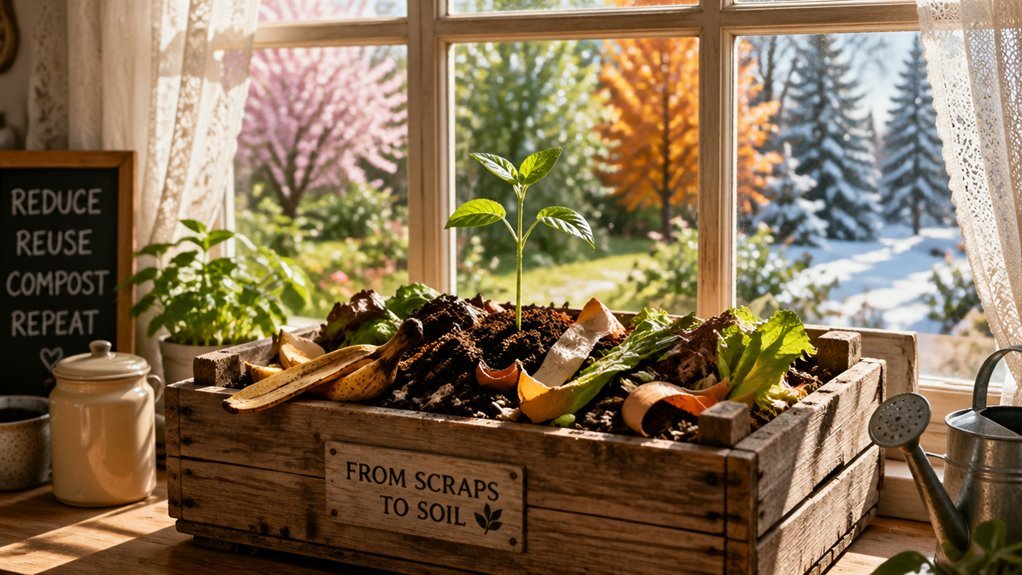
You keep a window compost thriving all year by treating the windrow like a living system—turn it regularly, balance moisture, and feed it the right mix of greens and browns. In spring, frequent turns and fresh greens push temperatures to 90‑140 °F, sparking rapid microbial activity. Summer’s heat does most of the work, so you just monitor moisture and keep aeration steady. Fall adds browns and leaf litter to maintain airflow, while winter turning and covers preserve core warmth and prevent ice buildup. Keep these steps in mind and you’ll discover even more seasonal tricks.
Why Window Composting Works Year‑Round
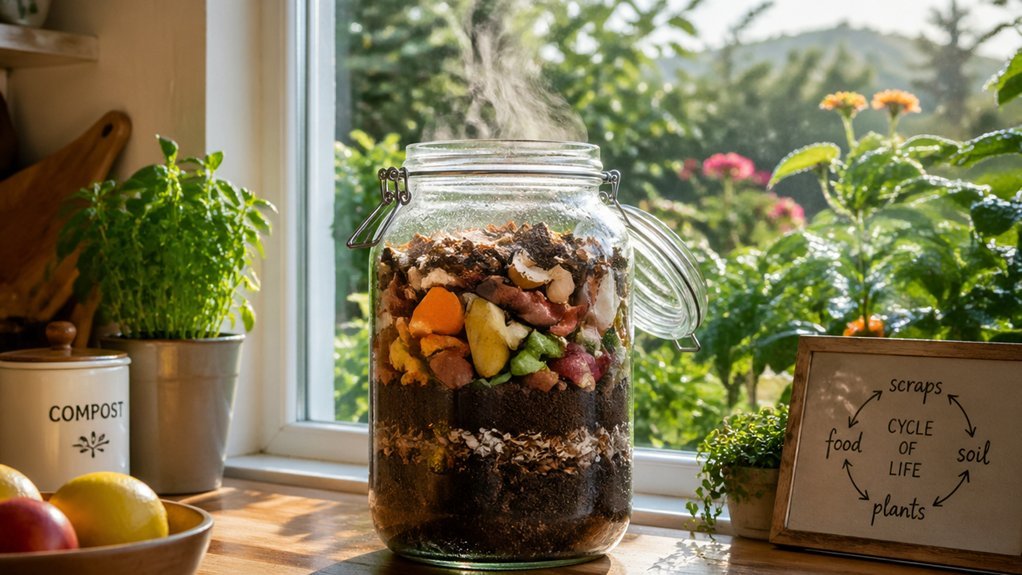
How does window composting stay effective all year? You keep composting alive by treating windrows like a living system, adjusting aeration, turning, temperature, and moisture through seasonal management. In spring, you raise the temperature to 90–140°F by turning frequently and adding green materials, which fuels microbial activity and yields usable compost in ~21 days. Summer’s heat does most of the work, but you must monitor moisture to avoid soggy piles that stall decomposition. In fall, you layer brown and green materials, turn to preserve airflow, and use covers that shield from rain while still allowing oxygen. Winter calls for extra turning to melt ice, retain core warmth, and keep moisture balanced, preventing activity collapse when temperatures dip below freezing. This disciplined routine sustains microbes and ensures steady breakdown year‑round. aeration
How Seasonal Temperatures Influence Window Composting Decomposition
Ever notice how the same compost pile behaves differently from spring to winter? In spring, seasonal temperatures rise, sparking microbial activity and speeding up the decomposition rate. You’ll want regular turning frequency—about every 1–2 weeks—to boost aeration and keep the carbon‑nitrogen balance healthy.
Spring’s warming sparks microbial activity; turn every 1–2 weeks for aeration and balanced carbon‑nitrogen.
Summer’s heat drives heat generation, so check moisture management daily; too dry, the windrow composting slows and odors can appear.
In fall, leaf litter adds carbon, improving aeration when you turn the row and preventing matting.
Winter demands more frequent turning to retain core warmth, while moisture management stays critical to keep microbes active despite cold.
Across all seasons, consistent aeration and moisture control sustain microbial activity, maintain odor control, and keep your window compost thriving.
Season‑by‑Season Tips to Keep Your Window Compost Healthy
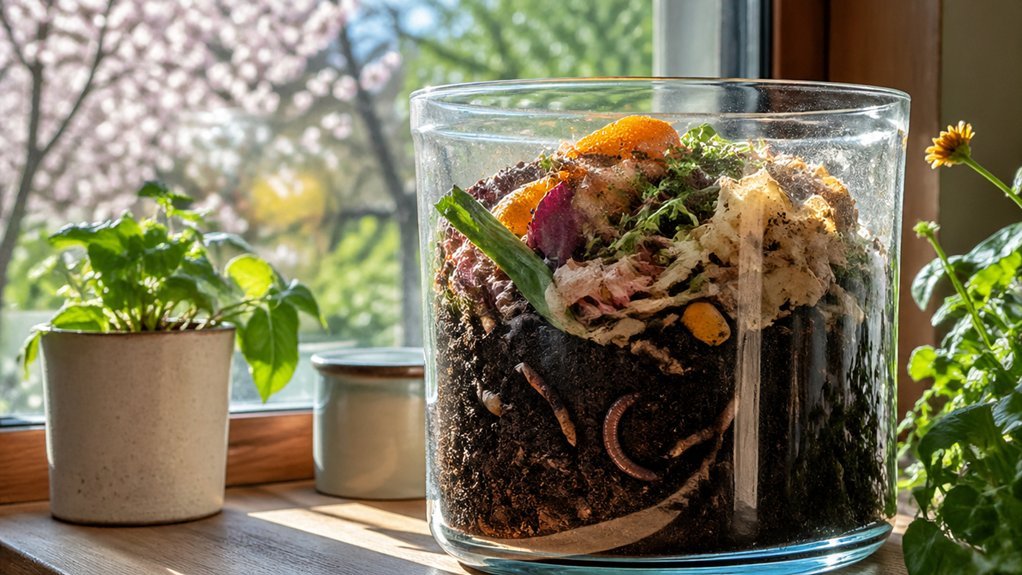
When spring arrives, you can expect a healthy window compost to finish in roughly 21 days if you turn it every 1–2 weeks and add fresh greens to keep microbes energized.
In summer, check moisture daily; humid air can dry the windrow, so spray water during each turning to sustain aerobic conditions. Add a mix of brown materials and green materials, keeping the temperature between 90–140 °F for rapid breakdown.
In fall, layer browns over greens, turn the windrow regularly for aeration, and set aside extra leaves for winter feeding.
Winter demands careful turning of frozen layers, adding moisture when snow melts, and protecting the compost from extreme cold while preserving aerobic activity. Adjust turning frequency and inputs each season to maintain balance, aeration, and temperature control.
A practical, compact all-season approach includes using an apartment-friendly system like a dual-chamber design that supports continuous processing while you add fresh scraps, helping you maintain steady aeration and temperature control dual-chamber design against seasonal fluctuations.
Frequently Asked Questions
Does Composting Work in the Winter?
Yes, it works—just keep the pile turned, moist, and insulated. You’ll maintain enough heat and oxygen for microbes, so decomposition continues even when outside temperatures drop below freezing.
What Are 5 Disadvantages of Composting?
You’ll face space constraints, odor problems, higher emissions, seasonal performance drops, and costly equipment or labor—each can make composting harder, especially in small or urban settings.
How Often Should Windrows Be Turned?
You should turn windrows every one to two weeks, adjusting for season and moisture; keep the core at 90‑140 °F, watch for drying, and avoid over‑turning to maintain steady decomposition.
Do Potato Peelings in Compost Attract Rats?
You’ll attract rats only if you leave moist potato peels exposed or pile them with oil. Mix them with dry browns, keep the windrow aerated, turn regularly, and cover the bin to prevent rodents.
In Summary
Now that you’ve seen how temperature swings, airflow, and moisture control keep your window bin humming, you can trust it to work year‑round. Adjust the feedstock, keep the lid slightly ajar, and tweak the water level as the seasons shift. With these simple tweaks, your compost will stay lively, break down faster, and keep your garden thriving no matter the weather.