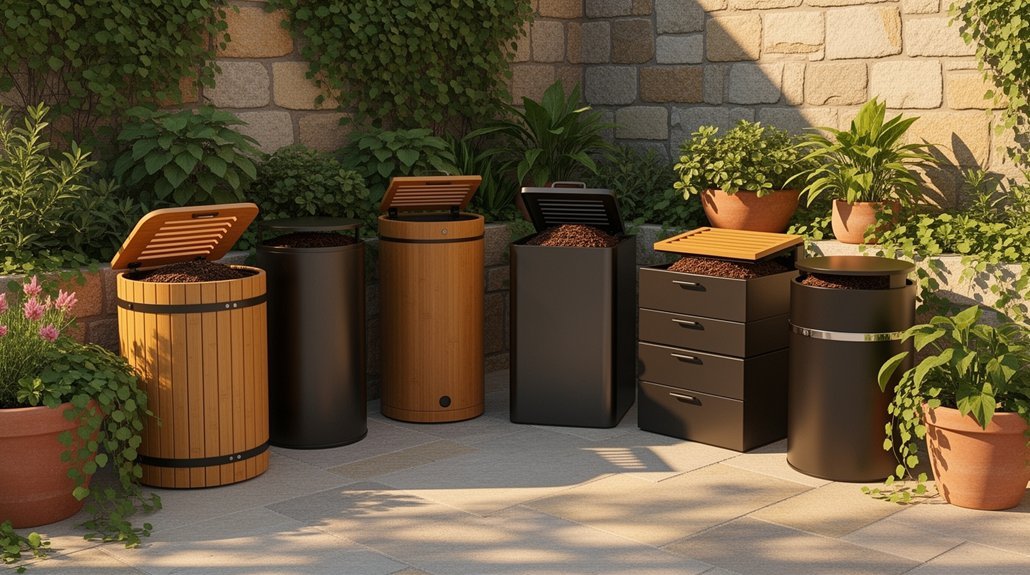
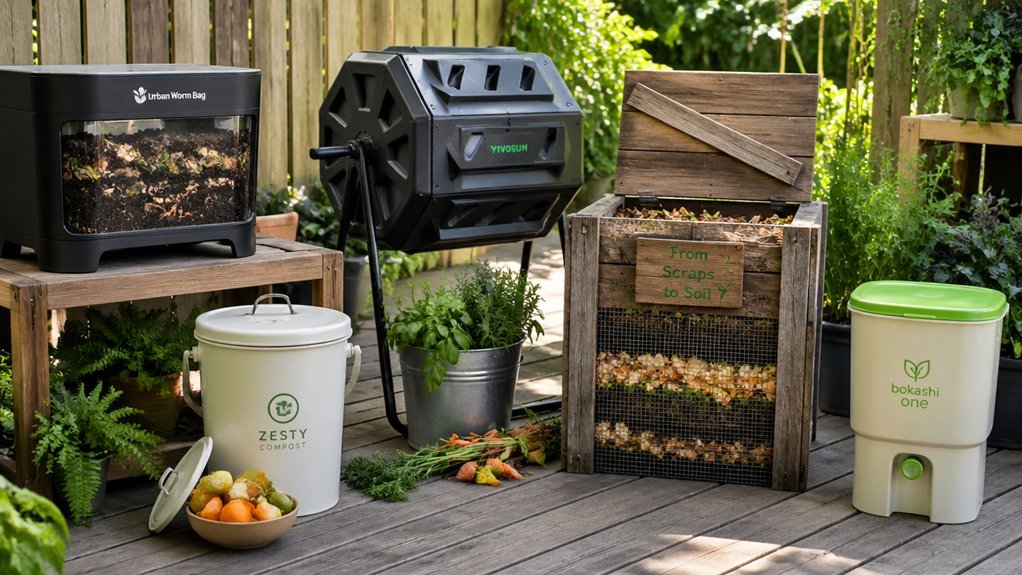
Pick a sturdy, tight‑fitting compost pail and line it with newspaper or paper bags to soak up moisture. Freeze your food scraps once a week to slow bacterial growth and keep odors at bay. Add a brown layer of shredded cardboard or egg cartons each cycle to balance wet greens and create air pockets. Empty and rinse the pail regularly with warm, and scrubbing every corner. Finish with a carbon‑filter lid, swapping the filter every few months for extra freshness. Keep going for deeper tips.
Pick a Compost Pail That Stays Fresh in Your Apartment
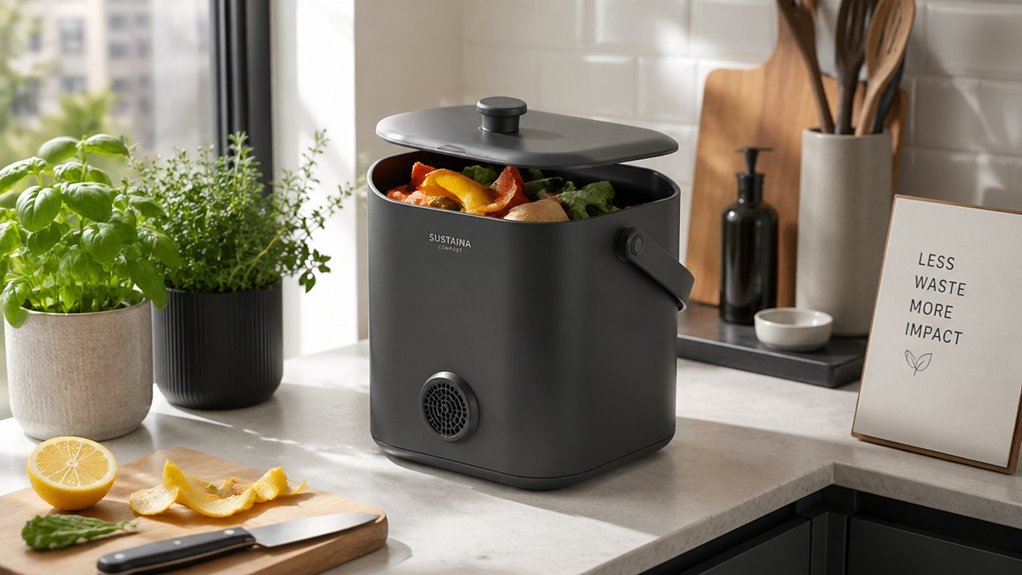
How can you keep a compost pail fresh in a small apartment? Choose a sturdy compost pail with a tight‑fitting lid and line it with newspaper or paper bags to soak up moisture and trap odor.
Choose a sturdy, tight‑fitting compost pail; line with newspaper or paper bags to absorb moisture and trap odor.
Position the pail where it’s handy—on a counter, under the sink, or even in the freezer—so you can empty it into the outdoor green bin on a regular schedule.
Add only food scraps and food‑soiled paper, then give the pail a quick soap‑and‑water rinse each week to curb bacteria that cause smells.
Keep the exterior green bin closed, and you’ll maintain a clean, odor‑free indoor composting system without attracting pests. This simple routine lets you compost efficiently while preserving a fresh‑smelling apartment.
Freeze Scraps (Once a Week) to Keep Your Odor‑Free Compost Pail Fresh
Ever wondered why your compost pail stays fresh even in a tiny apartment? You can keep it that way by freezing scraps once a week. When you toss food waste into the freezer, the low temperature slows bacterial growth and prevents moisture from creating anaerobic pockets that smell. Using a Bokashi approach with an airtight lid and bran layers can further reduce odors by starting fermentation in a sealed environment odor-control features and producing bokashi tea for plants. This simple routine extends the time between pail empties, giving you a longer window of odor control.
Line Your Odor‑Free Compost Pail With Newspaper or Other Brown Materials
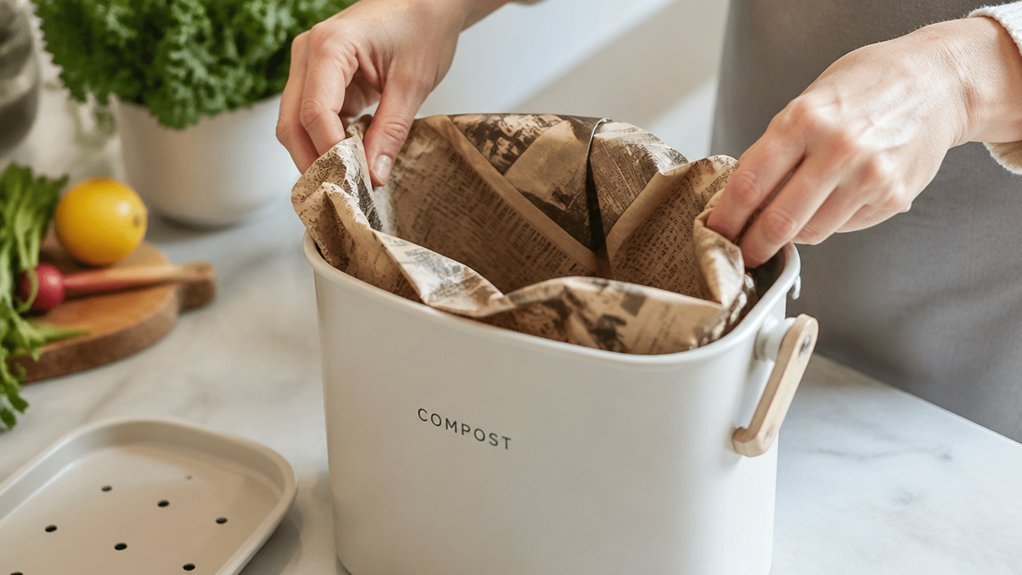
Why not start each compost cycle with a layer of brown material? Grab some newspaper, torn egg cartons, or shredded untreated cardboard and line the bottom of your compost pail. These brown materials soak up excess moisture, create pockets for air, and keep the pail from turning soggy—key for odor control. As you add kitchen scraps, the lining acts as a buffer, balancing the wet greens with dry browns and preventing anaerobic smells. When the layer gets saturated, pull it out and replace it with fresh brown material; this simple swap curbs bacterial buildup and keeps the pail smelling fresh. Following this routine not only meets SB1383 guidelines but also makes indoor composting painless and pleasant. The secure lids and odor-control features of modern countertop bins help maintain a clean, spill-free environment as you introduce each new layer odor control.
Empty and Rinse Your Odor‑Free Compost Pail Regularly
Ever notice a sour whiff drifting from your kitchen compost pail? That smell means bacteria are building up, so you need to empty and rinse it regularly. Pull the pail out, dump the kitchen scraps into your green bin, then wash the container with warm water and a little soap. Scrub every corner to remove residue, then rinse thoroughly. Doing this weekly keeps odor control in check and prevents the sour scent from returning. After washing, line the pail with newspaper or another brown material to absorb moisture and keep smells at bay until the next dump. For particularly strong scraps like onions, freeze them first to slow bacterial growth. Skip meat, dairy, and oily foods to maintain a fresh, pest‑free compost system. The compact pail design you use can be paired with dual‑chamber or odor‑control features to support consistent indoor composting without attracting pests. odor control
Add a Carbon‑Filter Lid Specifically for Your Odor‑Free Compost Pail
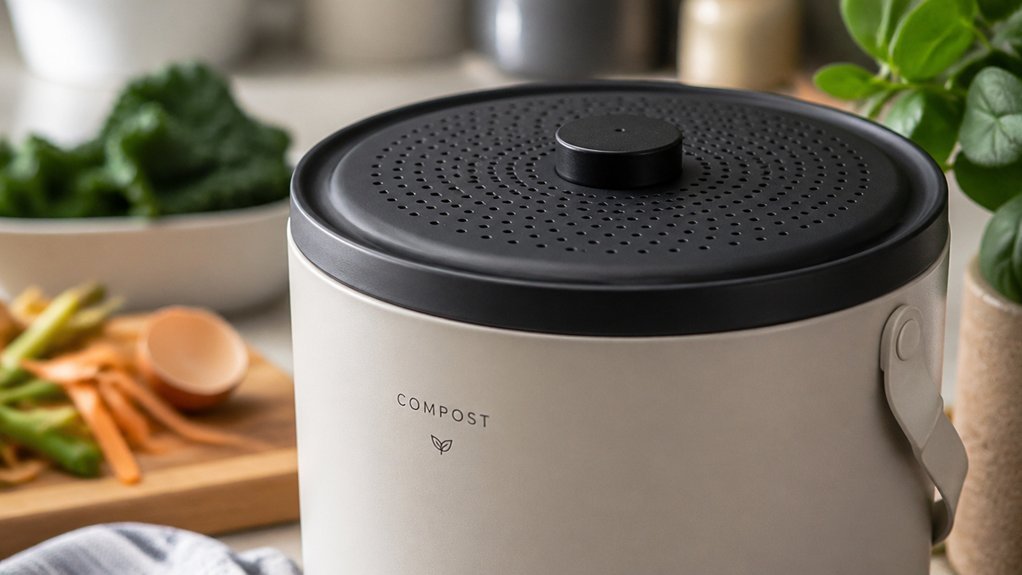
Could a carbon‑filter lid be the missing piece for a truly odor‑free kitchen compost? You’ll find that a carbon filter sits inside a tight‑fitting lid, actively absorbing volatile compounds that your scraps release. Choose a lid designed for your compost pail’s dimensions, so it seals securely and prevents leaks. The filter’s porous media traps odor molecules, keeping the kitchen air fresher during the week‑long collection period. For optimal performance, replace the filter every 2-3 months and trim to fit non-standard lid sizes as needed. filter replacement interval
Frequently Asked Questions
How to Compost at Home With No Smell?
You keep the bin balanced, adding two parts browns to one part greens, turn it weekly, spray water lightly, and never toss meat or dairy. If it smells, add dry browns and aerate immediately.
How Do the Amish Make Compost?
You make compost like the Amish by building a wooden bin, layering greens and browns, keeping it moist, turning it regularly, and covering it with a tarp or lid to block odors and pests.
How to Avoid Smell in Compost?
You keep smells down by balancing browns and greens, turning the pile often, adding dry leaves when it’s wet, and excluding meat, dairy, and oily foods. Use breathable covers and freeze scraps if needed.
What Is the Lazy Compost Method?
You’re using the lazy compost method: layer browns and greens, keep a simple weekly turn, add dry browns when you add greens, avoid meat/dairy, and balance moisture for odor‑free decomposition.
In Summary
By choosing a sealed compost pail, freezing your scraps weekly, lining it with newspaper, rinsing it often, and adding a carbon‑filter lid, you’ll keep odors at bay and your apartment smelling fresh. These simple steps let you compost any kitchen waste without embarrassment, turning waste into nutrient‑rich soil for your plants while keeping your living space pleasant. Enjoy hassle‑free, odor‑free composting right at home.