You’ve likely noticed that not all worm migration trays perform equally. Some dry out quickly, others don’t stack properly, and many fail to maintain the aeration your composting system demands. Finding the right tray setup can transform your vermicomposting results—and the difference between mediocre and exceptional production hinges on features you’d want to know about first.
| Additional Basic Worm Farm Trays |  | Budget Expansion Option | Tray Configuration: 2 additional stacking trays | Material Composition: Not specified | Worm Migration System: Not specified | CHECK ON AMAZON | Read Our Analysis |
| 5-Tray Worm Composter for Indoor & Outdoor Use |  | Best Overall System | Tray Configuration: 5-tier design | Material Composition: High-quality PP (polypropylene) | Worm Migration System: Layer mesh bases allow upward migration | CHECK ON AMAZON | Read Our Analysis |
| FCMP Outdoor Essential Living Worm Composter Bin |  | Premium Compact Choice | Tray Configuration: 4-tray design | Material Composition: BPA-free, UV-inhibited recycled polypropylene | Worm Migration System: 52 angled tunnels per tray for worm movement | CHECK ON AMAZON | Read Our Analysis |
| FCMP Outdoor – Expansion Tray Set for The Essential Living Composter Grey |  | Grey Expansion Set | Tray Configuration: 2 expansion trays | Material Composition: BPA-free, UV-inhibited recycled polypropylene | Worm Migration System: 40 angled migration tunnels per tray | CHECK ON AMAZON | Read Our Analysis |
| FCMP Outdoor – Expansion Tray Set for The Essential Living Composter Plum | 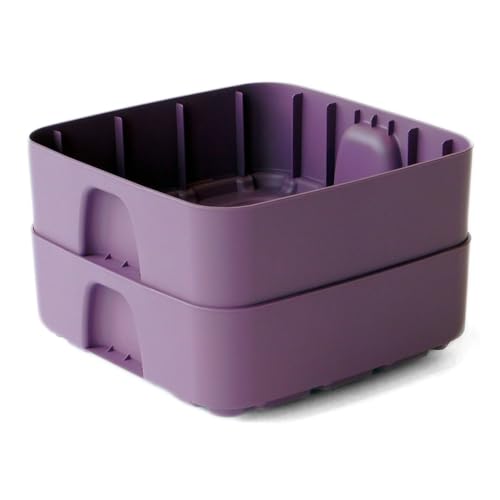 | Plum Expansion Set | Tray Configuration: 2 expansion trays | Material Composition: BPA-free, UV-inhibited recycled polypropylene | Worm Migration System: 40 angled migration tunnels per tray | CHECK ON AMAZON | Read Our Analysis |
| FCMP Outdoor – Expansion Tray Set for The Essential Living Composter Green |  | Green Expansion Set | Tray Configuration: 2 expansion trays | Material Composition: BPA-free, UV-inhibited recycled polypropylene | Worm Migration System: 40 angled migration tunnels per tray | CHECK ON AMAZON | Read Our Analysis |
More Details on Our Top Picks
Additional Basic Worm Farm Trays
Looking to expand your existing worm composting system? Additional Basic Worm Farm Trays offer you the perfect solution. These stacking trays measure 15.75 x 15.75 x 5 inches and weigh just 5 pounds each, making them easy to manage and integrate into your setup. With a impressive 4.7-star rating from 29 customer reviews, you’ll gain confidence in your purchase. The trays rank #275 in Outdoor Composting Bins, demonstrating their popularity among composting enthusiasts. You’ll appreciate the straightforward design that lets you scale your worm farm efficiently. Product warranty support’s available to back your investment, ensuring you can expand your composting operation without worry.
- Tray Configuration:2 additional stacking trays
- Material Composition:Not specified
- Worm Migration System:Not specified
- Aeration & Airflow:Not specified
- Moisture Management:Not specified
- Customer Rating:4.7 out of 5 stars (29 reviews)
- Additional Feature:Expandable 2-tray stacking system
- Additional Feature:Budget-friendly basic option
- Additional Feature:5-pound lightweight construction
5-Tray Worm Composter for Indoor & Outdoor Use
Want a composting system that adapts to your space without sacrificing performance? This 5-tier worm composter delivers 85 liters of capacity with high-speed composting through strategic air vents on each layer. The mesh bases encourage worms to migrate upward naturally, maintaining aerobic conditions that accelerate decomposition while controlling odors—ideal for backyards and gardens. You’ll collect nutrient-rich worm tea as a liquid fertilizer and harvest finished compost for topsoil. The modular design lets you stack layers as needed, making it perfect for indoor or outdoor setups. Plus, excess worms become premium poultry feed.
- Tray Configuration:5-tier design
- Material Composition:High-quality PP (polypropylene)
- Worm Migration System:Layer mesh bases allow upward migration
- Aeration & Airflow:Multiple air vents per tier
- Moisture Management:Not specified
- Customer Rating:Not specified
- Additional Feature:Nutrient-rich worm tea collection
- Additional Feature:High-protein poultry feed production
- Additional Feature:85-liter total capacity
FCMP Outdoor Essential Living Worm Composter Bin
If you’re seeking efficient vermicomposting without sacrificing indoor living space, the FCMP Outdoor Essential Living Worm Composter Bin delivers a compact 12-gallon solution with a thoughtfully engineered 4-tray system. You’ll benefit from 52 angled tunnels per tray that facilitate seamless worm migration, while the moisture-control channel prevents bedding from drying out. The molded aeration points create 360-degree airflow, ensuring ideal decomposition conditions. You can keep this odor-minimizing bin indoors year-round, producing nutrient-rich worm castings and liquid fertilizer. Made from BPA-free, UV-inhibited recycled polypropylene in Canada, it’s designed for serious composters. Note that you’ll need to purchase worms separately.
- Tray Configuration:4-tray design
- Material Composition:BPA-free, UV-inhibited recycled polypropylene
- Worm Migration System:52 angled tunnels per tray for worm movement
- Aeration & Airflow:360-degree airflow via molded aeration points
- Moisture Management:Water retention channel prevents bedding drying
- Customer Rating:4.8 out of 5 stars (18 reviews)
- Additional Feature:Made in Canada quality
- Additional Feature:Year-round indoor use capability
- Additional Feature:4.8-star customer rating
FCMP Outdoor – Expansion Tray Set for The Essential Living Composter Grey
The FCMP Outdoor Expansion Tray Set stands out for composters who’ve already invested in The Essential Living Composter and need to scale up their operation. You’ll get two extra trays plus a coconut coir brick to expand your composting capacity. The trays feature 40 angled migration tunnels per base, enabling worms to move freely between levels. Their 360-degree airflow design, supported by molded aeration points, keeps your bedding properly oxygenated. A moisture control channel around each tray’s outer edge prevents bedding from drying out. Made in Canada from UV-inhibited recycled polypropylene, these BPA-free trays deliver durability without compromising performance.
- Tray Configuration:2 expansion trays
- Material Composition:BPA-free, UV-inhibited recycled polypropylene
- Worm Migration System:40 angled migration tunnels per tray
- Aeration & Airflow:360-degree airflow via molded aeration points
- Moisture Management:Water retention channel prevents bedding drying
- Customer Rating:Not specified
- Additional Feature:Includes coconut coir brick
- Additional Feature:360-degree airflow support points
- Additional Feature:Compatible expansion option available
FCMP Outdoor – Expansion Tray Set for The Essential Living Composter Plum
Looking to expand your worm composting capacity without sacrificing migration efficiency? The FCMP Outdoor Expansion Tray Set for The Essential Living Composter in Plum offers a practical solution. You’ll receive two extra trays plus a coconut coir brick to jumpstart your setup. Each tray features forty angled migration tunnels that facilitate seamless worm movement between levels, while moisture control channels prevent edge drying. Aeration support points molded into the sides ensure 360-degree airflow throughout your system. Constructed from durable, UV-inhibited recycled polypropylene, these trays withstand outdoor conditions. Since they’re made in Canada and compatible exclusively with The Essential Living Composter, verify your model before purchasing.
- Tray Configuration:2 expansion trays
- Material Composition:BPA-free, UV-inhibited recycled polypropylene
- Worm Migration System:40 angled migration tunnels per tray
- Aeration & Airflow:360-degree airflow via molded aeration points
- Moisture Management:Water retention channel prevents bedding drying
- Customer Rating:Not specified
- Additional Feature:Includes coconut coir brick
- Additional Feature:Durable recycled polypropylene construction
- Additional Feature:Color-matched expansion option available
FCMP Outdoor – Expansion Tray Set for The Essential Living Composter Green
Want to expand your Essential Living Composter without replacing the entire system? The FCMP Outdoor Expansion Tray Set in green offers exactly that. You’ll receive two extra trays plus a coconut coir brick to enhance your composting capacity. The trays feature 40 angled migration tunnels at the base, allowing worms to move freely between levels. Moisture control channels around the tray edges prevent bedding from drying out, while aeration support points deliver 360-degree airflow. Constructed from durable, UV-inhibited recycled polypropylene, these Canadian-made trays are BPA-free and built to last. Note that they’re incompatible with the Classic Living Composter model.
- Tray Configuration:2 expansion trays
- Material Composition:BPA-free, UV-inhibited recycled polypropylene
- Worm Migration System:40 angled migration tunnels per tray
- Aeration & Airflow:360-degree airflow via molded aeration points
- Moisture Management:Water retention channel prevents bedding drying
- Customer Rating:Not specified
- Additional Feature:Includes coconut coir brick
- Additional Feature:Made in Canada quality
- Additional Feature:Color-matched expansion option available
Factors to Consider When Choosing Worm Migration Trays
When selecting a worm migration tray, you’ll want to evaluate the tray’s capacity and expansion capabilities to ensure your bin can grow as your worm population increases. You should also examine the migration tunnel design, aeration features, and airflow systems, since these elements directly impact how efficiently worms move between levels and access oxygen. Finally, you’ll need to assess the material’s durability, moisture control mechanisms, and overall construction quality to guarantee long-term performance and a healthy vermicomposting environment.
Tray Capacity and Expansion
Why does tray capacity matter so much? It directly determines how many worms and organic material you’ll process per layer, ultimately affecting your production volume and harvest frequency. When you’re ready to expand, you don’t need to replace your entire system. Instead, you can add expansion trays that stack vertically, increasing total capacity without replacing your base unit.
Multi-tier configurations—like 5-tray or 4-tray systems—give you more vertical space for worm activity and faster composting across layers. Before investing in additional trays, verify compatibility with your existing composter model to ensure proper fit and airflow alignment. Many expansion trays come with extra bedding materials like coconut coir bricks, so you’ll maintain appropriate moisture levels between layers immediately.
Migration Tunnel Design
The migration tunnels in your worm composter serve as the vertical highways that let worms move freely between stacked trays. You’ll want to look for trays featuring a specified number of tunnels—typically around 40 per tray—to ensure consistent worm circulation throughout your system.
Pay attention to tunnel entry point angles, as sloped designs promote efficient worm travel and prevent clogging at tray junctions. This thoughtful engineering keeps your worms actively moving upward without obstruction.
The best tunnel designs work seamlessly with bedding layers to maintain vertical expansion while preserving crucial aeration and moisture balance. When evaluating migration trays, prioritize models that integrate tunnels strategically, supporting healthy worm activity across all layers without compromising your vermicomposting system’s overall performance.
Aeration and Airflow
Have you considered how critical airflow is to your worm migration tray’s performance? Proper aeration directly impacts decomposition speed and worm health. Look for trays featuring molded aeration support points along edges that enable 360-degree airflow around your habitat. Strategic ventilation holes and air vents per tier maintain the aerobic conditions your worms need to thrive.
In multi-tray systems, mesh bases allow upward worm migration while preserving airflow between layers. Moisture-control channels running along tray outer edges stabilize moisture levels without compromising ventilation. These design elements work together to create optimal conditions inside your bin. When evaluating options, prioritize systems that combine robust aeration features with thoughtful moisture management to maximize both decomposition efficiency and worm activity throughout your composting operation.
Material Durability
UV-inhibited recycled polypropylene stands as the industry standard for worm migration trays because it’ll withstand outdoor temperature swings and sun exposure without cracking or warping. This durable material resists the environmental stress that degrades lesser alternatives, ensuring your investment lasts through multiple seasons.
Look for trays featuring reinforced edge channels—these prevent bending when you stack or handle them during maintenance. This structural reinforcement maintains tray integrity even under repeated use and weight distribution.
The material’s durability pairs effectively with coir bedding, which maintains moisture levels without compromising the tray itself. You’ll find that quality trays combine UV protection, reinforced construction, and moisture-compatible design, creating a system that endures challenging backyard conditions while supporting your worm colony’s thriving ecosystem.
Moisture Control Features
While durable materials keep your trays structurally sound, they can’t do the job alone—you’ll need effective moisture control features working alongside that robust construction. Water retention channels running along tray edges prevent bedding from drying out, maintaining consistent humidity levels that support worm comfort and activity across stacked configurations. These moisture management systems reduce your watering frequency by slowing water loss, saving you time and effort. Built-in moisture features stabilize worm migration by eliminating dry patches that obstruct movement between trays. When selecting migration trays, prioritize models with integrated water retention channels. This combination of durability and moisture control creates an optimal environment where your worms thrive and move naturally through the system without interruption.
Worm Castings Production
When you’re evaluating migration trays, worm castings production should rank high on your priority list since it directly reflects your system’s efficiency and output. The layered, modular design lets you expand by adding trays, which increases your total processing capacity and potential castings yield. Layer mesh bases enable upward worm movement, supporting multi-tier composting without manual mixing—a feature that streamlines production. The forty angled migration tunnels per tray funnel worms between layers, promoting even distribution and faster processing. Additionally, moisture control channels along tray outer edges prevent bedding drying, helping sustain worm activity that drives castings production. Aeration support points provide 360-degree airflow, maintaining aerobic conditions critical for efficient decomposition and rich castings output.
Indoor or Outdoor Use
Where you’ll set up your vermicomposting system—indoors or outdoors—fundamentally shapes which migration tray features you’ll need.
Indoor setups demand sealed or semi-sealed modular designs that contain odors and emissions effectively. You’ll want 360-degree airflow systems paired with odor control features to keep your space fresh. Layered, multi-tray designs with moisture control channels prevent bedding from drying out in enclosed environments. For substantial indoor operations, consider 4-tray or 5-tier systems that support larger worm populations while maintaining manageable airflow.
Outdoor systems offer more flexibility since natural ventilation handles odor concerns. You’re less constrained by sealing requirements, though layered designs still benefit moisture retention.
Regardless of location, ensure your chosen tray includes worm migration tunnels or channels, allowing worms to move upward as composting progresses naturally through the system.
Compatibility and Stacking
Because you’re investing in a system you’ll expand over time, ensuring your trays stack securely with your existing unit is critical. You’ll want compatible dimensions and edge features that align perfectly with your main unit’s connectors or lip design to prevent shifting or instability.
Check whether expansion trays are exclusive to specific models—some don’t work with certain “Classic” or other series, which could derail your plans. Verify that migration tunnels extend from each tray’s base to facilitate seamless worm movement between layers without gaps.
Look for 360-degree airflow features and molded aeration points along edges. Equally important, confirm that moisture control channels remain continuous when stacked, preventing bedding from drying at the edges and maintaining optimal conditions throughout your system.
Frequently Asked Questions
How Long Does It Typically Take Worms to Migrate to a New Tray?
You’ll typically see worms migrate to a new tray within one to three weeks. They’ll move gradually as they consume available food in their current tray, so you shouldn’t rush the process.
Can I Use Worm Migration Trays With Non-Composting Worm Species?
You shouldn’t use migration trays with non-composting worm species. They’re specifically designed for composting worms like red wigglers and European nightcrawlers. Other species won’t respond to the migration process effectively.
What Temperature Range Is Optimal for Successful Worm Migration?
You’ll achieve optimal worm migration between 55-77°F (13-25°C). You’ll want to maintain consistent temperatures within this range since you’re encouraging movement without stressing your worms through extreme heat or cold conditions.
How Often Should I Add New Migration Trays to My Composter?
You should add new migration trays every 4-6 weeks once your worms have colonized the current tray. You’ll know it’s time when you’ve noticed significant worm population growth and the existing tray’s bedding’s becoming depleted.
Are Worm Migration Trays Compatible With All Composting Systems?
No, you won’t find worm migration trays compatible with all composting systems. You’ll need to match them specifically to your bin’s dimensions and design. You should verify compatibility before purchasing to ensure they’ll fit properly.