You’re likely wondering which bedding materials’ll actually sustain your worm colony through 2026. Whether you’re raising mealworms or managing a multi-species bin, the wrong substrate can compromise your entire ecosystem. The materials we’re covering don’t just house your worms—they fundamentally shape hydration, cast quality, and long-term viability. Let’s examine what separates premium options from the rest.
| Premium Natural Wheat Bran Bedding for Mealworms (1lb) |  | Best for Mealworms | Primary Material: Wheat bran | Package Size: 1 lb | Chemical-Free/Natural Status: No added chemicals or preservatives | CHECK ON AMAZON | Read Our Analysis |
| Nutriworms Premium Natural Wheat Bran Bedding (5lb) | | Best Value | Primary Material: Wheat bran | Package Size: 5 lb | Chemical-Free/Natural Status: No added chemicals or preservatives | CHECK ON AMAZON | Read Our Analysis |
| Magic Bait 2-Pound Buss Bedding Bag Yellow |  | Best for Fishing | Primary Material: Sphagnum peat moss | Package Size: 2 lb | Chemical-Free/Natural Status: Organic fibrous material (no specifics listed) | CHECK ON AMAZON | Read Our Analysis |
| pH-Balanced Bedding for Worm Bins (4 Lbs) |  | Best for Beginners | Primary Material: pH-balanced professionally mixed blend | Package Size: 4 lb | Chemical-Free/Natural Status: pH-balanced professional mix (no specifics listed) | CHECK ON AMAZON | Read Our Analysis |
| Urban Worm Coco Coir – 5kg – Soil Amendment and Worm & Reptile Bedding |  | Most Sustainable | Primary Material: Coco coir | Package Size: 5 kg (expands to ~17 gallons) | Chemical-Free/Natural Status: 100% natural & organic | CHECK ON AMAZON | Read Our Analysis |
| BadAssBugs Premium Wheat Bran Mealworm Bedding |  | Best Organic Option | Primary Material: Wheat bran | Package Size: 2 lb | Chemical-Free/Natural Status: Pesticide, fungicide, and herbicide-free | CHECK ON AMAZON | Read Our Analysis |
| Urban Worm Coco Coir Soil Amendment and Bedding (2) |  | Best for Reptiles | Primary Material: Coco coir | Package Size: 1.4 lb per brick | Chemical-Free/Natural Status: 100% natural & organic | CHECK ON AMAZON | Read Our Analysis |
More Details on Our Top Picks
Premium Natural Wheat Bran Bedding for Mealworms (1lb)
If you’re raising mealworms, giant mealworms, superworms, or miniworms, you need bedding that won’t compromise your colony’s health—and that’s where this premium wheat bran shines. This 1lb package of 100% natural, coarse-milled wheat bran gives you exactly what your worms need without any added chemicals or preservatives. It’s locally milled and ready to use straight out of the bag, eliminating prep work. Since mealworms serve as a high-protein food source for reptiles, birds, and other animals, providing them quality bedding ensures they’re nutritious for your pets. You’ll appreciate the simplicity and purity of this option—it’s bedding that does one job exceptionally well.
- Primary Material:Wheat bran
- Package Size:1 lb
- Chemical-Free/Natural Status:No added chemicals or preservatives
- Worm Types Supported:Mealworms, giant mealworms, superworms, miniworms
- Water Retention/Moisture Handling:Not specified
- Sourcing/Origin:Locally milled
- Additional Feature:Locally milled coarse texture
- Additional Feature:Ready-to-use convenience
- Additional Feature:High-protein diet source
Nutriworms Premium Natural Wheat Bran Bedding (5lb)
Looking for versatile bedding that works across multiple worm species? Nutriworms’ 5lb bag of premium natural wheat bran delivers exactly that. You’ll get 100% natural, locally milled bedding with zero added chemicals or preservatives—ready to use straight from the package. This coarse-milled formula accommodates mealworms, giant mealworms, superworms, and miniworms seamlessly. Beyond bedding, you’re providing your worms with high-protein nutrition that translates directly to healthier reptiles, birds, and animals you’re feeding. The larger 5lb size suits both serious worm farmers and those running extended feeding cycles, offering better value than smaller quantities while maintaining consistent quality throughout your operation.
- Primary Material:Wheat bran
- Package Size:5 lb
- Chemical-Free/Natural Status:No added chemicals or preservatives
- Worm Types Supported:Mealworms, giant mealworms, superworms, miniworms
- Water Retention/Moisture Handling:Not specified
- Sourcing/Origin:Locally milled
- Additional Feature:Locally milled coarse texture
- Additional Feature:Ready-to-use convenience
- Additional Feature:Worm farming cycle optimization
Magic Bait 2-Pound Buss Bedding Bag Yellow
The Magic Bait 2-Pound Buss Bedding Bag stands out for anglers who want worms that’ll stay active longer on the hook. This yellow bag contains sphagnum peat moss, an organic fibrous material that absorbs moisture at twenty times its weight. You’ll notice your worms darken naturally, mimicking actual fish food and conditioning them for tougher performance. The bedding toughens your bait, extending its lifespan during fishing sessions and potentially increasing your catch rate. When the material darkens from worm castings, you can repurpose it as potting soil. At two pounds, this compact size suits casual anglers and those new to worm maintenance.
- Primary Material:Sphagnum peat moss
- Package Size:2 lb
- Chemical-Free/Natural Status:Organic fibrous material (no specifics listed)
- Worm Types Supported:General worms for fishing bait
- Water Retention/Moisture Handling:Handles 20x its weight in moisture
- Sourcing/Origin:Not specified
- Additional Feature:Darkens worms naturally
- Additional Feature:Extends hook durability
- Additional Feature:Dual-use potting soil option
pH-Balanced Bedding for Worm Bins (4 Lbs)
Want bedding that’s ready to use right out of the bag? pH-Balanced Bedding for Worm Bins (4 Lbs) is your answer if you’re tired of guessing whether your worm environment’s pH and carbon-to-nitrogen ratios are correct. This professionally mixed bedding comes from a real worm farm that uses it in their commercial operation, so you’re getting proven expertise. Setup’s straightforward: pour it into your bin, water lightly, add your worms, and you’re done. You’ll receive detailed care instructions to help you succeed. At four pounds, you’ve got enough bedding for most indoor or outdoor vermicomposting systems. It’s an ideal choice for anyone seeking simplicity without sacrificing quality or environmental impact.
- Primary Material:pH-balanced professionally mixed blend
- Package Size:4 lb
- Chemical-Free/Natural Status:pH-balanced professional mix (no specifics listed)
- Worm Types Supported:General worm bins/vermicomposters
- Water Retention/Moisture Handling:Not specified
- Sourcing/Origin:From commercial worm farm
- Additional Feature:pH and C:N balanced
- Additional Feature:Commercial worm farm tested
- Additional Feature:Expert care instructions included
Urban Worm Coco Coir – 5kg – Soil Amendment and Worm & Reptile Bedding
If you’re seeking a sustainable, versatile bedding solution that won’t compromise your worm composting setup, Urban Worm Coco Coir delivers impressive performance in a compact package. This 5kg block expands to nearly 17 gallons of fluffy, pH-neutral bedding material. You’ll appreciate its exceptional water retention—each brick absorbs 7.5 gallons of water, creating ideal moisture conditions for your worms. The product’s rinsed composition keeps salt content below 1.5 mS/cm, preventing harmful electrical conductivity. As a 100% natural, organic alternative to peat moss, it’s sustainably sourced. You can use it for worm bins, reptile bedding, or composting toilets, making it remarkably adaptable for various setups.
- Primary Material:Coco coir
- Package Size:5 kg (expands to ~17 gallons)
- Chemical-Free/Natural Status:100% natural & organic
- Worm Types Supported:Worms, turtles, reptiles
- Water Retention/Moisture Handling:Absorbs 7.5 gallons of water per brick
- Sourcing/Origin:Not specified
- Additional Feature:Expands to 17 gallons
- Additional Feature:Composting toilet compatible
- Additional Feature:Low salt content certified
BadAssBugs Premium Wheat Bran Mealworm Bedding
BadAssBugs™ Premium Wheat Bran Mealworm Bedding stands out for insect enthusiasts who won’t compromise on quality or purity. You’re getting a 100% organic product sourced directly from a local United States wheat farm. This 2lb bedding works perfectly for mealworms, superworms, kingworms, and other insects you’re raising. The pure wheat bran contains no added preservatives, pesticides, fungicides, or herbicides—ensuring your insects thrive safely. You’ll appreciate the resealable bag design, which keeps your bedding fresh throughout extended storage periods. Whether you’re a seasoned breeder or newcomer to insect cultivation, this premium option delivers reliable performance and nutritional value your colonies deserve.
- Primary Material:Wheat bran
- Package Size:2 lb
- Chemical-Free/Natural Status:Pesticide, fungicide, and herbicide-free
- Worm Types Supported:Mealworms, superworms, kingworms, all insects
- Water Retention/Moisture Handling:Not specified
- Sourcing/Origin:Local US wheat farm
- Additional Feature:USDA organic certified
- Additional Feature:Resealable freshness packaging
- Additional Feature:Pesticide-free sourcing guarantee
Urban Worm Coco Coir Soil Amendment and Bedding (2)
Looking for a bedding material that’ll transform your worm bin while supporting sustainable farming practices? Urban Worm Coco Coir offers you a 100% natural, organic solution that replaces peat moss sustainably. Each 1.4-pound brick absorbs an entire gallon of water, creating exceptional water retention for your worms. You’ll appreciate its pH-neutral composition and remarkably low salt content—thoroughly rinsed to minimize electrical conductivity. The material creates beautiful soil texture ideal for customizing your growing operation. Beyond worm bedding, you’ll find it perfect for turtles, reptiles, and composting toilets. This carbon-rich amendment delivers both functionality and environmental responsibility for serious composters.
- Primary Material:Coco coir
- Package Size:1.4 lb per brick
- Chemical-Free/Natural Status:100% natural & organic
- Worm Types Supported:Worms, turtles, reptiles
- Water Retention/Moisture Handling:Absorbs 1 gallon of water per brick
- Sourcing/Origin:Not specified
- Additional Feature:One-gallon water absorption
- Additional Feature:Designer soil customization
- Additional Feature:Incredible water retention performance
Factors to Consider When Choosing Worm Bedding Material
You’ll want to evaluate material composition and quality first, as these fundamentals determine how well your bedding supports worm populations. Next, examine pH balance, water retention capacity, and whether you prefer natural versus processed options, since each factor directly impacts your worms’ survival and reproduction rates. Finally, consider the sustainability and environmental impact of your chosen bedding, because responsible sourcing ensures your vermicomposting practice aligns with ecological principles.
Material Composition & Quality
What makes one bedding material superior to another? You’ll want to prioritize 100% natural, unmodified materials like wheat bran or coco coir without added chemicals or preservatives. Examine the milling process—coarse-milled, fiber-rich bedding provides better structure and aeration for your worms. Look for locally sourced inputs, which typically offer superior quality control and fresher materials. Check packaging for pesticide-free certification and explicit suitability for worm rearing. You should also verify balanced nutrient content and appropriate C:N ratio guidance to ensure optimal worm health. Materials meeting these standards create environments where your worms thrive, reproduce efficiently, and produce quality castings without compromising their wellbeing.
pH Balance & Chemical Properties
Why does pH matter so much in worm bedding? You’ll find that maintaining a neutral to slightly acidic environment directly supports your worms’ health and reduces physiological stress. When you choose pH-balanced bedding, you’re preventing mold proliferation and ammonia accumulation—both culprits behind respiratory irritation.
The right pH also optimizes your bin’s Carbon:Nitrogen ratio, which improves moisture management and enhances worm digestion. You’ll notice more predictable vermicomposting performance when pH levels remain consistent, creating stable conditions your worms thrive in.
Additionally, pH-neutral substrates minimize mineral toxicity while improving nutrient availability for both your worms and any organisms they’re processing. By prioritizing pH balance, you’re investing in cleaner bedding, stronger worm populations, and reliable bin stability over time.
Water Retention Capacity
Water retention capacity—the amount of moisture bedding can hold relative to its weight—forms the backbone of stable worm housing. You’ll want bedding that absorbs moisture effectively, reducing how often you water and preventing dry gaps that stress your worms.
Materials like coco coir bricks excel here, absorbing several times their weight in water and expanding significantly when hydrated. This absorption capability keeps conditions consistently moist between waterings.
However, you shouldn’t aim for maximum water retention at all costs. Excessively wet bedding creates anaerobic pockets that harm worm health and decomposition. Balance is critical—you need enough moisture retention to maintain stability while preserving adequate aeration.
Understanding your specific bedding’s absorption rate and your bin’s drainage capacity ensures you’ll strike that optimal moisture balance your worms need.
Natural vs. Processed Options
How you source your worm bedding fundamentally shapes your composting experience. Natural options like wheat bran and coco coir offer unprocessed materials without chemical additives, though their texture and moisture retention vary depending on local milling practices. You’ll appreciate the simplicity, but you’ll need to monitor consistency across batches.
Processed bedding takes the guesswork out of your setup. Manufacturers engineer these products for standardized pH levels, optimal carbon:nitrogen ratios, and predictable moisture management. You get reliable performance across different worm species and feeding schedules with ready-to-use convenience.
Quality control differences matter too. Processed options typically reduce contaminant risks through standardization, while natural bedding depends on your supplier’s handling practices. Your choice ultimately hinges on whether you prioritize flexibility and sustainability or consistency and ease.
Sustainability & Environmental Impact
Your choice of worm bedding carries environmental weight that extends beyond your composting bin. When you select locally milled, natural materials like wheat bran, you’re minimizing transport emissions while supporting regional agriculture. Coconut coir bricks offer a renewable alternative to peat moss, providing sustainable carbon-rich bedding with low salt content.
You’ll reduce waste by choosing materials with efficient water retention and appropriate pH balance—these qualities lower replacement frequency. Consider packaging design too; resealable bags and reusable sourcing significantly decrease per-use environmental impact. By prioritizing 100% natural options without chemical additives, you’re aligning your composting practice with environmentally friendly farming. These thoughtful decisions compound, creating a composting system that benefits both your garden and the planet.
Worm Species Compatibility
While sustainability shapes your overall composting philosophy, the specific needs of your worm species should directly influence which bedding materials you’ll actually use. Mealworms and superworms thrive on coarser substrates like milled wheat bran, while smaller species require finer textures. You’ll want to match particle size carefully—the wrong grade stresses your worms and tanks productivity.
Beyond texture, you’ll need to monitor pH stability and carbon-to-nitrogen ratios. Balanced conditions reduce stress considerably and boost cast production. Always verify your bedding contains no added chemicals, pesticides, or herbicides that’ll suppress growth or poison your colony.
Finally, prioritize materials with reliable water-holding capacity. You need bedding that maintains optimal moisture without waterlogging, keeping your worms vigorous and productive.
Cost & Package Size
When you’re scaling your worm operation, bedding costs can quickly add up—making package size and pricing strategy essential decisions. Larger packages typically offer lower per-unit costs, with options ranging from 1 lb to 5 lb and beyond. You’ll want to align your purchase quantity with your actual scale to avoid excess storage and waste.
Price per pound varies significantly based on product quality and milling standards. Premium blends cost more than coarse milled wheat bran, so evaluate what your worms genuinely need versus what you’re willing to spend.
Resealable packaging helps you maintain freshness and reduce waste over time. Bulk purchasing also decreases packaging materials and transport frequency, lowering your overall bedding expenses. Calculate your consumption rate before committing to larger quantities.
Long-Term Storage & Freshness
How long can you rely on bedding that’s been sitting in storage? You’ll want to store worm bedding in a cool, dry place to prevent mold growth and texture degradation. Keep packaging sealed in airtight containers, protecting against moisture and pests that compromise freshness over time.
You should monitor regularly for fungal growth or off-odors, discarding any spoiled bedding immediately to protect your worm cultures. Label each batch with its purchase date and bedding type so you can rotate stock effectively and track shelf life.
For extended storage, consider using moisture-control additives or desiccants suited to your specific bedding material. These tools maintain consistent moisture levels and significantly extend your bedding’s viability, ensuring you always have quality material ready when you need it.
Frequently Asked Questions
How Often Should I Replace or Refresh Worm Bedding Material Completely?
You’ll completely replace your worm bedding every 6-12 months, depending on decomposition rates. However, you don’t need full replacement if you’re harvesting castings regularly. Most vermicomposters refresh bedding partially every few months instead.
Can I Mix Different Types of Bedding Materials Together for Worms?
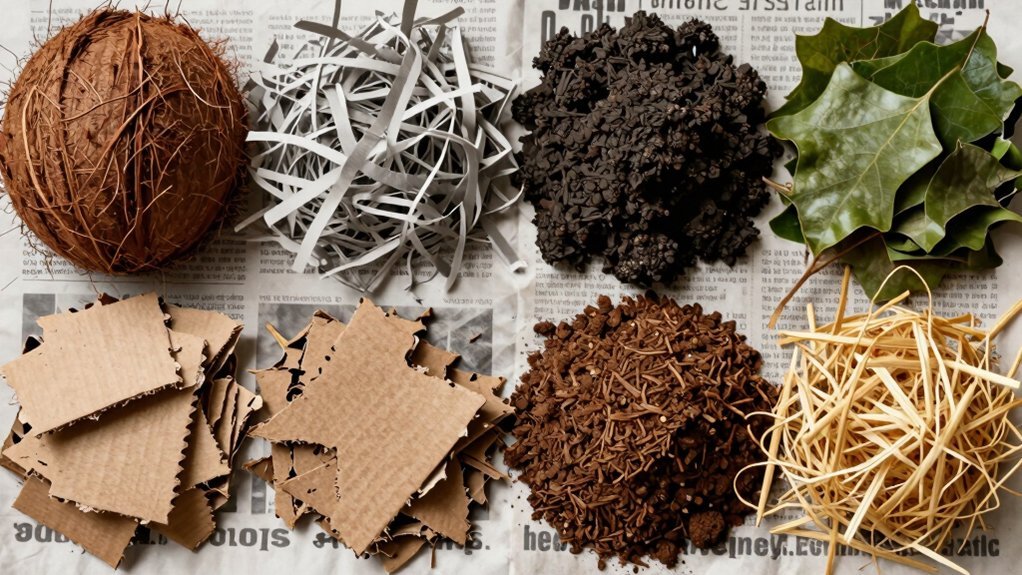
You can absolutely mix different bedding materials together for your worms. Combining materials like coconut coir, peat moss, and shredded paper creates a balanced environment that improves drainage, aeration, and moisture retention for optimal worm health.
What Is the Ideal Moisture Level for Worm Bedding?
You’ll want your worm bedding to feel like a wrung-out sponge—moist but not waterlogged. Aim for 60-70% moisture content. You’re maintaining the right balance when you squeeze it and only a few drops emerge.
How Do I Know When Bedding Has Decomposed and Needs Replacement?
You’ll know your bedding’s decomposed when it turns dark, crumbly, and unrecognizable. You’ll notice it’s become mostly castings. Replace it when you can’t identify original materials anymore.
Are There Any Bedding Materials That Are Toxic or Harmful to Worms?
You should avoid bedding materials containing pesticides, heavy metals, or treated wood. You’ll want to steer clear of glossy paper, colored inks, and diseased plant matter. These’ll harm your worms’ health and contaminate your compost.