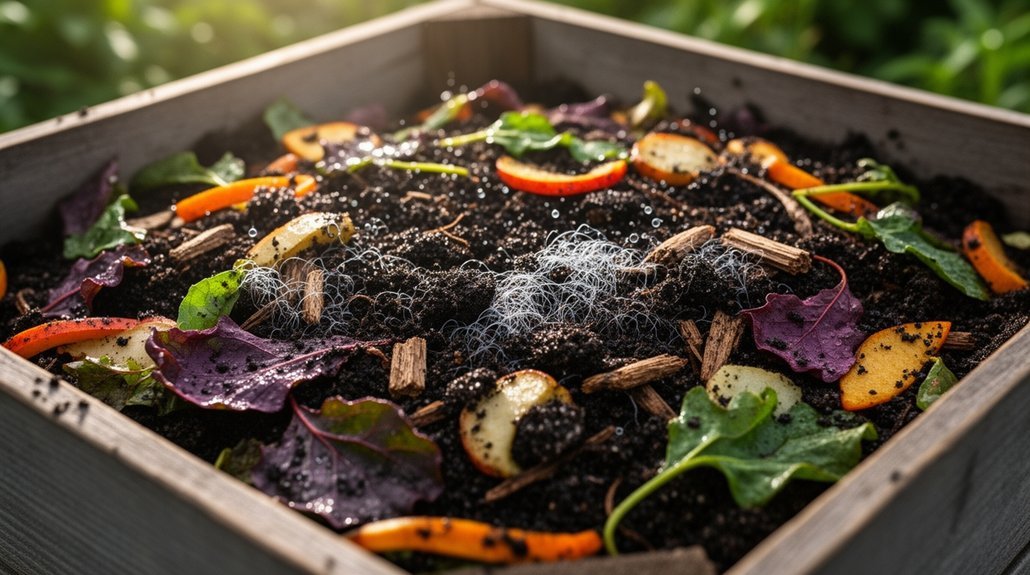
Your compost pile relies on oxygen to power aerobic microbes that break down organic matter efficiently. Without fresh air, anaerobic bacteria take over, creating foul odors and slowing decomposition dramatically. Regular turning reintroduces oxygen throughout your pile, maintaining the heat and microbial activity you need. You’ll notice the difference—well-aerated compost develops a rich, earthy smell and crumbly texture instead of slimy, waterlogged layers. Understanding how to maintain proper airflow transforms your composting results.
Why Your Compost Pile Needs Air (More Than You Think)
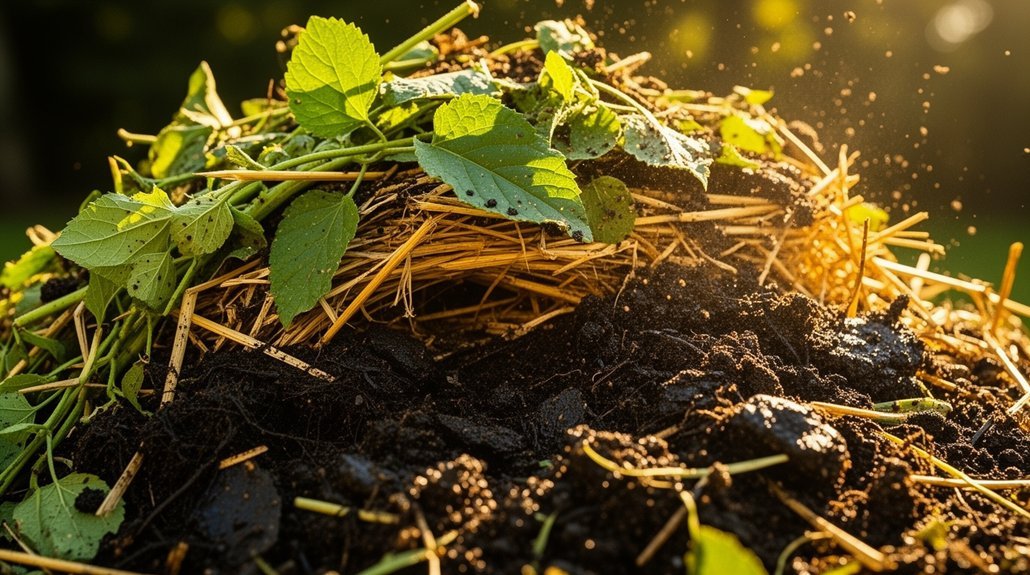
Have you noticed your compost pile smelling sour or decomposing slower than expected? Your pile’s likely struggling for oxygen. You need to understand that composting thrives as an aerobic process—one powered by oxygen-hungry microbes that break down organic matter efficiently while generating heat. When you don’t maintain adequate airflow, anaerobic bacteria take over, slowing decomposition and creating those unpleasant odors. Microbial respiration consumes oxygen rapidly in active piles, so you must continually replenish it. Turning your pile regularly reintroduces fresh air into compacted areas. Without proper aeration, you’re essentially suffocating your compost, extending decomposition time and inviting foul-smelling decay. Aerated static piles use perforated pipes to inject air and maintain consistent oxygen levels throughout the composting process. If indoor composting in bins, consider using carbon filters for odor control to manage any odors that develop from insufficient ventilation. Think of oxygen as fuel for your composting engine—neglect it, and everything stalls.
Is Your Pile Struggling With Oxygen or Moisture?
You can’t fix a struggling compost pile without figuring out whether it’s gasping for oxygen or thirsting for water.
Bad odors and wet, compacted layers point to oxygen deficiency, while a dry, crumbly texture signals moisture problems. The ideal moisture level should feel like a wrung sponge, allowing beneficial organisms to thrive while maintaining proper aeration. Quality bedding materials like coconut coir expand when hydrated, forming a porous structure with air pockets that prevent compaction.
Learning to spot these signs lets you adjust your pile’s conditions and get decomposition back on track.
Diagnosing Oxygen Deficiency Signs
When’s the last time you checked whether your compost pile’s problems stem from poor aeration or excess moisture? You can distinguish between the two with simple field tests. Squeeze a handful of compost—if water drips out, you’re dealing with excess moisture that’s displacing oxygen. Next, take a smell: rotten egg odors signal oxygen shortage, while strong ammonia points to excess nitrogen instead. Visually inspect your pile for matted clumps or layered material, which traps air and indicates poor airflow. Finally, check temperature. A pile that won’t heat up may be oxygen-limited, too wet, nitrogen-starved, or finished. To restore proper aeration, turn and mix your pile regularly to break up compacted areas and introduce fresh air throughout the material. For those with limited space, bokashi systems offer an alternative fermentation approach that doesn’t require active aeration. These diagnostic checks help you pinpoint exactly what’s holding your compost back so you can correct it effectively.
Balancing Water And Air
Striking the right balance between moisture and air space determines whether your compost thrives or stagnates. You’ll want your pile to feel like a wrung-out sponge—moist but not waterlogged. If water drips when you squeeze a handful, you’ve got too much moisture filling the air pockets and slowing decomposition. Conversely, overly dry material starves microbes of the moisture they need to function effectively. The solution involves regular turning to refresh oxygen and release excess water. Add dry carbon materials like straw or wood chips when your pile turns soggy and dense. Build on a drainage-friendly base, and consider a breathable cover to protect against heavy rain while maintaining gas exchange. When your pile develops a rotten smell, this insufficient oxygen signals anaerobic conditions that require immediate turning or restructuring on a pallet to restore proper aeration. For those managing smaller volumes of kitchen waste, electric composters with auto-cleaning can preprocess food scraps to accelerate decomposition before adding to outdoor piles. This approach keeps your pile crumbly and active.
Signs Your Pile Isn’t Getting Enough Fresh Air
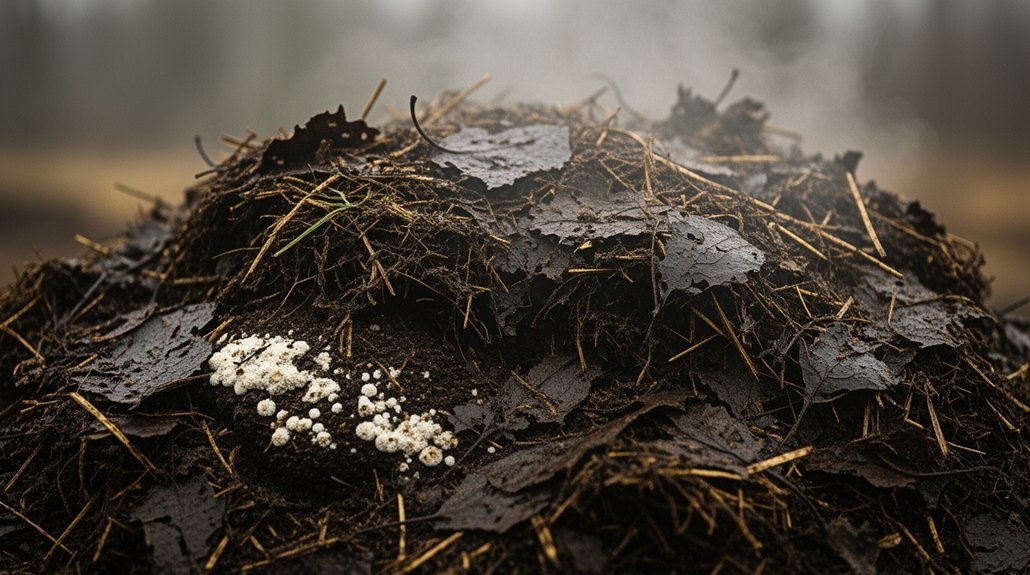
How can you tell if your compost pile isn’t getting enough fresh air? Several telltale signs reveal oxygen problems. You’ll notice a rotten or ammonia-like odor, which indicates anaerobic activity has replaced healthy decomposition. Your pile may feel slimy and waterlogged, with materials clumped together in a dense, matted mass. Breakdown slows dramatically, leaving your compost seemingly stuck despite adequate ingredients. The structure itself may be too compact, with solid walls or poor ventilation trapping stale air inside. If you’re turning frequently but seeing no improvement, your bin’s design likely prevents passive airflow. Check for adequate air gaps, perforations, or aeration tubes. Consider using airtight storage containers designed with proper ventilation systems to understand how airflow mechanics work in enclosed spaces. These problems compound when materials pack too tightly, blocking oxygen penetration to the core. When oxygen levels fall below 10 percent in large pores, anaerobic areas begin forming within the pile, accelerating odor production and slowing decomposition.
Reading Your Pile’s Temperature: The Aerobic Sign You Can’t Miss
Your compost pile’s temperature tells you more about its health than almost any other single indicator. When you monitor it regularly, you’re essentially checking your pile’s aerobic pulse.
A steadily rising temperature signals that aerobic microorganisms are actively breaking down organic matter. You’ll typically see active composting occur between 55–155°F, with ideal working conditions around 90–140°F. Once your pile reaches 130–135°F, you’re hitting temperatures that effectively reduce pathogens, fly larvae, and weed seeds. Proper aeration with techniques like regular turning of the pile contributes to faster decomposition and more consistent heat generation.
However, if temperatures keep climbing toward 160°F or higher, your pile may actually need aeration help—counterintuitively, excessive heat can indicate oxygen depletion in the interior. Conversely, temperatures that stall or drop suggest reduced microbial activity. Remember that heat is not strictly necessary for decomposition to proceed, as piles can still decay without reaching high temperatures, though at a notably slower pace.
When and How to Turn Your Pile for Maximum Oxygen
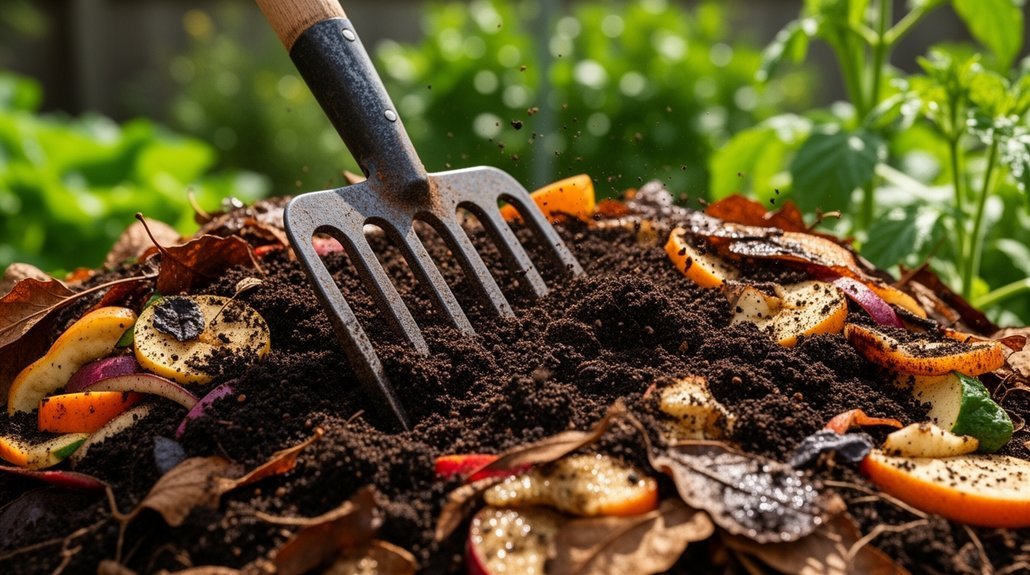
Once you’ve identified that your pile’s temperature is dropping or that microbial activity is slowing, it’s time to act—and turning’s where the real oxygen boost happens.
You’ll maximize aeration by following these key techniques:
- Use a shovel or pitchfork to move outside material into the center
- Break up compacted zones to restore airflow channels
- Bring partially decomposed material into contact with fresh air
- Mix materials thoroughly so everything briefly contacts oxygen
- Water while turning to distribute moisture evenly
Turn your pile once or twice weekly for faster decomposition. If you’re less concerned with speed, you can reduce frequency while keeping the pile active. The Berkeley Method advocates turning every few days for quickest results. For those seeking a more hands-off approach, dual-chamber tumblers can provide consistent aeration with minimal manual effort. Your goal: guarantee oxygen reaches the interior, not just the surface, reactivating microbes throughout all decomposition stages. However, it’s important to note that introducing air by turning can actually drop oxygen levels to less than 1% within 30–45 minutes, which is why consistent aeration methods may be more effective than manual turning alone.
The Turning and Layering Mistakes That Trap Your Pile
Why do so many compost piles fail despite regular turning? You’re likely making one of two critical mistakes: layering too thickly or turning incompletely.
Most compost piles fail due to two critical mistakes: layering too thickly or turning incompletely.
When you pile grass clippings in dense layers, they mat together and block airflow before decomposition even begins. Thick, wet materials compress under their own weight, starving your pile of oxygen. Instead, alternate thin layers of greens and browns to maintain an open structure. Just as dried materials require proper moisture management, your compost needs balanced moisture levels to support microbial activity without creating anaerobic zones.
Turning only the surface leaves your pile’s center starved for air. Fresh scraps stay isolated from active microbial zones, creating dead pockets where decomposition stalls. You’ll notice ammonia odors and sludge-like texture—clear signs that oxygen isn’t penetrating deep enough. For those over 45, using a compost aerator with a T-handle and collapsible wings allows you to work the pile in a grid pattern, loosening it and enhancing aeration without the strain of complete pile transfers.
Distribute materials uniformly throughout your pile when turning. This ensures moisture, heat, and oxygen reach every zone, preventing uneven breakdown and keeping your compost thriving aerobically.
Brown Materials: Your Secret Weapon for Restoring Air Pockets
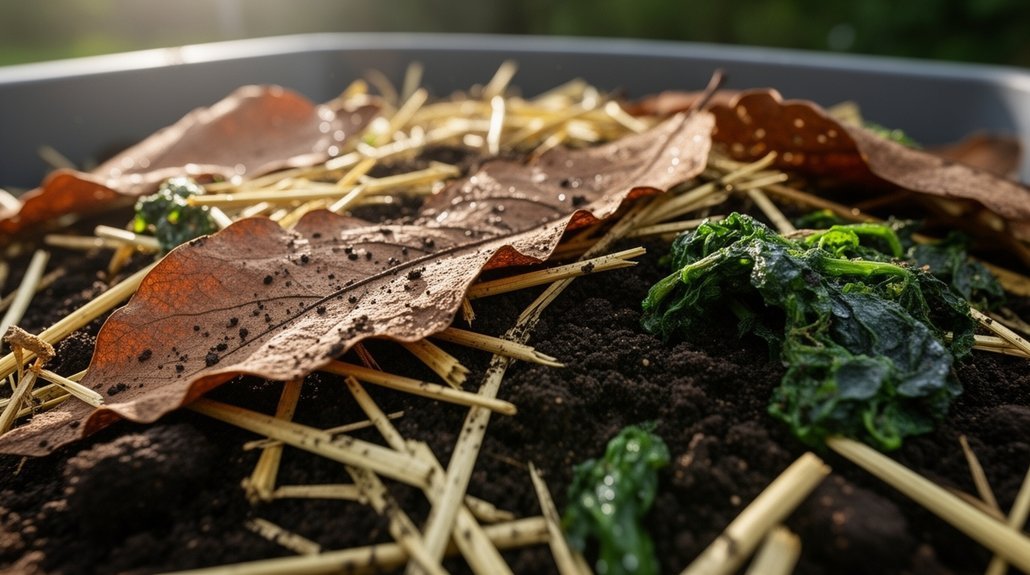
Brown materials aren’t just filler—they’re the structural backbone that keeps your pile breathing. These carbon-rich inputs create and preserve the air pockets your compost desperately needs for aerobic decomposition.
Here’s what browns do for you:
- Absorb excess moisture from wet greens, preventing matting and anaerobic conditions
- Resist compacting better than kitchen scraps, maintaining long-term porosity
- Supply carbon that energizes decomposer microbes throughout the pile
- Support heat generation in active compost, accelerating breakdown
- Reduce slime and stagnation by balancing green materials
Fallen leaves, straw, and wood chips are your best options—they hold open spaces longer than fine materials like sawdust. Aim for a 50:50 green-to-brown ratio. Without enough browns, your pile becomes dense and slow. With them, you’ve got a thriving, efficient composting system. For households managing smaller volumes of compost scraps, countertop compost bins can efficiently collect your kitchen greens before transferring them to your outdoor pile for proper brown-to-green balancing. Browns also help form air pockets that support the aerobic microbes essential for breaking down organic matter effectively.
How Poor Airflow Creates Foul Odors in Your Pile
When you don’t turn your pile regularly, you’re trapping moisture and allowing compaction to block the oxygen that aerobic microbes need to thrive.
As anaerobic bacteria take over, they produce hydrogen sulfide and other foul gases that signal your pile’s distress. You’ll notice rotten egg smells, sour odors, or putrid stenches—all telltale signs that stagnant air has created the perfect breeding ground for odor-causing decomposition. To restore balance, turn your pile weekly using a pitchfork or rake until the unpleasant smell subsides and aerobic conditions return. For kitchen scraps awaiting transfer to your outdoor pile, consider using airtight compost containers with proper ventilation to prevent odors from developing indoors.
Anaerobic Decomposition Smells Bad
Have you noticed your compost smelling like rotten eggs? That stench signals anaerobic decomposition—a sign your pile lacks oxygen. When oxygen depletes, anaerobic bacteria take over and produce foul-smelling byproducts that make composting miserable.
Here’s what happens when your pile goes anaerobic:
- Hydrogen sulfide gas creates that distinctive rotten egg smell
- Sulfate-reducing bacteria thrive in oxygen-poor zones
- Methane and volatile organic compounds accumulate
- Microbial efficiency drops considerably
- Odor intensity increases as conditions worsen
Even if your pile’s outer layer looks active, anaerobic pockets can form inside, producing these malodorous compounds. The problem intensifies with excess moisture and dense material that blocks airflow. Most odor problems resolve within 3–7 days of turning the pile and reintroducing air. Your compost doesn’t need to smell offensive—it needs oxygen to decompose properly and efficiently.
Compaction Blocks Oxygen Flow
Why does your compost pile compact so easily, and what does that mean for airflow?
When you handle, turn, or simply let weight accumulate, you’re squeezing particles closer together and collapsing the large pore spaces that allow air movement. This compaction creates a serious problem: reduced airflow means oxygen can’t infiltrate or circulate through your pile effectively.
Without adequate oxygen, anaerobic zones develop inside the compacted mass. These low-oxygen pockets shift decomposition away from efficient aerobic processes, and that’s when odors intensify. You’ll notice foul smells concentrated in blocked areas where airflow gets trapped. Half of soil makeup is pore space, which means even small reductions in these air channels significantly compromise your pile’s ability to breathe and decompose efficiently.
To prevent compaction, incorporate bulking agents like wood chips and dry leaves. These coarse materials maintain structural integrity and preserve channels for air movement. Turning your pile less frequently also helps protect the pore structure you’ve built.
Moisture Traps Stagnant Air
While compaction squeezes out air channels, excess moisture does something equally damaging—it fills those remaining pore spaces with water, forcing oxygen out entirely. When your pile becomes waterlogged, you’re creating ideal conditions for anaerobic microbes that produce foul odors instead of breaking down material efficiently.
Here’s what happens when moisture traps stagnant air:
- Waterlogged zones develop in low-lying areas, creating anaerobic pockets even when surfaces appear normal
- Anaerobic decomposition generates sulfur-like, rotten, or sour smells signaling microbial activity has shifted away from aerobic breakdown
- Wet compost stays cold and inactive because excess moisture dampens heat buildup needed for active composting
- Poor airflow coincides with persistent wetness and weak heat generation
- Foul odors indicate your pile urgently needs oxygen and drying
Sub-surface drip irrigation can help prevent waterlogging by delivering moisture slowly below the surface while maintaining the air channels your aerobic microbes depend on. Turn your pile frequently and add dry materials like straw or shredded cardboard to restore proper moisture balance.
The Wrung-Out Sponge Test: Balancing Aeration and Moisture
Getting your compost’s moisture level right is one of the simplest ways to keep oxygen flowing through your pile. The wrung-out sponge test gives you a quick, reliable field check. Grab a handful from multiple areas of your pile and squeeze firmly. You’re aiming for damp material with only a drop or two of water released. If more water drips out, your pile’s too wet and oxygen-starved. If nothing squeezes out, it’s too dry and decomposition stalls. The material should feel moist throughout, not just on the surface.
Regular checking matters because rain, watering, turning, and feedstock changes shift moisture quickly. This simple test keeps your pile in the ideal 40–60% moisture range where decomposition thrives. An aerating tool with wings can further enhance oxygen penetration by opening and closing to improve air circulation throughout the pile.
What Well-Aerated Compost Actually Looks and Feels Like
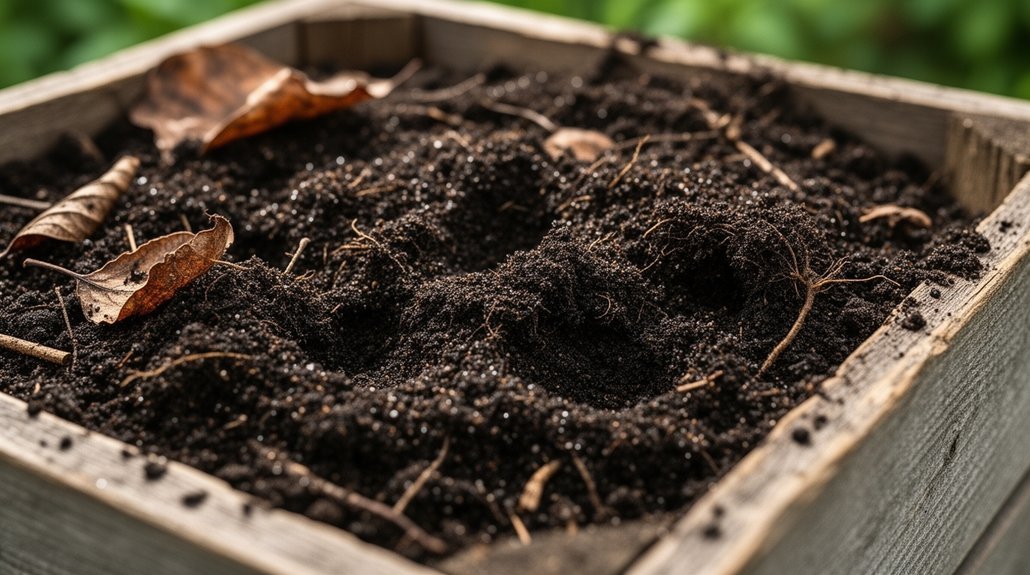
How do you know when your compost has truly matured? You’ll recognize it by several unmistakable characteristics that signal your pile’s readiness.
Well-aerated compost exhibits these key features:
- Rich dark brown to nearly black coloration throughout
- Crumbly, loose texture that breaks apart easily into small aggregates
- Pleasant earthy aroma resembling forest soil after rain
- Little to no recognizable food scraps or plant fragments
- Cool temperature stable near ambient air conditions
When you squeeze finished compost, it shouldn’t clump densely or feel sticky. Instead, it’ll resemble coarse coffee grounds or friable soil mix. Large clumps, mats, or sour odors indicate insufficient aeration or excess moisture. Your mature compost has shrunk to roughly one-third its original volume and acts like a genuine soil amendment rather than active organic waste. Occasional stirring and Remix powder help maintain the aeration needed to prevent these decomposition problems.
What Your Garden Actually Gets From Oxygen-Rich Compost
So what’s actually happening when you work finished compost into your garden beds? You’re unlocking a cascade of benefits that transform your soil’s capacity to support plant life.
Oxygen-rich compost jumpstarts nutrient availability. Aerobic microbes break down organic matter efficiently, releasing nitrogen, phosphorus, potassium, and trace elements in forms your plants can absorb. Unlike synthetic fertilizers, compost delivers these nutrients slowly and steadily, preventing fertilizer burn while sustaining growth throughout the season.
You’re also rebuilding soil structure. Compost creates stable aggregates that increase pore space, allowing roots to penetrate deeper and access water more effectively. Each 1% increase in soil organic matter helps your soil hold roughly 20,000 additional gallons of water per acre—critical during droughts.
Finally, you’re cultivating thriving soil biology that sustains long-term fertility naturally.
Frequently Asked Questions
Can I Use a Compost Tumbler Instead of Turning My Pile Manually for Aeration?
Yes, you can use a compost tumbler instead of manually turning your pile. You’ll find it’s physically easier, reduces pest access, and provides more consistent mixing—though you’ll still need to turn it several times weekly for proper aeration.
How Does Compost Aeration Differ Between Indoor Vermicomposting and Outdoor Pile Systems?
You’ll find that vermicomposting relies on worms naturally aerating bedding through tunneling, while outdoor piles require you to turn them manually or use mechanical systems like perforated pipes for oxygen circulation.
Will Adding Aeration Tools Like Pipes or Spikes Replace the Need for Turning?
No, aeration tools don’t replace turning. You’ll still need to turn your pile regularly because pipes and spikes can’t reach compacted zones that mixing handles. You’re combining methods, not substituting them.
What’s the Ideal Frequency for Turning Compost in Different Climate Conditions?
You’ll turn your hot pile every 3-7 days during warm months, then reduce to monthly in winter. Cold composting needs turning every 3-4 weeks year-round. Adjust based on your pile’s temperature and moisture.
Can Anaerobic Compost Be Salvaged, or Should I Start Over Completely?
You can salvage anaerobic compost if it’s still structured and shows moderate symptoms. Turn it thoroughly, add dry browns, improve airflow, and rebalance moisture. Start over if it’s soupy, heavily compacted, and persistently foul.
In Summary
You’ll transform your compost pile when you prioritize fresh air. By turning your pile regularly and monitoring moisture levels, you’re creating the ideal environment for beneficial microorganisms to thrive. Your garden will thank you with nutrient-rich compost that boosts soil health and plant growth. Don’t overlook aeration—it’s the difference between a foul-smelling mess and dark, crumbly gold. Start implementing these strategies today, and you’ll see results faster than you expect.