
Use 1/4‑inch galvanized hardware cloth to line walls, floor, and lid, overlapping seams and folding it snugly around edges. Elevate the bin on bricks or a sturdy stand, keep a level base, and seal any vent holes with the same mesh or silicone. Layer a thick brown cover—shredded paper, leaves, or straw—over greens, and sprinkle crushed mint, lavender, or citrus around the perimeter. Bury scraps at least six inches deep and top with carbon material to mask odors. If you keep these steps, you’ll discover even more tricks to stay pest‑free.
Pick the Best Mesh – 1/4‑In Hardware Cloth Keeps Rodents Out
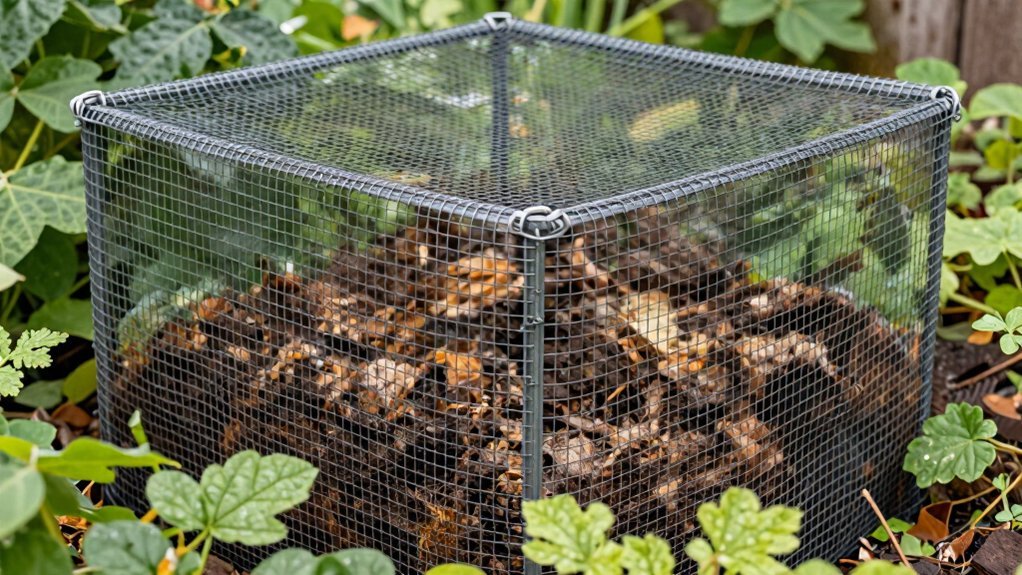
Why settle for a mesh that lets rodents slip through? You’ll want 1/4‑inch hardware cloth because rats and mice can’t squeeze through those tiny openings, unlike 1/2‑inch mesh that leaves a gap. This size gives a tight barrier while still letting air circulate for aerobic composting. Use the same 1/4‑inch cloth on the walls, bottom, and lid—full enclosure stops digging, climbing, and slipping in through any side. Choose galvanized 23‑gauge rolls (48 in × 50 ft or 100 ft) for rust resistance and durability. Overlap seams by a few inches, fold the mesh snugly around edges, and keep the front door accessible for turning. To further protect your compost, avoid adding meat, dairy, and oils which attract pests to your bin in the first place. The result is a pest‑proof bin that stays ventilated and easy to maintain. Small openings provide maximum protection against small pests.
Elevate Your Bin on Bricks or a Stand to Block Climbing Pests
After securing the bin with 1/4‑inch hardware cloth, lift it off the ground to keep climbing pests at bay. Raising the bin on bricks, cement blocks, or a sturdy stand creates a physical gap that mice and rats can’t easily bridge. Use a level base to prevent wobbling, and keep the clearance wide enough for your turning tool but low enough that pests can’t jump up. Pair the elevation with tight seams and a solid bottom to stop burrowing. Inspect the support regularly for shifting bricks or gaps, and clear any debris that could become a ramp. This simple height boost works best as part of a layered defense. For optimal results, select a countertop or under-sink compost bin with an airtight lid to minimize odor that attracts pests in the first place. Adding a layer of mesh screening over ventilation holes further deters insects.
| Benefit | Why It Works | Quick Tip |
|---|---|---|
| Ground clearance | Stops low‑level crawlers | Use 3‑4 in bricks |
| Stable platform | Prevents tipping | Level with a spirit level |
| Easy access | Improves turning | Leave 6‑8 in space |
| Airflow | Reduces moisture | Add slatted base if possible |
Seal Ventilation Holes for a Rodent‑Proof Compost Bin
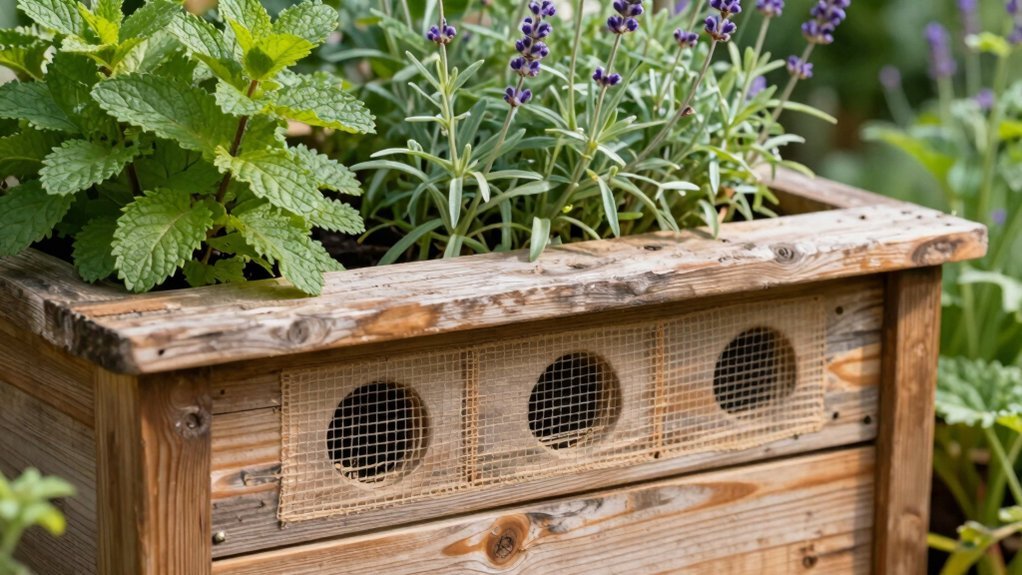
Ever wonder how to keep rodents out while still letting your compost breathe? Start by covering every vent hole with heavy‑duty wire mesh—hardware cloth or vermin mesh works best because rats can’t chew through it. Use 6 mm squares or 13 mm × 13 mm welded mesh, and secure the mesh tightly so it can’t tear or shift.
If you prefer a softer barrier, fine window screen or landscape fabric can sit behind a rigid frame, but remember it won’t last as long as metal. Seal any unused openings with silicone or a weather‑proof sealant, especially around pipe penetrations and vent fittings. For additional odor control and pest deterrence, consider installing activated charcoal filters as part of your ventilation system. After installing, inspect each edge for gaps; even a tiny hole can become a rodent entry point. This combined mesh‑and‑seal approach lets air flow while blocking pests.
The mesh should be placed on the bottom of the bin to provide an extra barrier against burrowing rodents.
Balance Greens & Browns in a Rodent‑Proof Compost Bin
How do you keep rodents at bay while your compost stays healthy? Aim for a 2:1–4:1 brown‑to‑green volume ratio, typically three parts browns to one part greens. Layer leaves, straw, cardboard, or wood chips over food scraps, coffee grounds, and grass clippings. The brown cover masks scent, absorbs excess moisture, and creates a dry barrier that rodents dislike. If the pile smells sour or feels soggy, add more carbon‑rich material to rebalance. Chop scraps small and mix them into the brown layer to speed decomposition, reducing the time food is exposed. Watch for foul odor, slimy texture, or pest activity—these signs tell you to increase browns. A well‑balanced, slightly damp pile stays hot, decomposes quickly, and keeps rodents out. Maintain airflow by turning the pile regularly to prevent anaerobic conditions. Incorporate perlite or vermiculite into your compost mixture to create air pockets that enhance decomposition and discourage pest habitation.
Bury & Cover Scraps to Hide Food From Pests
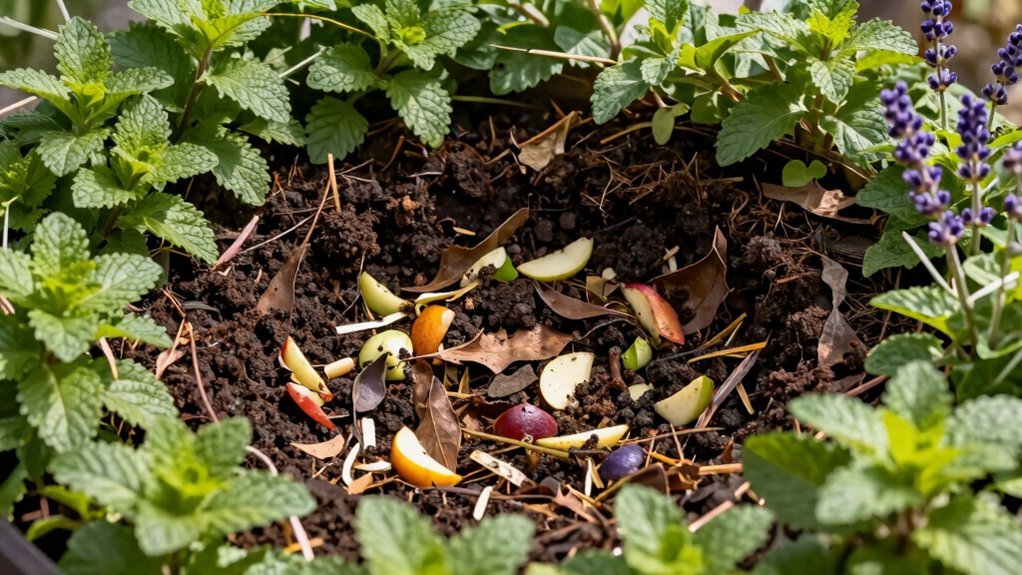
You’ll keep pests at bay by burying food at least six inches deep and then topping it with a generous carbon layer like shredded paper or leaves. This deep placement hides the scraps from flies, rodents, and pets while the cover material masks odors and discourages egg‑laying. The result is a cleaner bin that stays active for microbes and worms without attracting unwanted visitors. For optimal results, ensure your mesh filtration system or composting method maintains proper aeration to support microbial activity. Winter microbes continue to work on the buried scraps, turning them into dark, crumbly humus by spring.
Deeply Bury Food
When you dig fresh kitchen scraps into the center of your compost pile—about six inches deep—you hide both the sight and scent that lure flies, rodents, and raccoons. This depth places waste in the warm, active zone where microbes break it down quickly, while keeping odors low and pests out. Each new addition should be fully surrounded by existing material, so insects can’t reach it and rodents can’t sniff it easily. Break larger pieces before burial to speed decomposition, and turn the pile occasionally to redistribute food and prevent nesting spots. For additional odor control, consider using odor-neutralizing sprays designed for composting areas to further discourage pest activity.
- Dig a 6‑inch hole in the pile’s core for each batch.
- Pack scraps tightly and cover with surrounding compost.
- Break up big pieces to increase microbial contact.
- Turn the bin weekly to mix buried food and deter pests.
Use hardware cloth on the bin’s bottom and outside walls to block rodents from entering.
Cover With Carbon Layers
After burying your scraps deep, seal them with a thick brown layer to keep odors and sights hidden from flies, rodents and raccoons.
A generous cover of dry leaves, shredded paper, cardboard, wood chips, or straw blocks scent and creates a physical shield. Cornell Extension notes that brown layers act as visual and olfactory barriers, reducing the attraction of nuisance animals.
Add a carbon layer after every bucket of kitchen waste, using enough material to fully hide the food. The porous browns absorb excess moisture, let air flow, and maintain the 1:3 nitrogen‑to‑carbon ratio. Effective odor control and moisture management requires consistent application of these carbon barriers to prevent pest attraction.
Keep your supply of brown cover nearby, chop large scraps before topping, and stay consistent—every exposure invites pests, while a steady blanket keeps your compost pest‑free. Direct sunlight helps the cage dry materials quickly, improving the effectiveness of the carbon cover.
How Often Should I Turn the Compost? Tips for a Rodent‑Proof Bin
Ever wonder how often you should turn your compost to keep rodents at bay? Turning moves fresh scraps underground, cuts odors, and sustains heat that deters pests. Aim for a schedule that matches temperature cues: when the pile drops below ~104 °F, give it a stir. For rapid, hot composting, turn every 3–4 days; a weekly turn works for most backyard bins. If you monitor heat, you can stretch to 7–10 days without inviting rodents. Keep the pile aerated, moist, and well‑mixed so microbes work fast and food stays hidden. For smaller spaces or apartment dwellers, consider compact bokashi systems as an alternative to traditional compost bins, which can provide odor control and pest prevention through sealed, airtight designs.
- Turn when temperature falls below 104 °F
- Rotate every 3–4 days for hot piles
- Weekly turns are a reliable middle ground
- Use a thermometer, not just a calendar, for timing
- Proper bulking material creates free air space, reducing the need for frequent turning.
Use Mint, Lavender, and Citrus to Repel Rodents and Flies

Keeping your compost fresh and rodent‑free isn’t just about timing turns; the scents you surround the bin with can make a huge difference. Plant peppermint or spearmint in pots right next to the bin; crush a few leaves each week to release the strong, menthol‑rich aroma that mice and rats avoid. Add a lavender bush or a few potted lavender plants to the perimeter—its floral scent irritates rodents and draws pollinators, while dried sprigs work outdoors. Scatter fresh lemon balm or citronella grass, and toss citrus peels around the base; the bright, citrus notes deter flies and some rodents, but replace them before they dry out. Use containers, not direct pile placement, and combine these herbs for a layered, continuously fresh barrier. Rosemary’s pine‑like scent helps discourage deer and raccoons.
Avoid Meat, Dairy, and Large Pieces – They Invite Pests
You’ll keep pests out by skipping meat and dairy altogether and by chopping any food scraps into small pieces.
Large chunks linger, smell stronger, and draw rodents, flies, and raccoons to your bin.
Cutting everything down speeds decomposition and cuts off the invitation.
Cheese creates anaerobic conditions that produce foul odors and attract pests.
Pairing your waste reduction efforts with activated carbon filters in your compost bin provides an additional layer of odor control to further deter pests.
Skip Meat and Dairy
Because meat and dairy emit strong, lingering odors, they quickly draw rats, mice, flies, and other scavengers to your compost bin. These scraps also harbor pathogens like Salmonella and E. coli, which a backyard pile’s modest heat can’t reliably kill. The added moisture, fats, and protein upset the carbon‑nitrogen balance, slowing decomposition and creating slimy, rancid pockets that further attract pests. By keeping animal‑based waste out, you protect your compost’s hygiene, speed up breakdown, and avoid the digging, scattering, and contamination that pests cause. Pest attraction is amplified when the waste is not fully broken down, making it essential to exclude these items. Consider using activated charcoal deodorizers to manage odors from nearby kitchen waste containers, preventing pest problems before they reach your compost bin.
- Skip all raw meat, poultry, and fish.
- Exclude cheese, yogurt, and other dairy products.
- Avoid fatty or oily leftovers that linger.
- Stick to fruit, veg, coffee grounds, eggshells, leaves, and cardboard.
Cut Large Food Pieces
Wondering why your compost slows down? You’re probably tossing whole carrots, watermelon rinds, or thick stalks straight into the bin. Those big pieces hide a lot of surface area from microbes and oxygen, so they stay intact for weeks and give pests a tasty, odorous buffet. Chop everything into 1‑ to 2‑inch chunks while you prep meals—use scissors, a kitchen knife, or secateurs for tougher garden waste. Smaller bits bury easily under brown layers like leaves or newspaper, cutting odors and hiding food from flies and rodents. When you turn the pile, spot any oversized scraps and slice them again or move them to a fresh batch. Consistent size reduction speeds decomposition, improves the final texture, and keeps pests at bay. Cutting up fruit increases surface area and speeds decomposition.
Frequently Asked Questions
Can Compost Attract Pests if It’s Too Acidic?
Yes, if your compost gets too acidic you’ll notice foul odors and soggy conditions that attract flies, rodents, and ants. Keep pH near neutral, turn regularly, and avoid excess moisture to deter pests.
Do Seasonal Temperature Changes Affect the Effectiveness of Scent Deterrents?
Yes, seasonal temperature shifts affect scent deterrents. Warm weather speeds evaporation, weakening them quickly, while cold slows loss, letting scents linger but spread less. Adjust frequency and concentration accordingly.
How Often Should I Replace the Hardware Cloth for Optimal Rodent Protection?
You should replace the hardware cloth roughly every five years, but inspect it each season and swap it out sooner if rust, holes, or loose seams appear, ensuring continuous rodent protection.
Can I Use Natural Predators, Like Cats, to Deter Compost Pests?
You can’t rely on cats alone; they’re inconsistent and won’t stop flies, maggots, or mites. Focus on proper bin sealing, burying scraps, and maintaining moisture balance for effective pest control.
Is It Safe to Add Coffee Grounds Without Affecting Pest Activity?
Yes, you can add coffee grounds safely, and they’ll mildly deter slugs and ants without eliminating all pests. Keep them under 20% of the mix, blend well, and maintain proper moisture and aeration.
In Summary
By sealing the bin, using sturdy mesh, and keeping scraps buried, you’ll make your compost a fortress pests rodents and flies. Elevate it, balance greens and browns, and turn it regularly to stay ahead of pests. Add mint, lavender, or citrus for extra deterrence, and skip meat and dairy. Follow these steps, and your compost will stay healthy, odor‑free, and pest‑proof.