
Add fresh greens and give the pile a vigorous turn to spark heat, then keep it moist like a wrung‑out sponge—add water or browns as needed. Balance carbon and nitrogen at roughly 30:1 by mixing kitchen scraps, grass clippings, and shredded paper or dry leaves. Build a 3‑ft‑cube pile for insulation, turn weekly (or use passive aeration) to supply oxygen, and cover with a breathable tarp or straw to trap warmth. Monitor temperature daily; if it falls below 130 °F, turn and adjust moisture, and if it climbs above 150 °F, add more browns and increase airflow. Keep these steps in sync and you’ll see the compost bounce back quickly.
Add Greens and Turn the Pile to Kick‑Start Hot Compost
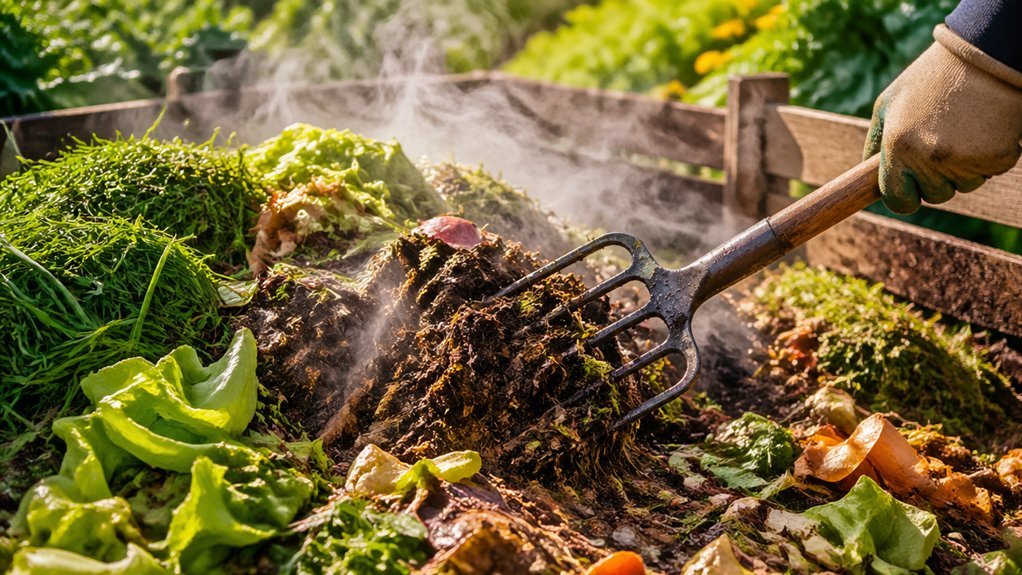
When you add nitrogen‑rich greens—kitchen scraps, grass clippings, egg shells—to your pile and turn it regularly, you instantly boost microbial activity and oxygen flow, which drives the temperature upward into the hot‑compost range.
The nitrogen supplies the fuel bacteria need to multiply, while each turn mixes fresh material, introduces air, and breaks up anaerobic pockets that would otherwise stall heating.
As you rotate the heap weekly or bi‑weekly, you see the temperature climb, signaling that hot composting is taking hold.
If the pile feels sluggish, sprinkle a handful of extra greens and give it another vigorous turn; the added carbon‑nitrogen balance will reignite microbial heat production.
Keep the process steady, and the pile will stay in the hot‑compost zone, accelerating decomposition. Moisture control
Check and Adjust Moisture to a “Damp Sponge” Level
You should test the moisture by squeezing a handful of material—if it drips, it’s too wet; if it crumbles dry, it’s too dry. Adjust by adding browns or a splash of water, then turn the pile to mix and introduce oxygen. Regular turning keeps the “damp sponge” texture uniform and fuels steady microbial heat. In hot composting setups, consider using an enzyme-based digester supplement to speed breakdown and odor control enzymatic digestion.
Test Moisture Levels
How do you know if your compost is at the right moisture? You’ll feel it like a wrung‑out sponge—damp, not dripping, and able to hold shape when you squeeze it lightly. If it’s soggy, water less, cover it on rainy days, and let the sun dry it out. If it’s bone‑dry, mist it gradually and mix in fresh greens to boost moisture retention. After each turning, do a quick moisture level check because turning can shift water around. A simple texture test—squeezing a handful—tells you if it’s cool and moist or dry and powdery. Regularly using readings like the squeeze test helps maintain consistent moisture across cycles, especially when balancing drainage and aeration (Texture and Moisture Balance).
- Squeeze a handful; it should feel cool and damp.
- Adjust water by adding small amounts until the sponge test passes.
- Re‑check after each turning to keep moisture stable.
Turn Regularly for Aeration
Why bother with a stagnant pile? Turning your compost weekly or biweekly revives aeration, fuels aerobic microbes, and ramps up heat. Each turn mixes material, breaks clumps, and stops smelly anaerobic spots. After you turn, feel the mix—aim for a “damp sponge” texture: moist but not soggy. If it’s too wet, loosen the heap and let the sun dry the surface before re‑stacking. Consistent turning spreads moisture evenly, keeping the moisture balance right and preventing hot or dry pockets that stall decomposition.
| Action | Result |
|---|---|
| Turn weekly | Boosts aeration |
| Turn biweekly | Maintains microbial activity |
| Check moisture after turn | Ensures damp sponge |
| Loosen wet spots | Restores moisture balance |
| Expose to sun briefly | Reduces excess water |
Balance Carbon‑To‑Nitrogen Ratio With Right Browns and Greens
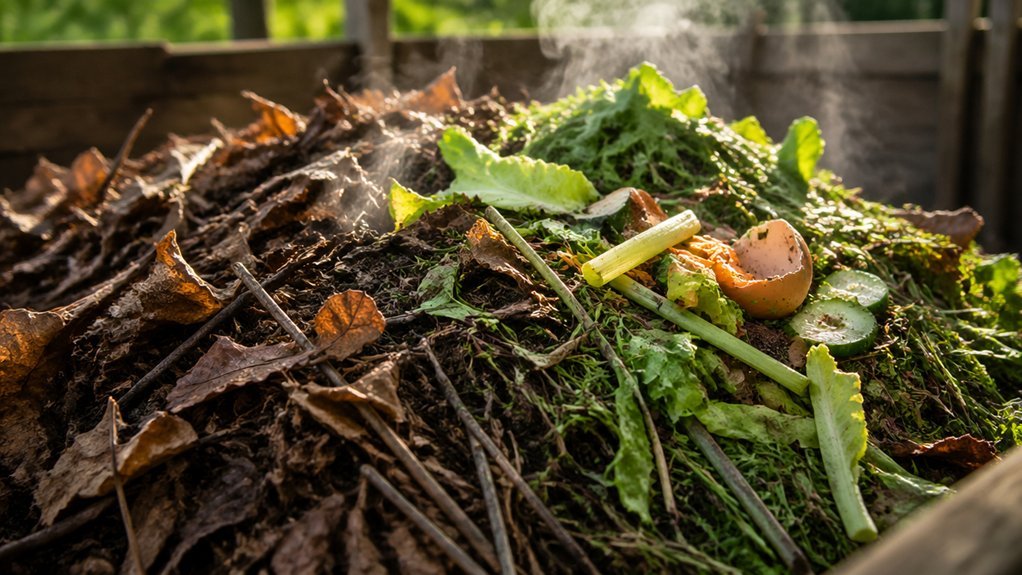
You’ll boost heat by adding the right amount of nitrogen‑rich greens and then topping them with carbon‑rich browns. Too many greens can cause ammonia smells, while too many browns stall the temperature rise. A standard practice is to monitor for steady heat and turn the pile when it cools, ensuring balanced decomposition C:N balance. Aim for a balanced C:N ratio, roughly 30:1, to keep microbes active and the pile warm.
Correct the Right Greens
When you balance the carbon‑to‑nitrogen (C:N) ratio around 30:1, the compost heats efficiently and avoids ammonia odors. Greens supply the nitrogen your microbes crave, so pick the right ones and keep the pile thriving. Use fresh kitchen scraps (no meat), egg shells, and grass clippings as primary greens. If the heap feels sluggish, boost microbial activity with a handful of well‑aged manure. Avoid over‑loading greens; too much nitrogen can drown the pile and cause foul smells. Remember, a steady supply of nitrogen‑rich material fuels thermophilic bacteria, keeping temperature high and decomposition fast. You can also stagger additions to maintain steady heat and microbial activity enhanced odor control throughout the process.
- Add kitchen scraps daily.
- Sprinkle shredded eggshells for calcium.
- Mix in a small amount of manure when heating stalls.
Add Carbon‑Rich Browns
A handful of shredded paper, dry leaves, or coffee grounds can tip the C:N balance back toward the ideal 30:1 range, keeping the pile airy and preventing it from getting soggy. Mix these brown materials with any wet greens, breaking up larger pieces of garden waste so they blend smoothly. By raising the carbon-to-nitrogen ratio, you encourage aerobic microbes and improve aeration, which in turn boosts heat production. If the compost feels soggy, add more brown, then turn the pile to introduce oxygen and distribute moisture evenly. Remember, you don’t need exact measurements—just enough brown to dry the mix and keep it fluffy. Combine these tweaks with regular turning, and the pile should warm up and stay balanced aeration benefits.
Build a Pile at Least 3 ft³ for Heat Retention
Why settle for a sluggish pile when a 3 ft × 3 ft × 3 ft heap can hold the heat you need? A three‑foot cube gives you enough mass to trap thermophilic activity, keeping compost temperature in the sweet spot of 130–150 °F. The volume creates insulation, so the heat you generate stays put instead of escaping through thin layers. With that size, you can balance carbon and nitrogen, maintain moisture, and still turn the pile without breaking it apart. Additionally, an airtight design and proper drainage minimize odor risks while you manage the pile.
A 3‑ft cube traps thermophilic heat, balancing carbon, nitrogen, and moisture for optimal composting.
- Measure the dimensions – ensure each side reaches at least 3 ft for proper heat retention.
- Layer wisely – alternate nitrogen‑rich greens and carbon‑rich browns to sustain temperature.
- Monitor and adjust – use a thermometer; add greens if it cools and browns if it overheats.
Turn Regularly or Use Passive Aeration to Supply Oxygen
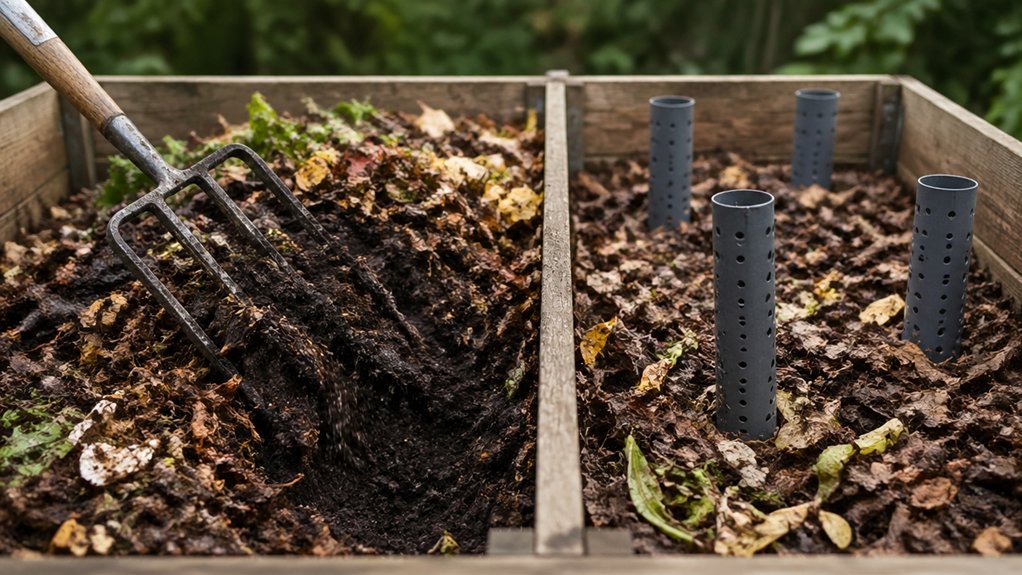
If you keep the pile aerated, microbes stay active and heat builds faster, so either turn it weekly (or bi‑weekly) or set up passive airflow with drainage tiles or vented bins.
Regular turning shuffles material, exposing fresh oxygen to the hottest zones and preventing anaerobic pockets.
When you turn, aim for a quick, vigorous mix that breaks up compacted spots and redistributes moisture, keeping the texture like a damp sponge.
Passive aeration works similarly; a vented bin or a finished pile with drainage tiles lets ambient oxygen seep in continuously without the labor of turning.
Both methods keep oxygen levels high, sustain aerobic microbial activity, and help the compost stay warm and productive.
Adjust turning frequency based on temperature and moisture cues.
Cover or Insulate the Pile to Preserve Heat
Ever wondered how to keep your compost warm when the weather turns cold or windy? Covering the pile with a breathable tarp or a light shade helps trap heat while letting excess steam escape, preserving the moisture balance microbes need. Insulation with stacked straw, wood chips, or a hollow‑stem wrap creates a thermal barrier that reduces surface cooling without suffocating the microbes. Adjust the cover daily: pull it back on sunny, dry days and replace it before rain returns, so the pile stays warm and aerated.
Breathable tarp and straw insulation trap heat, letting steam escape while keeping microbes warm and aerated.
- Use a tarp that lets moisture breathe but blocks wind.
- Stack brown material around the sides for extra insulation.
- Add a hollow‑stem wrap for a lightweight, vented barrier.
Monitor Temperature and Troubleshoot Stalls for Faster Hot Compost
Keeping the pile’s temperature in the 130‑150 °F range is the key to fast, hot compost, and a simple thermometer lets you spot drops before they stall the process. Check the reading every 24 hours; if it slips below 130 °F, turn the pile to boost aeration and mix in drier, carbon‑rich browns like shredded cardboard. When moisture feels soggy, add more browns and wait until the mix feels like a wrung‑out sponge before adding water. If the pile stalls despite proper moisture, increase turning frequency and consider a starter or inoculant to re‑ignite microbial activity. Keep the pile at least three feet on each side so heat stays trapped, and maintain a balanced C:N near 30:1 for steady, vigorous thermophilic action.
Frequently Asked Questions
What to Do if Compost Is Too Cold?
Turn the pile, add moist, nitrogen‑rich greens, and sprinkle a starter inoculant. Keep it at least three feet high, moisture it weekly, and ensure it’s damp like a sponge for heat‑boosting microbes.
How Do the Amish Compost?
You’ll layer greens and browns, turn the pile regularly, keep it moist but not soggy, use straw or leaves for aeration, and protect it from rain, letting nature’s microbes do the work.
Do Potato Peelings in Compost Attract Rats?
Yes, they can. Bury the peels deep, mix them well, and keep the pile aerated. Small, chopped pieces decompose faster, reducing odor and visibility, which deters rats from nesting or feeding.
What Is a Natural Accelerator for Compost?
You boost compost by adding fresh greens, manure, or coffee grounds—nitrogen‑rich, readily decomposable materials that feed microbes, raise temperature, and speed up the whole breakdown process.
In Summary
By following these steps—adding greens, turning the pile, keeping it damp like a sponge, balancing carbon and nitrogen, building a sizable heap, ensuring airflow, covering it, and monitoring temperature—you’ll turn a sluggish compost into a hot, fast‑acting one. Keep tweaking as needed, and you’ll enjoy rich, ready‑to‑use soil in weeks, not months.