
Keep your enclosed compost bin in the thermophilic zone—about 55 °C to 65 °C (131 °F–149 °F). This range kills pathogens while preserving the beneficial microbes that speed decomposition. Aim for a 4:1 brown‑to‑green mix, keep moisture at 50‑60 %, and turn regularly to prevent hot spots. Use a long‑stem probe to check the center, back, and front daily; if any spot tops 65 °C, boost aeration. Following these tips will help you maintain alternative heat and keep the process healthy.
Set the Ideal Thermophilic Compost Temperature Range
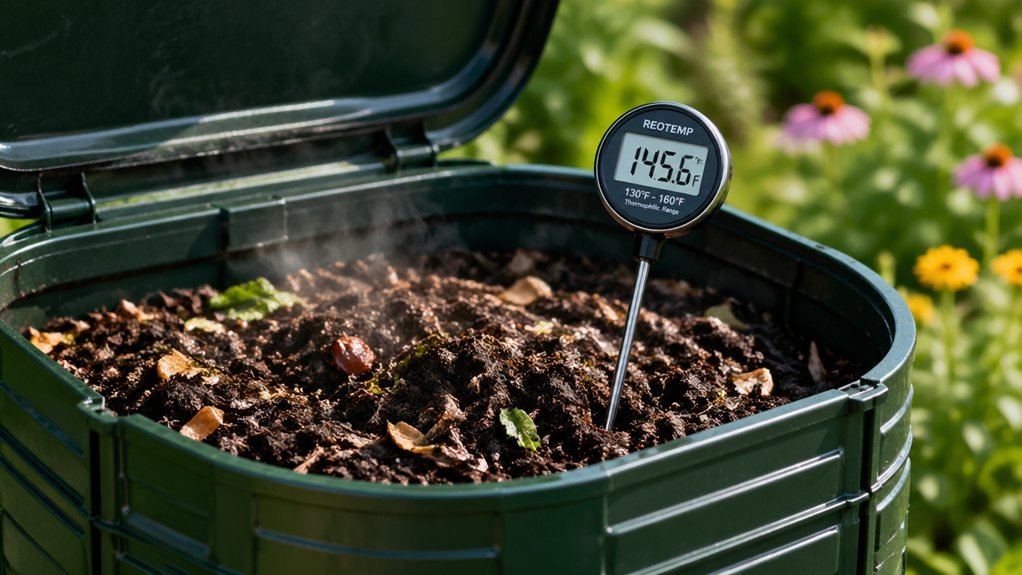
Wondering what temperature to aim for in your enclosed compost bin? Aim for a compost temperature in the thermophilic range of about 49 °C to 70 °C (120 °F‑158 °F) to speed aerobic decomposition and hit sanitation targets. The National Organic Program recommends maintaining 55 °C to 77 °C (131 °F‑170 °F) for at least 15 days with five turnings, but many growers settle on 55 °C to 65 °C (131 °F‑149 °F) to balance pathogen kill and microbial activity. Keep moisture content high enough for microbes but not soggy, and turn compost regularly to distribute heat and oxygen. Use a reliable probe for monitoring temperature at several depths, ensuring the whole pile stays within the target range. This precision protects health and meets organic standards. Temperature monitoring helps ensure the entire bin stays within the target range.
Why You Should Keep Your Compost Below 65 °C (149 °F)
Why keep your compost under 65 °C (149 °F)? Maintaining the compost temperature below this threshold protects microbial activity while still allowing rapid breakdown. In an enclosed bin, temperatures above 65 °C can kill beneficial microbes, slowing decomposition and upsetting the sanitation balance you need for a healthy pile. Regular turning and aeration help you manage heat, preventing hot spots that push the temperature past 65 °C. Take readings at several points—center, back, front—to confirm the whole bin stays under the limit. By keeping the temperature under 65 °C (149 °F), you sustain aerobic conditions, preserve the microbial community, and ensure efficient, safe composting. Proper monitoring also helps prevent residue issues and supports consistent decomposition across your pile maintain aerobic conditions.
Balance Moisture, Airflow, and Feedstock to Control Temperature
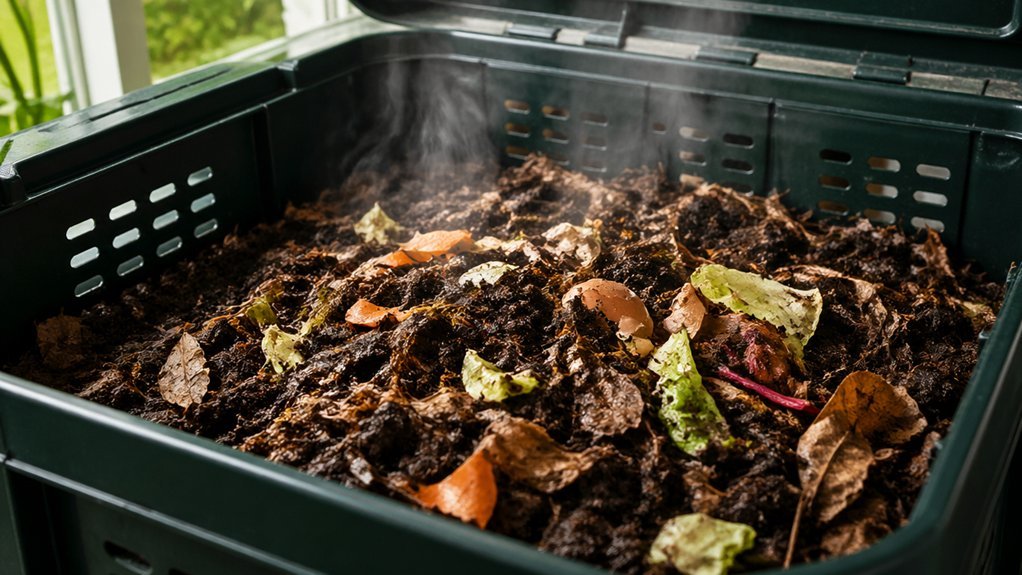
How can you keep your compost bin hot enough to sanitize yet cool enough to stay alive? Balance moisture, airflow, and feedstock to steer temperature. Aim for 131‑170 °F (55‑77 °C) for pathogen kill, but keep the active range around 120‑158 °F (49‑70 °C). Use a 4:1 brown‑to‑green feedstock ratio; brown leaves boost aeration while greens supply nitrogen. Maintain moisture at 50‑60 % so the compost pile acts as a thermal flywheel without waterlogging. Practice regular turning or aeration to supply oxygen, spread heat, and avoid hot spots that exceed 140‑149 °F (60‑65 °C). Monitor in‑bin temperature at several points, then adjust turning frequency to keep the profile steady and the pathogen kill efficient. Regular replacement of activated charcoal filters in kitchen bins supports maintaining a fresh environment that helps keep odors in check and allows you to manage moisture and airflow more precisely within indoor compost systems odor-control and ensure consistent in-bin conditions.
Pick the Right Thermometer for Tracking Thermophilic Compost
Balancing moisture, airflow, and feedstock gets your compost into the thermophilic sweet spot, but you still need a reliable way to verify those temperatures. A long‑stem, T‑handle thermometer like the RT610B gives you precise thermophilic temperatures inside enclosed compost bins. Its sturdy stem reaches deep, and the T‑handle lets you pull it out without contaminating the pile. For effective temperature monitoring, take multilocation readings—back, center, front—each day and log them. If any spot stays above 65 °C, increase aeration to keep microbes healthy while still achieving pathogen kill. Consistent tracking ensures the composting process stays within the 49‑70 °C range. The long-stem designs referenced include 16‑ to 39‑inch probes with hermetically sealed dials to prevent fogging and moisture ingress, providing durable, accurate readings in wet, deep piles. Long Stem Durability supports deep pile visibility and reliable monitoring across multiple locations.
Fix Common Thermophilic Compost Temperature Problems
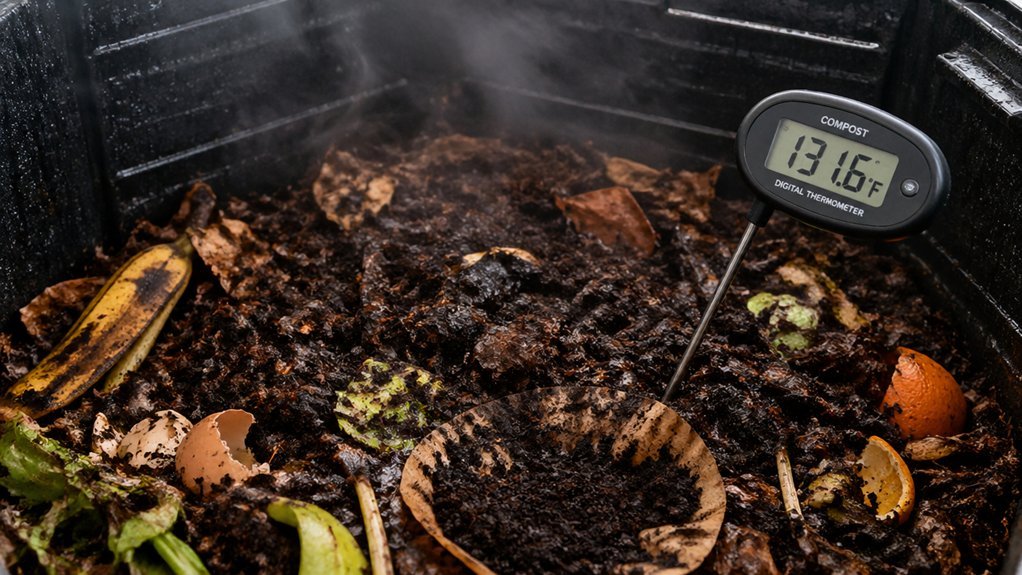
Ever notice your compost turning either too cool or scorching hot? You can fix those swings by checking temperature monitoring, adjusting turning frequency, and balancing moisture and greens. Aim for a compost bin temperature of 49‑70 °C for rapid thermophilic decomposition and pathogen kill, but keep it under 65 °C to avoid overheating. Sample several monitoring locations—center, back, front—to gauge heat distribution and act quickly when spots dip below 45 °C or rise past 60 °C. When using a bucket-based sifter or screen to separate finer material while managing moisture, also ensure good airflow to support even heating bucket compatibility and avoid creating anaerobic pockets during turning. – Add nitrogen‑rich green material and water if the pile cools; improve moisture management. – Turn the pile about five times early on or whenever a hotspot exceeds 65 °C; this restores oxygen and evens heat distribution. – Re‑balance green material ratio if the pile stays too hot or too cold; keep the mix even for steady thermophilic activity.
Frequently Asked Questions
How Hot Should My Compost Bin Be?
Your compost bin should stay between 130°F and 150°F, aiming for about 140°F. Keep it hot enough for thermophilic activity, but avoid exceeding 160°F, or turn the pile to cool it.
Do Potato Peelings in Compost Attract Rats?
You’ll attract rats if you leave moist potato peels exposed; keep the bin sealed, dry, and well‑aerated, and turn it regularly so peels decompose fast and don’t become a rodent magnet.
Can I Put Toilet Paper Rolls in My Compost?
Yes, you can shred toilet‑paper rolls and toss them into your compost; they break down quickly, add carbon, and won’t attract pests as long as you mix them well and keep the pile moist.
What Are Two Mistakes That We Should Avoid When We Prepare Compost?
You should avoid over‑watering and piling too much carbon‑rich material; both choke airflow and stall heat. Also, never skip regular turnings—without them the pile won’t heat up or decompose efficiently.
In Summary
Keep your bin in the sweet spot—around 55‑65 °C (131‑149 °F)—to speed decomposition and kill pathogens without scorching microbes. Monitor regularly, adjust moisture and airflow, and use a reliable thermometer. If temps drift too high, add dry material or increase ventilation; if they dip, turn the pile and add fresh greens. Maintaining this balance gives you nutrient‑rich compost faster, safely, and with minimal effort.