You can compost indoors if your city’s size limits and approved methods are met, usually a vermicomposter or sealed tumbler under 0.5 cu ft or 10 sq ft. Check whether a permit, notification, or simple registration is required—most health or solid‑waste departments handle it, and exemptions apply to tiny home‑scale bins. Follow odor‑control rules, use proper signage, and keep logs to stay compliant. The next sections will show you exactly how to register, document, and avoid common pitfalls.
City Ordinances That Permit Indoor Composting?

How do city ordinances actually allow you to compost indoors? You’ll find that many jurisdictions embed indoor composting rules within broader waste‑management sections, so you must scan for language on designated containers, lid closures, and bans on plastic bags. In California, SB 1383 points to home‑based options, yet the real permission hinges on local solid‑waste divisions and signage requirements—some counties even inspect multi‑family buildings for compliance. Colorado and Arizona don’t spell out indoor rules but set container and containment standards that indirectly legitimize indoor composting setups. When you evaluate city ordinances, look for waivers or exemptions that specifically mention indoor composting, and note any treatment or containment clauses that let you keep a vermicompost bin or sealed organic waste container inside your residence. Indoor composting rules are often paired with strict labeling and waste‑stream separation requirements to keep household bins compliant.
Which Composting Methods Are Officially Approved for Indoor Use?
Which Composting Methods Are Officially Approved for Indoor Use?
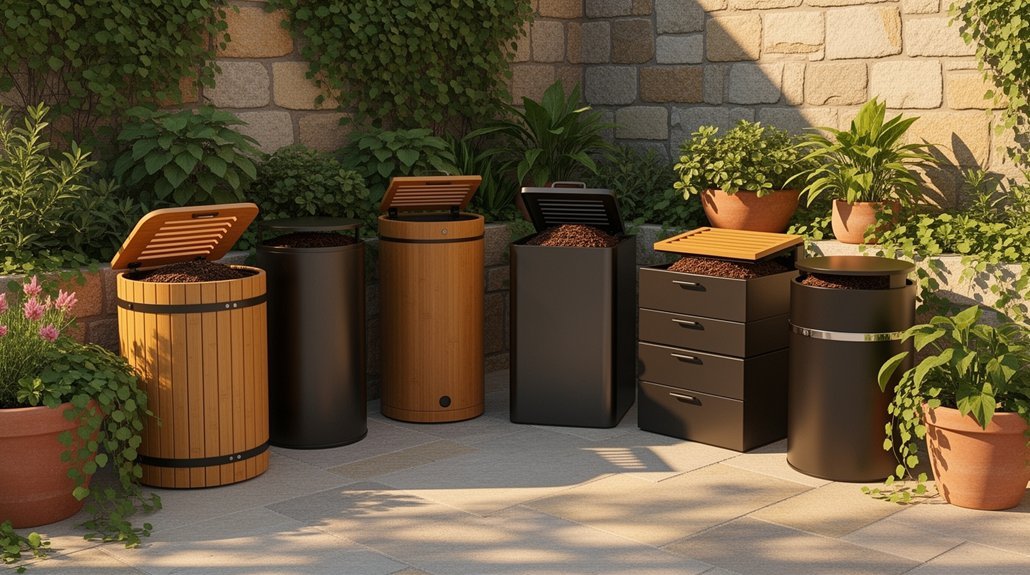
City ordinances that permit indoor composting usually spell out which systems meet safety and odor standards, and the most commonly approved options are compact vermicomposters and small, sealed tumblers designed for indoor use. You’ll find that vermicomposting thrives in a tight, breathable bin, while indoor composting systems like sealed tumblers keep waste contained and airflow regulated. Both types satisfy permit requirements, avoid non‑compostable plastics, and fit apartment kitchens or balconies. Compact vermicomposter airflow considerations can process scraps efficiently in small spaces, while small sealed tumbler systems maintain odor control in close quarters. | System | Key Feature |
| ——– | ————- |
|---|---|
| Compact vermicomposter | Worms process scraps in < 10 L |
| Small sealed tumbler | Closed lid limits odor |
| Counter‑top bin | Fits on kitchen surface |
| Under‑sink unit | Discreet, low‑maintenance |
| Wall‑mounted cartridge | Saves floor space |
How to Keep Odors and Pests Under Control in Indoor Composting?

You’ll want a sealed bin that still lets air flow, so choose a model with a tight lid and built‑in vent holes.
Keep the green‑to‑brown ratio balanced and turn the pile regularly to maintain aerobic conditions and prevent odor buildup.
Odor control filters can help manage smells by capturing volatile compounds as long as you replace them every 4–6 months based on usage and odor load.
Seal Proper Bins
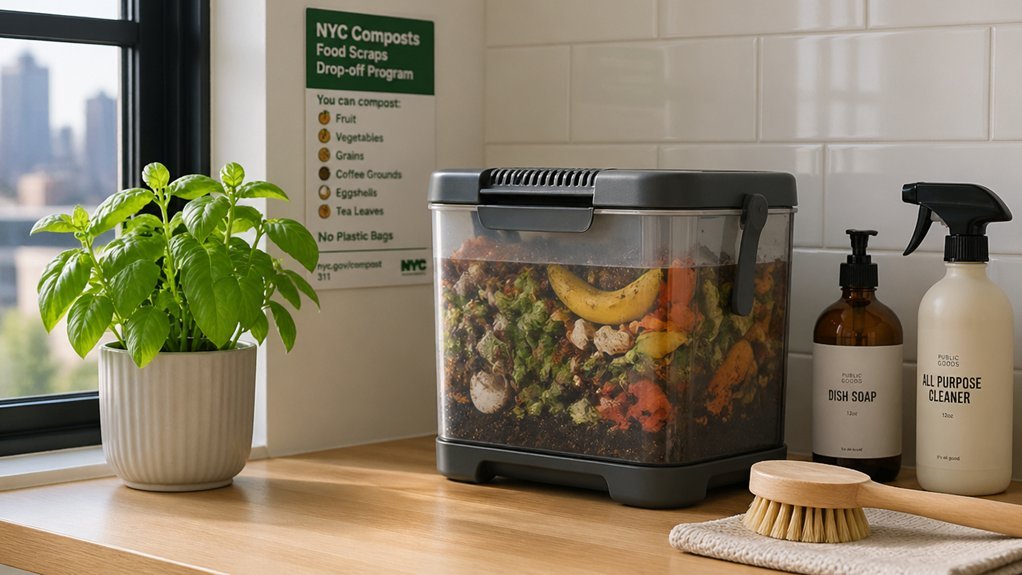
A tight‑fitting, odor‑tight bin is the cornerstone of indoor composting, because it blocks smells and keeps pests out. Choose a compost bin with a secure, snap‑on lid and, if possible, a built‑in charcoal filter or vented cap that still seals tightly. Position the bin in a cool, dry spot away from living spaces, and empty it weekly or transfer contents to an outdoor system to prevent buildup. Layer kitchen scraps with dry browns—shredded paper, cardboard, or sawdust—to balance carbon‑to‑nitrogen and curb odor control. Skip meat, dairy, oils, and greasy foods; they attract pests and generate lingering smells. By sealing the bin correctly and maintaining proper layering, you keep indoor composting clean, quiet, and city‑compliant. Regular maintenance with odor‑control features such as charcoal filters helps sustain a pleasant, odor‑free environment in compact living spaces. odor control features
Ventilation and Airflow
How can you keep indoor compost fresh without inviting pests? Focus on ventilation and airflow. Use a vented bin or a container with breathable material, and give it a light shake daily to stir oxygen‑rich air into the pile. A tumbling or rotating bin boosts airflow, preventing anaerobic pockets that create strong smells. Add small vent holes or a perforated lid to an otherwise airtight box; the openings let air escape while keeping insects out. Regularly monitor readings from a multi-parameter device to ensure moisture stays in the optimal range for aerobic decomposition stable readings. Position the bin near a window or in a room with gentle cross‑drafts, so cooler, drier conditions reduce mold and pest attraction. Never seal waste in a tight bag—steady, controlled aeration is essential for odor control and a healthy indoor compost system.
What Signage and Labeling Are Required for Residential Bins?
Ever wondered which labels you need on your compost bin? You must display clear organics signage that tells neighbors and inspectors what belongs inside. The county supplies free templates, so you don’t have to design them yourself. Your bin should show acceptable materials, prohibited items, and the collection day. County inspections will check that the signage is visible and accurate.
- Organics only – bold header with a green leaf icon
- Acceptable items – list of fruit scraps, coffee grounds, yard trimmings
- Prohibited items – “No plastic bags, metal, or glass” in red text
- Collection schedule – day of week and time window highlighted in yellow
Follow these guidelines, and you’ll stay compliant with SB 1383 while keeping your compost tidy.
When Is a Permit Required Versus When It’s Optional for Indoor Composting?

You’ll need a permit if your indoor compost exceeds the city’s volume, tonnage, or nuisance thresholds, and the responsible agency will enforce those limits. Smaller, home‑scale setups like vermicomposting or a modest tumbler usually fall under optional or exempt status, provided they stay within the defined activity caps. Always verify the specific jurisdiction’s rules to confirm whether your system is permit‑required or optional. Indoor composting guidelines provide additional context on how to size and manage systems within typical urban limits.
Permit Thresholds and Scale
When does indoor composting cross the line from a simple home hobby to a regulated operation? You’ll know you’ve hit a permit threshold when the volume, enclosure size, or waste type exceeds what the city deems a residential activity. Small bins in a kitchen or balcony usually stay permit‑free, but once you process larger quantities, add meat or dairy, or serve multiple households, you’ll need to check with the solid‑waste or environmental‑health office. Keep an eye on local tonnage limits and any SB 1383‑style guidance that could trigger inspection or signage requirements. A bin under 0.5 cubic feet, single‑family use, and an enclosure larger than 10 sq ft, multi‑unit service, are common thresholds to watch. Thresholds help you stay compliant without unnecessary paperwork.
Regulatory Agency Jurisdiction
If you’re wondering whether a permit is mandatory or merely optional for indoor composting, start by checking which agency has jurisdiction over your operation. In many states, health departments, solid‑waste agencies, or environmental protection divisions enforce the rules, so you must identify the regulatory jurisdiction before you begin. California relies on county health officials and CalRecycle to enforce SB 1383 compliance, but households typically avoid a formal permit.
Colorado classifies facilities; only Class I‑II sites need full permits, while Class III‑V—often residential—are exempt.
Arizona requires a 30‑day notice, not a full permit, for small indoor setups.
Alaska’s department of natural resources reviews beneficial‑use proposals, yet home‑scale indoor composting usually stays outside that process. Knowing the correct agency lets you determine when a permit is required versus optional.
Exemptions and Optional Requirements
Wondering whether you need a permit or can rely on an exemption for indoor composting? You’ll find that SB 1383 drives the line between mandatory permits and optional compliance. If you run a tiny vermicompost bin in a single‑family home, most cities treat it as a de‑minimis activity and grant exemptions. Once you scale to a shared‑facility or a designated recovery site, the jurisdiction’s solid‑waste staff will inspect and likely require a permit. Your operation’s link to edible‑food recovery programs also triggers oversight.
- A balcony worm bin under 10 lb, no permit.
- A condo‑level compost room serving 5 units, optional permit if you register with the city.
- A commercial‑scale indoor digester, mandatory permit and SB 1383 reporting.
- A cross‑border waste hub, always requires a permit.
How to Register Your Home Compost System With the Municipality?
Curious how to get your indoor compost system officially recognized? First, call your city or county solid‑waste division to verify which home composting methods and size limits the ordinance permits. Some places need a simple notification; others require a formal permit. Gather basic details—type of system, indoor location, container volume, and accepted materials—and fill out the registration form they provide. Attach any required signage or outreach plan, then submit the paperwork online or in person. Expect a possible inspection to confirm you’re handling organics correctly and avoiding odors or pests. If your municipality offers templates or educational flyers, use them to streamline the process. Keep copies of all correspondence to protect yourself from future fines.
What Common Compliance Pitfalls Should You Avoid?
After you’ve secured registration, the next step is to stay clear of the most common compliance missteps. You’ll avoid fines and inspections by following the city’s Composting Regulations and keeping your indoor system tidy and documented.
Stay compliant: register, follow city Composting Regulations, and keep your indoor system tidy and documented.
- Don’t use plastic bags in your organics container; they contaminate the pile and violate waste‑handling rules.
- Skip unapproved methods—check that your tumbler or bin matches the ordinance’s allowed designs.
- Ignore signage and records; many jurisdictions demand visible notices and a log of inputs and outputs.
- Overlook SB 1383‑style requirements; failing to align with organic‑waste diversion goals can trigger penalties.
City‑Provided Composting Forms & Guides
You’ll find the city’s guided composting forms and municipal manuals handy for setting up a compliant indoor system. They walk you through choosing a worm bin or compact tumbler, controlling odors, and keeping containers pest‑free. Plus, many cities offer free starter kits and clear material lists to keep you on track.
Guided Composting Forms
If your city offers a composting form, you’ll find it’s designed to walk you through the approved indoor methods—typically vermicomposting or compact tumblers—while ensuring you meet odor, pest, and runoff limits. The form asks you to list the types of household organic waste you’ll process, describe your enclosure, and confirm you’ll follow signage rules. It also prompts you to schedule a pre‑approval inspection, so you avoid fines for non‑compliant indoor composting. By filling it out, you demonstrate that your system stays clean, sealed, and low‑maintenance, satisfying municipal standards.
- A sealed worm bin with a lid and vent filter
- A compact tumbler with a lockable lid and drainage tray
- A labeled container for kitchen scraps, coffee grounds, and tea bags
- A posted guide showing odor‑control steps and pest‑prevention tips
Municipal Composting Manuals
Ever wonder how a city’s composting manual can simplify indoor waste management? You’ll find that municipal composting manuals lay out clear steps for setting up indoor composting systems that meet local codes. They spell out permitted methods—like vermicomposting or compact tumblers—plus size limits, location rules, and odor‑control standards. The guides also list required container types, such as sealed bins or totes, and tell you which materials are allowed versus prohibited items like plastics. In the compliance section, you’ll see collection options, signage requirements, and enrollment procedures for city programs. Checklists help you prepare for inspections, and contact information connects you to permit assistance, ensuring your indoor composting stays legal and efficient.
Documenting and Reporting Your Composting
Keeping clear records of what you put into your indoor compost, how you process it, and the amount of finished product you generate is essential for meeting city ordinances and any SB 1383‑style mandates. Your indoor composting documentation should capture inputs, methods, and outputs in a format that inspectors can audit quickly. Use the tools your municipality offers—templates, weight charts, and online portals—to streamline reporting and avoid gaps.
- Daily log of food scraps, paper, and yard waste with weights
- Weekly notes on vermicomposting or tumbler maintenance, space usage, and odor checks
- Monthly summary of finished compost volume and any donations to food‑recovery groups
- Signed agreements and waiver copies stored digitally for health‑department inspections
Stay organized, update records consistently, and you’ll meet compliance without hassle.
Frequently Asked Questions About Indoor Composting Legality?
What’s the real legal standing of indoor composting in your city? You’ll find that many ordinances favor low‑maintenance options like in‑bins or tumblers, and they often require lids to stay closed and ban plastic bags in organics bins. Indoor vermicomposting usually passes because it’s space‑efficient and uses worms to accelerate the Composting Process, but you must check whether your jurisdiction limits container types. Some cities accept three‑container or single‑bin systems to meet “organic waste” collection rules, while others enforce SB 1383‑style programs that trigger signage checks. Before you start, verify local code enforcement, confirm permitted materials, and ensure your setup complies with any lid‑closure or container‑quantity requirements. This diligence keeps your indoor composting legal and hassle‑free.
Frequently Asked Questions
Can Composting Be Done Indoors?
Yes, you can compost indoors, but you’ll need to follow local ordinances, choose low‑odor systems like vermicomposting or compact tumblers, and possibly obtain any required permits or notifications.
What Is the New Composting Law in California?
You must follow California’s SB 1383, which forces 75 % organic waste diversion by 2025, bans plastic bags in green‑lid bins, mandates weekly pickups, and requires food donors to donate surplus to recovery programs.
Do I Need a Permit for a Composting Toilet?
Yes, you’ll likely need a permit—check your city’s health or environmental department. Requirements differ by jurisdiction, so confirm whether your system type, installation, or commercial use triggers licensing.
What Are the Rules of Composting?
You follow city ordinances: limit pile size, keep bins closed, aerate weekly, avoid meat/dairy, use approved tumblers or worm bins, and maintain odor‑free, pest‑free conditions.
In Summary
By following your city’s ordinances, using approved indoor methods, and keeping odors and pests in check, you’ll stay compliant and enjoy hassle‑free composting. Remember to post required signs, file permits when needed, and keep accurate records. Avoid common pitfalls like improper labeling or neglecting reporting. With the right paperwork and practices, indoor composting can be both legal and sustainable in your home.