
Pick a semi‑shaded spot near water and stack three untreated‑brick bins side‑by‑side, leaving the left one open for turning. Start each bin with 4–6 in. of carbon‑rich browns (straw, wood chips) then 2–4 in. of nitrogen‑rich greens (kitchen scraps, fresh grass), topping with a thin soil layer; keep the mix as damp as a wrung‑out sponge. Turn the piles every 2–3 weeks, moving material to the next bin, and add extra browns if it gets too wet or smelly. Harvest the finished compost by sifting through a ¼‑inch screen and apply it to your beds for richer soil—more details await if you keep going.
How to Fit a Three‑Bin Compost System Into a Small Garden
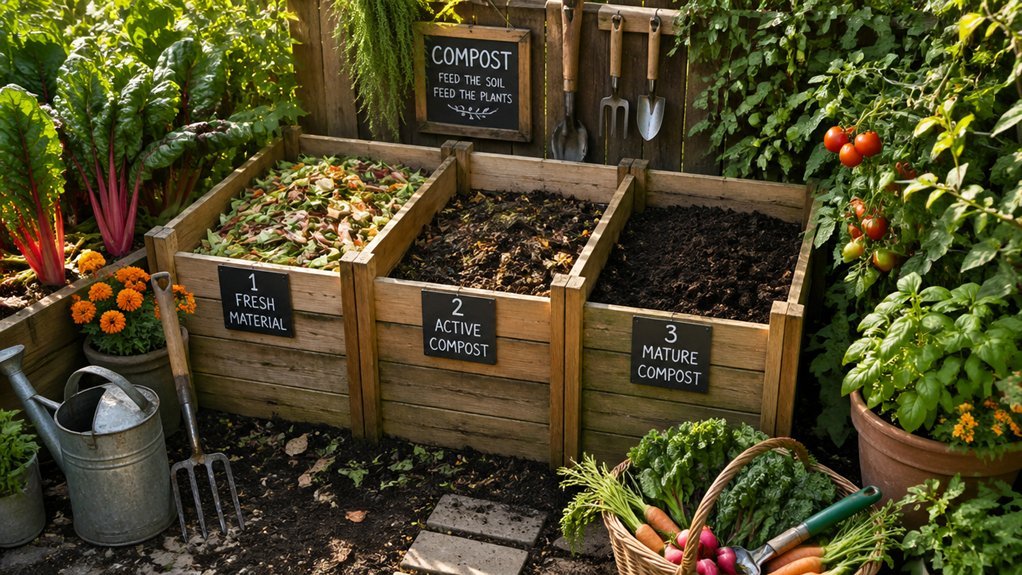
How can you squeeze a three‑bin compost system into a tiny garden? First, pick a level, semi‑shaded spot near a water source. Use untreated bricks, blocks, or pallets to build three adjacent bins, leaving the left one open for turning and the middle and right ones covered for moisture control. Fill each bin with alternating layers of browns and greens—4–6 inches of straw, wood chips, or dried leaves, then 2–4 inches of kitchen scraps or fresh grass, topped with a thin soil layer. Keep the active pile moist, aiming for a wrung‑out‑sponge feel, and turn it every 2–3 weeks to introduce air. As material ages, shift it to the next bin, allowing the final bin to mature into finished compost ready for your small garden. Smart Automated Bokashi Systems
Three‑Bin Compost Balance: Browns vs. Greens
Once your three‑bin setup is snug in the garden, the next step is keeping the brown‑to‑green ratio in check.
Snug three‑bin setup? Next, keep the brown‑to‑green ratio balanced for thriving compost.
In three‑bin composting you’ll start with twice as much browns as greens, then alternate layers: a 8‑10‑inch carbon‑rich brown sheet, a 4‑inch nitrogen‑rich green slice, then a dash of soil inoculant.
This pile layering creates a carbon-to-nitrogen ratio around 2:1–3:1, which sustains steady decomposition and a healthy compost balance.
Bury fresh greens 6–12 inches deep to keep odors down and pests away while maintaining contact with organic matter.
Keep a stash of fall leaves as a reliable brown source, so the ratio stays stable even when greens flood in a 1-4 word phrase.
How Often to Turn a Three‑Bin Compost for Best Results?
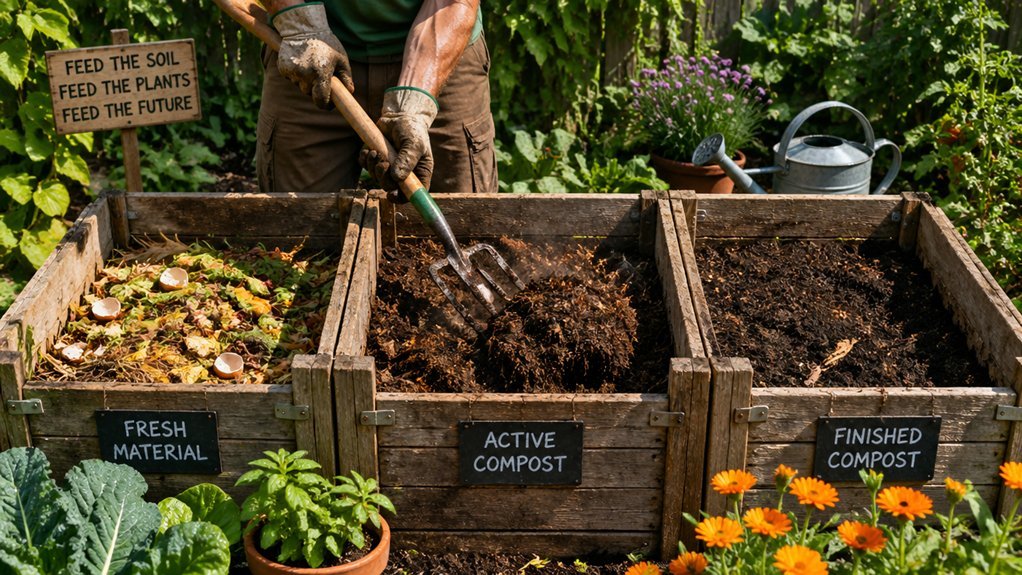
When should you turn your three‑bin compost? Aim for every 2–3 weeks, shifting material between bins to keep aeration high and odor low. In a three‑bin composting system, keep one bin open for turning while the other two finish their cycles, ensuring a continuous workflow. Before each turn, layer 4–6 inches of browns and 2–4 inches of greens, then mix to a sponge‑like moisture—neither soggy nor dry. Monitor the temperature, as a hot pile signals you need more frequent aeration, while a cool pile can wait a bit longer. By rotating piles on this schedule, you maintain ideal moisture, temperature, and microbial activity, accelerating decomposition and delivering rich compost faster. Regular turning also helps prevent clumping by leveraging the deep fins and aeration features described in dual‑chamber designs such as 360° tumbling systems, which support consistent airflow and faster turnover aeration and can guide you on how often to rotate for optimal results.
Three‑Bin Compost Moisture Tips and Simple Rinsing Hacks
Keeping the bins properly moist is just as important as turning them on a regular schedule. In your three-bin composting setup, aim for a moisture level that feels like a wrung‑out sponge; check weekly and add water during hot spells. When the pile dries, sprinkle water and toss in extra brown materials to restore balance and keep the mix from compacting. Use simple rinsing hacks: fill the kitchen pail with water before dumping kitchen scraps, or give the pail a quick rinse after emptying it into the bin. This cuts residue, reduces odor, and eases aeration. Remember to keep one bin empty for smoother turning and better airflow, letting green materials decompose efficiently while you maintain optimal moisture.
Harvest and Apply Finished Compost
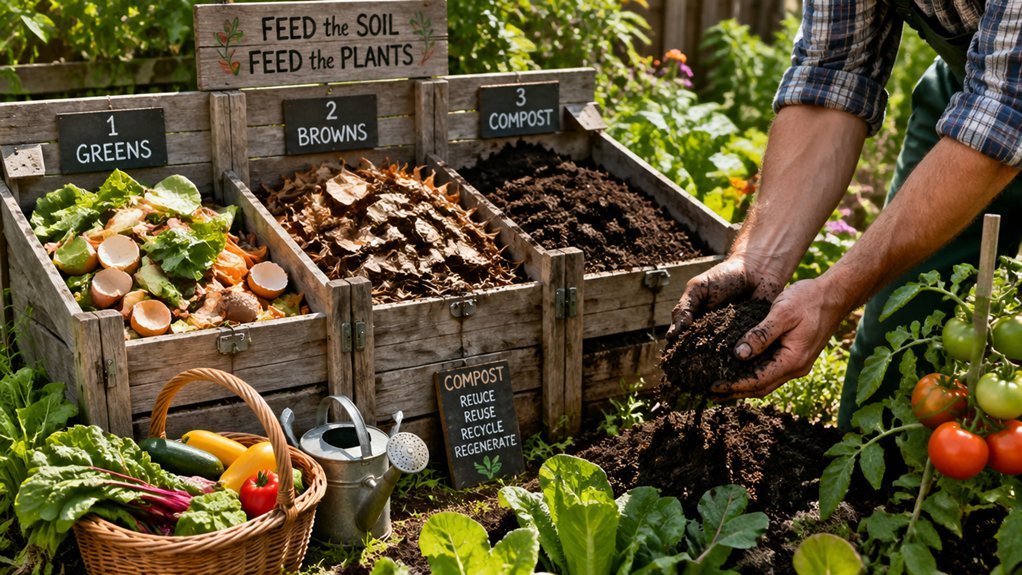
Harvest your mature compost by pulling the ready‑to‑use bin, sifting it through a ¼‑inch mesh or chicken wire, and spreading the dark, crumbly humus onto garden beds in spring or fall. The finished compost you harvest from the three‑bin system acts as a potent soil amendment, improving texture, moisture retention, and nutrient cycling. Whether you’re managing a modest backyard pile or large‑scale composting, the key is timing: aim for a rich, earthy humus that feels dry enough to handle but still slightly moist. After screening, evenly distribute the mature compost, then lightly work it into the top few inches of soil for best results. A ¼‑inch galvanized steel mesh, noted for its sturdy and durable construction, helps ensure consistent screening during harvest, supporting efficient processing throughout the season ¼‑inch mesh and contributing to reliable yields.
Frequently Asked Questions
What Are Three Items That You Should Never Put Into the Compost Bin?
You should never put meat, dairy, or fats into the compost bin; avoid bones and oily foods, and keep out diseased plants, weed seeds, and any glossy‑coated paper or pet waste.
How to Manage a 3 Bin Compost System?
You rotate material every two to three weeks, keep one bin empty, layer browns and greens, add a thin soil top, monitor moisture, and turn the active bin regularly to speed decomposition.
Do Potato Peelings in Compost Attract Rats?
Yes, potato peels can attract rats if they sit on the surface or stay too moist. Bury them 6–12 inches deep, mix with brown material, and keep the pile well‑aerated to deter rodents.
Can I Put Toilet Paper Rolls in My Compost?
Yes, you can compost toilet paper rolls—just shred or tear them, strip any plastic or dye, and mix them into the brown layer to keep carbon balanced and speed decomposition.
In Summary
By mastering the three‑bin setup, you’ll turn scraps into rich soil faster than ever. Keep the brown‑green balance steady, turn regularly, and watch the moisture stay just right. When the compost darkens and smells earthy, it’s ready to harvest. Sprinkle it onto your beds, mix it into pots, and let your garden thrive on the nutrients you’ve created. This simple system maximizes space, cuts waste, and fuels healthier plants with minimal effort.