
You’ll get the most efficient indoor composting by picking a stackable bin that fits your kitchen footprint, controls odor, and needs minimal upkeep. The Worm Factory 360 offers four trays, expandable capacity, and a five‑year warranty, while the Terra II uses AI‑driven microbes to hit 97 °F for fast pre‑compost. Both fit on countertops and produce worm‑casting or rich soil amendments. If you explore further, you’ll discover how to match capacity, maintenance, and space constraints to your lifestyle.
Stackable Compost Bin Basics: Choosing the Right Apartment System
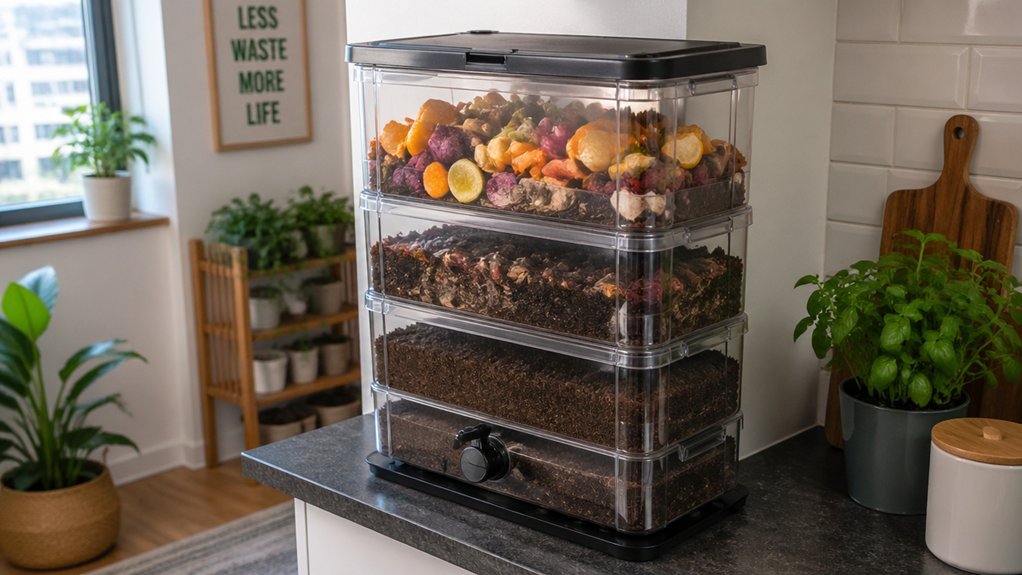
When space is tight, start by matching the compost method to your apartment’s layout and lifestyle. Indoor composting thrives on stackable bins that fit your kitchen’s footprint while handling daily scraps. Choose a vermicompost system like The Worm Factory 360 if you want expandable capacity and can tend to worms; its four trays let you postpone emptying for weeks. For odor‑sensitive spaces, aerobic bins with charcoal filters and tight‑seal lids give reliable odor control. Bokashi starter kits work in airtight containers, turning waste into pre‑compost that you bury later—perfect for compact apartments. Evaluate each option for capacity per bin, cleaning ease, and how it integrates into your apartment waste management routine before committing. Consider how replacement intervals and filter maintenance impact overall odor control and upkeep in an indoor setting odor control maintenance.
Space‑Smart Stackable Compost Bins for Small Kitchens
You’ll find that a compact design lets you tuck a compost bin into a countertop gap or pantry shelf without crowding your prep space, and sturdy, reinforced connections help ensure long-term durability in small-kitchen use one-piece head.
Compact Design Options
Where can you find a compost system that fits a cramped countertop without sacrificing capacity? You’ll love the compact indoor composting solutions that stay stackable yet powerful. The Worm Factory 360 gives you four trays that slide together, letting you add space as waste grows. The Vitamix FoodCycler FC‑50 packs a full‑cycle process into a sleek, countertop‑friendly unit. Polder’s rotating‑lid bin fits tight kitchens while letting you control airflow. Bokashi starter kits seal waste airtight, turning scraps into pre‑compost with a simple daily bran dose. Urbalive’s two‑layer farm offers a spigot for worm tea, but its larger footprint may stretch a tiny space. This approach aligns with odor‑management strategies that emphasize airtight containment and controlled aeration odor management.
Odor‑Control Features
Compact designs let you stack trays as waste grows, but without proper odor control the convenience quickly turns into a nuisance. You’ll want a bin that combines filtration and an airtight seal to lock in smells while letting air circulate safely. Stainless‑steel models often sport double carbon filters and charcoal‑filtered lids that neutralize volatile compounds. Look for a leachate drainage spigot so liquid can be tapped without opening the whole system, preventing soggy odors from escaping.
Some vermicompost and Bokashi units rely on anaerobic processes and tight seals, reducing surface scent. Replaceable filters keep performance steady, and a quiet fan (40–46 dB) can boost airflow without adding noise. With these features, your kitchen stays fresh while you compost. Odor-control
3‑Tier Rotate‑and‑Refresh Method: Cycle Times, Odor Control & Maintenance
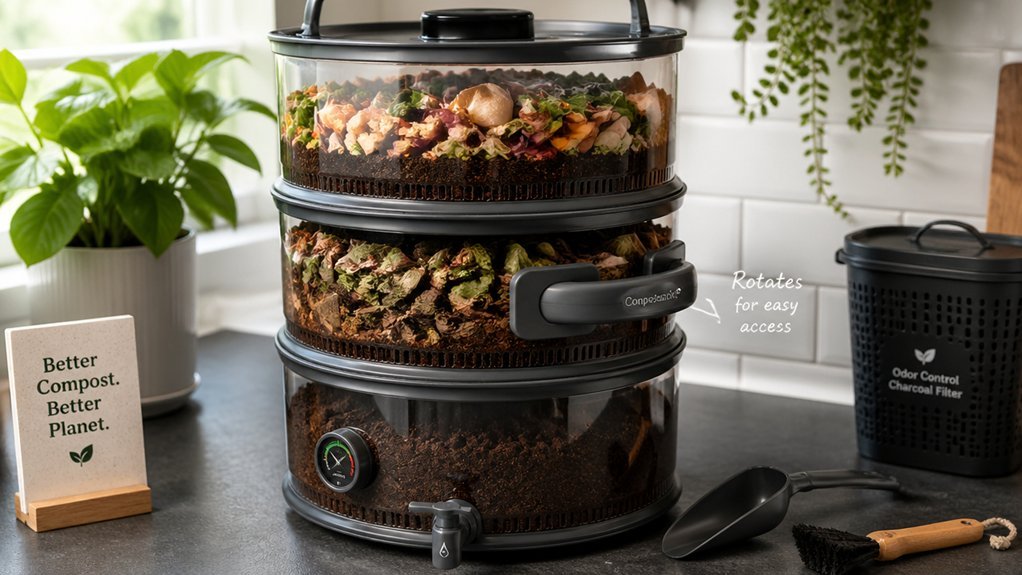
How long should each tier sit before you refresh it, and what does that mean for odor and upkeep? In a 3‑tier rotate‑and‑refresh system you typically let the bottom tray work 5‑7 days, the middle 3‑5 days, and the top 2‑3 days. As waste moves upward, microbes finish the compost, and the fresh air in the top tray keeps odor control tight. You’ll notice less smell when you swap tiers on schedule, and maintenance stays simple: just empty the finished bottom tray, replace it with a clean one, and keep seals and carbon filters snug. The system can support a longer overall lifespan with proper bin capacity management and regular maintenance checks, aligning with best practices for durable composting gear. bin capacity management
Bottom‑Tier Compact Stackable Compost Bins (Reencle Prime, Eco 3)
Curious about a low‑profile compost bin that fits snugly under your kitchen counter? The Reencle Prime delivers 14 × 15 × 22 inches of compact power, handling up to 1.5 lb of daily scraps for indoor compost. Its built-in carbon filter and starter kit—Microbe, activated carbon, wood pellets, glucose—keep odor control tight while you stack it with Eco 3 for a tidy, modular setup. You’ll sift and cure the dirt-sawdust-like output before mixing into a 1:4 soil blend, but you must avoid large bones, shells, and pits. The simple control panel or sensor lid lets you monitor progress without fuss, making stackable bins a hassle-free addition to any kitchen garden. Odor control is enhanced by the carbon filter, aligning with best practices for indoor systems to maintain a cleaner indoor environment.
Mid‑Tier Fermentation‑Ready Bins: Bokashi & Aerobic Pods (Polder, Bamboozle)
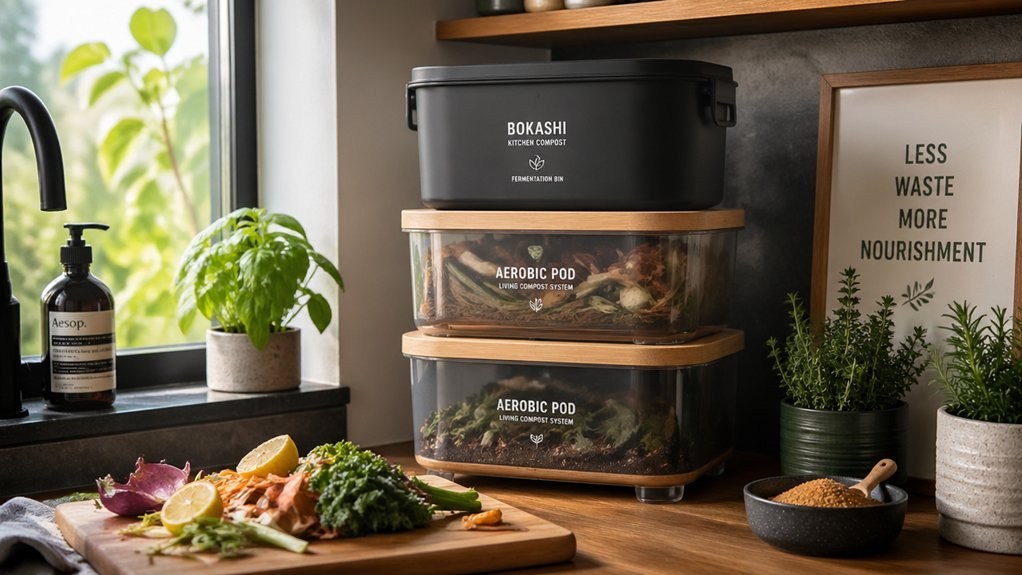
You’ll start by sprinkling the right amount of bokashi bran on each load and sealing the bucket tightly to keep the anaerobic environment intact.
Then, keep an eye on the aerobic pod’s rotating lid, adjusting airflow so the kitchen stays odor‑free while microbes break down waste efficiently.
With these simple steps you’ll maintain both fermentation‑ready and aerobic systems without hassle.
Bokashi Preparation Tips
A few simple steps will keep your mid‑tier Bokashi‑plus‑aerobic‑pod system humming efficiently. Start by loading your airtight bin with a thin layer of bran, then sprinkle a generous amount of starter to seed the fermentation. Add kitchen scraps in small batches, avoiding dairy and oils, and cover each addition with another bran layer to lock in moisture and odor‑control. Press the lid firmly; the airtight seal is essential for anaerobic activity. Let the bin sit for two weeks, then burrow the pre‑compost into soil or a garden bed.
- Feel the satisfying thudas each lid snaps shut.
- Smell the faint, sweet tang of successful fermentation.
- See the vibrant, nutrient‑rich leachate collect in the spigot.
- Hear the quiet hum of microbes at work.
- Watch the compact stack grow, fitting neatly on your countertop.
Aerobic Pod Maintenance
Ever wonder how to keep your Polder or Bamboozle pod humming smoothly day after day? Start by checking the rotating lid on your Polder; it should click shut and open freely, guaranteeing steady airflow for aerobic breakdown.
For Bamboozle, wipe the charcoal filter weekly to trap smells and keep odor management on point.
When you add scraps, pack them loosely but avoid over‑filling—this lets oxygen circulate and prevents soggy spots. If you use Bokashi kits alongside, seal the bin for two weeks after the final layer, then transfer the fermented material to your aerobic pod for final composting.
Empty the leachate tray daily, rinse it, and store the liquid for garden use. Consistent cleaning, proper lid function, and balanced loading keep indoor composting systems efficient and odor‑free.
Top‑Tier Finished‑Compost & Worm‑Casting Bins (Worm Factory 360, Terra II)
The Worm Factory 360 and Terra II are the two leading top‑tier indoor compost solutions, each delivering high‑capacity, ready‑to‑use soil amendments. The Worm Factory 360 lets you stack four trays, expanding as your worm‑casting harvest grows, while Terra II uses AI‑driven microbes to generate pre‑compost at a steady 97°F. Both systems fit neatly on a kitchen counter, turning scraps into valuable amendments without mess. You’ll value the five‑year warranty on the Worm Factory and the sleek, heated enclosure of Terra II, which speeds up vermiculture and indoor composting alike. The design emphasis on odor control and easy maintenance aligns with best practices for compact, odor‑reduced indoor systems odor control features.
Common Issues & How to Fix Them: Stuck Lids, Bad Smells, Over‑loading
Stuck lids, foul odors, and overloaded trays are the three most common hiccups in indoor compost setups, but each has a straightforward fix. When lids stay stuck, release the pressure by gently prying the seal or loosening the lock, then reseal tightly. Bad smells usually signal over‑loading or excess moisture; balance greens with browns, add a charcoal filter, and keep the bin dry. Over‑loading slows breakdown—follow the daily intake guide, add scraps in smaller batches, and rotate trays regularly. Venting issues arise when airflow is blocked; check that vent tubes are clear, avoid sealing gas‑producing foods, and clean filters often. Routine maintenance—emptying leachate, wiping seals, and rotating trays—prevents stuck lids, bad smells, and over‑loading, keeping your stackable system humming smoothly.
Frequently Asked Questions
What Is the Best Indoor Composter?
You’ll find the Lomi best most versatile indoor composter; it’s compact, odor‑controlled, and turns scraps into usable soil quickly, requiring minimal maintenance and fitting neatly on countertops.
Which Is Better, Lomi or Reencle?
You’ll find Reencle better if you need higher daily capacity and a raw, dirt‑like output, but Lomi wins for compact, odor‑controlled, plug‑and‑play composting with finer soil amendment.
What Is the Lazy Compost Method?
You’ll love the lazy compost method: just toss food scraps into a sealed bokashi bucket, add the bran mix, let it ferment for a week, then bury the pre‑compost in a garden or pot.
Do Potato Peelings in Compost Attract Rats?
Yes, fresh potato peels can attract rats because their moisture and scent draw rodents. Dry them first, seal the bin tightly, and use a bokashi or vermicompost system to keep pests away.
In Summary
By stacking the right bins, you’ll turn a cramped kitchen into a thriving compost hub. Start with a compact bottom tier, add a fermentation‑ready mid tier, then finish with a worm‑casting top tier. Keep lids tight, balance moisture, and rotate regularly to dodge odors and blockages. With this simple three‑step system, you’ll produce nutrient‑rich soil at home, all while staying tidy and odor‑free.