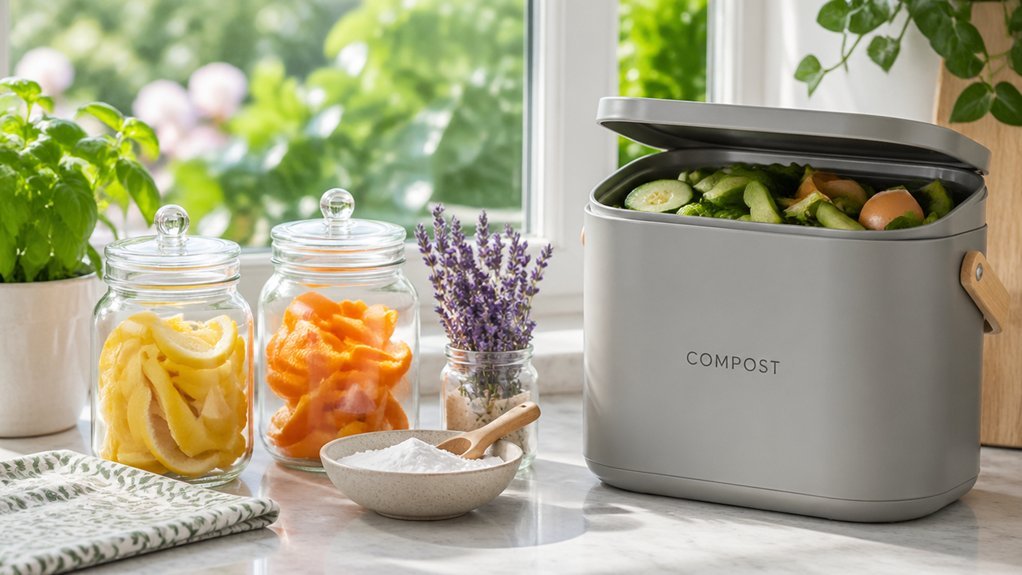
Seal your bin with a tight‑fitting lid and keep it cool and dark, like under the sink, to slow decomposition. Freeze scraps in a bin‑friendly container before tossing them in, then add a generous layer of dry browns—shredded paper, cardboard, or dry leaves—on top of each load to absorb moisture and block odors. Skip meat, dairy, oil, and sauces, and empty and rinse the bin weekly. Follow these steps, and you’ll discover even more tricks to keep your window composting fresh.
Why Kitchen Compost Bins Smell and How to Stop It
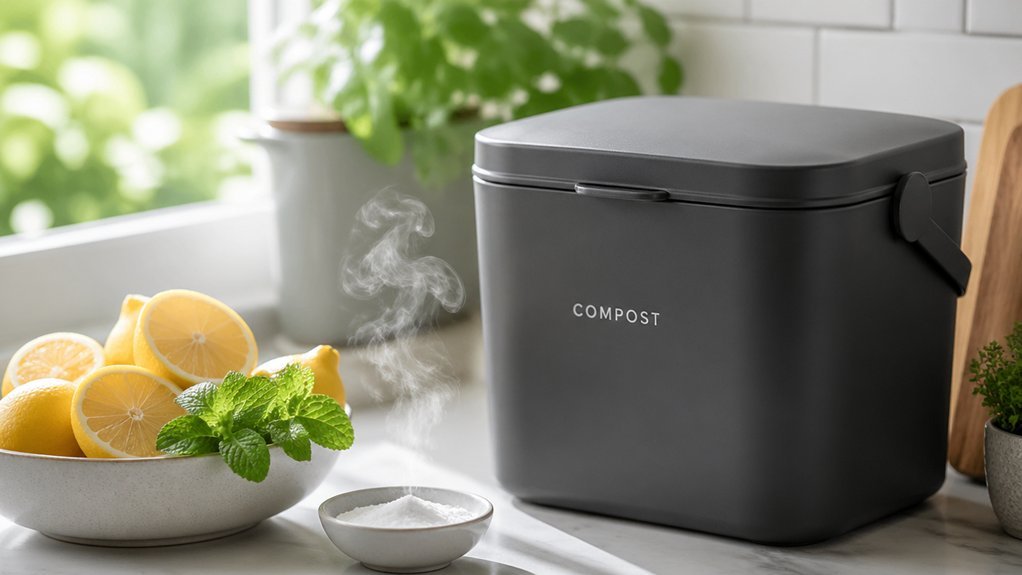
You’re probably letting scraps sit too long, especially meat, dairy, or oily sauces, which fuel compost odor. Keep indoor bins cool and dark, then layer a generous amount of browns—shredded paper, cardboard, or dry leaves—on top of the waste. The dry material soaks up moisture, slows decomposition, and blocks the smell.
Stick to a strict emptying cadence, emptying every 4–7 days or sooner if you add a lot of waste. If the odor persists, add more browns, wash the bin thoroughly, and reassess both moisture levels and your emptying schedule. These steps will keep your kitchen compost bin fresh and odor‑free. Regularly replacing charcoal filters helps maintain odor control and is part of effective maintenance. odor control becomes easier when you pair proper filtration with consistent empties.
Pick a Bin With a Tight‑Fitting, Secure Lid
Ever wonder how a simple lid can keep your window compost fresh? A tight‑fitting, secure lid is the frontline defense against smell and pests. When you close the lid properly, you seal in moisture, keep fruit flies out, and boost odor control. Choose a bin whose lid snaps shut and stays closed, even when you’re busy. Regularly check the seal and replace worn gaskets to maintain a perfect lock, and you’ll notice far less odor leaking into your kitchen. Ensure the lid has a reliable cross-cut style or secure latch to minimize gaps, especially if you’re managing high-moisture scraps.
Store the Bin in a Cool, Dark Spot (e.g., Under the Sink)
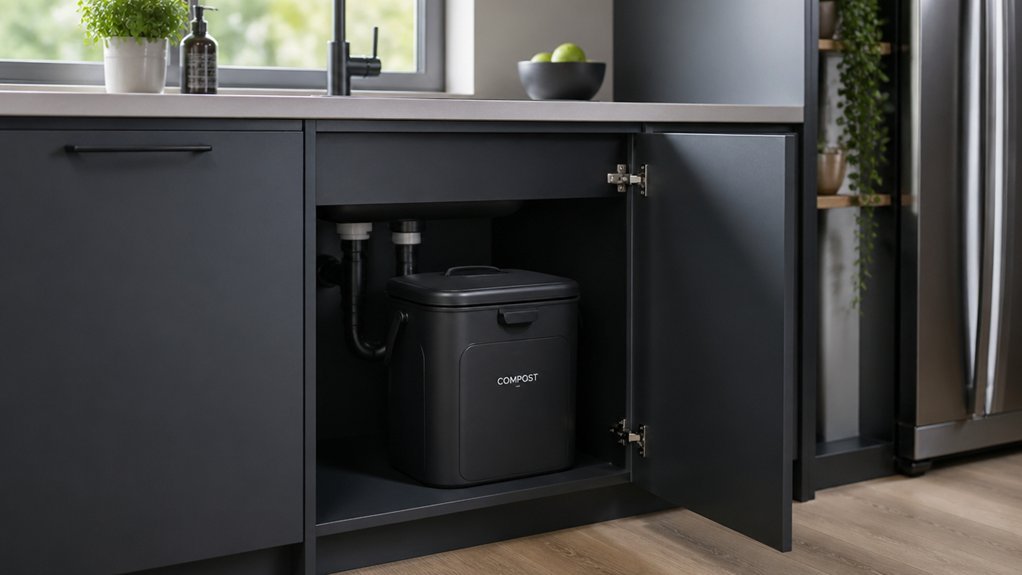
Looking for a simple way to curb compost odors? Place your kitchen compost bin in a cool, dark spot—ideally under‑sink storage—to create a stable environment that slows microbial activity. A cool environment reduces the rate of decomposition, which keeps gas release and unpleasant smells at bay. By keeping the bin away from sunny windows, radiators, and stoves, you enhance odor control and extend the time between emptyings. Under‑sink placement fits most apartment layouts and offers easy access for regular disposal routines. Choose a spot that stays shaded and temperature‑stable, and you’ll notice a marked drop in odor intensity while maintaining a tidy, functional compost system. odor-control features help minimize odors when the lid is sealed and the spigot remains unclogged.
Freeze Scraps Inside a Bin‑Friendly Container to Reduce Odor
Ever wonder how to keep your kitchen compost bin odor‑free until you can take it out? Freezing scraps in a bin‑friendly container is a simple hack that halts decomposition and delivers major odor reduction, keeping the dreaded window composting smell at bay. Just toss your food waste into a sturdy plastic bag or reusable Tupperware, seal it, and pop into the freezer. When you’re ready to empty the bin, transfer the frozen bundle straight to an outdoor container. The cold lock‑up gives you flexibility, especially if you empty infrequently or lack time for daily maintenance, and this method aligns with moisture and odor control practices that help manage indoor bins more effectively moisture balance.
- Choose a durable bin‑friendly container that seals tightly.
- Fill it with scraps, avoiding compostable bags that melt.
- Freeze promptly to stop bacterial activity.
- Move the frozen block to your outdoor bin when you’re set to discard.
Add a Dry Brown Layer to Every Load
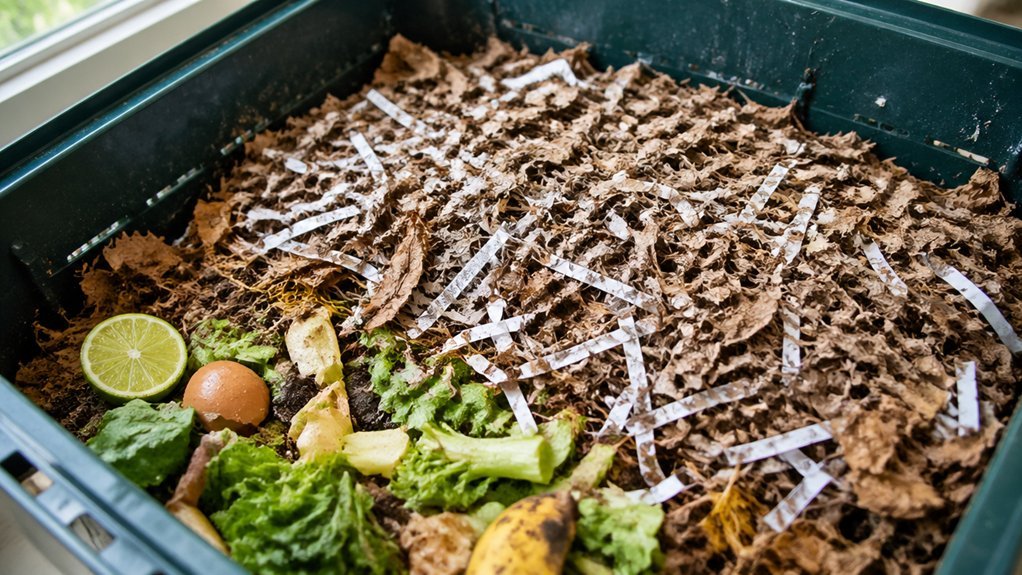
How can you keep your kitchen compost bin smelling fresh without constant fuss? Add a thin, dry brown layer—shredded paper, cardboard, or dried leaves—on top of every load. The browns act as moisture absorbers, soaking up excess liquid and creating a dry barrier that blocks odor before it escapes. This simple step boosts odor control for indoor composting, keeping flies at bay and preventing soggy buildup. In apartments, grab a few sheets of newspaper or a cardboard box; shred them, sprinkle a modest amount, then cover your scraps. The dry layer works with a tight lid and regular emptying, balancing moisture and preserving a pleasant scent. Consistently applying this layer ensures your window compost stays fresh and hassle‑free. Regularly replacing the filter in your odor-control system can further enhance odor management and keep your kitchen ambiance pleasant. odor-control system
Leave Meat, Dairy, Oil, and Sauces Out of the Bin
You’ll notice a big difference when you keep the bin strictly plant‑based, because veggies and fruit don’t release the strong, lingering smells that meat, dairy, oil, and sauces do.
This approach also helps reduce pests and makes maintenance easier by avoiding high-odor ingredients.
In addition, choosing a dual‑chamber or rotating tumbler design can help you separate fresh scraps from mature material, speeding up decomposition and keeping odors more contained continuous composting.
Plant‑Based Only
If you keep the countertop bin strictly plant‑based, you’ll notice a dramatic drop in unpleasant odors. Plant‑based scraps decompose aerobically, keeping composting odor at bay and making indoor bin odor control a breeze. By sticking to fruit peels, veggie trimmings, coffee grounds, and eggshells, you supply the right browns and carbon sources without feeding microbes that produce sulfurous gases. This simple rule also cuts pest attraction, so your window setup stays tidy and fresh. Regularly replacing Bokashi bran according to waste input helps maintain steady fermentation and odor control bran replacement cadence. 1. Toss only fruit and vegetable waste into the bin. 2. Add a handful of dry leaves or shredded newspaper for extra carbon. 3. Avoid any dairy, meat, oil, or sauces—they spike odor instantly. 4. Rinse containers briefly before discarding to prevent residue buildup.
Avoid High‑Odor Ingredients
Ever notice how a single piece of meat can turn a fresh‑scented compost bin into a stinky nightmare? You can keep compost odor at bay by ditching meat, dairy, oil, and sauces. Stick to plant‑based scraps; they break down quickly and stay low‑smell in an indoor bin. Those high‑odor ingredients release greasy gases that cling to the browns carbon material, inviting pests and lingering fumes. By feeding only fruit, veg, and coffee grounds, you maintain a balanced carbon‑to‑nitrogen ratio and avoid the complex odor‑control steps that animal fats demand.
| What to Avoid | Why It Smells |
|---|---|
| Meat & Fish | Strong proteins release foul gases |
| Dairy & Cheese | Fatty residues cling to browns carbon material |
| Oil & Sauces | Grease slows decomposition, creates slime |
Empty the Bin Once a Week, Rinse It, and Troubleshoot Persistent Odor
Because waste continues to break down, emptying the bin once a week stops odor from building up in a window compost setup. You’ll notice better odor control when you combine weekly emptying with a quick rinse and troubleshoot any lingering smells. Keep the compost bin clean, use a tight‑fitting lid, and place it in a cool, dark spot to slow decay between cleanouts.
- Empty weekly – Remove all material every seven days to prevent buildup.
- Rinse and troubleshoot – Wash the bin with soap, water, and an old sponge; rinse scraps before reloading.
- Add dry browns – If odor persists, increase emptying frequency or layer extra dry leaves/ newspaper to absorb moisture.
- Seal and cool – Fit a tight lid and store the bin away from direct sunlight to maintain freshness.
Frequently Asked Questions
How to Neutralize Compost Smell?
You neutralize compost smell by sealing the bin tightly, adding a thick layer of dry browns, emptying it frequently, washing the interior, and keeping meat or dairy out of the mix.
What Kills Compost Bacteria?
You kill compost bacteria by flooding the pile with oxygen, keeping it dry, and maintaining cooler temperatures; adding plenty of carbon‑rich browns and turning it regularly prevents anaerobic growth.
How Long Does It Take for Compost Smell to Go Away?
You’ll notice the smell fading within two to three days if you turn the bin often, keep it cool, add plenty of browns, and clean it regularly, but stubborn odors may need an outdoor transfer.
How to Start a No Smell No Hassle Compost Box in Your Living Room?
You’ll pick a sealed, hinged compost bin, line it with a compostable bag, add a layer of dry browns, keep it cool, and empty it every few days to avoid smells and hassle.
In Summary
By keeping your compost bin sealed, cool, and dry, you’ll stop the stink before it starts. Freeze scraps, add a brown layer, and avoid meat, dairy, and oil to keep odors at bay. Empty and rinse the bin weekly, and you’ll enjoy a fresh‑smelling kitchen without the hassle. Follow these simple steps, and your compost will stay invisible—and odor‑free.