Seal your bin with a snug, flat‑seated lid and stash it in a cool, dark spot—under the kitchen sink works great. After each load, sprinkle a thin layer of dry browns (shredded paper, cardboard, or leaves) to soak up moisture and boost airflow. Toss a pinch of baking soda at the bottom to neutralize sour smells, and freeze scraps between emptyings to pause decomposition. Mist the interior with a simple rice‑milk LAB spray for probiotic balance, and you’ll keep odors under control while learning even more tricks.
Seal the Bin Tight: Choose a Fitting Lid for Odor Control
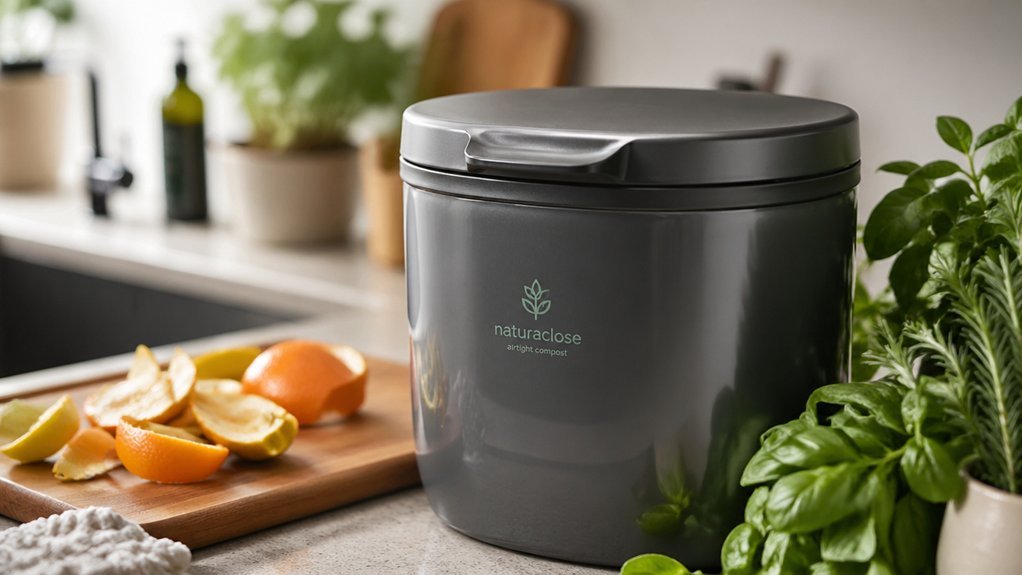
Why let smells escape? You’ll keep your kitchen fresher by securing tight lid seals on your compost bin. A sturdy, well‑fitting lid blocks air, so odors stay inside and fruit flies lose their feast. When you snap the lid shut, you eliminate gaps where scent can drift out, making odor control effortless. Check that the lid rests flat and that the gasket or rubber edge presses firmly against the rim; any misalignment invites smells. If you notice a whiff, re‑tighten the lid and add a layer of dry browns on top to soak up moisture. Pairing this simple seal with a cool, dark spot slows decomposition, but the lid alone the heavy lifting for a clean, odor‑free indoor compost. Odor Control
Keep the Compost Bin Cool and Dark – Best Under the Kitchen Sink
Securing the lid already blocks most odor, now give the bin a cool, dark home—ideally under the kitchen sink. The under‑sink bin stays out of sight and away from heat sources like stoves or radiators, creating a natural cool storage zone that slows decomposition.
By tucking the compost into that dark nook, you limit exposure to sunlight and warm air, which keeps compost odors at bay. Make sure the cabinet isn’t near a dishwasher vent or a hot pipe; a stable, low‑temperature environment helps the bin stay fresh longer. A tight‑fitting lid plus this cool, dark spot gives you a low‑maintenance solution that fits seamlessly into apartment kitchens environmental considerations.
Balance Moisture and Air: Add a Thin Layer of Browns After Each Load
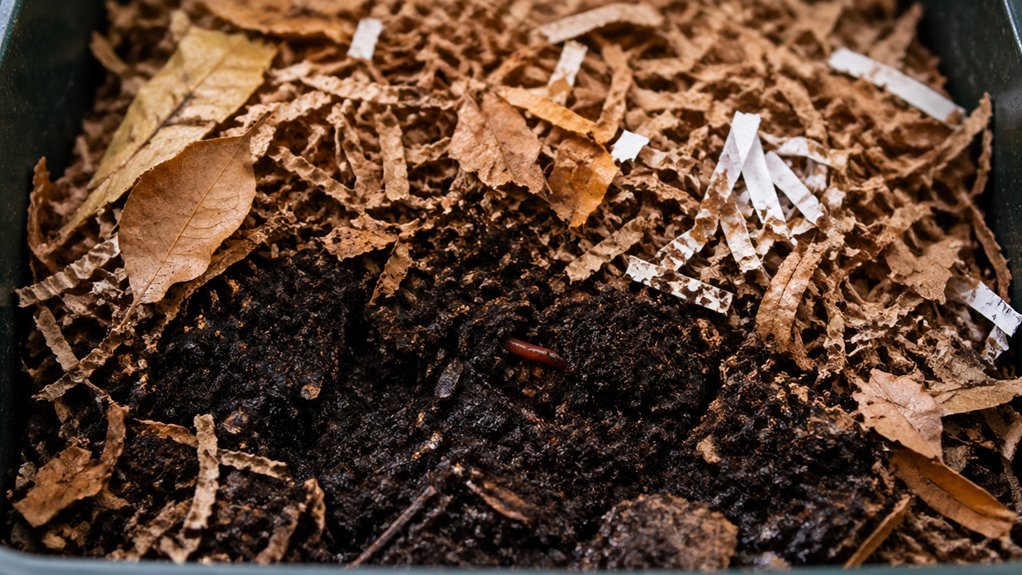
You’ll keep the air moving by sprinkling a thin brown layer after each load, letting dry material absorb moisture quickly. This carbon‑rich barrier creates space for oxygen, preventing the bin from turning soggy and smelly. If the compost still feels damp, just add a bit more brown to restore the balance. jar compatibility supports efficient layering to maintain proper aeration and moisture control.
Dry Air Flow
Ever wondered how a simple layer of browns can keep your compost smelling fresh? Adding a thin brown layer after each load creates dry air flow, which boosts odor control and keeps the bin breathable. The porous texture of shredded paper or cardboard lets oxygen circulate while soaking up excess liquid, preventing slime and anaerobic smells. Keep the lid snug but not airtight; the brown layer acts as a moisture barrier, letting the compost stay lively and fragrant. Regularly monitoring moisture with a light touch of browns helps maintain the right balance for anaerobic fermentation and reduces odors Bokashi composting balance.
- Use shredded newspaper for quick, even coverage.
- Sprinkle a thin line of cardboard strips to improve porosity.
- Add a light coat of brown paper bag pieces after every food‑scrap addition.
Absorb Moisture Quickly
How does a thin blanket of browns keep your compost dry and odor‑free? You spread a light layer of shredded paper, newspaper, or torn cardboard over each batch of food scraps. Those browns act like dry carbon sponges, pulling excess moisture away and letting air flow through. The result is a drier pile that resists soggy spots where odor‑producing microbes thrive. If you notice a faint smell, add another thin coating and give the bin a quick stir to boost aeration. You don’t need a thick mound—just enough to wick moisture after every load. This simple habit balances moisture, improves airflow, and keeps your indoor compost fresh without upsetting the long‑term green‑brown ratio.
Maintain Carbon Balance
Wondering why a thin blanket of browns after each load keeps your indoor compost fresh? Adding a light layer of brown material each time you drop in kitchen scraps does more than mop up excess moisture; it locks in carbon, boosts aeration, and keeps odors at bay. The dry layer creates a moisture buffer, letting air flow through and preventing anaerobic pockets that smell sour. Over weeks, the 2:1 or 3:1 browns‑to‑greens ratio you maintain balances carbon inputs, so the pile stays lively and odor‑free. Brown Layer Benefits This balance supports steady fermentation and helps maintain odor control in compact setups like indoor bokashi systems.
- Shredded paper or cardboard spreads evenly, soaking up wet bits.
- Dried leaves add texture and extra carbon for a stable mix.
- A thin top coat blocks flies and seals in fresh scent.
Keep this rhythm, and your indoor compost will stay balanced, breathable, and pleasantly fresh.
Control Excess Moisture With a Pinch of Baking Soda
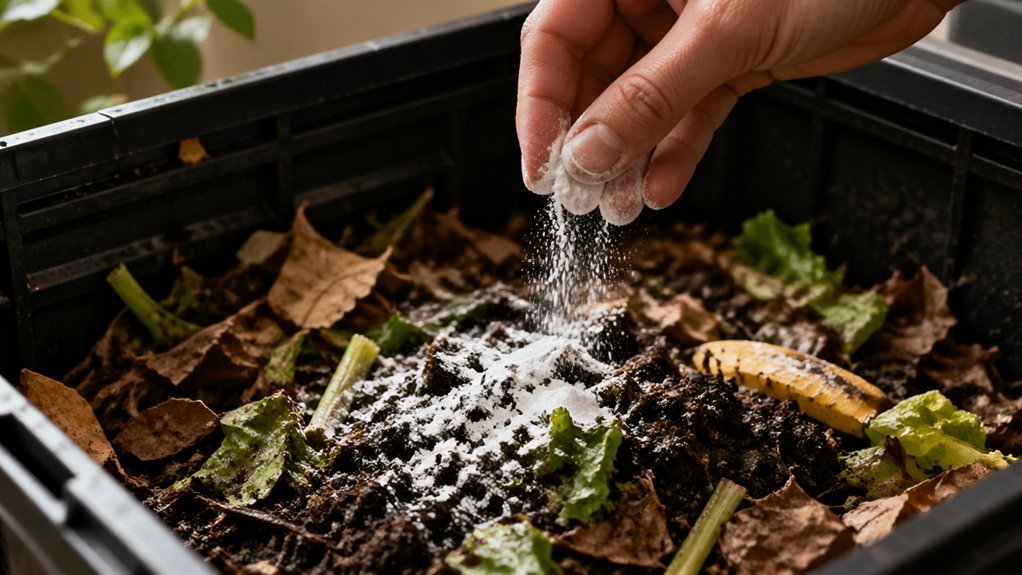
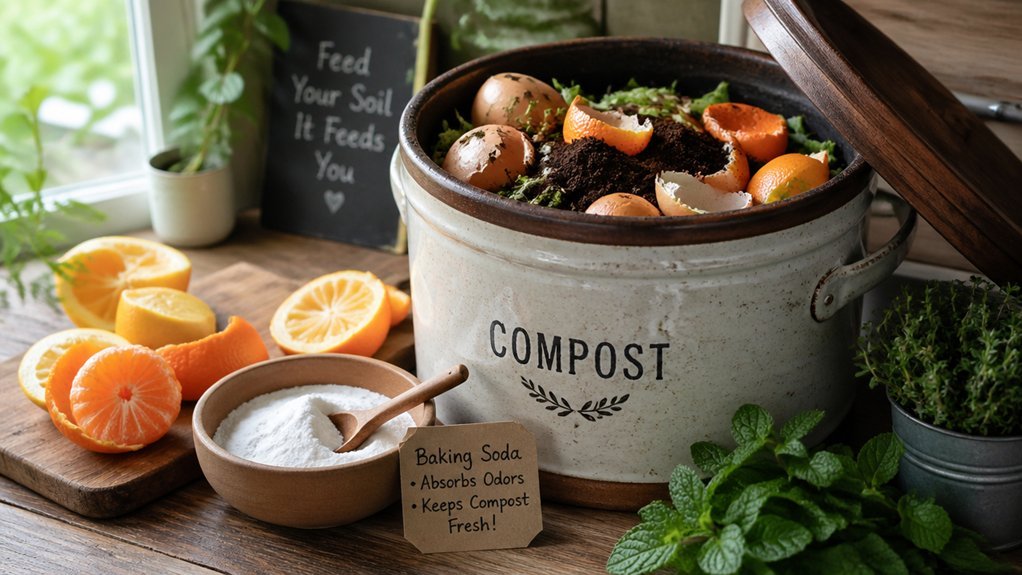
Can a pinch of baking soda really keep your indoor compost from getting soggy? Yes, a light dusting can aid moisture control and odor reduction. Sprinkle a small amount at the bin’s bottom or layer it with dry browns; the soda soaks up excess liquid and neutralizes sour smells as scraps decompose. This approach aligns with odor-control practices that rely on charcoal filters and proper capacity management to maintain a balanced environment inside the crock odor control.
Freeze Scraps Between Emptyings to Stop Decomposition
Ever notice how kitchen scraps turn your indoor bin into a stinky mess? Freezing scraps between emptyings puts decomposition on pause, giving you solid odor control for indoor composting. Just toss meat, dairy, or any high‑odor leftovers into a freezer‑safe container or reusable bag, seal it, and pop it in the freezer. The cold halts microbial activity, so the bin stays fresh until you transfer the frozen load to your outdoor compost bin or drop it off on pickup day. This trick works with San Diego’s organics recycling program, so you don’t need to empty the bin daily. Using a Bokashi bran inoculant can further speed up fermentation when you’re ready to dispose of frozen loads, helping to neutralize odors microbial cultures and prepare scraps for soil amendment. – Use a sturdy freezer‑grade container, not regular plastic bags.
Freezing kitchen scraps pauses decay, keeping indoor compost bins odor‑free until outdoor transfer.
- Freeze high‑odor items first for maximum odor control.
- Move frozen scraps outdoors promptly to keep indoor composting odor‑free.
Spray a Simple Rice‑Milk LAB Mix to Neutralize Indoor Compost Odors
Mix rice, water, and milk into a thin LAB solution, then spray it lightly over the compost surface. The probiotics will ferment and neutralize odors without overwhelming the bin. Finally, reseal the bin tightly to keep the fresh scent locked in.
Mix Rice‑Milk Solution
A simple rice‑milk spray can keep your indoor compost smelling fresh without expensive gadgets. To craft the mix, combine one cup of cooked rice, two cups of water, and a splash of milk. Blend until smooth, then let the slurry sit for 24 hours at room temperature; the lactic acid bacteria (LABs) will proliferate, creating a natural odor‑control brew. Strain the liquid, pour it into a spray bottle, and you’ve got a ready‑to‑use rice‑milk LAB solution for indoor compost.
- Use equal parts rice, water, and milk for balanced LAB growth.
- Allow the mixture to ferment for a full day before straining.
- Store the spray in a cool, dark place to preserve bacterial potency.
Apply Lightly to Surface
Wondering how to keep your indoor compost smelling fresh without pricey gadgets? Grab a spray bottle, fill it with your homemade LABS mix—rice, water, and milk fermented into a lactic acid bacteria solution—and give the compost a light surface spray. You’ll notice the odor dropping quickly as the beneficial microbes colonize the top layer, outcompeting the smell‑producing ones. Aim for a fine mist; you don’t need to soak the pile, just a thin coating that the bacteria can work through. The spray is cheap, easy to make, and leaves behind probiotics that keep the system healthy. Repeat every few days, especially after adding fresh kitchen scraps, and your indoor compost will stay fresh and odor‑free.
Re‑Seal Bin Tightly
Why not lock in freshness by sealing your compost bin tightly and spraying a quick rice‑milk LAB mix inside? When you re-seal bin, you trap moisture, heat, and the beneficial microbes that break down scraps while keeping smells locked out. A simple spray of rice‑milk LAB introduces lactic acid bacteria that outcompete odor‑causing microbes, turning your indoor compost into a probiotic haven. The spray also adds a thin, protective layer that deters fruit flies from finding exposed food. Combine this with regular emptying, and you’ll notice a dramatic shift from sour, rotten‑egg aromas to a mild, earthy scent that barely registers.
- Prepare a 1:1:1 mix of rice, water, and milk, let it ferment 24 hours.
- Transfer the liquid to a spray bottle and mist the bin interior after each addition.
- Immediately re-seal bin with a tight‑fit lid to maximize odor control.
Quick “Browns‑Air‑Water” Checklist for Troubleshooting Persistent Smells
Stinky compost? Follow this “Browns‑Air‑Water” checklist to banish odors fast.
First, verify a 2:1 or 3:1 browns‑to‑greens ratio; add dry browns like newspaper, shredded paper, or leaves if the mix feels wet.
Verify a 2:1–3:1 browns‑to‑greens ratio; add dry browns if the mix feels wet.
Next, turn the pile every few days to boost air flow and break up compact spots.
After each turn, sprinkle a thin brown top layer to soak excess moisture and keep the compost breathable.
If rain or high humidity drenches the bin, layer more browns, mix thoroughly, and guarantee the container has ventilation holes.
For stubborn smells, spread a thin topsoil inoculation or soil layer on the surface to balance microbes and neutralize sulfurous odors.
Keep checking browns, air, and moisture daily, and the scent will improve.
Frequently Asked Questions
What Is a Natural Accelerator for Compost?
You can accelerate compost naturally with LABS—lactic‑acid‑bacteria spray made from rice, water, and milk. It inoculates the pile, boosts beneficial microbes, speeds breakdown, and controls odors without chemicals.
Do Potato Peelings in Compost Attract Rats?
Yes, they can attract rats if you leave them exposed or overfill the bin. Seal the peels in a tight container, freeze them first, and keep a dry brown layer on top to deter pests.
How to Refresh Old Compost?
Add a fresh brown layer, turn the pile, balance moisture with greens or more browns, freeze strong‑smelling scraps before adding, and spray a LABS solution or mix in topsoil to neutralize odors.
How Do You Deodorize Compost?
You deodorize compost by spraying a LABS or probiotic solution, adding dry brown layers, freezing high‑odor scraps, and cleaning the bin regularly with vinegar and baking soda to curb smell.
In Summary
By sealing the lid, keeping the bin cool and dark, and layering thin browns after each load, you’ll curb odors fast. Add a pinch of baking soda to soak up extra moisture, and freeze scraps between emptyings to halt decomposition. A quick rice‑milk LAB spray neutralizes any lingering smells. Follow the “Browns‑Air‑Water” checklist when needed, and your indoor compost will stay fresh, clean, and hassle‑free.