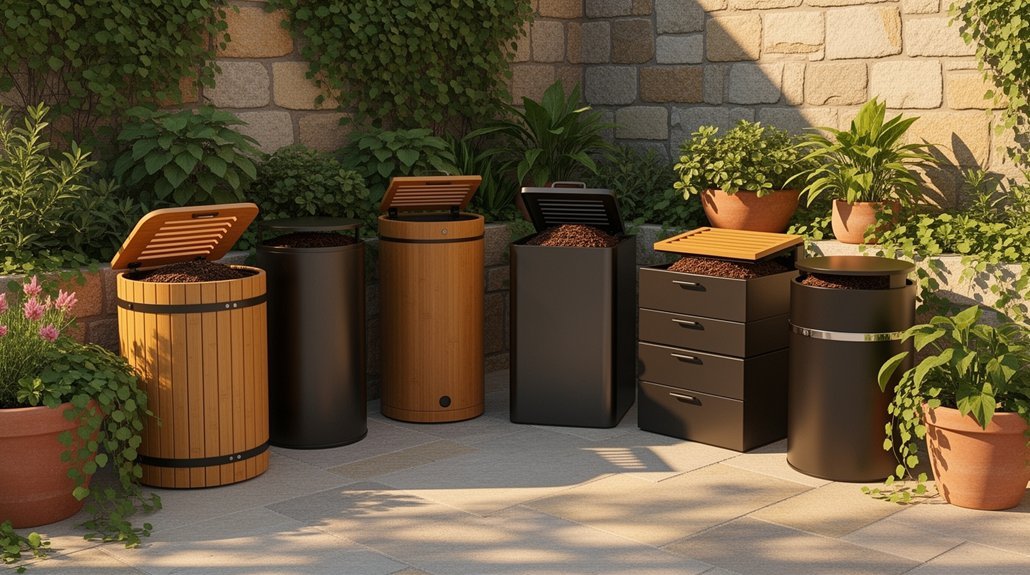
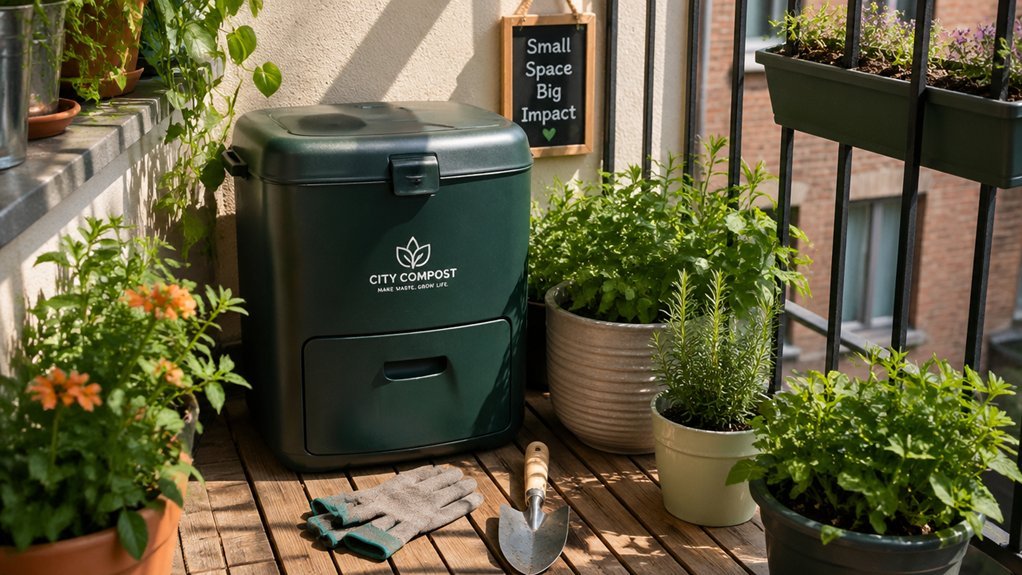
Place your bin a few feet from the kitchen so you can toss scraps without a trek, but keep it far enough from the house to avoid strong odors. Choose a spot with partial shade and good airflow—ideally on a brick or wood platform with a drip tray underneath. Add ventilation holes every five centimeters on the bottom and sides, and leave a six‑to‑inch gap all around for air circulation and tool access. Keep a watering can nearby and a shallow tray to catch excess water, and consider a breathable lid for odor control. If you follow these tips, you’ll discover even more ways to optimize your balcony compost setup.
Choose the Best Balcony Compost Bin Placement Spot
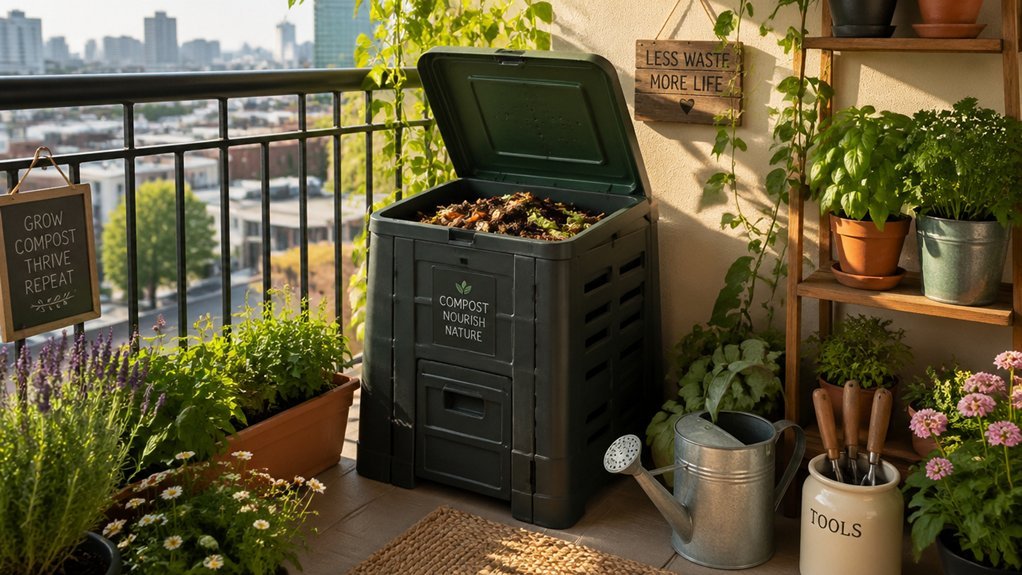
Ever wondered where to put your balcony compost bin for maximum convenience and minimal odor? You should position it close to the kitchen so you can dump scraps quickly, but keep it far enough from the house to stop smells drifting inside. Pick a spot with good airflow and partial shade; this balances moisture and keeps odors at bay. Elevate the bin on bricks or blocks and add a drip tray to catch leachate and protect the floor. Drill ventilation holes about five centimeters apart on the bottom and sides to boost oxygen flow and improve odor control. Avoid places where tree roots could intrude or where the bin would block daily traffic, and make sure the surface is level and stable. 360° ventilation helps ensure continuous processing and better airflow in compact balcony setups.
Keep Your Balcony Compost Bin Near Water for Moisture Control
After positioning your bin for airflow and odor control, the next step is to place it close to a water source. Proximity lets you fine‑tune moisture control, keeping the mix sponge‑like—wet enough for microbes but not soggy. You’ll add water quickly when the pile dries, and a drip tray can catch leachate for easy drainage. This setup also speeds up response to overheating, letting you dampen the heap without hauling a hose across the balcony.
- Keep a small watering can or spray bottle within arm’s reach.
- Use a shallow tray under the bin to collect excess water.
- Check moisture daily; the material should feel like a wrung‑out sponge.
- Adjust water amount based on temperature and sunlight exposure.
- Position the bin near a faucet or rain‑catcher for effortless refills.
How to Insulate Your Balcony Compost Bin for Year‑Round Warmth
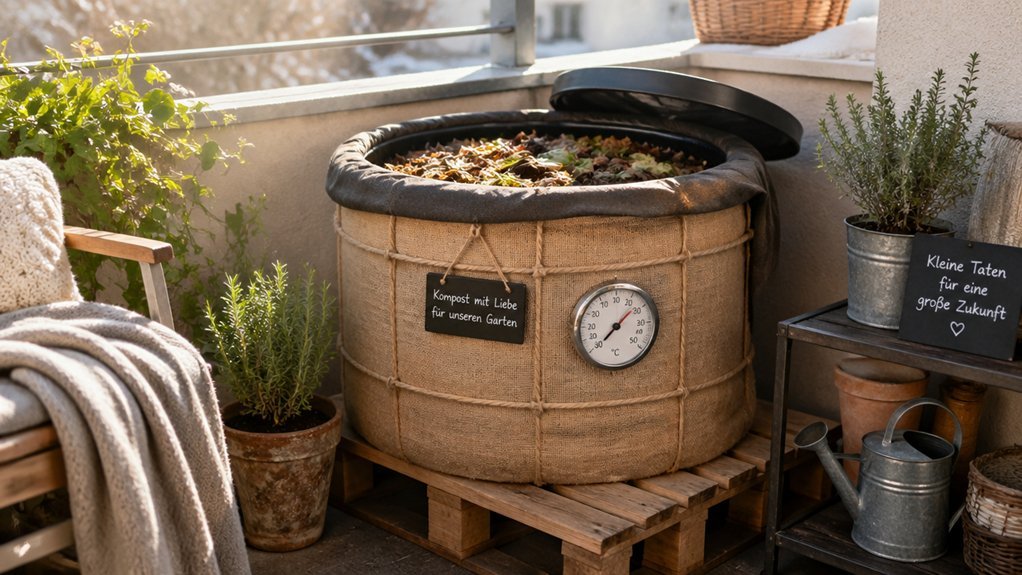
Wondering how to keep your balcony compost bin warm year‑round? Start with insulation: wrap the barrel in bubble wrap to trap heat and shield microbes from freezing air. Then, elevate the bin on bricks or wood blocks; the air gap adds extra insulation and improves drainage, keeping moisture balanced. If your balcony faces a southern wall or a heat source like a dryer vent, position the bin there for passive warmth. During harsh spells, move the bin to a garage or exterior utility room, but keep it ventilated to avoid odor. Regularly check temperature control—if activity slows, add another layer of wrap and ensure airflow. This simple setup maintains optimal moisture and temperature for steady composting. Maintaining a clean interior with a smooth surface and removable bottom trays aids in odor control and easy maintenance air circulation features to support efficient decomposition.
Locate Your Balcony Compost Bin Close to the Kitchen for Easy Dumping
Keeping your compost bin warm is only half the battle; now make it easy to feed. Placing the compost bin near kitchen cuts the steps you take to drop off vegetable peels, coffee grounds, and other scraps. The shorter route boosts balcony, and you’ll find yourself dumping kitchen scraps dumping more often, which keeps the pile active. Even on a tight balcony, you can slot the bin along a convenient aisle that leads straight from the stove or sink. Just remember to add a small cover or screen for weather protection and ventilation, so odors stay at bay while you enjoy the balcony compost accessibility you’ve created.
- Choose a spot within arm’s reach of the kitchen door.
- Keep a small tray for pre‑sorting scraps before dumping.
- Use a breathable lid to control smells.
- Position the bin on a stable surface to avoid wobble.
- Ensure a clear path for quick kitchen scraps dumping.
Keep Trees, Large Shrubs, and Raspberry Suckers Away From Your Bin
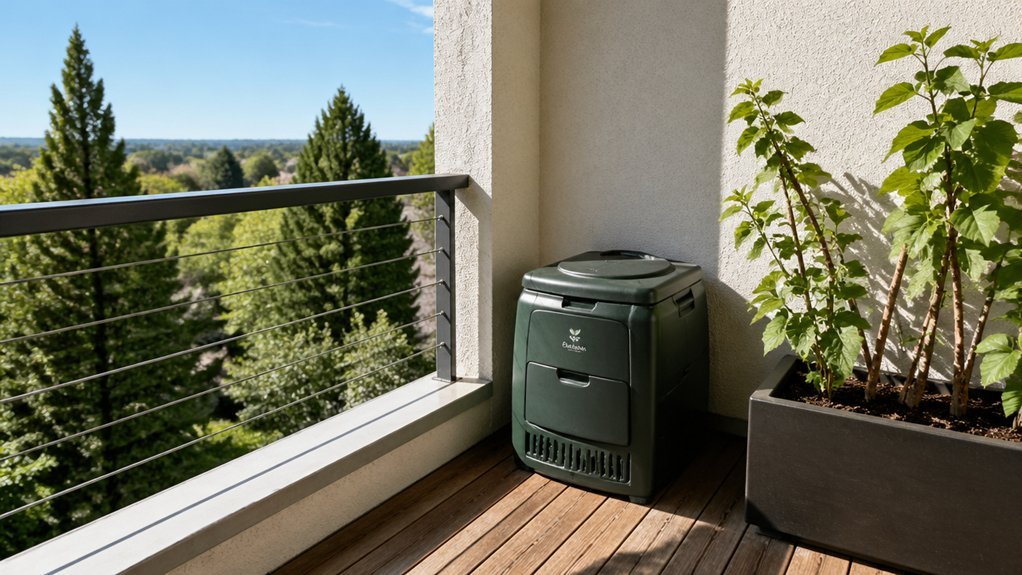
Why let tree roots, shrub roots, or raspberry suckers sabotage your balcony compost? Keep your bin clear of trees, large shrubs, and raspberry suckers to protect its health. Roots from trees and large shrubs will infiltrate the compost, stealing moisture and nutrients, while shading the bin and slowing decomposition. Raspberry suckers spread aggressively; if they reach the bin, they can introduce unwanted plant material and compete for space. Position the bin a few feet away from any canopy or shrub base, ensuring airflow and preventing root intrusion. If you plant nearby, choose nitrogen‑loving herbs that benefit from leaching, but stay clear of raspberry suckers. This simple spacing preserves compost efficiency and prolongs the life of your balcony system. Sustainable sourcing
Leave Space Around Your Balcony Compost Bin for Airflow and a Portable Turning Tool
Make sure you leave a clear gap around your compost bin so air can circulate and you can reach the lid without hassle. Also, using a 600 µm mesh filter can help you strain finer particles when transferring finished compost tea from the bin, aiding cleanliness and efficiency. filtration quality
Airspace for Turning
Do you notice how a cramped balcony can choke your compost’s airflow? Giving your bin breathing room boosts air circulation, keeps moisture low, and makes turning a breeze. Aim for a ventilation clearance of at least several inches on all sides, and leave a clear path for your portable turning tool. This space lets you pivot the tool, slide the lid, and extract finished compost without hitting railings or plants.
- Keep a minimum of 6‑12 inches around the bin for airflow.
- Position the bin away from walls to ensure turning access.
- Allow room on one side for the tool to pivot and slide out.
- Avoid corners that trap moisture or block ventilation.
- Check that the lid can open fully without obstruction. Ventilation clearance
Room for Tool Access
A clear gap around your balcony compost bin does more than keep air flowing—it gives you room to swing a portable turning tool without hitting railings or potted plants. Proper airflow speeds decomposition and reduces odors, so keep a clearance space of at least six inches on every side odor control. This clearance space also ensures turning tool access, letting you reach the lid, drainage tray, and leachate collection without awkward twists.
Position the bin where you can maneuver the tool freely, away from walls, railings, and nearby pots.
A clutter‑free zone reduces tripping hazards and lets you shift the bin for seasonal sun or shade changes.
Maintaining this space makes inspections and adjustments quick and safe.
Frequently Asked Questions
Can You Have a Compost Bin on a Balcony?
Yes, you can keep a compost bin on a balcony; just choose a sturdy, ventilated container, protect it from extreme weather, and maintain proper green‑brown layers, moisture, and airflow for active decomposition.
Where Should I Put My Outdoor Compost Bin?
Pick a spot with good airflow, partial shade, and easy kitchen access. Elevate the bin on bricks, add drainage holes, keep it near a water source, and protect it from extreme weather.
Do Compost Heaps Attract Rats?
Yes, they can if you let food scraps rot, moisture build up, and odors linger. Keep the lid sealed, balance greens and browns, turn regularly, and place it away from walls to deter rats.
How to Start Composting on a Balcony?
Start by picking a sturdy, ventilated bin, then layer kitchen scraps with shredded paper or leaves, keep it moist, seal the lid, turn it weekly, and watch the dark, crumbly compost form.
In Summary
By placing your balcony compost bin where it’s easy to water, insulated for winter, and close to the kitchen, you’ll keep scraps moist and reduce trips. Keep it away from trees, shrubs, and raspberry suckers, and give it room for airflow and a portable turner. This setup maximizes decomposition speed, minimizes odors, and makes composting a hassle‑free part of your balcony routine.