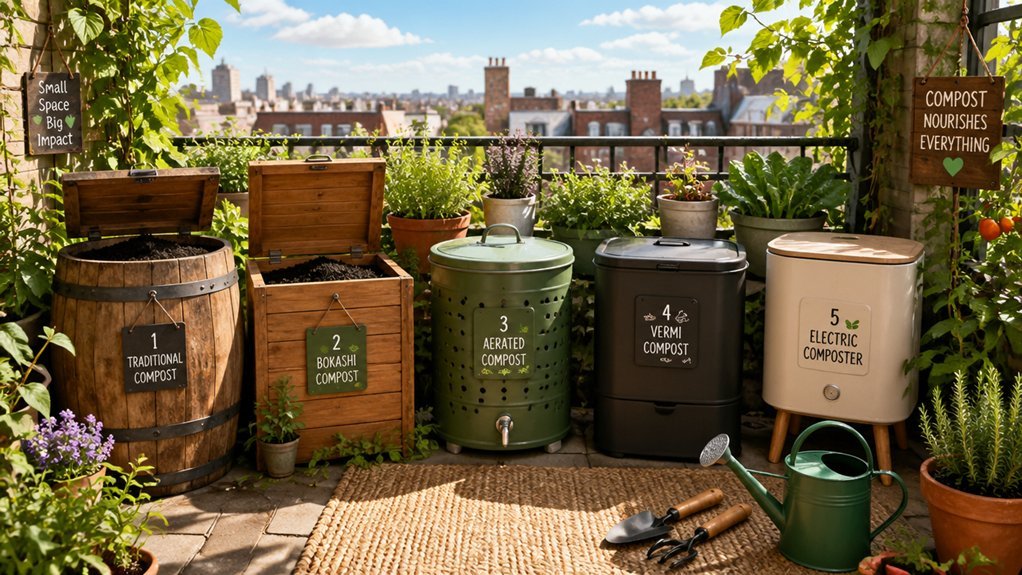
Choose a balcony spot that catches gentle morning sun but stays shaded during the hottest part of the day, and keep it near a faucet or hose for easy watering and drainage. Position the bin away from strong winds, using a light‑colored tarp or a simple wind‑shield panel to protect it while still allowing airflow. Rotate the bin seasonally—move it into more sun in cooler months and add extra shade in summer—to keep the compost warm and moist. Follow these tips, and you’ll discover even more tricks for thriving balcony compost.
Pick a Spot With Morning Sun, No Mid‑Day Heat for Your Balcony Compost Bin
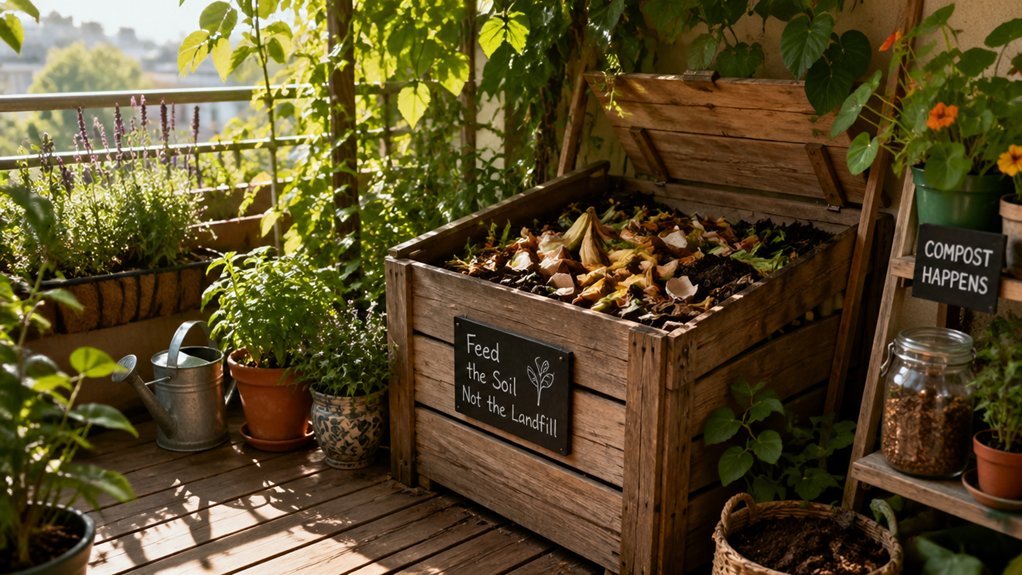
Where should you place your balcony compost bin? Choose a spot that catches morning sun but falls into shade by midday. That early light jump‑starts microbial activity without the drying punch of direct sun all day.
Position the bin near a water source and keep it away from strong prevailing winds to aid moisture retention. If you can’t find full shade, drape a light‑colored lid or tarp over the bin to reflect heat and keep the interior cool.
Avoid any location that basks in sun sun from sunrise to sunset, because it will dry greens too quickly and stall decomposition. Thoughtful compost bin placement balances warmth and moisture, giving your balcony garden the boost it needs. Moisture management helps prevent drying out and supports steady microbial activity.
Balance Shade and Sun: How Light Affects Moisture and Microbial Activity
How does light shape your balcony compost’s moisture and microbial vigor? Sun warms the pile, sparking faster decomposition, but it also drives evaporation, so you’ll need to water more often. Shade cushions the temperature, holding moisture and protecting microbes, yet too much shade can chill the mix and slow microbial activity. The trick is to find a spot that gets gentle morning sun and dappled shade for the rest of the day, adjusting for your climate. Monitor the texture daily; it should feel like a wrung‑out sponge, not bone‑dry or soggy. By balancing heat and humidity, you keep microbial activity humming and your balcony composting thriving. Morning sun on the east side, then soft shade from a lattice proper exposure helps maintain a steady moisture level. A breathable tarp that blocks harsh midday rays while letting air flow. A potted plant nearby that offers natural shade without sealing in moisture. A simple moisture‑check routine that feels rewarding when the pile stays just right.
Place Your Balcony Compost Bin Near a Water Source for Easy Draining and Liquid Fertilizer Management

If you set your balcony compost bin next to a faucet or hose, draining excess liquid and adding water become effortless. Placing the bin near a water source also supports easy creation of bokashi tea for your plants, reinforcing your balcony garden’s nutrient cycle bokashi tea. A compost bin near water lets you tap a drip for quick drainage, preventing soggy messes and collecting liquid fertilizer for your balcony gardening.
You’ll notice better moisture control because you can spray greens and browns to keep the pile humid without over‑watering.
The nearby source also simplifies regular drainage, so you can funnel leachate into a container for compost tea or dilution.
Just keep the bin shaded enough to avoid scorching, and you’ll maintain steady microbial activity while managing liquid fertilizer with minimal hassle.
This setup streamlines both aeration and nutrient recycling on a compact balcony.
Shield the Bin From Wind and Direct Sun With Simple DIY Wind‑Protection
Having secured easy water access, you’ll notice the compost can dry out quickly when wind whips across the balcony. To keep your balcony composting thriving, install a DIY shield on the windward side of the bin. Use a lightweight, angled board to block gusts and direct sun while still allowing airflow for aeration and odor control. Position the shield so rain can still drip in, preserving moisture without over‑watering. Pair the shield with a shaded spot or a mulch cover for extra protection, and you’ll stabilize the microclimate, preventing temperature swings that slow microbes. Good airflow management keeps the pile healthy and reduces drying, so your compost stays active and fragrant.
- A sturdy wooden panel as a wind barrier
- A slanted PVC sheet to deflect sun and rain
- A fabric screen for flexible airflow control
- A decorative lattice for aesthetic and functional protection
Adjust Placement Seasonally: When to Move or Rotate Your Bin for Optimal Temperature and Moisture

When summer heat turns your balcony into an oven, shift the bin into a shaded nook to curb evaporation and keep microbes humming; in cooler months, move it into a sun‑lit spot to warm the pile and speed decomposition, always protecting it from wind. Seasonal rotation balances compost pile temperature and moisture without constant guesswork. In hot periods, pick a sun/shade placement that blocks direct rays, then check the moisture level daily—if it feels dry, mist it lightly and add brown material. When frost threatens, relocate the bin to a sunny, wind‑sheltered corner, monitor the temperature, and keep the pile damp like a “wrung‑out sponge.” Adjusting placement each season prevents overheating, drying out, and stagnation, ensuring steady, efficient breakdown. A sturdy, weather‑resistant dual‑chamber design can help maintain ongoing composting cycles during seasonal shifts seasonal rotation and support continuous processing.
Frequently Asked Questions
Should Your Compost Pile Be in the Sun or the Shade?
You should place your compost where it gets partial sun—enough to warm it but not dry it out. Use a lid or tarp for shade during peak heat, and keep it moist and aerated.
How Do I Compost on My Balcony?
You start by choosing a compact worm or Bokashi bin, placing it in a shaded balcony corner near a water source, balancing greens and browns, keeping it moist, and aerating regularly to speed decomposition.
What Three Items Should Not Be Placed in a Compost Pile?
You shouldn’t add meat, dairy, or oily foods; avoid citrus and onions; and keep Bokashi pre‑compost sealed. These items cause odors, attract pests, and slow decomposition in your balcony compost.
Do Potato Peelings in Compost Attract Rats?
You’ll attract rats if you leave potato peels exposed on the bin’s surface; bury them under bedding, keep the bin sealed, and manage moisture to deter rodents.
In Summary
By picking a sunny‑morning spot, balancing shade, keeping the bin near water, shielding it from wind, and adjusting its position each season, you’ll create the ideal micro‑climate for balcony composting. These simple tweaks keep moisture steady, boost microbial activity, and prevent overheating, so your waste turns into rich, usable fertilizer faster and with less hassle. Enjoy a thriving, low‑maintenance compost system right on your balcony.