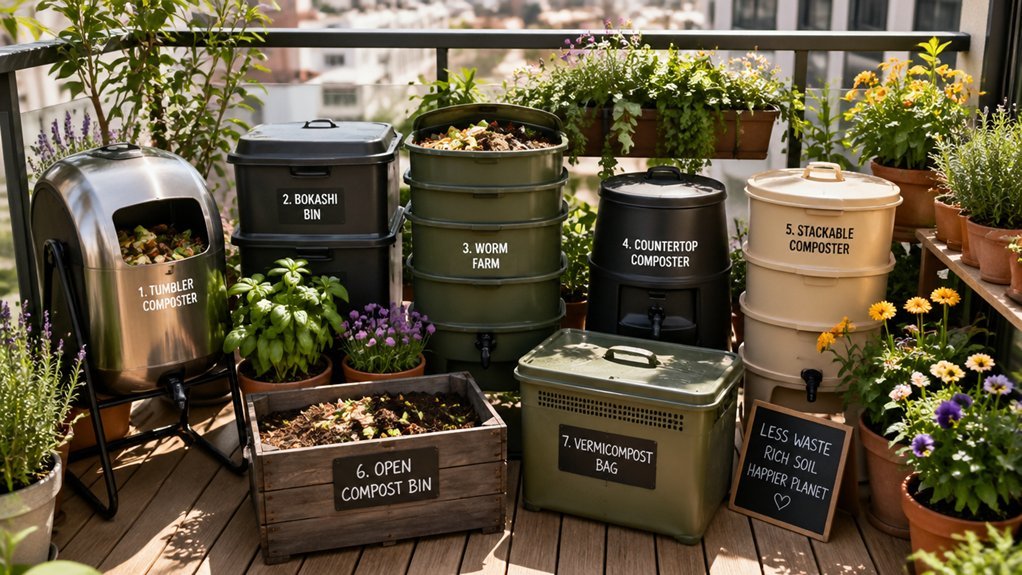
You can turn a modest balcony into a thriving compost hub with seven space‑smart solutions: a countertop food cycler that dries scraps in hours, a DIY 5‑gallon bucket Bokashi for odor‑free fermentation, a compact worm hotel that continuously harvests castings, a sleek tumblers that aerates and balances moisture, a discreet storage tote that fits against walls, an in‑ground digester that silently enriches planter soil, and a modular multi‑bin system for batch processing. Keep reading to discover which option fits your balcony best.
How to Pick the Right Balcony Compost System

Vermicomposting shines in tight spots; red wiggler worms turn scraps into castings and worm tea with minimal smell if you keep moisture balanced.
Vermicomposting thrives in cramped balconies; red wiggler worms convert waste into castings and tea with minimal odor when moisture stays balanced.
Bokashi offers airtight fermentation, letting you toss meat and dairy, then you’ll need to bury the pre‑compost in soil after a few weeks.
If you want flexibility, look at multi‑bin systems—dual‑chamber tumblers or pallet‑based setups let you process batches while another bin rests, keeping a steady flow without crowding your railing.
Choose the approach that matches your space, desired odor level, and how hands‑on you want to be.
Integrated Odor Management considerations can help you maintain a fresh balcony environment when using compact systems, especially in small urban spaces.
Choose the Counter‑Top Food Cycler for Fast, Odor‑Free Balcony Composting
Looking for a quick, odor-free way to handle kitchen waste on a balcony? The countertop food cycler dehydrates and grinds scraps into a dry, odorless material in just a few hours, perfect for urban waste reduction. You place leftovers in the chamber, press start, and let the device work hands-free while you tend to your plants. Its compact design fits neatly on any kitchen counter, freeing up space for cooking and balcony gardening. The resulting powder can be tossed onto a compost pile or mixed into soil, accelerating composting without the months‑long wait. Choose this counter‑top cycler for fast, odor‑free results that keep your balcony tidy and your waste cycle efficient, and when using finished compost, select pots with proper drainage to maximize aeration and prevent moisture buildup drainage holes.
Choose the DIY 5‑Gallon Bucket Bokashi for All‑Kitchen‑Scrap Fermentation

Ever wondered how to turn every kitchen scrap—including meat and dairy—into a nutrient‑rich compost without a stinky mess? Try the DIY 5‑gallon bucket Bokashi. You’ll need two 5‑gallon buckets, one fitted with a spigot, and a bag of Bokashi bran. Layer kitchen scraps, sprinkle bran, and seal the lid tightly; the anaerobic environment drives Bokashi fermentation, producing an odor‑free “pre‑compost” tea you drain weekly. After about two weeks, bury the fermented pile in soil or a planter for final breakdown. The system’s compact composting design fits under a sink or on a balcony railing, and regular draining plus airtight lids keep the process smooth. This low‑maintenance setup turns all kitchen waste into valuable garden feed odor‑control.
Choose the Elegant Worm Hotel for Balcony‑Friendly Vermicomposting
You’ll love how the Compact Worm Tray fits snugly on your balcony rail, turning a tiny nook into a productive garden. The design keeps odors at bay, so you can enjoy fresh air while the red wigglers work. With each tray cycling independently, you harvest castings continuously without disturbing the others. USA-grown Kaytee
Compact Worm Tray
Curious how a tiny hotel can turn balcony scraps into garden gold? You’ll love the compact worm tray that fits a balcony railing or kitchen shelf. The stacked‑tray design lets red wiggler worms work in a vertical flow, so you feed the top tray while the bottom tray harvests finished vermicomposting castings. Because each tray is shallow and modular, you can add or remove layers as space permits, keeping the system tidy and odor‑free.
As the worms digest kitchen peelings, they excrete worm tea—a nutrient‑rich liquid you can dilute and drench balcony herbs or succulents. The whole setup stays under a foot tall, making it ideal for tight urban corners while delivering continuous, high‑quality fertilizer.
Odor‑Free Operation
How can a balcony stay fresh while turning food scraps into garden gold? The Elegant Worm Hotel gives you an odor‑free vermicomposting hub that fits sleekly on any balcony. Its compact design stacks trays so you maximize limited space, and the red wiggler worms work silently beneath a breathable lid. You simply add kitchen scraps, keep the bedding moist, and let the worms break it down. Because the system seals in gases and balances moisture, you won’t notice any foul smells. When the castings mature, you drain the liquid worm tea and pour it onto potted plants, boosting growth without any stench. This tidy, efficient setup lets you recycle waste and nurture your garden while keeping the balcony air clean. The recyclable kraft corrugated construction mirrors sustainable packaging concepts recyclable cardboard and supports easy disposal after use.
Choose the Sleek Tumbler for Compact, Aerated Balcony Composting
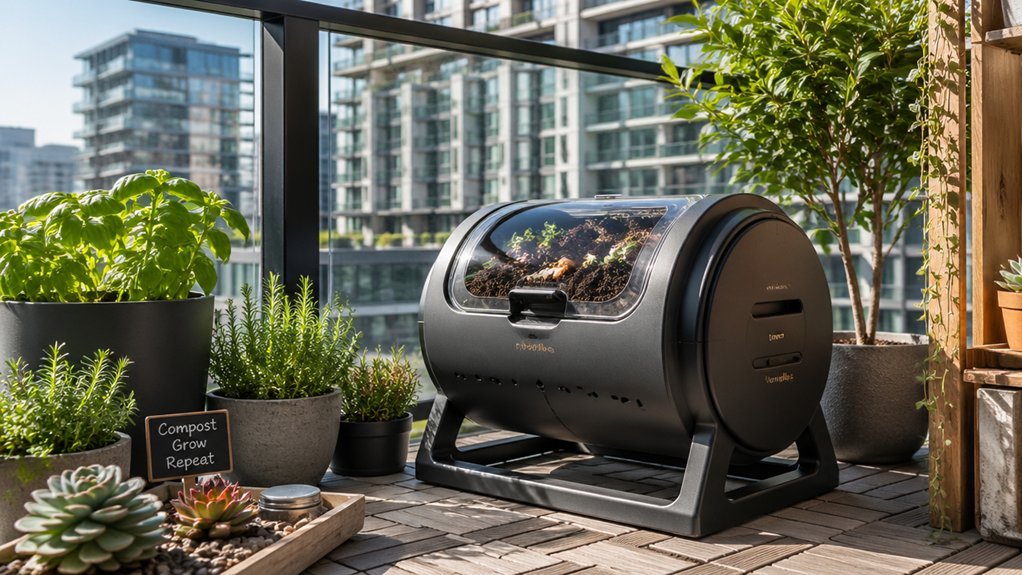
Ever wondered how a single, sleek barrel can turn a cramped balcony into a thriving compost hub? You’ll love the small-space composting power of an aerated tumbler that fits a balcony railing. Its enclosed design guarantees odor containment, while the rotating drum delivers compost rotation that mixes material and balances moisture. This setup also benefits from using coconut coir as a sustainable bedding material, which helps maintain moisture and aeration for worm-friendly conditions in long-term composting. Coconut coir
Choose the Discreet Storage Tote for Space‑Saving Outdoor Composting
You’ll start by drilling a few aeration holes in the tote’s sides and lid, which keeps airflow steady without any fancy equipment.
Its rectangular shape hugs the fence or wall, giving you a compact footprint that won’t crowd your balcony.
A simple weekly stir or roll keeps the waste moving, moisture balanced, and odors at bay.
Easy Aeration Hole Drilling
Wondering how to turn a simple plastic tote into an efficient balcony composter? Start by marking a grid of 1‑inch holes on each side and the lid. Use a drill with a ¼‑inch bit, keeping the drill perpendicular to avoid cracking. Space holes 2‑3 inches apart to maximize airflow while preserving structural integrity. Once drilled, sand the edges to prevent sharp bits that could injure you or your pets. The resulting aeration network fuels aerobic composting, speeds decomposition, and enhances odor control, making the tote a low‑maintenance, space‑saving solution for any balcony.
- Measure and sketch hole layout on the tote.
- Drill uniformly spaced holes on sides and lid.
- Sand rough edges for safety.
- Test airflow by waving a piece of newspaper through the holes.
Compact Rectangular Footprint
After drilling the aeration holes, slide the tote into a corner where a fence or wall runs, letting its rectangular shape hug the vertical surface.
The compact rectangular footprint makes the aerated bin perfect for small spaces, turning a balcony into an efficient outdoor composting zone without blocking foot traffic.
You’ll notice the low‑profile design nestles neatly against the railing, keeping the compost tidy and discreet.
The tote’s sturdy plastic walls hold a balanced greens‑and‑browns mix, while the drilled holes maintain airflow for healthy decomposition.
Just monitor moisture, add browns when needed, and guarantee drainage—no odors, just a thriving compost heap that fits your balcony composting needs.
Odor Control can be enhanced by ensuring the lid remains tight and the filter system is maintained regularly to keep smells contained.
Simple Weekly Stirring Routine
Since the tote sits in a shaded corner, a quick weekly stir keeps the greens‑and‑browns mix moving, distributes moisture, and supplies oxygen to the microbes. You’ll notice faster breakdown, fewer odors, and a tidy, space‑saving composting system that blends into your balcony décor. The discreet storage tote’s aeration holes make stirring easy; just lift the lid, grab a garden fork, and turn the pile. Consistent motion prevents clumping, balances carbon‑to‑nitrogen ratios, and keeps the compost aerobic, so the microbes stay active and the process stays efficient.
- Open the lid and pull the fork out.
- Scoop from the bottom and lift toward the top.
- Rotate the tote slightly to shake any stuck bits.
- Close the lid, letting fresh air flow through the holes.
Choose the In‑Ground Digester for Hidden, Low‑Maintenance Balcony Soil Enrichment
Looking for a truly invisible, set‑it‑and‑forget‑it compost solution? The in‑ground digester slips beneath your balcony planter, letting you add scraps from the top while worms and microbes work from the bottom up. You get hidden soil enrichment, low‑maintenance care, and continuous underground processing without any unsightly bins.
| Feature | Benefit | Ideal Use |
|---|---|---|
| Perforated cylinder | Allows airflow | Balcony composting |
| Bottom‑up action | Directly feeds soil | Hidden soil enrichment |
| No surface bin | Keeps aesthetics | Urban balconies |
| Passive operation | Set‑it‑and‑forget‑it | Low‑maintenance |
| Moisture‑rich castings | Boosts plant health | Flower beds & herbs |
You simply drop peels, coffee grounds, or veggie trimmings into the opening, and the digester does the rest, turning waste into nutrient‑dense material that seeps into the surrounding soil. This discreet system lets you maintain a thriving balcony garden without daily effort or visual clutter.
Frequently Asked Questions
What Works Best in an Outhouse for Decomposing Waste?
You’ll get the best results with a sealed Bokashi bucket, then bury the fermented waste in a soil‑filled trench or compost bin; it handles waste quickly, controls odor, and needs minimal upkeep.
What Compost Is Best for Balcony Plants?
You should use vermicompost or well‑aged aerobic compost, mixing it 1:3 with potting soil. Keep the green‑to‑brown ratio balanced, and you’ll boost microbial activity, structure, and water retention for your balcony plants.
Which Is Better, Lomi or Reencle?
You’ll find Lomi better if you want fast, dry material for garden beds, while Reencle suits balcony living with odor‑free, low‑maintenance processing; choose based on your space, power access, and waste‑handling preferences.
What Three Items Should Not Be Placed in a Compost Pile?
You should keep meat, dairy, and oily foods out of the compost pile; they attract pests, cause foul odors, and slow decomposition. Also avoid large amounts of citrus, onions, and spoiled or moldy scraps.
In Summary
Pick the system that fits your balcony’s size, style, and how much effort you want to put in. Whether you go for a quick‑cycle counter‑top cycler, a low‑maintenance bokashi bucket, a tidy worm hotel, a sleek tumbler, a discreet tote, or an in‑ground digester, each option turns scraps into fertile soil without sacrificing space. Choose one, set it up, and start turning waste into garden gold right on your balcony.