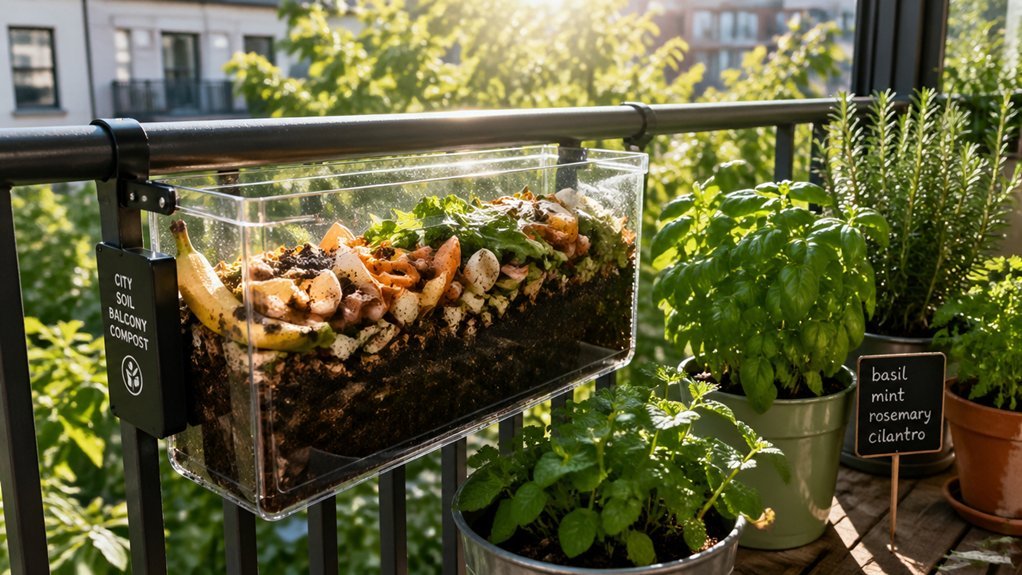
A window compost bin on your balcony lets you turn kitchen scraps into rich, soil‑building material without cluttering your kitchen or attracting pests. It keeps odors sealed with airtight lids and carbon filters, while the compact design fits snugly on a sunny or shaded wall for optimal temperature. You’ll reduce waste, save money on fertilizers, and enjoy a greener living space—all while keeping the process invisible to neighbors. Keep reading to discover the best setup tips and methods.
How to Set Up a Window Compost Bin on Your Balcony
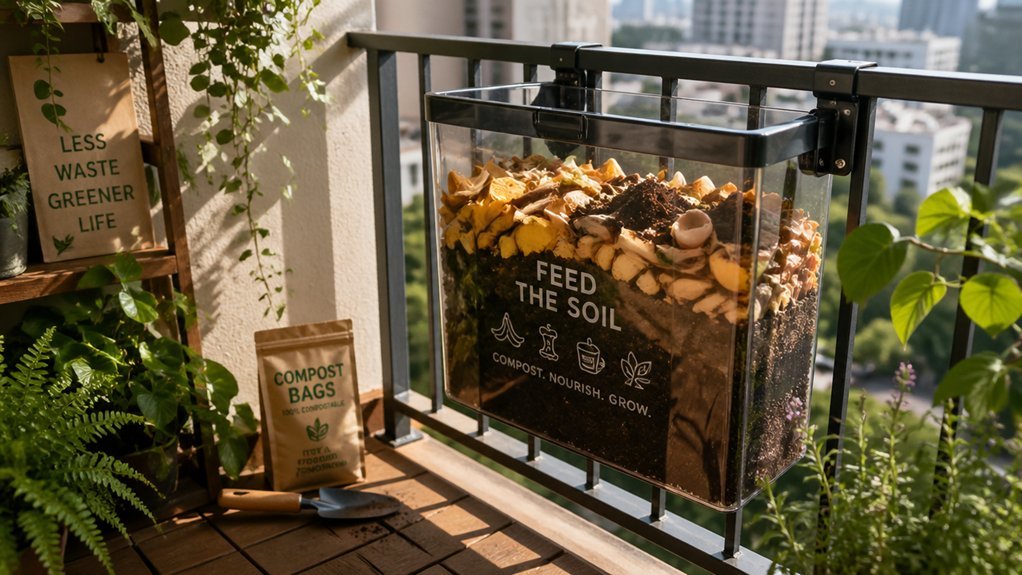
Want a tidy, odor‑free compost bin on your balcony? Start by picking a compact, airtight compost bin with a carbon filter. Position it on a shelf or table near a southern‑facing wall, keeping it out of direct sun to avoid overheating. Drill a few small drainage holes, then raise the bin on bricks or blocks so air circulates and moisture doesn’t pool. As you begin balcony composting, layer kitchen scraps (greens) with shredded paper or leaves (browns) to keep the mix aerated and balanced. Watch for slime or smells; if it gets too wet, toss in extra browns and collect leachate in a drip tray to protect your balcony floor. This setup keeps your bin efficient and odor‑free.
Which Compost Method Fits Your Balcony Bin? (Vermiculture, Bokashi, Traditional)
Which compost method suits your balcony best? You’ll want a system that fits limited space, stays odor‑free, and matches your maintenance rhythm.
- Vermiculture – Red wigglers turn scraps into nutrient‑rich castings and tea. A compact bin slides under a table, but keep temperature steady; extreme heat or cold slows the worms.
- Bokashi – An airtight, spigot‑equipped bucket ferments waste with bran inoculant. It’s space‑efficient and odor‑controlled, yet you must buy bran regularly and drain liquid weekly. It can also produce bokashi tea for plants, which adds a useful byproduct to balcony gardening. odor control methods help keep it discreet in close quarters.
- Traditional – Small aerobic bins accept fruit, veg, and coffee grounds. They need frequent turning and decompose slower, especially in cooler weather, but require no extra inputs.
Choose the method that aligns with your balcony’s climate, your willingness to purchase supplies, and how much hands‑on care you enjoy.
Choose the Best Compost Method for Your Balcony Bin
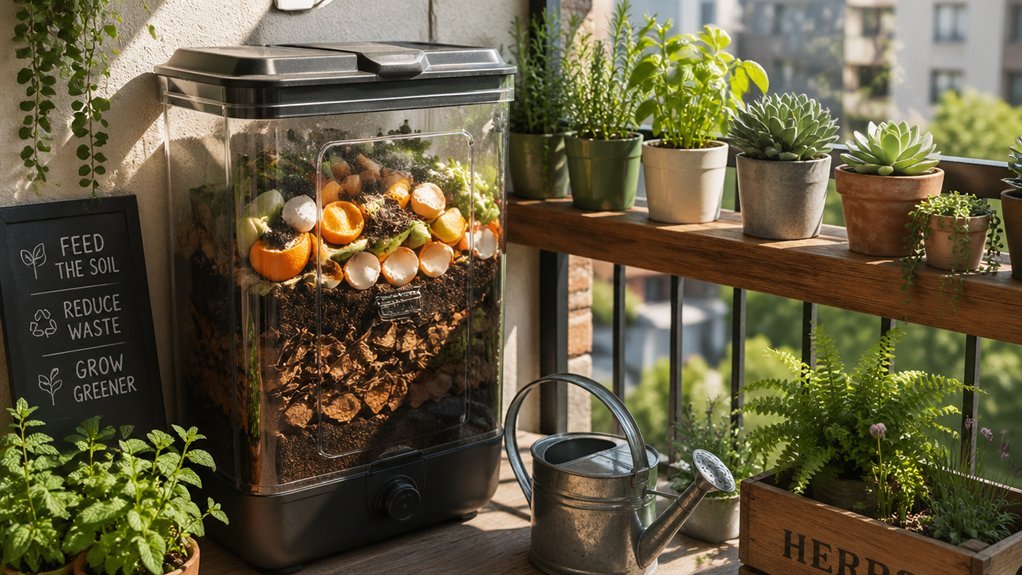
If you’re deciding which compost method to adopt on your balcony, consider space, odor control, and maintenance rhythm. For tight balconies, worm composting fits because red wigglers thrive in shallow, compact bins and produce nutrient‑rich castings and worm tea without bulky equipment. Bokashi offers an airtight, tiny system that handles cooked leftovers and dairy, but you’ll need a place to bury the fermented material later. Traditional aerobic bins work well if you have a modest corner to turn regularly and can balance greens with browns to keep odors at bay. Cardboard box composting is low‑tech and slow, best for patient gardeners who don’t mind occasional moisture checks. Choose the method that matches your balcony composting style, odor tolerance, and how often you’ll tend the bin. Odor containment considerations can guide the choice toward systems with higher-density activated charcoal filters for tighter spaces.
Winter‑Proof Your Balcony Bin With Insulation & Heat Hacks
You can wrap your bin in bubble wrap to trap heat and keep the microbes active when temperatures drop. Position it near a dryer vent, furnace exhaust, or a sunny wall to steal extra warmth without a bulky heater. A simple drip tray will catch any meltwater, protecting your balcony from stains and damage. Sustainable coir bedding can also help maintain moisture and aeration for worms during colder periods.
Insulate Bin With Bubble Wrap
A few layers of bubble wrap around your balcony compost bin can keep it warm enough to stay active throughout winter. The lightweight insulation traps heat, slowing the temperature drop that stalls microbes. Wrap the bin against a southern‑facing wall, but leave small gaps for airflow so oxygen can still circulate. Pair the bubble wrap with a drip tray to catch condensation and protect the balcony floor. Regularly check that the wrap remains loose enough to allow ventilation and prevent moisture buildup, which can reduce odor control and microbial activity. insulation
Leverage Nearby Heat Sources
Wondering how to keep your balcony compost humming through frosty nights? Position your bin near a reliable heat source—think a southern‑facing wall, dryer vent, or furnace exhaust. The gentle warmth from these spots keeps the microbial activity alive, speeding up worm composting without freezing the mix. Wrap the container in bubble wrap or foam to trap heat and shield it from wind. If you can, move the bin into a garage or utility room for extra protection, then elevate it on bricks or wooden blocks so air circulates and the cold ground doesn’t sap warmth. Keep an eye on temperature; you want steady, moderate heat, not scorching conditions that could kill the worms. This simple heat‑source strategy lets your balcony bin thrive all winter odor-control and maintain healthy microbial activity.
How to Keep Your Balcony Bin Moisture‑Balanced and Leak‑Free
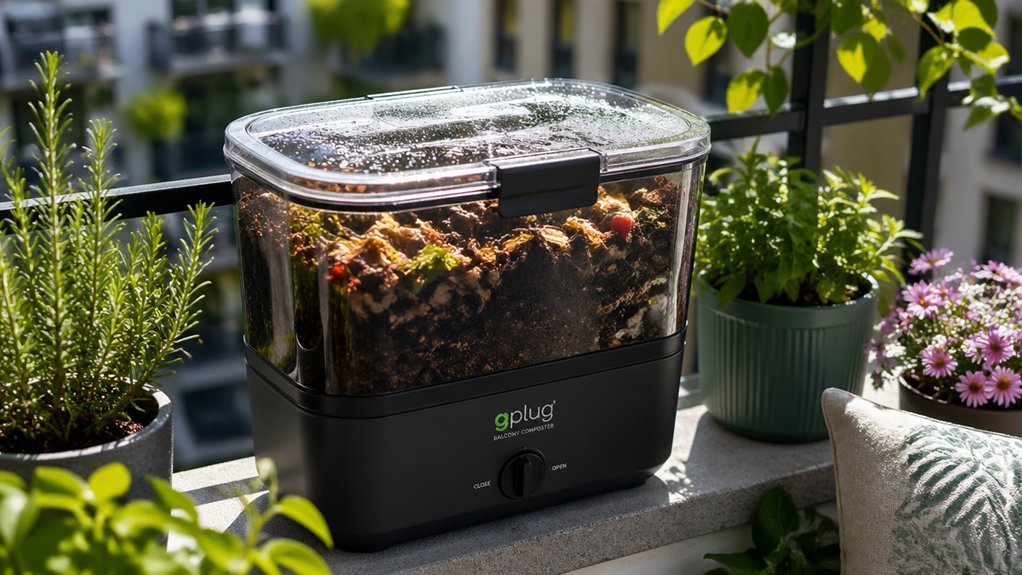
You’ll want to keep the compost moist enough for microbes but not soggy, so check for a slimy texture or rotten‑egg smell and add dry browns if needed. Elevate the bin on bricks or wood blocks, drill drainage holes in the bottom and sides, and place a drip tray underneath to catch any leachate. By stirring the mix occasionally you’ll maintain airflow, balance moisture, and prevent leaks on your balcony. Look for bags and liners that are certified compostable and plant-based to minimize plastic exposure in your space certification standards to help ensure your setup aligns with home composting best practices.
Balcony Bin Moisture Control
Ever wondered how to keep your balcony compost bin moist enough for microbes without turning it into a leaky mess? Mastering composting moisture on a balcony is simple when you balance greens, browns, and dry absorbents. Keep the bin’s moisture level like a wrung‑out sponge: add shredded paper or dry leaves when it feels slimy, and stir every 1–2 weeks to spread dampness evenly. Elevate the bin on bricks or wood blocks to boost airflow, and use a drip tray to catch any leachate.
Key steps for balcony bin moisture control
- Layer greens with browns, inserting dry material as needed.
- Raise the bin and place a protective tray underneath.
- Turn the pile regularly to prevent anaerobic pockets.
Leak‑Free Drainage Solutions
Keeping your balcony bin dry while maintaining the right moisture for microbes means adding a simple drainage system before you worry about leaks. Start by placing a drip tray under the bin to catch leachate and protect the balcony surface. Elevate the container on bricks or wood blocks so water can flow out and air can circulate, reducing standing moisture. Drill a few small holes in the bottom and lower sides; this creates a drainage pathway and supplies oxygen for aerobic microbes. Use compost gloves that are at least 6 mil thick for better protection while handling bins and materials glove durability and ensure proper fit to avoid tearing during tasks. Check the compost daily—if it feels slimy or smells like rotten eggs, add more brown material and increase drainage. Layer greens and browns evenly to keep moisture balanced, prevent excess leachate, and keep your balcony bin leak‑free.
Seal the Bin to Prevent Odors and Pests
Wondering how to keep your balcony compost fresh and pest‑free? Sealing the bin properly is your first line of defense against odors and critters. A tight‑fitting lid stops rain, birds, and insects from slipping in, while an airtight design traps fermentation gases. Replace carbon filters every couple of months to keep the air clean and the scent contained.
Sealing your balcony compost bin with a tight, airtight lid and regular carbon filter changes keeps odors out and pests away.
- Snap the lid shut after each addition, ensuring no gaps.
- Install a carbon filter and swap it regularly.
- Choose a bin with an airtight seal, like a Bokashi system, to lock in odors and block pests.
Harvest Rich Compost From Your Balcony Bin in 4‑6 Weeks
Typically, you’ll see rich, crumbly compost ready in just four to six weeks when you keep the mix balanced, aerate regularly, and control moisture. To hit that window, layer greens and browns evenly in your balcony compost bin, never overfill, and make sure drainage holes stay clear. Turn the pile every week or two—more often if you’re using red worms—to inject oxygen and speed breakdown. Keep the bin in a shaded, sheltered spot so temperature stays stable, and spray lightly if it feels dry; a damp, not soggy, feel is ideal. After the 4‑6‑week mark, sift out any undecomposed bits, then harvest the dark, earthy material for potting soil, worm tea, or garden mulch.
Troubleshoot Common Balcony Compost Issues Quickly
When your balcony bin isn’t delivering the promised dark, crumbly compost in four to six weeks, the first thing to check is the environment and moisture balance. Sunlight and extreme cold can stall your balcony compost, so relocate the bin to a shaded, sheltered spot. Overwatering creates soggy mass and foul odors; add brown material, stir gently, and watch the moisture level. Proper drainage prevents waterlogging and stains, so perforate the bottom and place a drip tray beneath.
Check temperature, moisture, and drainage; relocate, balance greens‑browns, and ensure proper airflow for healthy balcony compost.
Three quick fixes
- Adjust temperature: move the bin away from direct sun or wind‑chill areas.
- Balance moisture: layer greens with browns, seal the lid, and remove excess liquid.
- Drain liquids: empty Bokashi tea or worm castings regularly to keep anaerobic smells at bay.
Quick‑Fix FAQ: Your Most Asked Balcony Compost Questions
Got a burning question about balcony composting? You’re not alone. Here’s a quick‑fix FAQ that tackles your most common concerns.
How do I keep odor control in check? Balance greens with browns, seal the lid tightly, and place a drip tray under the bin to catch leachate.
Which system matures fastest? Bokashi finishes fermentation in 2–4 weeks, then you bury or mix the material into soil. Worm bins need 2–3 months; aerobic bins take 3–6 months.
What worms do I need? Red wigglers—about 1,000 for a medium setup—produce castings and nutrient‑rich worm tea.
Can I use a small aerobic bin on a balcony? Yes, just keep it ventilated and monitor moisture.
Do I need to worry about pests? Proper lid sealing and regular waste turning deter flies and rodents. Follow these tips, and your balcony composting will stay clean, efficient, and odor‑free.
Frequently Asked Questions
Can You Have a Compost Bin on a Balcony?
Yes, you can keep a compost bin on a balcony; just choose a compact, odor‑controlled design, balance greens and browns, and use a lid or carbon filter to keep smells and pests away.
Do Potato Peelings in Compost Attract Rats?
Yes, potato peels can attract rats if you leave them exposed or pile them up without enough carbon material. Bury them under browns, keep the lid tight, and mix with dry scraps to deter rodents.
Do Compost Bins Attract Termites?
You’ll rarely attract termites if you use a sealed, plastic or metal bin, keep it dry, and place it on non‑wooden supports; proper maintenance and avoiding cellulose‑rich debris keep pests away.
How to Compost in an Apartment Balcony?
You’ll need a small, breathable bin, layer greens and browns, keep it moist, turn it weekly, and protect it from rain with a lid or shelter. Use a tray to catch drips.
In Summary
Now you’ve got a compact, odor‑free compost bin that fits right on your balcony, you can turn kitchen scraps into nutrient‑rich soil in weeks. Pick the method that suits your space, keep moisture balanced, seal it tight, and protect it from winter’s chill. With a little attention, your balcony will stay clean, your plants will thrive, and you’ll be composting sustainably without any hassle.