Keep your bin cool and well‑ventilated, and make sure the bedding stays moist but not soggy. Drain excess liquid regularly, add plenty of dry bedding to soak up moisture, and leave the lid slightly ajar or use a dim lamp to limit bright light. Avoid over‑feeding or acidic foods that raise the temperature, and block drainage holes with nylon stockings if worms try to crawl out. Stick to these habits, and you’ll see fewer escapes while maintaining a healthy, odor‑free environment.
Why Red Wigglers Crawl Out of Bins
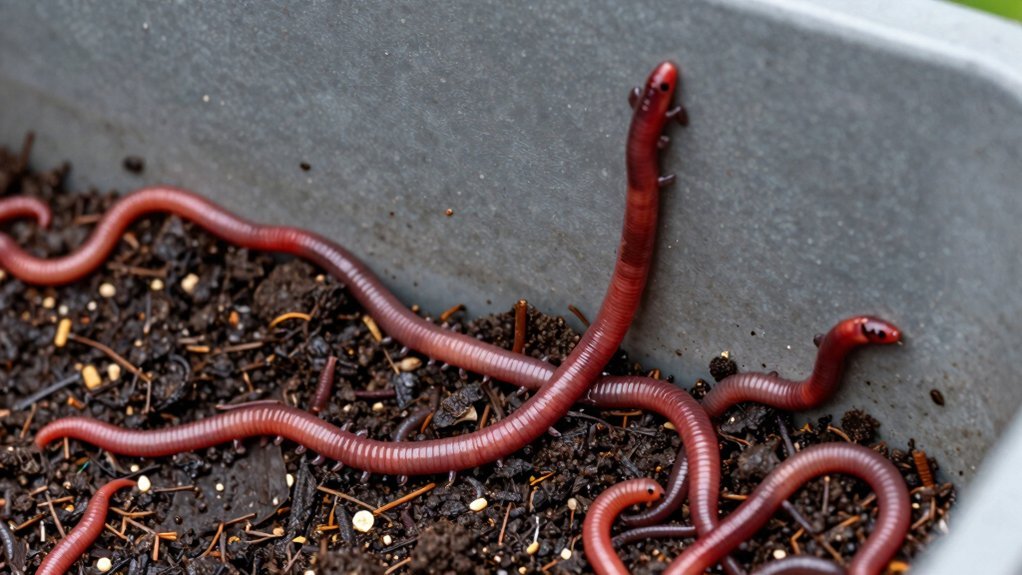
Why do your red wigglers bolt from the bin? When bin conditions turn hostile, they start escaping. Overfeeding food scraps raises temperature and creates soggy pockets; excess moisture clogs drainage and suffocates the bedding. Insufficient ventilation adds heat and reduces airspace, pushing worms toward the surface. A sudden shift in bedding or diet can also trigger a flee response.
Keep the bin moist but not soupy, and ensure good airflow. Avoid high‑nitrogen, acidic foods that spike temperature. Regularly check drainage and remove excess liquid. By balancing moisture, temperature, and ventilation, you give red wigglers a stable home, so they stay where they belong instead of crawling out. Using bedding with superior drainage and aeration can help maintain optimal conditions and prevent escapes.
Balancing Moisture, Airflow & Light Inside Your Worm Bin
How do you keep your worm bin from turning into a soggy, stagnant mess? Start by adding plenty of dry bedding—newspaper, peat moss, coir, shredded cardboard—to soak up excess moisture and boost airflow. Keep drainage holes clear and practice a light deterrent by leaving the lid slightly ajar or using a dim lamp; this reduces condensation and discourages wall‑dwelling. Watch moisture balance: add food in small amounts, then mix in more dry bedding if the mix feels damp. Proper lid management prevents a sealed, humid environment while still protecting worms. Good worm bin ventilation and regular checks for moisture spots keep the habitat breathable, preventing condensation buildup and maintaining a healthy, active colony. Systems designed with ventilation slits and moisture control features enhance airflow and reduce odors for better worm health.
Quick Fixes & Ongoing Maintenance to Keep Red Wigglers Safe

After balancing moisture, airflow, and light, the next step is to keep the bin from becoming a soggy, stagnant mess that pushes wigglers to escape. You’ll tighten lid management, add dry bedding, and fine‑tune moisture control daily. A bright clamp light limits light exposure and discourages wall climbing, while a strict feeding schedule prevents oversized moisture. If wigglers still try to flee, slip a physical barrier—like nylon stockings—over drainage holes to block exits without choking airflow. For added odor control and containment, consider using compost bins with built-in charcoal filters to maintain freshness and reduce unwanted smells.
| Action | Tool | Result |
|---|---|---|
| Add dry bedding | Paper, coir, cardboard | Bedding absorption, less soggy |
| Open lid partially | Clip or hinge | Lid management, balanced humidity |
| Install clamp light | LED clamp | Light exposure, deter climbing |
| Use nylon over holes | Stockings | Physical barrier, safe airflow |
Frequently Asked Questions
How to Keep Worms From Escaping in a Worm Bin?
You keep worms from escaping by maintaining a moist but not soggy bedding, adding plenty of dry material, keeping the lid slightly ajar, feeding sparingly, and using a clamp light to draw them toward the bin’s center.
Why Are My Red Wigglers Trying to Escape?
You’re seeing them try to escape because the bin’s too hot, too dry, too wet, or lacking oxygen—overfeeding, poor ventilation, sudden moisture changes, or light exposure all push red wigglers to crawl out.
What Are the 5 Mistakes That People Commonly Make When Composting With Worms?
You overfeed, drown, or heat the bin, use compacted or bleached paper, neglect ventilation, introduce new worms abruptly, and ignore moisture balance—each mistake stresses Red Wigglers and drives them to escape.
Does Rubbing Two Sticks Together Attract Worms?
No, rubbing two sticks together doesn’t attract worms. You’ll find they ignore the heat, smoke, and vibration, preferring moisture, oxygen, and food cues instead. Focus on proper bin conditions.
In Summary
By keeping the bin moist but not soggy, ensuring good airflow, and shielding the worms from light, you’ll stop red wigglers from making a dash for freedom. Regularly check for leaks, add fresh bedding, and trim any gaps that let them escape. With these simple habits, your worms stay safe, happy, and busy turning waste into rich compost for your garden.