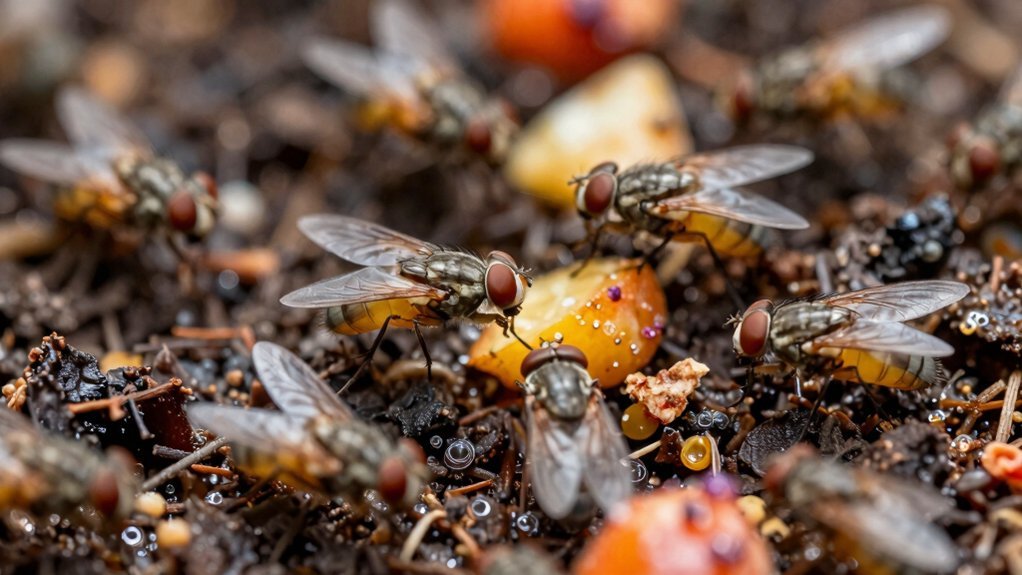
You’re attracting fruit flies because excess moisture and fermentable scraps turn your worm bin into a warm, scented breeding ground. Over‑feeding leaves soggy food on the surface, which ferments and releases aromas that signal a perfect egg‑laying site. The flies lay eggs just beneath the moist layer, and the larvae hatch within hours, feeding on the same waste. A dry, dense top layer of bedding or shredded paper blocks access, while proper moisture control and frequent, small feedings keep the habitat less inviting. Keep reading to discover the exact steps you can take next.
Why Fruit Flies Are Drawn to Your Worm Bin
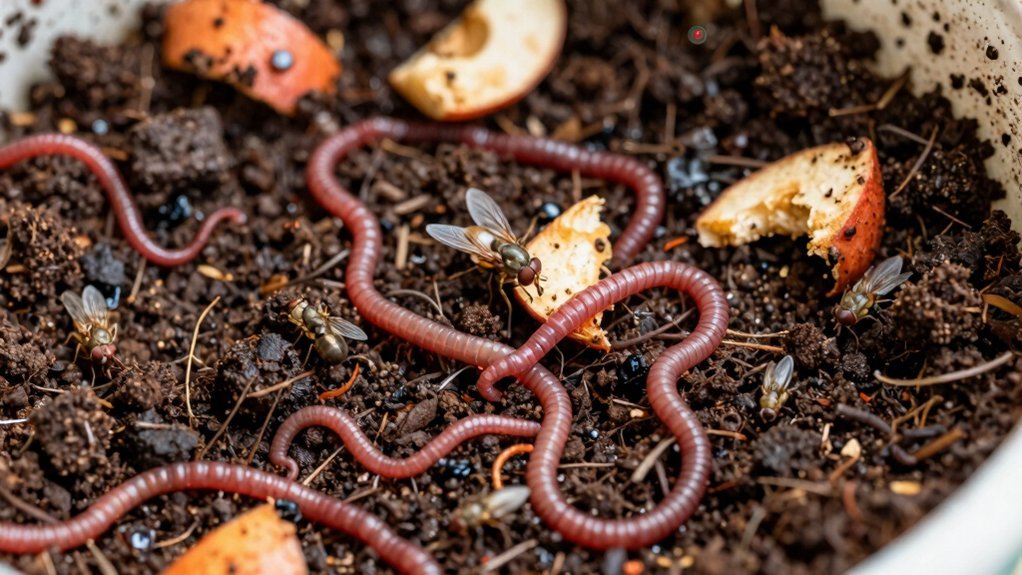
Why do fruit flies swarm your worm bin? You’re likely feeding too much, leaving food scraps exposed, and not keeping bedding thick enough. The moist, fermenting waste creates a warm, humid pocket that attracts fruit flies, and the scent of fermentation signals a perfect place to lay fruit fly eggs/larvae. When scraps sit on the surface, especially ripe fruit, females drop eggs just beneath the bedding, and the larvae thrive in the anaerobic zones you’ve unintentionally created. White mold on bedding is a warning sign of overfeeding, which correlates with higher fly activity. By burying scraps under a dry, dense layer of mature vermicompost and maintaining proper moisture, you cut off the flies’ access and reduce their attraction to your worm bin. Using carbon filters in your compost setup can also help prevent fruit flies and keep odors under control.
The Life Cycle That Makes a Worm Bin a Fly‑Friendly Habitat
Ever wonder how a worm bin becomes a fruit‑fly nursery? You’ll see fruit flies exploiting every exposed, fermenting bite. A female drops eggs just under the surface of moist scraps; within 12 hours the eggs hatch into tiny larvae. Those larvae feast on the soggy bedding and fermenting waste, growing for about four days before they pupate. Warm temperatures—roughly 72–82 °F—speed the whole life cycle, so you get a rapid turnover of eggs, larvae, and adults.
If you leave excess food or let the bedding stay too wet, you create the perfect breeding ground. By keeping bedding dry, burying scraps deep, and removing rotting material, you break the cycle and deny fruit flies the habitat they love. Using liquid lure traps can effectively reduce adult fruit fly populations and help maintain control in compost areas.
How Over‑Feeding and Moisture Spark Fruit Flies in Your Worm Bin
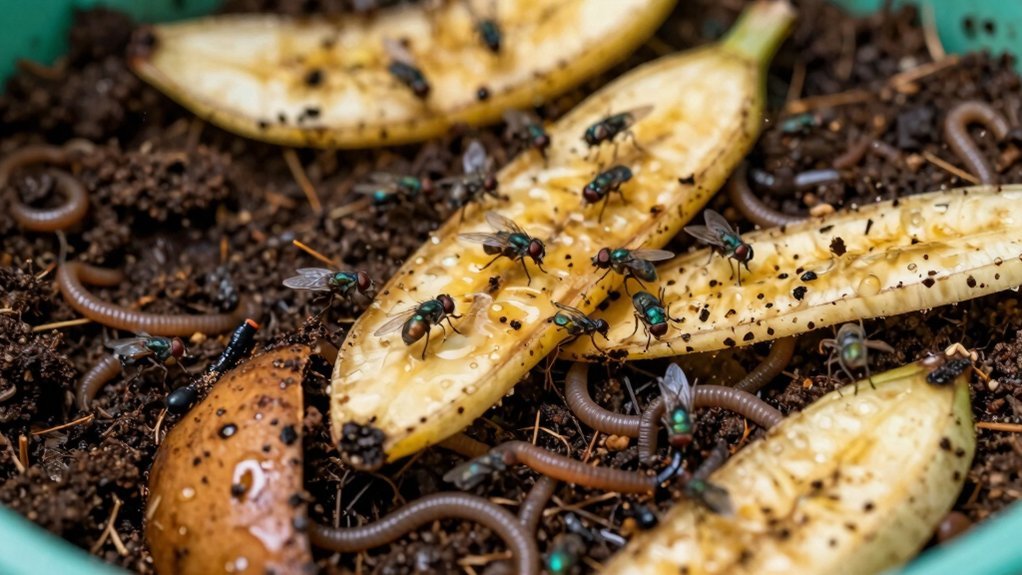
What happens when you pile too much food into a worm bin? Overfeeding dumps excess moisture and fermentable scraps onto the surface, creating anaerobic pockets that spark fermentation and foul odors. Fruit flies detect those smells and lay eggs—oviposition under surface—right where the food lies uncovered.
The soggy, dense mass overwhelms the bedding, choking airflow and preventing the bin from staying dry. Without a dry, airy layer, mold blooms and the moisture balance collapses, giving larvae a perfect buffet. By cutting feeding density and restoring a bedding dry/airflow environment, you starve the flies, halt fermentation, and keep your worm bin healthy. Using bokashi moisture control aids can help absorb excess moisture and reduce odors, creating a less inviting environment for fruit flies.
Bedding Choices to Prevent Fruit Flies in a Worm Bin
When you stop over‑feeding and keep the bin’s surface dry, the next step is to choose a bedding that both absorbs excess moisture and creates a physical barrier for flies. Opt for a thick layer of shredded paper or cardboard; they soak up wetness while staying loose enough for aeration. Add a thin coat of coco‑ir or aged manure as dry bedding to keep the surface crumbly and unattractive to fruit flies. Bury fresh scraps under this dry layer, and the vermicomposting system stays healthy and fly‑free. Proper moisture management and ventilation, such as those used in drainage trays, can significantly reduce fruit fly attraction.
| Bedding Type | Why It Works |
|---|---|
| Shredded paper | High absorbency, creates barrier |
| Cardboard | Cheap, dry, slows fly access |
| Coco‑ir / aged manure | Adds texture, maintains moisture balance |
Immediate Barrier Steps to Stop Fruit Flies in Your Worm Bin
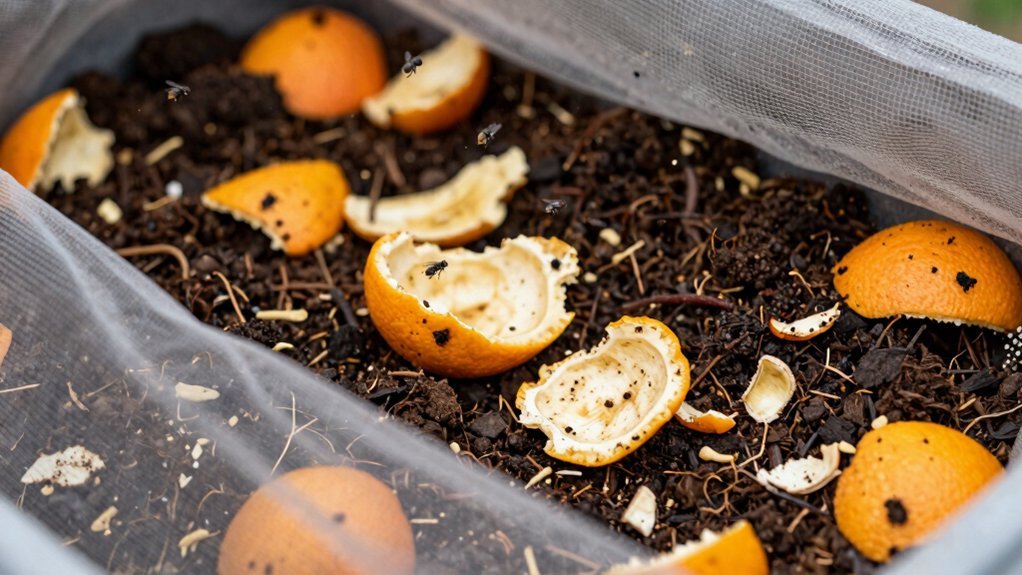
Even if you’ve already set up the right bedding, the moment fresh scraps hit the surface can invite fruit flies, so you need an immediate barrier. First, spread a thick top‑layer barrier of dry bedding or shredded paper over the worm bin. This creates a dry, unattractive surface that deters flies and blocks their access to food. Next, practice feed management: add smaller, more frequent portions and never overfeed. When you prep scraps, either freeze them for a few hours or chop them finely; this slows decomposition and reduces the scent that draws flies. Finally, always bury food under a couple of inches of dry vermicompost. The combination of a dry top layer, careful feed management, and proper scraps prep keeps fruit flies out and your worm bin healthy. Using a layer of zeolite mineral can also help absorb excess moisture and odors, further deterring fruit flies from invading.
Trap: Worm‑Safe Apple Cider Vinegar Solution for Fruit Flies
You’ll mix 1/3‑½ cup apple cider vinegar with a splash of dish soap, then set the jar near (but not inside) your worm bin so flies are drawn in and drown.
Position a funnel or perforated lid over the opening to guide flies straight into the liquid while keeping worms out.
Refresh the solution every few days to keep the scent strong and the trap effective.
Using a sealed container for composting helps maintain odor control and reduces fruit fly attraction by promoting anaerobic fermentation.
Safe Apple Cider Vinegar
How can you trap fruit flies without harming the composting worms? Use a worm‑safe trap that relies on apple cider vinegar’s natural acidity and the mother’s microbes. Mix organic cider vinegar with a splash of water, then add a single drop of dish soap to break surface tension, ensuring species drosophila melanogaster drown quickly while the solution stays out of reach of your worm composting bin. Place the mixture in a small glass or plastic jar, cover the top with a funnel or perforated lid, and tape it near the bin. Refresh the solution every few days to keep the fruit fly trap effective. For maintaining a clean environment, remember that charcoal filters help control odors effectively in composting setups.
Trap Placement Tips
Where should you set your worm‑safe ACV trap to keep fruit flies from your compost? Position it a few meters away from the worm bin on a shelf or countertop, not inside the composting chamber. Use a small jar or funnel trap with holes taped on top, fill it with apple cider vinegar, add a drop of dish soap, and stir occasionally to prevent fogging. Place the trap near kitchen scraps where flies gather, but keep it elevated so they encounter the lure before reaching the bedding. Refresh the solution every few weeks and check that the trap stays dry around the opening. Proper trap placement intercepts fruit flies early, protecting your worm bin without contaminating the compost.
Vacuum and Light Hacks to Kill Fruit Flies Quickly
When fruit flies swarm your worm compost, a simple light‑and‑vacuum combo can slash the adult population in minutes. First, set a bright LED or lamp near the bin; the light traps draw the flies toward the source. While they hover, grab a wand‑style vacuum and suction the adults away. This rapid vacuuming removes the breeders before they lay more eggs, and the light keeps them congregated for easy capture. Remember, eggs may still hatch, so repeat the process daily until the numbers drop.
- Position a LED lamp 6‑12 inches from the worm compost to create a focal point for fruit flies.
- Use a bag‑style vacuum with a narrow nozzle to target hovering adults directly.
- Pair the vacuuming session with a sticky light trap to catch any stragglers and reduce future generations.
Maintenance Habits That Keep Fruit Flies Out of Your Worm Bin
You’ll keep fruit flies at bay by maintaining a deep, dry bedding that stays aerobic and doesn’t sit soggy. Bury food scraps under a layer of mature vermicompost, use a newspaper or dry bedding top‑cover, and set up simple traps to catch any that wander in. By monitoring moisture, feeding modestly, and keeping barriers in place, you’ll give the worms a clean, fly‑free environment.
Bedding and Proper Moisture
Ever wondered why a few damp sheets of shredded paper can turn your worm bin into a fruit‑fly‑free zone? The secret lies in proper bedding and moisture control. Deep, airy bedding so aeration, absorbs excess moisture, and blocks anaerobic pockets that lure fruit flies. Keep the bedding moist, not soggy, and you’ll maintain aerobic conditions that keep compost healthy and pests away. Regularly check moisture levels and add dry layers when needed.
- Use a high bedding‑to‑food ratio to promote aeration and reduce sogginess.
- Add a dry paper top barrier after each feeding to mask odors.
- Monitor moisture daily; sprinkle water only until the bedding feels like a wrung‑out sponge.
These habits ensure your worm bin stays balanced, odor‑free, and fruit‑fly‑free.
Regular Traps & Barriers
Proper bedding sets the stage, but keeping fruit flies out long‑term hinges on regular traps and barriers. You’ll want fruit fly traps—like a jar of apple cider vinegar with a few drops of dish soap and a funnel—placed near the worm compost. Empty or replace the liquid every few days; this trap maintenance cuts the adult population quickly. Lay a barrier of dry newspaper or a loose lid over the bedding material to block flies from reaching the fermentation zone. Consistent moisture management keeps the surface dry, so the traps stay effective and the flies lose interest. Vacuuming any stray adults around the bin or nearby lights adds another layer of control, reinforcing your barrier strategy.
Frequently Asked Questions
How to Get Rid of Fruit Flies in Worm Compost?
You’ll eliminate fruit flies by keeping the bin dry, burying food scraps under plenty of bedding, using apple‑cider‑vinegar traps with a soap drop, and removing any rotting material promptly.
What Are the 5 Mistakes That People Commonly Make When Composting With Worms?
You overfeed, keep the bin too wet, neglect to bury food under dry bedding, add too much citrus or acidic scraps, and fail to chop or freeze waste before adding it.
How Do I Stop Fruit Flies in My Compost?
Cover food scraps with dry bedding, keep the bin aerated and not too wet, freeze leftovers before adding them, and set up vinegar‑soap traps near the surface to catch any flies that appear.
What Permanently Kills Fruit Flies?
You permanently kill fruit flies by removing all moist, fermenting material, freezing or burying leftovers, drying the bin thoroughly, and maintaining a dry, well‑aerated environment that prevents any eggs from hatching.
In Summary
By keeping your worm bin dry, not over‑feeding, and using coarse bedding, you’ll make the habitat unappealing to fruit flies. Quick barriers like fine mesh and a cider‑vinegar trap stop any that slip through, while regular light‑vacuum sweeps keep numbers down. Stick to these habits, and your compost will stay a thriving worm haven—fly‑free and low‑maintenance.