Seal your compost bin with a tight‑fitting lid and raise it on a cement slab or sturdy legs so rodents can’t burrow underneath. Use a fully enclosed container—no plastic on the ground or wooden slats—and line any wooden base with ¼‑inch wire mesh. Install a 6 mm vermin‑mesh barrier around the bin, folding the edges securely but keeping it removable for cleaning. Keep dairy sealed, sweep away debris daily, and add a carbon filter to curb odors. Continue and you’ll discover more tips.
Understand Why Rodents Target Your Balcony Compost
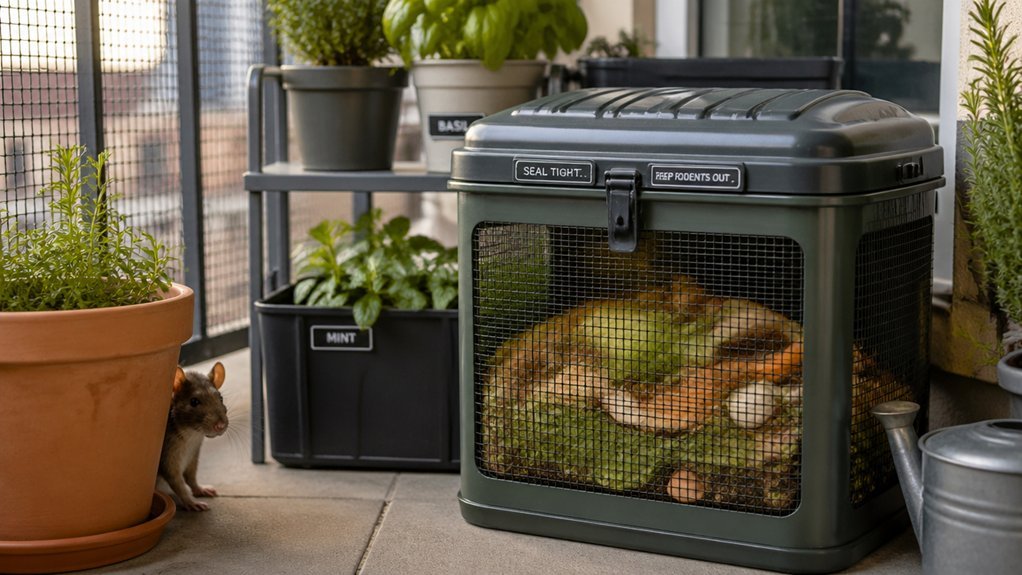
Why do rodents flock to your balcony compost? You’re giving them a perfect snack spot when compost bins sit on the ground, lack a secure lid, or have exposed bases that let them burrow in. Warm, moist scraps—especially kitchen leftovers, meat, or dairy—turn the bin into a cozy, food‑rich refuge. Open lids let scent escape, inviting rats and mice to explore, while a missing solid base creates easy entry points. Even a tiny gap under the bin becomes a highway for vermin. When you lift the bin off the floor and seal it airtight, you cut off shelter and food access, dramatically lowering attraction. Adding a 6 mm mesh around the base blocks rodents yet still lets worms aerate, keeping the compost healthy without inviting pests. Implementing a dedicated, vermin‑resistant feeding zone and proper moisture management further reduces attractants rodent prevention and supports a healthier compost system.
Pick a Rodent‑Proof Compost Bin
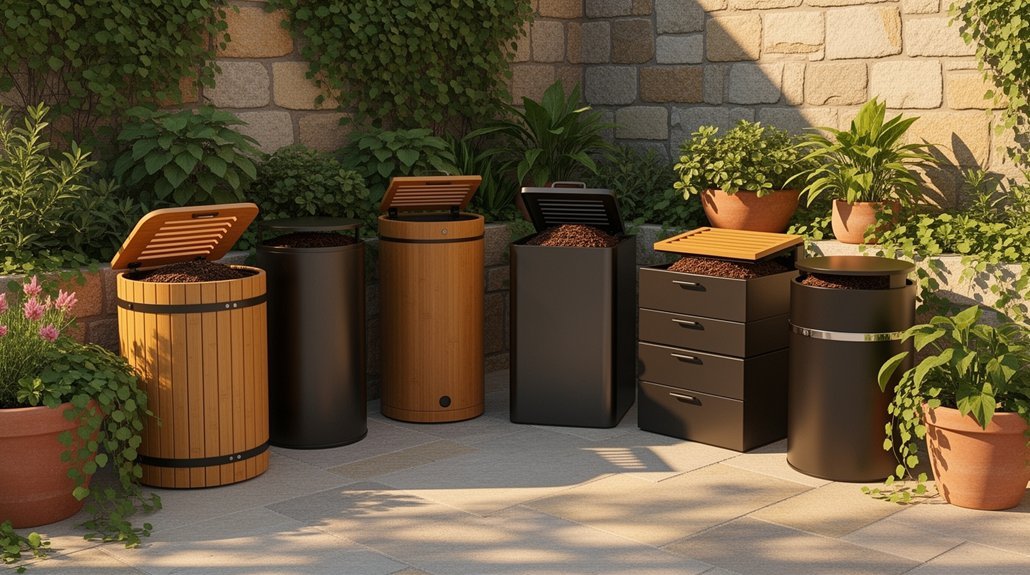
Looking for a compost bin that truly keeps rodents out? Choose a fully enclosed container with a tight‑fitting lid and place it on a cement slab or paving stones. Avoid plastic bins that sit directly on the ground and wooden bins with open slats; if you must use one, line the bottom with a ¼‑inch wire mesh. Pick a model that has legs or a raised platform so you can inspect it easily and limit access points for rats and mice. Install vermin mesh beneath the bin, cutting a large square and a rough circle with at least a 10 cm margin, then fold and secure it to block digging while still letting worms move for aeration. Keep dairy products sealed and away from the bin to reduce attraction. A raised, durable ceramic or metal exterior can further deter pests by offering a sturdy, wipeable surface that is easier to keep clean and odor-controlled rodent-proof design.
Elevate the Bin on a Solid, Non‑Burrowing Base
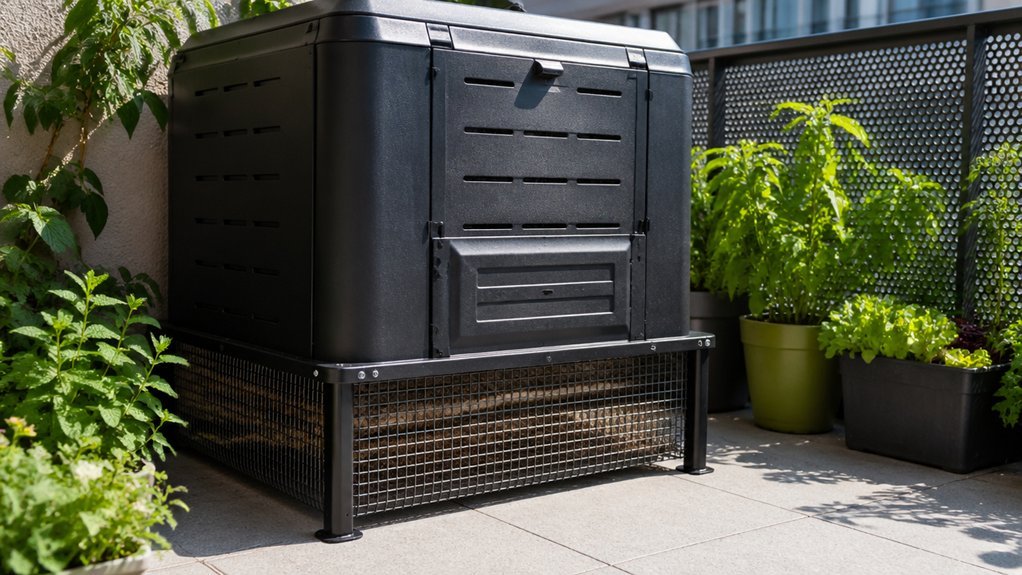
After sealing the lid and adding a wire‑mesh floor, the next step is to keep rodents from reaching the bin from below. Place the compost container on a solid, non‑burrowing base—think a cement slab, concrete pavers, or a sturdy wooden platform. If a permanent slab isn’t possible, choose a bin with legs that lift it a few inches off the balcony floor, giving you space to inspect and clean underneath.
Make sure the base has no gaps or cavities where rodents could squeeze or dig. A continuous, flat surface eliminates weak points that gnawing could exploit, while still allowing airflow. Pairing this elevated base with a vermin‑mesh underlay adds extra protection without hindering worm movement. Non-burrowing base
Add a Vermin‑Mesh Barrier for Extra Protection
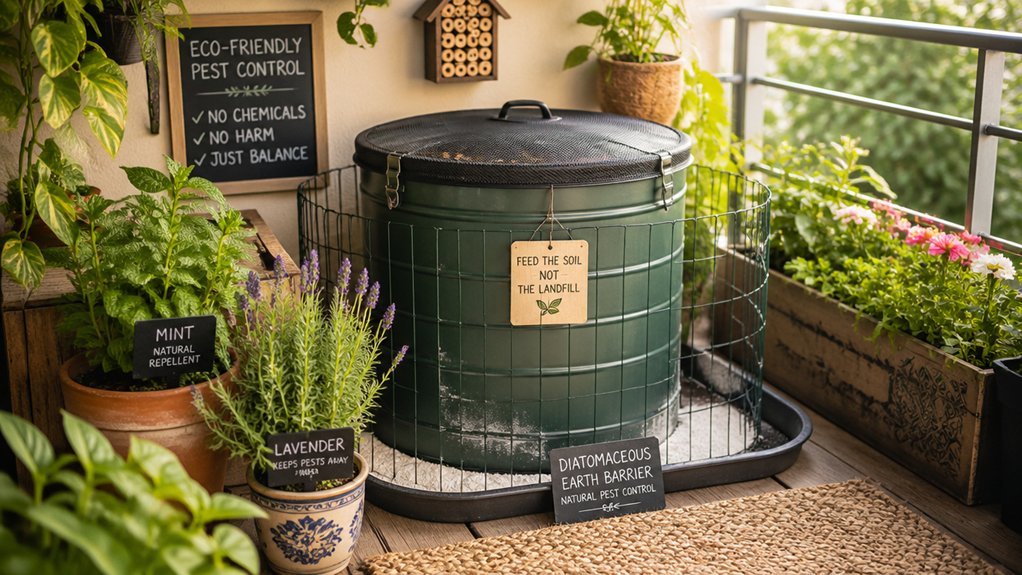
A sturdy vermin‑mesh barrier, made from 6 mm‑square wire, slots under the bin and folds over its edges to block rodents while still letting worms move for aeration. You cut a large square of vermin mesh, trim a rough circle leaving at least a 10 cm margin, then press the folded edges firmly around the bin. Wear gloves and gardening boots for safety and stability while you secure the barrier. Keep the edging accessible for easy emptying, ensuring the mesh stays solid yet removable for maintenance. This design blocks rats but lets worms circulate, giving your balcony compost a reliable rodent‑proof shield. Also note that choosing a bin with a tight‑fitting lid or using carbon filters can further reduce odors that might attract pests rodent‑resistance.
Keep the Balcony Free of Food and Debris
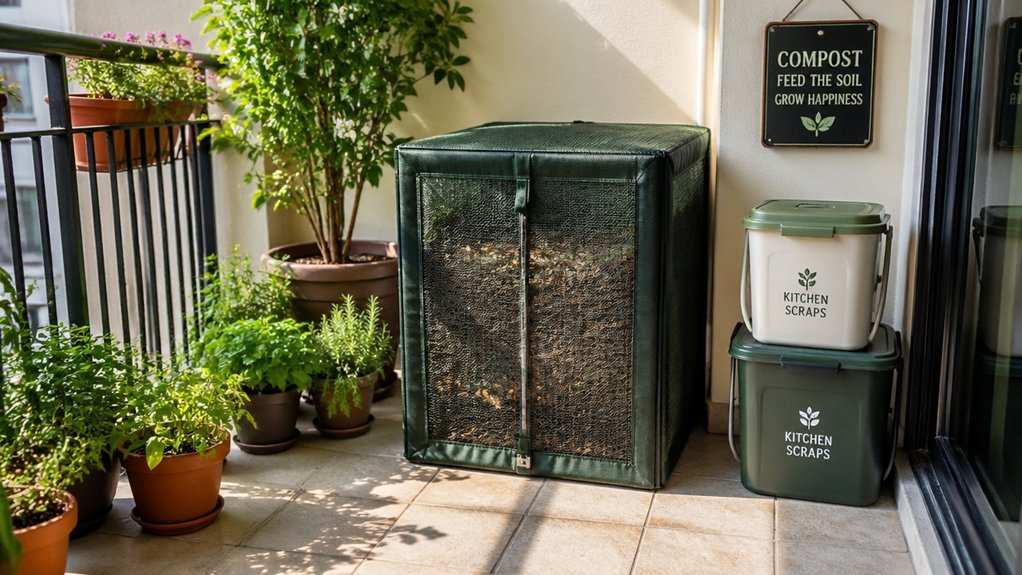
Wondering how to keep rodents at bay? You should clear every food scraps, wrappers, and open containers from the balcony the day. A sealed compost bin lid is essential, but you also need a solid base—place the bin on cement, paving stones, or a leg‑supported frame so rats can’t burrow underneath. Sweep the surface daily, picking up spilled seeds, mulch, or any dropped debris that might lure vermin. Install a 6 mm vermin mesh around the bin; it blocks rodents while letting worms breathe. Keep the area tidy, and you’ll deny pests the scent and shelter they crave, making your balcony compost a clean, pest‑free zone. Vermin mesh
Frequently Asked Questions
How to Keep Pests Away From Compost?
You keep pests away by sealing the bin, using a tight‑fitting lid, placing it on a slab, avoiding meat or dairy, keeping it moist, turning it often, and removing nearby food sources.
How Do I Compost on My Balcony?
You start by choosing a sealed, lid‑tight compost bin, placing it on a raised slab or legs, adding only kitchen scraps (no meat or dairy), keeping it moist, turning it weekly, and cleaning up any spills.
What Deters Rats From Compost?
You deter rats by sealing lids tightly, keeping food scraps grease‑free, placing the bin on a solid, raised surface, adding a fine vermin mesh base, and maintaining dry, well‑turned compost.
Do Cockroaches Like Compost?
Yes, you’ll find cockroaches love compost because it’s warm, moist, and full of organic scraps. They’re drawn to exposed food, especially meat, dairy, or grease, so keep lids sealed and the mix dry.
In Summary
By understanding why rodents target your compost and taking these five steps, you’ll keep your balcony clean and critter‑free. Choose a sturdy, sealed bin, lift it off the ground, add a vermin‑mesh barrier, and stay on top of food scraps. With these simple actions, you can enjoy a thriving compost without unwanted visitors.