Use a sealed, airtight bin with a gasketed lid and place it away from sinks or fruit bowls. Add kitchen scraps, then cover them with a 2‑4 inch layer of dry browns like shredded newspaper or cardboard to block odors and moisture. Bury the greens 10‑12 inches deep and keep a steady stash of browns for each addition. Empty and clean the bin regularly, and you’ll prevent fruit flies from invading your compost; the next steps will show you how to fine‑tune moisture, ventilation, and even DIY traps.
Why Fruit Flies Target Kitchen Compost
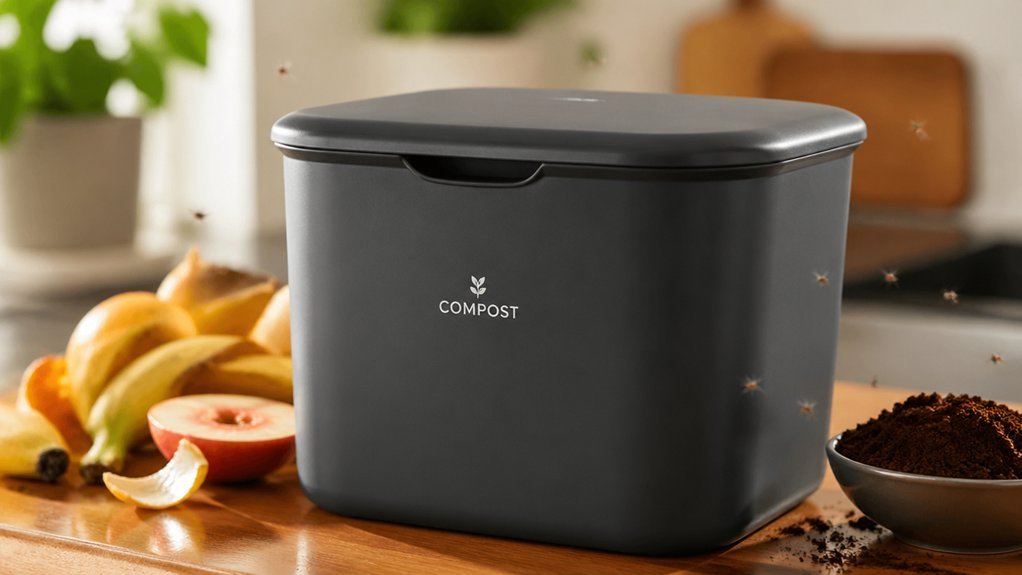
Why do fruit flies swarm your kitchen compost? You’re giving them a banquet of exposed organic matter—fresh fruit skins, veggie peels, and soggy scraps that sit on the surface of your compost bin. Every time you open the bin or leave it ajar, adults slip in, lay eggs just beneath the waste, and the damp, odorous environment fuels rapid breeding. If you don’t seal the lid or bury the waste in a brown‑green mix, the scent spreads across the countertop, inviting more flies. The key is to minimize smells and moisture: cover the bin tightly, bury scraps under a layer of dry material, and keep the area dry. These simple steps cut off the flies’ food source and breeding ground, keeping your kitchen compost fly‑free. Regularly replacing odor-control filters helps maintain a dry, odor-free environment by limiting the persistence of smells that attract pests. odor-control filters
Choose a Fly‑Proof Small‑Space Container
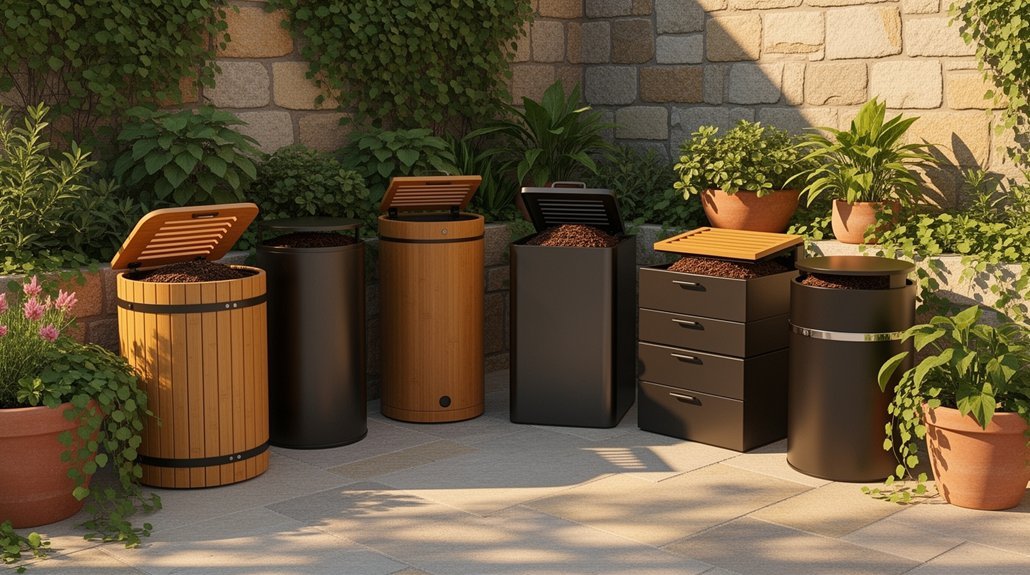
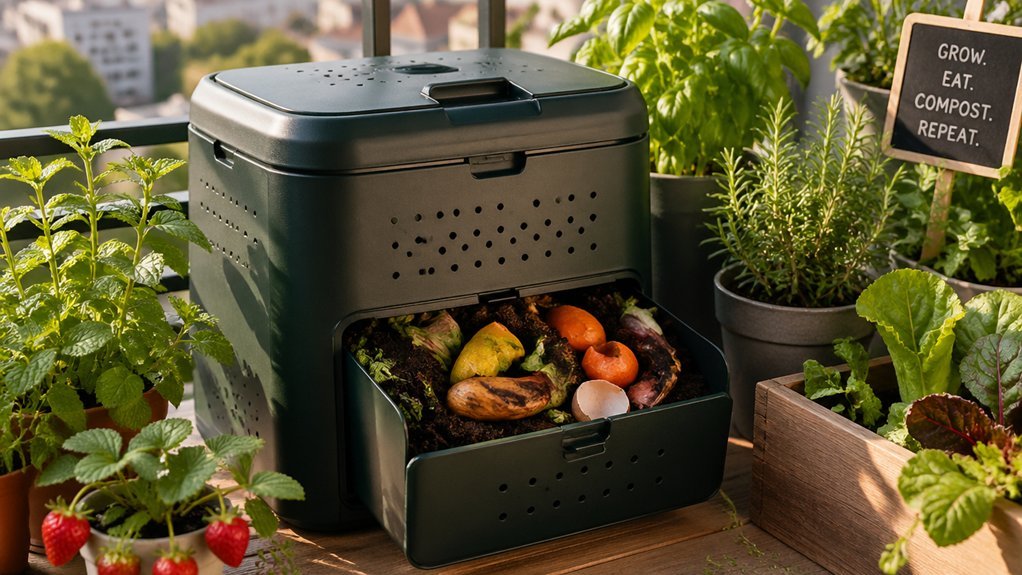
A sealed, tight‑fitting container is the cornerstone of a fly‑proof compost setup in a small kitchen. Choose a bin with a gasketed lid that snaps shut, keeping flies out while you add kitchen scraps. Look for models that offer dedicated venting—tiny one‑way filters let moisture escape but block insects. If you can spend a bit more, a Bokashi bucket or a commercially sealed hot bin gives extra protection. Place the container away from sinks, fruit bowls, and any standing water, and schedule regular emptying to avoid buildup that attracts flies. A 5‑gallon Bokashi bin with a tight‑sealing lid and built‑in spigot adds an additional layer of odor control and containment for fly prevention odor control.
Seal the Lid to Stop Flies and Odors
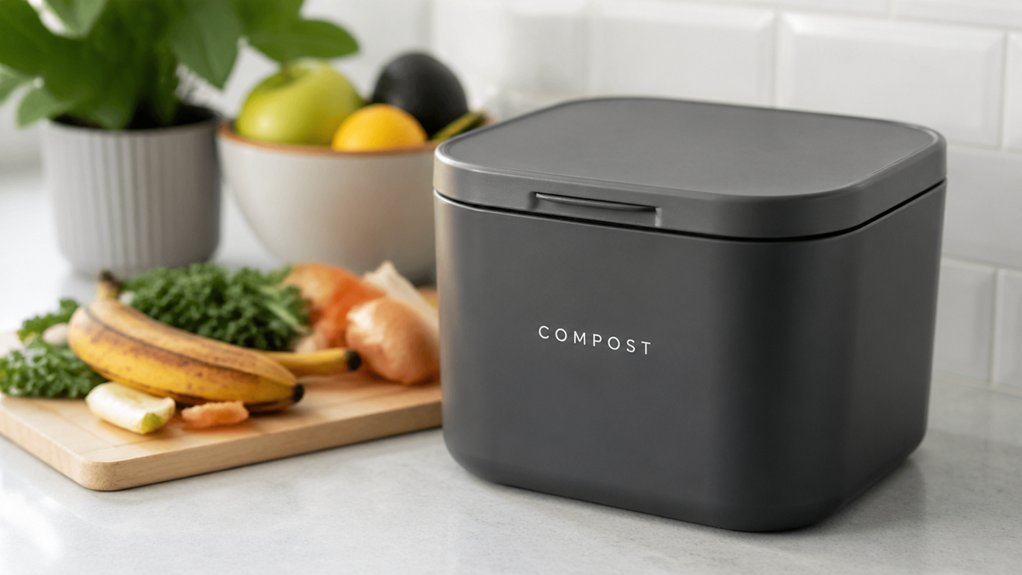
Make sure you close the lid tightly every time you add scraps, because a secure lid is your first line of defense against fruit flies. By using the lid as the only access point, you block their entry and keep the bin’s scent contained. A well‑designed, odor‑blocking seal also reduces smells, making the compost less attractive to pests.
Secure Lid Every Time
Ever notice how a simple click of a lid can keep fruit flies and odors at bay? A secure lid is your most reliable weapon; you close it each time you toss scraps in. By sealing the bin right after you add food waste, you prevent fruit flies from sniffing out the scent and you keep odors locked inside. This habit also cuts down the attraction of other insects, making your kitchen cleaner. Use a sturdy, well‑fitting lid that snaps shut with a firm click, and never leave it ajar between trips to empty the bin. Consistently sealing the lid works hand‑in‑hand with burying waste or adding browns, creating a robust barrier that limits access to attractants and keeps indoor fruit fly activity at bay. The approach aligns with odor control practices found in compost starters like Convino, which emphasize using natural enzymes and a pleasant scent to reduce smells at the source Odor Control Champion.
Lid‑Only Access Control
Wondering why your kitchen compost stays fresh while fruit flies vanish? You’ve learned that a secure lid is the single most effective barrier, and you can amplify its power by treating the lid as the sole access point. Each time you add scraps, open the lid just enough to drop food in, then snap it shut. That tight‑fitting lid blocks flies and contains odors, keeping the bin’s interior hostile to breeding. Regularly using USA-raised worms from large, reputable worm farms with breeding‑to‑market control can also help maintain consistent performance and reduce odors in vermicomposting setups USA-raised worms. Consistency matters—don’t leave the lid ajar while you’re cooking or when the bin sits idle. Pair this lid‑only access habit with regular emptying and minimal exposed residue, and you’ll notice far fewer flies and a fresher kitchen. The result is a clean, odor‑controlled compost system that works without extra gadgets.
Odor‑Blocking Seal Design
If you want the lid to act like a barrier against both fruit flies and odors, focus on a seal that stays tight every time you close it. A snug seal blocks the airflow that carries scent, keeping flies out and the kitchen fresh. Pair the lid with layered methods—like a lasagne of browns and greens—to trap moisture and lock smells inside. Make sure the gasket or silicone ring is clean and intact; replace it when it hardens. Consistently pressing the lid down creates a uniform seal, reinforcing other pest‑prevention steps such as burying scraps or adding a brown‑rich cover. In addition, choose containers with side‑lock lids or four‑sided locking hinges to maintain a consistently tight seal across repeated use. silicone gasket
Layer Browns Over Greens Like a Lasagna
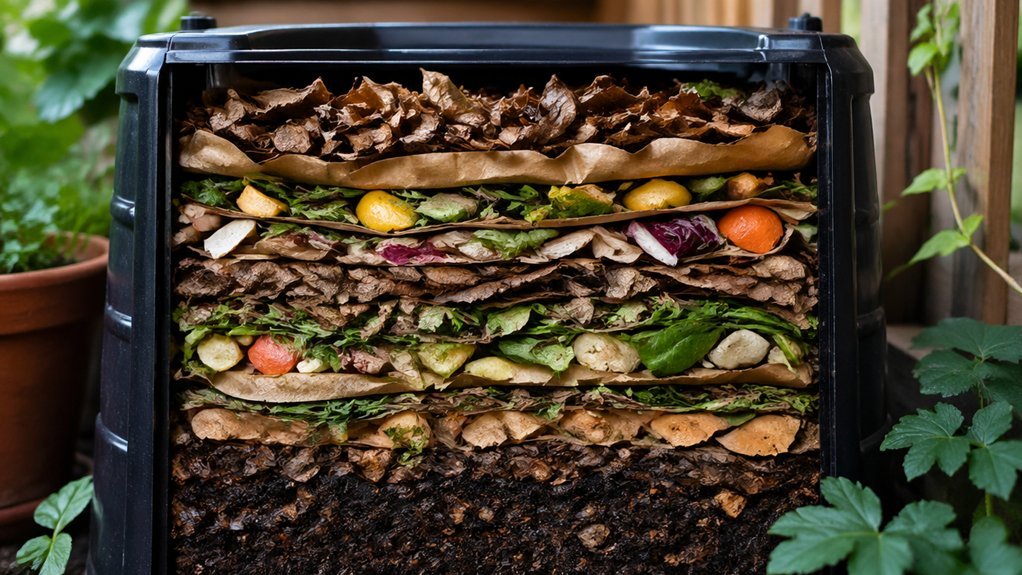
Layer the brown material over your food scraps just like you’d build a lasagna, creating a protective blanket that cuts down odors and blocks fruit flies. You’ll notice the compost stays fresher when you spread a 2‑4‑inch layer of shredded paper, cardboard, twigs, or wood on top of kitchen scraps. Keep a stash of brown waste nearby so you can add it right after each green addition. This simple habit creates an insulating cover that limits fly access and balances carbon to nitrogen, speeding decomposition while keeping smells at bay.
- Use shredded newspaper for quick, even coverage.
- Cardboard pieces add structure and bulk.
- Twigs improve aeration within the brown layer.
- Store a small bin of brown waste within arm’s reach.
- Aim for a consistent 2‑4‑inch thickness each time you layer. carbon-to-nitrogen balance
Bury Greens at 10‑12 Inches Depth
You’ll notice that burying greens 10‑12 inches deep cuts off the scent fruit flies follow.
Cover the buried layer with a generous coat of brown material to mask any remaining odors.
Keep the brown layer refreshed so the depth stays effective and the pests stay out.
Depth Matters for Flies
- Bury greens at shovel depth to block fly access.
- Deep burial traps volatile smells underground.
- Reduces surface odor that attracts fruit flies.
- Limits fly breeding sites in small spaces.
- Complements other pest‑control measures for optimal results.
- For added effectiveness, consider combining burial depth with an airtight container to minimize scent escape Odor Control Method.
Cover With Brown Material
Burying greens 10–12 inches deep cuts off the scent that lures fruit flies, but the key to keeping them out is sealing the spot with a generous layer of brown material. You’ll place the greens in the pile’s center, then blanket them with at least four inches of dry leaves, shredded newspaper, or straw. This brown material acts as a barrier, absorbing moisture and trapping odors so flies can’t locate the food. Keep a steady supply on hand; each time you add greens, repeat the burying and covering routine.
Pair this with a lasagne‑style layering system—alternating greens and browns—to maintain a balanced, odor‑free compost. While no method is foolproof, the extra cover dramatically cuts fly activity when combined with other pest‑control steps.
Pick a Cover Material (Cardboard, Straw, Coir)
A thin layer of cardboard, straw, or coir makes an effective cover that blocks odors and deters fruit flies in tight spaces. You can rip cardboard into shreds for a breathable, moisture‑regulating sheet, or spread straw for bulk insulation that slows anaerobic smells. Coir’s coconut fibers hold moisture while staying loose, creating a mat that lets air flow and keeps flies out. Aim for a 2‑4 inch brown layer each time you add kitchen scraps, and watch the balance stay pest‑resistant and nutrient‑rich.
A thin 2‑4 inch layer of cardboard, straw, or coir blocks odor, deters flies, and keeps compost airy and nutrient‑rich.
- Cardboard shreds trap odor and let excess water evaporate.
- Straw adds volume, keeping the pile cool and aerated.
- Coir retains humidity without becoming soggy.
- All three materials are cheap, renewable, and easy to source.
- Rotate the cover material weekly to prevent compaction and maintain airflow.
Wrap High‑Sugar Scraps in Newspaper
When you wrap sugary leftovers—like candy, soda cans, or fruit juice concentrates—in newspaper before tossing them into the bin, you trap the strong scent that normally draws fruit flies. The newspaper wrap acts as a cheap, biodegradable barrier that slows odor release, making the compost pile less inviting to fruit flies. It’s easy to fold a piece around the scrap, seal the edges, and drop it in; the paper will break down with the rest of the material. Pair this with lids, balanced browns and greens, and a sealed system for even better pest control.
| Item | How to wrap |
|---|---|
| Candy bars | Fold newspaper, tuck ends |
| Fruit juice concentrate | Spoon into a paper cup, wrap |
| Soda cans (empty) | Slip inside a newspaper sheet, crumple lightly |
Freeze Scraps Until Ready to Compost
Wrapping sugary scraps in newspaper cuts the scent that lures fruit flies, but you still need a way to keep fresh waste from fermenting before you can add it to the bin. Freezing scraps lets you pause composting in small spaces until collection day, eliminating odor and pest problems. Store cut fruit, vegetable peels, and coffee grounds in a sealed bag or container, then pop the bag into the freezer. The low temperature stops microbial activity, so the material stays fresh and odor‑free. When you’re ready, transfer the frozen bundle directly to your compost bin; it will thaw and begin breaking down without attracting flies.
- Use airtight zip‑lock bags to prevent freezer burn.
- Label bags with the date to track storage time.
- Keep a dedicated “freeze‑first” basket on the counter.
- Stack bags vertically to maximize freezer space.
- Transfer to the bin within 48 hours of thawing for best results.
Set Up a Mini Vermicompost System
Pick a compact, ventilated bin and line it with moist bedding to give your worms a cozy home. Feed them a handful of kitchen scraps—avoid meat, dairy, and acidic foods—to keep the colony thriving. Check moisture and aeration regularly, and you’ll see earthy castings appear without any fruit‑fly drama.
Mini Bin Setup
Ever wondered how to turn a countertop corner into a thriving worm kitchen? Pick a shallow, breathable container—plastic or wooden—then line it with a moist bedding mix. Add a handful of composting worms, spreading them gently. Toss in a small spoonful of vegetable scraps, keeping the pile as damp as a wrung‑out sponge. Cover with a vented lid to block fruit flies while letting air flow. As worms multiply, increase waste slowly, never overloading the bin. Keep the temperature room‑range and avoid meat, dairy, oily foods, or large citrus pieces to maintain worm health.
- Choose a container with drainage holes
- Use shredded newspaper or coconut coir for bedding
- Maintain sponge‑like moisture levels
- Install a mesh or perforated lid for airflow
- Add food scraps in thin layers to prevent odor
Worm Feeding Basics
After setting up your mini bin, the next step is feeding the worms correctly. Offer them shredded newspaper, fruit scraps, and coffee grounds, keeping portions small and evenly distributed. Avoid meat, dairy, and citrus—they raise acidity and attract fruit flies, which can ruin your composting setup. Aim for a moisture level like a wrung‑out sponge; if it’s too dry, lightly mist the food, and if it’s soggy, add more dry bedding. Feed once or twice a week, watching for worm activity: active movement means they’re happy, while sluggishness signals over‑feeding or moisture issues. Rotate the bin or use a two‑bin system so you can harvest castings while continuously adding fresh feed, maintaining steady temperature and aeration for optimal decomposition.
Keep a Steady Supply of Brown Material
How can you keep your compost humming without inviting flies? Keep a ready stash of brown material—shredded paper, cardboard, twigs, wood chips—right next to your bin. Aim for a 2‑4‑inch brown layer each time you add greens, using the lasagne method to seal odors and block fly access. Rip up boxes and paper on the spot; the quicker you shred, the faster you can cover fresh scraps. Store your browns in a nearby, easy‑to‑reach container so you never run out and can maintain a steady rhythm of browns‑greens balancing in small‑space composting.
- Shred newspaper and office paper weekly.
- Keep a cardboard box half‑full for quick grabs.
- Collect dry yard twigs after pruning.
- Store wood chips in a sealed tote.
- Rotate supplies to avoid moisture buildup.
Empty and Clean the Bin Regularly
Why let lingering smells turn your compost bin into a fruit‑fly magnet? You should empty and clean the bin regularly to keep odors low and breeding sites scarce. Rinse the compost bin cleaning water and a mild, non‑toxic cleaner, then dry it completely before refilling; moisture invites fruit flies.
Set a consistent schedule—weekly if you add scraps daily—so waste never ferments enough to lure pests. Scrape food residues from interior walls and lid, paying special attention to corners where flies lay eggs. Keep the outer surface and surrounding area dry, wiping away any standing water.
This disciplined compost bin cleaning routine cuts down on fruit flies, maintains a fresh smell, and ensures your small‑space compost stays healthy and pest‑free.
DIY Banana‑Peel Trap for Adult Flies
A banana‑peel trap is a simple, low‑cost way to catch adult fruit flies before they infest your compost. Place a banana peel inside a clear plastic container, then poke tiny holes with a toothpick so flies can enter. Add a few drops of dishwashing liquid to a shallow pool of apple cider vinegar or water; the soap breaks surface tension and holds them. Position the trap near fruit bowls or the compost area, but keep it out of the active composter. Seal the lid or tape a funnel to stop odors and ensure flies are drawn into the liquid. You’ll see a noticeable drop in flies within 24 hours and continued improvement over the next few days.
- Use a clear container to watch the capture process.
- Poke holes just large enough for flies, not for larger pests.
- Choose apple cider vinegar for its strong scent.
- Add soap sparingly; too much can deter flies.
- Replace the banana peel and liquid every 2–3 days for maximum efficiency.
Troubleshoot Odor, Moisture, and Fly Re‑Invaders
Ever notice a sour whiff, soggy spots, or a sudden influx of flies despite your best efforts? Keep the bin lid sealed and only open it when you add scraps; this blocks fruit flies and contains odor.
Bury food waste 10–12 inches deep whenever you can, limiting their access to attractants.
Mix greens with brown materials—twigs, dried leaves, straw—to make the pile less appealing to fruit flies and to balance moisture.
Spread a layer of straw or cardboard on top; it retains warmth, holds moisture, and forms a physical barrier against pests.
If the smell still lingers, wrap new scraps in newspaper before dropping them in. This slows scent release and curtails fly activity, keeping your composting system fresh and fly‑free.
Frequently Asked Questions
How to Compost Without Getting Fruit Flies?
You prevent fruit flies by sealing your bin with a tight lid, burying scraps deep, adding plenty of brown material, using newspaper wraps or banana‑peat traps, and opting for sealed bokashi or hot‑bin systems.
How to 100% Get Rid of Fruit Flies?
You’ll eliminate fruit flies by sealing every entry point: use a tight‑fitting lid, keep the bin airtight, layer waste with brown material, and add banana‑pepper traps daily.
What Are Three Items That You Should Never Put Into the Compost Bin?
You should never toss meat, dairy, or oily foods into your compost bin; they attract flies, cause odors, and slow decomposition. Also avoid pet waste, medicines, and large amounts of citrus or onions.
How to Compost With Minimal Space?
You’ll stack food scraps, then add 2‑4 inches of shredded paper or cardboard, keep a sealed container for waste, bury scraps deep, and use a lid or Bokashi bin to stay compact and fruit‑fly‑free.
In Summary
By sealing your bin, layering browns over greens, and burying scraps deep, you keep fruit flies out while your compost stays fresh. Regularly adding brown material, cleaning the container, and using a simple banana‑peel trap will stop any stray flies from returning. Stick to these steps, and you’ll have a thriving, odor‑free compost system that fits perfectly in even the smallest kitchen space.