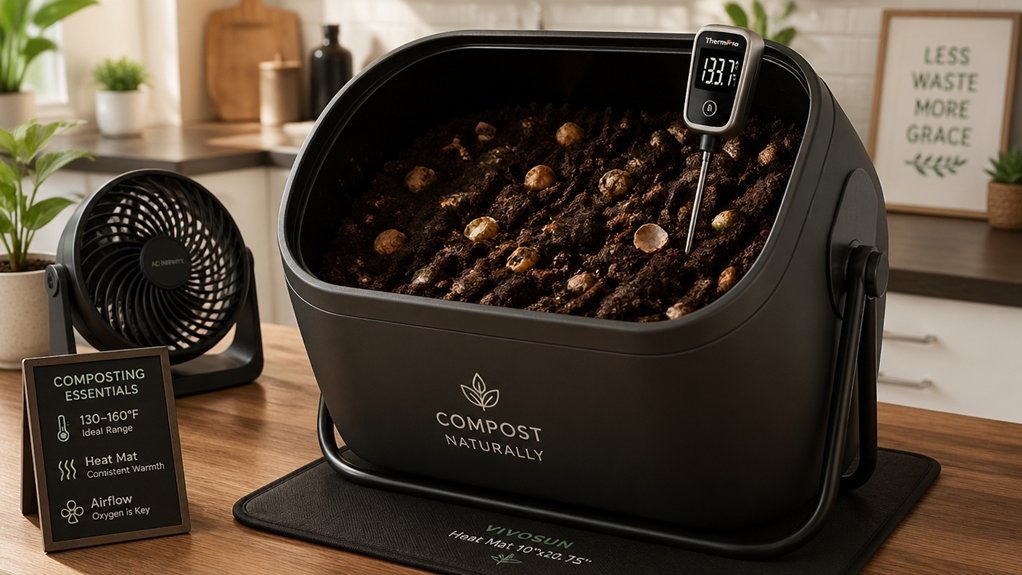
Keep your indoor tumbler between 130 °F and 160 °F by placing a probe thermometer in the core and checking daily. Turn the drum 3–5 times a week, adding more browns if it’s too hot and more greens if it’s cool. Insulate the drum with foam or a blanket, and position it in a spot with indirect light, good airflow, and no drafts. Adjust shade, ventilation, and moisture like a wrung‑out sponge to stabilize heat, and you’ll discover even more tricks ahead.
Set the Ideal Temperature for Indoor Tumbler Composting
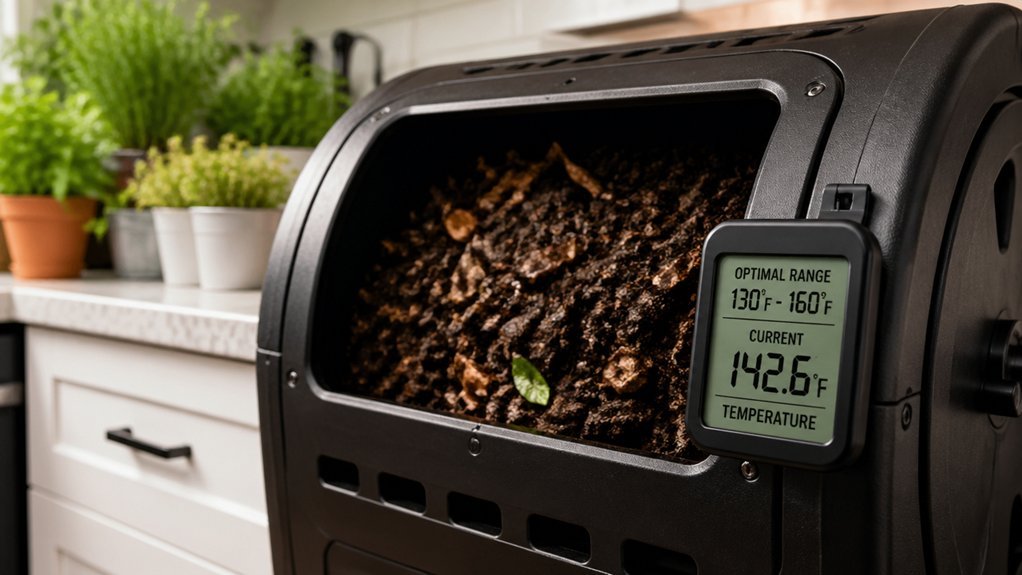
To keep your indoor tumbler composting efficiently, aim for a steady internal temperature of 130 °F–160 °F (54 °C–71 °C). Place a probe thermometer in the core, not just the wall, and check it daily. If readings dip below 130 °F, add more browns, reduce greens, and increase turning to stir up heat.
When the thermometer spikes past 160 °F, cut back greens, toss in extra carbon‑rich material, and open a vent or shade the tumbler to cool it down.
Keep moisture at a wrung‑out sponge level; too dry stalls microbes, too wet causes odor. Regular turning distributes heat and oxygen, ensuring the compost stays hot enough for fast, odor‑free decomposition.
Why Consistent Heat Boosts Microbial Activity
You’ll notice that steady heat turns your tumbler into a microbial accelerator, keeping the microbes humming and breaking down waste faster. When the temperature stays between 130 °F and 160 °F, thermophilic bacteria thrive, slashing pathogens and speeding composting. Regular turning and insulated setup help maintain this range for consistent results, supporting a dry, odor-controlled process that minimizes moisture buildup and anaerobic spots. dual-opening lid design
Microbial Accelerators
Why does steady heat matter? In your indoor tumbler, microbial activators spark heat generation, but they work best when you keep the browns-to-greens ratio near a 3:1 ratio. That balance fuels the microbes, pushing compost temperature into the 130‑160 °F sweet spot. Add activators two or three times a year to jump‑start the process, then turn the tumbler three to five times weekly. Each turn improves oxygen turnover, spreads heat evenly, and prevents hotspots. Keep the moisture level at a wrung‑out sponge consistency; too dry or too wet will blunt temperature rise. By managing these variables, you create a stable, hot environment that accelerates decomposition and maximizes nutrient release. The dual‑chamber design can help maintain continuous throughput by letting one batch mature while the other is fed, which supports more consistent heat generation continuous throughput.
Consistent Heat Benefits
Ever wonder how a steady temperature keeps your compost humming? When you keep temperature stability within the optimal heat range of 130‑160 °F, thermophilic microbes stay active and break down material quickly. In your indoor tumbler, continuous heat eliminates the need for large air gaps, so moisture control stays tight and clumping drops. This steadiness prevents anaerobic pockets, letting the microbes work without interruption. As a result, compost maturation speeds up, shaving weeks off the timeline to finished compost. By avoiding temperature spikes and crashes, you maintain a reliable environment that fuels microbial growth, keeps pathogens at bay, and delivers a uniform, high‑quality end product. Regularly monitoring and maintaining consistent heat can further support filtration quality and microbial retention in related composting processes mesh filtration considerations.
Choose the Best Spot for Your Indoor Tumbler

Pick a spot that gets gentle natural light but isn’t in direct sun, so the compost stays warm without overheating. Make sure the area is well‑ventilated so airflow can move through the tumbler’s vents and keep odors at bay. Place the unit on a stable, level surface away from drafts or heat sources for steady temperature control, and consider using an insulated cover to further reduce heat loss temperature control and maintain consistent microbial activity.
Optimal Light Exposure
Looking for the perfect spot for your indoor tumbler? Choose a place bat gets indirect light and ambient temperature that stays above 60 °F (15 °C). Diffuse light from a north‑facing window or a bright laundry room gives warmth without overheating. Keep the tumbler in shade/partial shade and away from radiators, ovens, or direct sun to maintain stable temperatures. Use temperature management by rotating the tumbler a few degrees toward or away from the light each hour, ensuring the interior stays consistent.
| Location | Light Type | Temperature Effect |
|---|---|---|
| Kitchen counter near window | Diffuse light | Warmth without overheating |
| Laundry room shelf | Indirect light | Stable temperatures |
| Hallway shelf | Shade/partial shade | Consistent ambient temperature |
| Closet with small vent | Ambient light | Gentle warmth, no spikes |
Ventilation and Airflow
A spot that gets indirect light also needs good airflow, because the microbes in your tumbler rely on a steady stream of oxygen to stay active. Choose a location where ventilation is unobstructed and airflow clearance is at least a few feet around the indoor tumbler. Keep it away from walls or furniture so air can circulate and prevent heat buildup. Open the vents just enough to allow air exchange without flooding the room with odors, and use a breathable cover if pests are a concern. Avoid sealed closets or cramped corners; a kitchen counter or a shelf near a window works well. Consistent oxygen delivery keeps the compost hot, active, and odor‑free. Regularly checking the aerator tools described in air circulation tools can help maintain optimal airflow for indoor tumblers.
Insulate a Small‑Space Tumbler for Better Temperature Control
Ever wondered how a simple insulation tweak can keep your small‑space tumbler humming at the ideal 130‑160 °F? Insulating the indoor tumbler is the fastest way to boost heat retention. Wrap the drum snugly with a foam or reflective insulated wrap, sealing every seam to stop drafts. Position the tumbler against an interior wall or inside a cabinet with a door gasket for extra protection. Slip a thin foam insert inside the housing; it cools the surface without hindering the turn. Place a compact sensor near the centerload for accurate temperature monitoring, then adjust turning frequency based on those readings. This combo of external and internal insulation keeps the compost warm, steady, and ready to decompose efficiently. Continuous monitoring helps you optimize performance during fluctuating indoor temperatures temperature stability and supports year-round use.
Use a Thermometer to Track Tumbler Heat
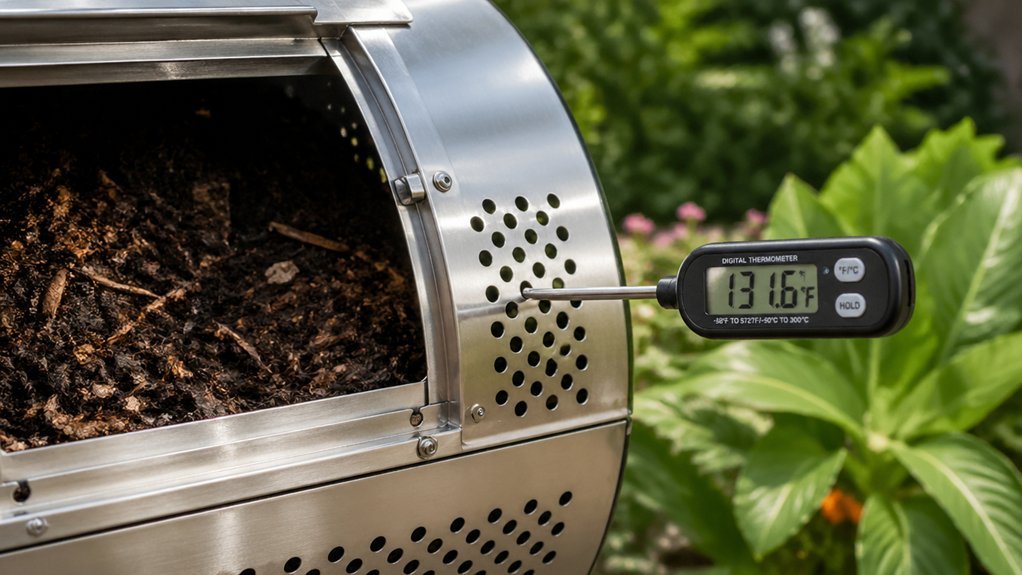
Curious how to keep your tumbler humming at the sweet spot of 130‑160 °F? Grab a reliable thermometer and insert the probe into the center of a representative batch. This gives you an accurate internal temperature reading, avoiding misleading surface values. Record the data daily or several times a week, watching for heat buildup or sudden drops after new additions. Use the numbers to fine‑tune turning frequency and moisture adjustments; higher readings usually mean good aeration, while low readings signal a need for more greens or browns. Tracking progress helps with odor control and consistent performance over time.
- Track trends: Spot cooling patterns before they stall the process.
- Adjust aeration: Turn more often if the active range slips.
- Tweak moisture: Add water or dry material to bring temperature back into range.
Adjust Green‑Brown Ratios to Stabilize Temperature
How can you keep your indoor tumbler humming at the right temperature? Start by aiming for a green‑brown ratio around 1:3. Adding more brown materials—dry leaves, shredded cardboard, sawdust—after each green layer boosts carbon content, improves aeration, and creates microclimates that sustain heat production. If the tumbler feels cool, front‑load browns to dry the mix, then turn regularly for better aeration. Alternate layers of green materials and brown materials to prevent matting and keep airflow steady, which supports temperature stabilization. Keep the moisture balance at a wrung‑out sponge consistency; proper moisture lets microbes thrive while the excess browns retain warmth. This balanced approach maintains consistent heat without over‑wetting or over‑drying.
Add Water or Dry Materials to Fine‑Tune Heat
Struggling to keep the tumbler in the sweet spot of 130‑160 °F? Balance moisture and oxygen by adding the right mix of water and dry material. When heat dips, sprinkle a handful of nitrogen‑rich greens and a pinch of carbon‑rich browns; the greens boost nitrogen while the browns soak up excess moisture and create air pockets. Turn the tumbler after each addition to improve aeration and spark microbial activity. Keep moisture like a wrung‑out sponge—wet enough for microbes, dry enough for airflow.
Balance moisture and oxygen: add nitrogen‑rich greens, carbon‑rich browns, and turn frequently for optimal tumbler heat.
- Add shredded cardboard or dry leaves to soak up moisture and improve aeration.
- Mix in small amounts of kitchen scraps to raise nitrogen and heat.
- Turn the tumbler a few extra times after each addition to maximize oxygen flow.
Apply Simple Blankets or DIY Boxes for Extra Insulation
Ever wondered how a simple blanket or a DIY box can boost your tumbler’s heat? Wrap a fleece or wool‑blend blanket snugly around the tumbler for extra insulation; you’ll see 2–5 °F higher indoor composting temperatures without sacrificing vent clearance.
If you prefer a sturdier shell, build a DIY box from foam board or insulated corrugated panels, leaving a narrow gap for moisture control and airflow. Position the box so the lid opens for easy turning, and keep the vent openings clear to prevent excess humidity buildup.
Check the tumbler temperature regularly—adjust blanket layers or box thickness if it climbs too fast. This low‑cost setup improves heat retention while maintaining proper airflow for efficient indoor composting.
Turn Your Tumbler to Distribute Heat Evenly
After you add fresh greens, give the tumbler a quick spin to spread the new heat right away.
Keep a schedule of three to five turns each week so the compost stays uniformly warm and avoids hot spots.
If the temperature drops, turn more often until the profile evens out.
Rotate After Each Addition
Wondering how to keep your indoor tumbler compost hot and uniform? Rotate after each addition to keep heat distribution steady and avoid cold spots. A quick spin right after you dump greens or browns reincorporates the warmth generated by microbial activity, preserving moisture balance and boosting aeration. This habit also prevents compaction, so oxygen reaches every layer and temperature control stays on point.
- Feel the surge of consistent heat as you turn, knowing microbes stay active.
- Enjoy the satisfying “whoosh” of the tumbler, a reminder that airflow and moisture are balanced.
- Relish the confidence that each rotation keeps your compost tumbler thriving, eliminating anaerobic pockets.
Even Heat Distribution
How can you keep every inch of your indoor tumbler compost at the right temperature?
Turn the drum regularly to blend warm inner layers with cooler outer material, creating even heat and stable temperature control. Shred kitchen scraps and yard waste into small pieces; the increased surface area accelerates aerobic decomposition and smooths heat distribution. Keep moisture like a wrung‑out sponge—neither soggy nor bone‑dry—to maintain moisture balance, which prevents hot spots and cold pockets. A consistent tumbling rhythm (3–5 turns per week) continuously exposes fresh microbes to heat‑producing activity, ensuring the whole batch stays within the optimal range.
| Action | Effect | Result |
|---|---|---|
| Tumbler turning | Mixes hot and cool zones | Uniform temperature |
| Material shredding | Boosts surface area | Faster microbial heating |
| Moisture balance | Holds water evenly | Consistent aerobic activity |
Regular Turning Schedule
Even heat distribution only works if you turn your tumbler on a reliable schedule. A steady turning cadence—three to five turns per week—keeps your indoor tumbler’s temperature in the 130‑160 °F sweet spot. When you add fresh greens, crank up the frequency to feed microbial activity and boost heat generation. Each deliberate turn mixes the mix without over‑tumbling, preserving heat and preventing moisture loss. Proper aeration spreads moisture evenly, avoiding dry pockets that stall the browns‑greens balance.
- Feel the surge of life as oxygen fuels microbes.
- Watch the temperature stabilize, eliminating hot spots.
- Enjoy a consistently moist, fragrant compost that smells like rich earth.
Activate Heat With Compost Boosters and Natural Add‑Ons
Can you boost your tumbler’s heat quickly? Add compost boosters, like a commercial activator or a handful of finished compost, to jump‑start microbial heat. Sprinkle a thin layer over fresh material, then repeat two or three times a year to sustain higher thermal activity. Pair boosters with natural add‑ons: finely chopped greens mixed with carbon‑rich browns such as shredded paper or sawdust. This balance fuels microbes, keeps the indoor tumbler warm, and improves heat retention. Start each batch with a scoop of activated compost or garden soil to seed beneficial microbes, and turn regularly to distribute warmth. By maintaining this rhythm, you’ll see core temperatures climb to 130‑160 °F, accelerating decomposition and delivering finished compost faster.
Winter Temperature Management for Indoor Tumbler Composting
Ever notice the tumbler’s heat dropping as winter settles in? You can keep compost alive by boosting indoor temperature and heat retention. Keep the tumbler in a sheltered, moderately sunny spot away from drafts, aiming for an ambient temperature near 15 °C. Add material continuously and turn it 3–5 times a week, preserving microbial activity. Balance greens and browns ratio at 3:1, and adjust moisture balance to a wrung‑out sponge—add dry browns if it gets too wet.
Keep the tumbler warm, sunny, and well‑balanced—15 °C, 3:1 greens‑browns, moist like a wrung‑out sponge.
- Warm the space with a nearby lamp or heater, but don’t over‑dry the mix.
- Slip a thin blanket or insulated cover over the tumbler at night for extra heat retention.
- Monitor moisture and turn more often when the mix feels cool, ensuring steady heat production.
These winter management steps keep your tumbler composting thriving despite the cold.
Prevent Overheating in Summer With Shade and Ventilation
How do you keep your summer tumbler from turning into a furnace? First, position the drum in partial shade so the temperature stays in the optimal 130–160 °F range without sacrificing the warm microclimate that speeds decomposition. Keep vents wide open and, if needed, add extra ventilation holes to boost airflow around the unit. Raising the tumbler a few inches off the floor or using a stand improves circulation beneath the drum, further curbing overheating.
Mix in more brown materials—shredded cardboard, dry leaves, or straw—to soak up excess moisture and buffer temperature spikes. Regularly check the internal reading; if it climbs above the target, adjust shade, venting, or brown‑material balance promptly to maintain stable, efficient indoor composting.
Spot Cold or Hot Issues and Apply Quick Fixes
Having secured shade and ventilation, you now need to spot temperature extremes and act fast. When the indoor tumbler feels chilly, move it to a warmer, draft‑free corner or place a mild heat source nearby, aiming for 65–75 °F. If it’s scorching, shift it to a shaded spot, boost cooling/airflow, and cut direct sun. Keep a probe handy and adjust turning frequency, adding greens for heat or browns for moisture control as needed.
- Cold snap: relocate, add a few active greens, sprinkle dry browns, and increase mixing.
- Heat spike: shade it, fan it, reduce greens, and turn more often.
- Moisture drift: spray water, balance browns, and monitor the probe.
Quick fixes keep your compost humming without overheating or freezing.
Frequently Asked Questions
How to Use a Compost Tumbler in Winter?
You keep the tumbler turning often, add wet scraps or a damp sponge, balance with dry browns, place it in a sunny, sheltered spot, and consider an insulated model or compost activator for extra heat.
When to Open Vents on Compost Tumbler?
You should open the vents whenever the compost feels humid, smells sour, or reaches 120‑160 °F; also open them briefly after turning or adding fresh material to restore airflow and prevent heat pockets.
How to Make the Best Compost in a Tumbler?
You’ll get top‑quality compost by layering 3 parts brown, 1 part green, chopping scraps to 1‑2 inches, keeping moisture sponge‑like, turning 3‑5 times weekly, and inoculating with finished compost.
Should My Compost Tumbler Be in the Sun or Shade?
You should place it where it gets morning sun but avoid intense afternoon heat; a bright, indirect spot keeps it warm enough for microbes without drying out, especially if you can add occasional shade.
In Summary
By keeping your tumbler’s temperature steady, you’ll fuel the microbes that turn kitchen scraps into rich compost faster. Pick a warm, stable spot, insulate it, and monitor with a thermometer. Add boosters or natural additives when the heat drops, and use shade or ventilation to prevent summer spikes. With these quick fixes, your indoor tumbler will stay in the sweet spot year‑round, delivering consistent, high‑quality compost.