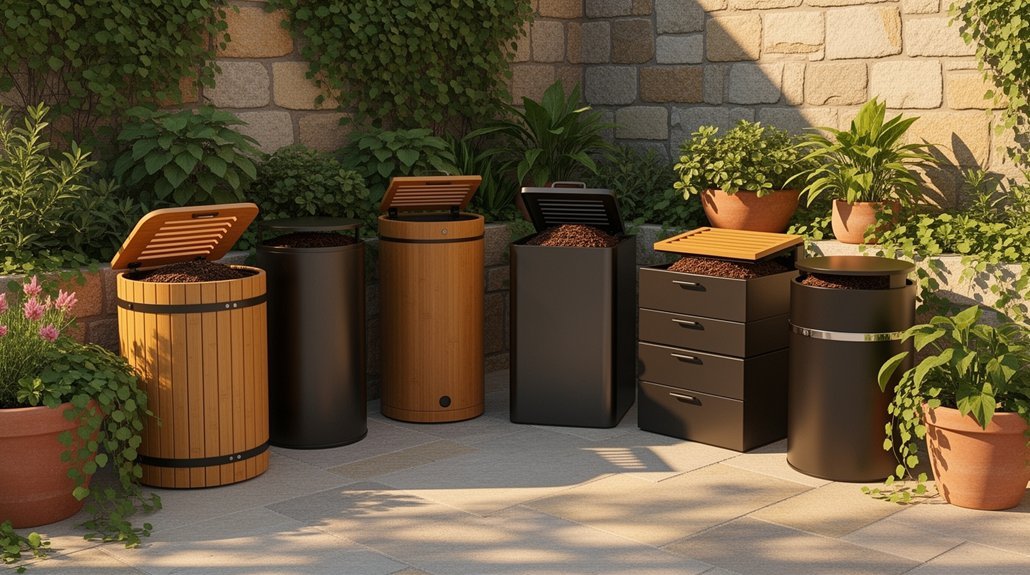

Your indoor compost bin should feel compact yet sturdy, fitting snugly on your countertop without crowding prep space. It needs a tight‑fitting lid with a reliable latch and a double‑layer charcoal filter to block odors, while a smooth, removable inner bucket makes cleaning quick and easy. A 1‑2‑gallon size works for one or two people, and a paper liner catches moisture and sticky scraps. If you keep these basics in mind, you’ll discover how to fine‑tune the bin for optimal daily use.
Choose the Right Size for Your Kitchen Countertop Compost Bin
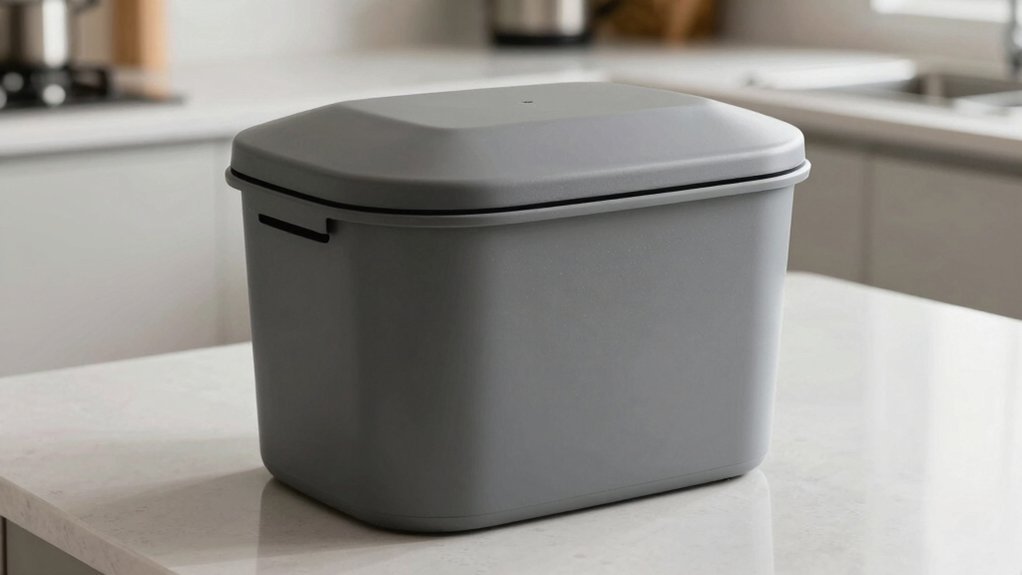
A well‑fitted countertop compost bin starts with matching its capacity to your household’s waste output. If you’re a solo cook or share a kitchen with one other person, a 1‑ to 2‑gallon bin usually suffices; larger families often need about 3 gallons. Aim for a size that fits your countertop without crowding prep space—measure the area first.
Compact models sit well on counters, under sinks, or hang from cabinet doors, while oversized bins can block chopping boards and washing stations. Choose a bin with at least a 6‑inch opening so you can drop scraps from a cutting board with one hand. Most dehydrating composters feature processing times that range from 2–3 hours for smaller units to 6–8 hours for larger capacity models.
Smaller bins (around 1 gallon) prompt frequent emptying, keeping waste fresh, whereas larger containers let you go longer between trips but become heavier to carry. Balance capacity with how often you want to empty and how much weight you’re comfortable handling. Odor‑free technology helps maintain a fresh kitchen environment.
Control Odors on Your Kitchen Countertop Compost Bin With Lid Design & Filters
Ever wonder why some countertop compost bins stay fresh while others turn your kitchen into a stinky zone? You can tame odors by choosing a tight‑fitting lid that seals every seam and uses sturdy hinges, a reliable latch. Pair it with a built‑in charcoal filter—ideally a double‑layer system—that absorbs smells before they escape. Keep the bin drier by adding shredded paper or a paper liner at the bottom, which helps the filter work harder and reduces bacterial activity. Most ceramic crocks use standardized 5.625-inch diameter filters that require replacement every 4–6 months based on usage and odor load. Finally, balance airflow: a modest vented design can cut anaerobic breakdown, but the lid must stay shut when you’re not emptying. Store the bin in a cool spot to slow decomposition and further reduce odor buildup.
- Secure, gap‑free lid with strong latch
- Double‑layer charcoal filter in the lid compartment
- Moisture‑absorbing liner (paper or shredded brown material)
Clean Your Kitchen Countertop Compost Bin Quickly With Low‑Maintenance Materials
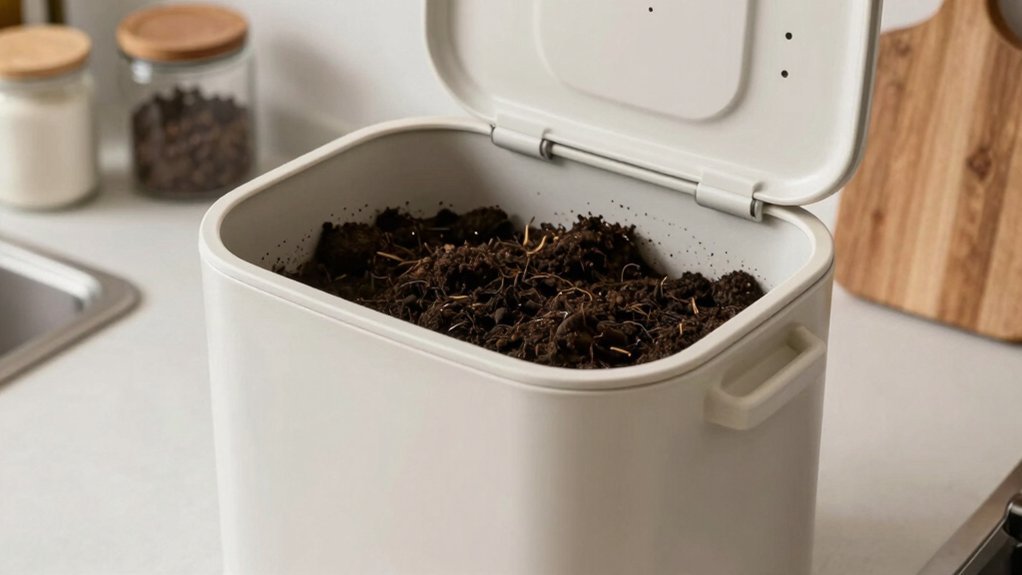
Keeping the lid sealed and the filter fresh is only half the battle; the real time‑saver comes from the bin’s material and design. Empty it daily, rinse with hot water and mild dish soap, then wipe the interior while it’s still warm. Use a paper liner—newspaper or cardboard—to catch moisture and sticky scraps, then lift the whole liner out for disposal. Sprinkle a little baking soda after each emptying to absorb odors, and let warm scraps cool before they hit the bin. Choose a smooth‑walled, removable inner bucket that’s dishwasher‑safe; you’ll spend seconds, not minutes, on maintenance. Replace your charcoal filter system every 2–3 months to maintain consistent odor control and airflow performance. Balancing moisture helps keep odors at bay and prevents fruit flies.
| Feature | Why it helps |
|---|---|
| Paper liner | Absorbs liquid, limits sticking |
| Smooth interior | Wipes clean with one swipe |
| Removable bucket | Fits dishwasher, quick rinse |
| Baking soda | Neutralizes smells, dries excess moisture |
Pick Durable Materials for a Long‑Lasting Kitchen Countertop Compost Bin
Which material will keep your countertop compost bin standing up to daily use without cracking, rusting, or warping? Stainless steel tops the list: it resists rust, dents, and wear, offers about 30 % fewer odor leaks, and stays easy to clean. If you favor a renewable vibe, bamboo fiber gives a sturdier feel than thin plastic while staying lightweight and eco‑forward. Plastic is budget‑friendly and lightweight, but it degrades with heat and sunlight, and it traps odors faster. Ceramic or clay look solid but can crack under impact, making them risky for busy kitchens. Choose a material that matches your durability expectations and maintenance habits. For optimal odor control, look for bins with dual-filter technology to manage volatile compounds effectively. The Reotemp KCBB-2 Grey Bamboo Fiber Kitchen Compost Bin features a charcoal filter in its lid to help trap odors.
- Stainless steel – ultra‑durable, odor‑resistant, dishwasher‑safe
- Bamboo fiber – renewable, sturdy, lighter than steel
- Plastic – cheap, lightweight, but limited lifespan and odor control
Use Your Kitchen Countertop Compost Bin Effortlessly Every Day

Choosing the right material gives you a sturdy base, but the real test is how the bin works while you’re cooking. You’ll want a hinged lid that opens with one hand, letting you toss peels or stems without pausing. Snap‑tight or slip‑fit lids keep the opening predictable, and wide mouths catch stray drops. A charcoal filter or perforated lid channels air, keeping odors at bay for days without fruit flies—especially important for cooked scraps. Pick a size that fits your counter space: 5‑10 gallons for a single dweller, 18 gallons for a family of four, so you won’t empty it after every meal. Smooth, dishwasher‑safe interiors let you rinse quickly, and like many modern kitchen containers designed for daily use, your compost bin should prioritize silicone gasket seals for an airtight fit that prevents odors from escaping. The bin placed next to the sink or prep area becomes a natural part of your workflow, making daily composting effortless. The Epica model’s perforated lid with an embedded charcoal filter is tested to contain odors for over a week.
Frequently Asked Questions
Can I Compost Meat or Dairy in an Indoor Bin?
You can compost meat or dairy indoors only if you use a sealed, insulated system—like an electric composter or Bokashi pre‑processor—and balance it with plenty of dry carbon to control odor and pests.
How Often Should I Replace the Charcoal Filter?
You should replace the charcoal filter roughly every three to six months, depending on usage and odor. If you notice smells, reduced airflow, or visible grime, swap it out immediately.
Do Indoor Bins Attract Pests Like Rodents?
Yes, indoor bins can attract rodents if you leave food scraps exposed or keep the lid cracked. Seal the bin, bury scraps deep, and turn the pile regularly to keep pests away.
Is a Compost Bin Safe for Dishwasher Cleaning?
You can put most stainless‑steel bins in the dishwasher, but check each component—body, lid, bucket, filter—because plastics, paints, seals, or charcoal filters often need hand washing.
Can I Use a Bin With a Built‑In Grinder for Faster Breakdown?
You can use a bin with a built‑in grinder, but it won’t dramatically speed breakdown indoors; it just shreds scraps, still needs oxygen, moisture, and frequent emptying to control odors.
In Summary
With the right size, a tight‑sealing lid, easy‑clean materials, and sturdy construction, your countertop compost bin becomes a hassle‑free kitchen companion. You’ll keep odors at bay, clean it in seconds, and enjoy a durable, low‑maintenance solution that fits your daily routine. Pick the bin that feels right, and composting will feel effortless, efficient, and completely under control.