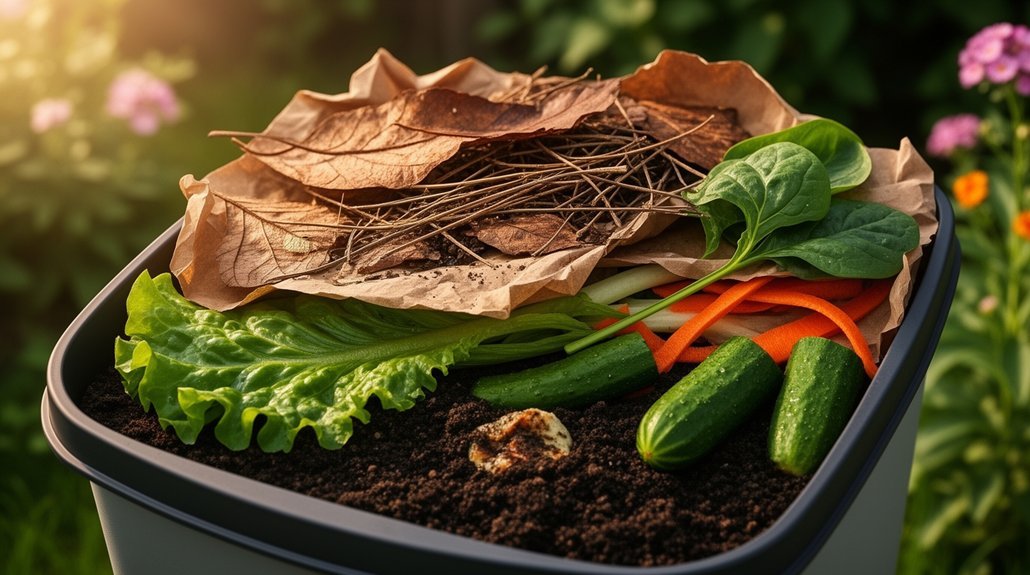
You keep a 2‑to‑3 parts brown to 1 part green balance, microbes stay aerobic, odors stay low, and heat stays steady, so the pile breaks down quickly without soggy mats. Browns like dry leaves, shredded paper, or cardboard soak up excess moisture and create airflow, while greens such as kitchen scraps or grass clippings supply the nitrogen microbes need. If the pile gets too hot or smells sour, add more browns; if it’s dry or sluggish, add greens. Adjusting the ratio as your compost matures will keep it efficient and odor‑free.
Why a 30:1 C:N Ratio Matters in Apartment Compost
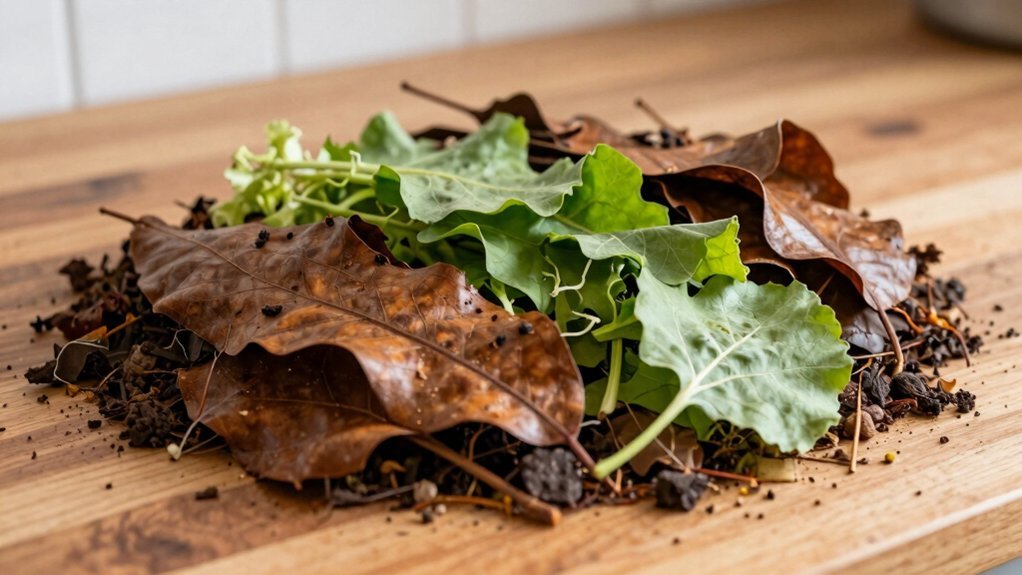
Why does a 30:1 carbon‑to‑nitrogen ratio matter in your apartment compost? It gives microbes the sweet spot they need to thrive, keeping decomposition fast and odor low. When you stay near 30:1, you generate enough heat (130‑150 °F) to kill pathogens and speed breakdown, even in a tiny bin. Too much nitrogen—below 20:1—creates ammonia, the stinky gas that seeps through small spaces and pushes the pile anaerobic. Too much carbon—above 35:1—cools the mix, stalls microbes, and forces you to wait weeks for scraps to disappear. By balancing browns (cardboard, dried leaves) with greens (vegetable peels, coffee grounds) you stay in the 25‑30:1 window, preserving airflow, controlling moisture, and keeping your apartment compost efficient and pleasant. Thermophilic activity helps the pile reach temperatures of 150 °F or higher.
2‑to‑3 Parts Browns to 1 Part Greens – The Apartment Compost Rule
Balancing the carbon‑to‑nitrogen ratio is just the first step; now you need a practical mix rule that fits a cramped bin. In an apartment, aim for 2‑to‑3 parts browns for every 1 part greens. This browns‑heavy blend curbs odor, so excess moisture, and deters pests—crucial when ventilation is limited. Choose dry leaves, shredded cardboard, or newspaper as browns, and kitchen scraps or fresh garden waste as greens. Mix thoroughly each time you add material; if the pile smells, toss in more browns. Adjust within the 2:1‑3:1 range to balance speed and smell control. Browns provide bulk and airflow that helps prevent the pile from becoming soggy. For apartment dwellers seeking faster fermentation and odor elimination, consider bokashi composting systems as a complementary approach to traditional brown-green ratios. | Ratio | Browns (vol.) | Greens (vol.) |
| ——- | ————— | ————— |
|---|---|---|
| 2:1 | 2 parts | 1 part |
| 2.5:1 | 2.5 parts | 1 part |
| 3:1 | 3 parts | 1 part |
| 3.5:1 | 3.5 parts | 1 part |
| 4:1 | 4 parts | 1 part |
How to Balance the Ratio When Food Scraps Are Wet
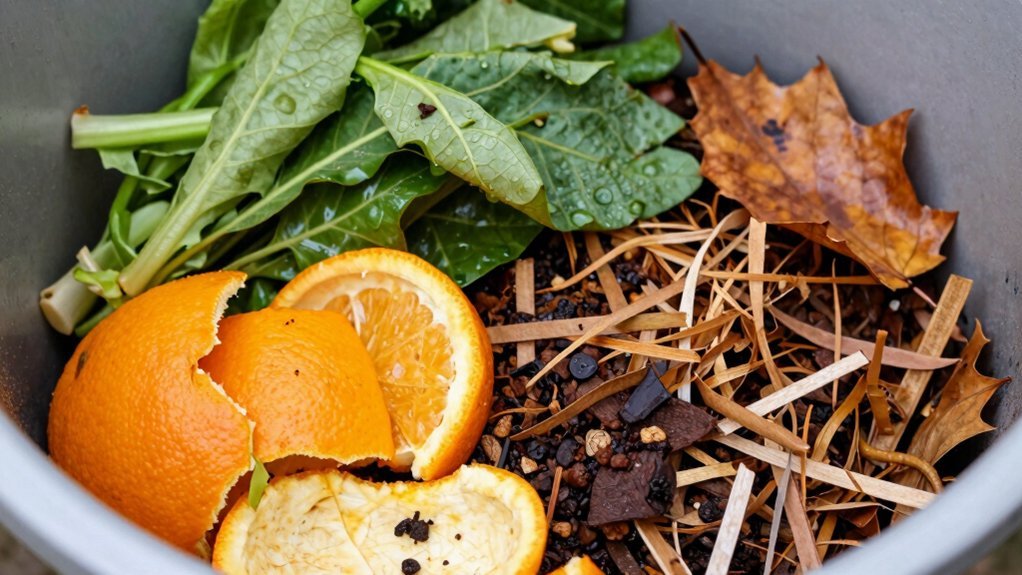
Ever notice how a handful of watermelon rinds can turn your apartment compost bin into a soggy mess? When you add wet scraps, aim for a higher brown ratio—often 4:1 greens to browns. First, shred dry materials like newspaper, cardboard, or dry leaves; the finer they are, the faster they soak up liquid. Toss the scraps and browns into a container, crush the browns, and mix until every wet piece is coated. Then bury the blend in the bin, covering it with a thick layer of coarse browns to keep the surface dry. If the pile smells sour, feels heavy, or looks slimy, sprinkle more dry browns and fluff it. Keep the texture damp, not dripping, and you’ll maintain airflow and avoid anaerobic odors. Adding the right amount of carbon-rich browns prevents the pile from becoming overly wet and smelly. For kitchen composters with charcoal filters, maintaining proper moisture balance also reduces odor and extends filter lifespan beyond the typical 4–6 months.
Pick the Best Browns: Leaves, Paper, Cardboard, Sawdust
You’ll find that dry leaves give you a high‑carbon boost but bring variable moisture, while shredded paper offers a moderate C:N ratio and easy aeration.
Cardboard is dense and breaks down slowly, yet it stays low‑odor and helps keep the pile structure intact.
Use sawdust sparingly in thin layers to avoid moisture‑locking pockets and to maintain airflow. Adding paper filters can increase nitrogen content and speed up decomposition. For small-space composting, consider supplementing browns with bokashi bran to accelerate food waste breakdown alongside your carbon-rich materials.
Leaves: High Carbon, Variable Moisture
Why do leaves make such a reliable brown for small‑space composting? You’ll find them in abundance, high in carbon and low in nitrogen, perfect for balancing kitchen scraps and grass clippings. Their flaky structure lets air flow, preventing the soggy, odor‑prone conditions that dense browns create.
Mix fresh, rain‑wet leaves with drier ones to keep moisture in check, and shred them for faster breakdown. Oak leaves decompose slower, so you may want a separate pile if you need speed. In a compact bin, alternating leaf layers with greener, wetter material gives you a balanced, aerobic environment that stays active all season. Using a compost starter accelerator can help speed decomposition of leaves in small-space systems.
- Dry leaves soak up excess moisture, improving structure.
- Wet leaves need mixing with drier browns to avoid anaerobic smells.
- Shredded leaves decompose quicker than whole leaves.
Adding brown material such as cardboard can further improve aeration.
Paper: Easy to Shred, Moderate C:N
Leaves give you a quick, airy brown, but paper steps in when you need a compact, easy‑to‑shred carbon source that won’t clump. Shred newspaper, printer paper, or uncoated packing paper into narrow strips before tossing them in. The fine texture improves airflow, absorbs excess moisture, and keeps your small bin from turning soggy or anaerobic. Paper’s moderate C:N balances kitchen scraps, curbing odor and speeding microbial activity. Mix it thoroughly with greens rather than layering it thickly, and keep the pile just moist, not waterlogged. Because it breaks down faster than woody browns, paper is a reliable, readily available buffer when leaves are scarce, helping you maintain a stable brown‑green ratio in tight spaces. For apartment dwellers and urban composters, compact electric composters can process your kitchen scraps more efficiently while you balance your carbon and nitrogen sources. Sticks from trees can also serve as a brown alternative when other carbon sources are limited.
Cardboard: Dense, Slow Degrading, Low Odor
Ever wondered how cardboard fits into a tiny compost bin? You’ll find it’s a carbon‑rich brown that balances nitrogen‑heavy scraps, but its dense sheets can mat together and choke airflow. Shred or tear it into strips; this boosts surface area, lets microbes work faster, and prevents soggy layers. Cardboard also muffles odors when you blanket kitchen waste, yet it won’t replace lighter browns like leaves in a cramped system.
- Shred cardboard to thin strips for better aeration.
- Mix it with porous browns (leaves or sawdust) to keep moisture in check.
- Keep layers thin; avoid large, flat pieces that compact and slow decomposition.
Dry leaves are a readily available brown material that can improve aeration when mixed with cardboard.
Choose Low‑Nitrogen Greens: Kitchen Scraps & Grass Clippings
Looking for quick, low‑effort greens for a small compost bin? Pick kitchen scraps and grass clippings, both nitrogen‑rich but easy to handle. Fruit and veggie peelings, coffee grounds, and tea leaves add moisture and feed microbes. Fresh grass clippings boost activity, but watch the C:N ratio (12‑25:1) and avoid chemically treated lawns. Balance each green addition with 2‑3 parts dry browns—leaf litter, straw, shredded paper—to prevent odors and soggy mats. Chop scraps into bite‑size pieces to speed breakdown in tight spaces. Maintain a 4:1 browns‑to‑greens ratio for optimal speed. Using activated carbon filters alongside proper brown-green balance creates a multi-layered approach to odor prevention in countertop bins.
| Material | Typical C:N | Tips |
|---|---|---|
| Fruit/veg scraps | ~20:1 | Keep pieces small, avoid meat |
| Coffee grounds | ~20:1 | Mix with dry browns |
| Grass clippings | 12‑25:1 | Use fresh, avoid herbicide‑treated lawns |
Shred and Mix for Airflow in Compact Compost Bins
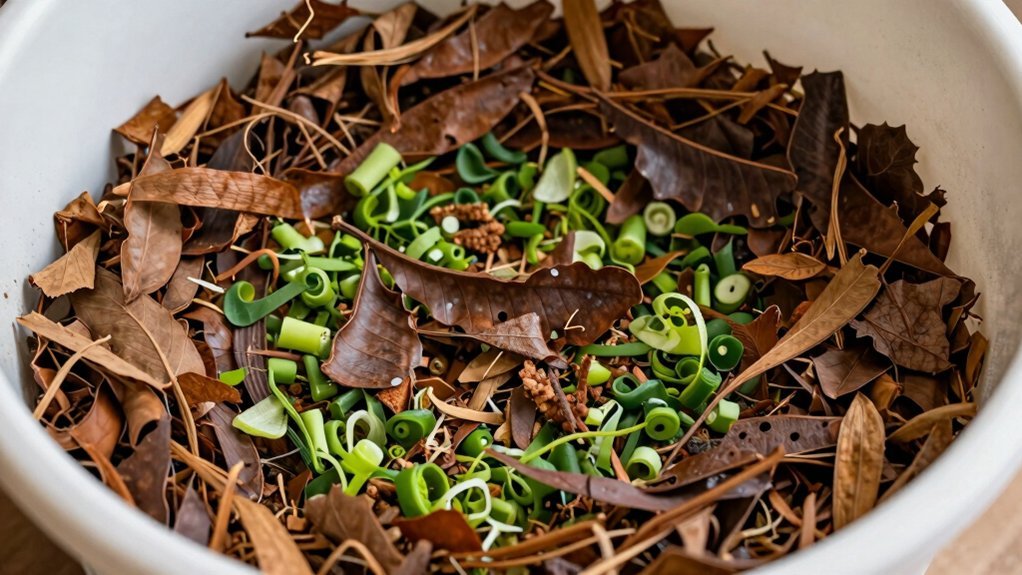
How does shredding boost airflow in a cramped compost bin? By cutting material into smaller pieces you increase surface area, letting microbes reach more nutrients and oxygen. The extra edges and interior fibers keep the pile loose, while a balanced shred size prevents the fine particles from compacting and choking airflow. Mixing greens with browns then spreads the shredded bits evenly, creating a homogeneous mass that avoids stratified layers that could collapse and block air channels. Coarse browns—sticks, pine cones, corn cobs—hold pore space, and regular stirring with a pitchfork lifts clumps, reducing dense pockets and keeping oxygen flowing throughout the bin. Maintaining consistent 360° ventilation through perforated sides or multi-directional vents ensures microbes stay active and odors remain controlled even in tight spaces.
- Shred to a medium size for max surface area without compaction
- Mix greens and browns thoroughly to prevent layered collapse
- Add coarse bulking material to maintain channels and steady airflow
Maintaining the C:N ratio within the 20:1–40:1 range ensures optimal microbial activity and prevents temperature spikes that could dry out the pile.
Feel the Heat and Moisture: Simple Sensory Checks
After shredding and mixing to keep the pile loose, your next quick diagnostic is checking heat and moisture. Warmth tells you microbes are thriving; a hand held near the bin’s center should feel a gentle, steady heat, not a cold spot. Moisture feels like a wrung‑out sponge—damp but not dripping. If the surface is slick or sticky, you’ve got too many greens and excess liquid; if it’s dusty and crumbly, browns dominate and the pile is drying out. Combine the cues: warm and damp means active decomposition; cold and dry signals a carbon‑heavy, nitrogen‑poor mix; warm and wet warns of over‑wet greens. Adjust by adding browns to soak up moisture or greens to boost heat, then re‑check frequently. A balanced C:N ratio ensures the microbes have the nutrients they need.
Spot Odor Signals: Too‑Green vs. Too‑Brown in Apartment Compost
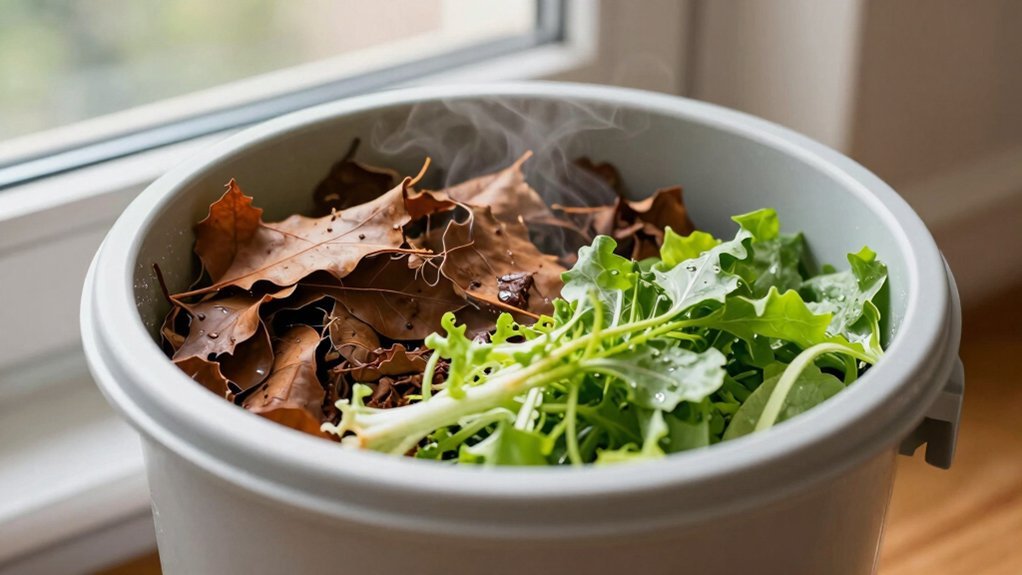
Ever wondered why your apartment compost sometimes smells like a chemistry lab and other times like a dusty attic? When the scent hits you, it’s a clue about your green‑brown balance. A sharp, ammonia‑like whiff or a rotten‑egg stench means you’ve overloaded nitrogen—greens are wet, slimy, and the pile may be scorching above 160 °F. Conversely, a dry, musty, old‑wood aroma signals a carbon surplus—browns dominate, the bin stays cool, and decomposition stalls. Both odors warn you before you see visible problems, so you can tweak texture, airflow, or ingredient ratios early.
- Ammonia or rotten‑egg smell → too many greens, wet and hot.
- Musty, stale odor → too many browns, dry and cold.
- Strong foul smell → nitrogen overload; mild musty → carbon excess.
Ideal ratio guidance is to aim for at least twice as much brown material as green material.
Fast Adjustments: Add Browns or Greens to Control Heat and Smell
If your bin feels too hot or smells sour, you’re probably over‑loading greens, so toss in some browns to soak up moisture and cool it down.
When the pile stays chilly and sluggish, add a handful of greens to boost nitrogen and spark heat.
Mix and turn the material after each adjustment to restore airflow and keep the balance in check.
The C:N ratio should stay near 25‑30:1 for optimal decomposition.
For small balcony systems, maintaining proper drainage and continuous fermentation capability helps prevent moisture buildup that can throw off your brown-green balance.
Add Browns to Cool
Need a quick way to cool a smelly, soggy bin? Adding browns restores the carbon‑to‑nitrogen balance, dries excess moisture, and opens up air pockets. Dry leaves, shredded cardboard, or wood shavings soak up slime and prevent anaerobic odors. Mix them thoroughly around kitchen scraps to “bury” the food, cutting scent and keeping pests away. Larger chopped pieces also create channels for oxygen, keeping the pile loose and active. If you’re storing scraps in a kitchen caddy before composting outdoors, consider using a model with odor control technologies like charcoal filters or soft-seal lids to manage smell between transfers.
- Use shredded paper, torn cardboard, or dried leaves for fast moisture absorption.
- Add a thin layer of wood shavings or straw to improve airflow and reduce compaction.
- Mix browns evenly into the bin, aiming for a 2:1–3:1 brown‑to‑green volume ratio.
Adding brown-rich materials also helps the pile reach the temperature needed to kill weed seeds.
Add Greens to Warm
Why boost a smelly, soggy bin’s temperature? Adding greens fuels microbes with nitrogen, sparking rapid breakdown and heat. Toss a generous handful of kitchen scraps, fresh grass, or green trimmings in one go, then shred or chop them to expose more surface. Balance the surge with enough browns, keep the mix moist, and turn it to oxygenate. If the pile stays cool, dry, or sluggish, you’re low on nitrogen—add another batch of greens. Layer greens and browns like a lasagna, covering fresh material with a few inches of browns to curb odor. Regular turning spreads the nitrogen, oxygen, and heat‑producing microbes, ensuring your small‑space bin reaches hot‑compost temperatures quickly. For indoor composting systems like bokashi, tight-fitting lids with rubber seals provide similar odor control benefits when layering materials properly. Maintain a balanced green‑to‑brown ratio to support consistent microbial activity.
Scale the Ratio as Your Apartment Compost Matures From Fresh to Finished
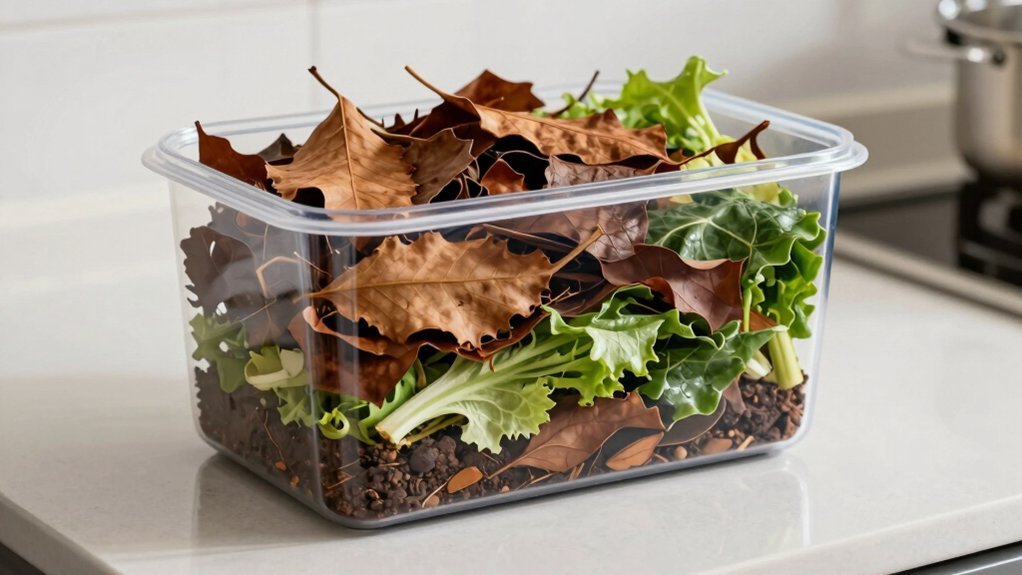
Ever wondered how to keep your apartment compost humming as it ages? Start fresh with about a 3:1 brown‑to‑green mix, using shredded paper, cardboard, or dried leaves to soak up moisture and boost airflow. As the pile warms and compresses, watch for sour smells—add more browns if it gets smelly, or toss in a few extra greens if it dries out. By the time it’s dark, fine, and shrunk, the carbon has burned off, so you’ll need less nitrogen and a protective carbon layer to finish the process.
- Fresh stage: 3 parts browns, 1 part greens, pre‑chopped for even contact.
- Intermediate stage: adjust by scent and texture; more browns for odor, more greens for dryness.
- Finished stage: keep a thin brown cover, add minimal greens, focus on stabilization.
Balancing the pile helps prevent excess odor and ensures steady decomposition.
Frequently Asked Questions
How Often Should I Turn My Compost Bin in a Studio Apartment?
You should mix it whenever it smells sour, gets soggy, or looks compacted—usually every few days in a studio. If it stays dry and airy, you can wait a week before turning again.
Can I Use Coffee Grounds as a Green Material Without Affecting the Ratio?
Yes, you can use coffee grounds as a green, but keep them modest. Mix them with plenty of browns, add thin layers, and watch moisture—this maintains balance without upsetting the ratio.
What Is the Ideal Moisture Level for a Small Indoor Compost Bin?
You should aim for about 50 % moisture—roughly a wrung‑out sponge. If it feels dry, sprinkle a little water; if it drips when squeezed, add dry browns and mix well.
Do I Need to Add Extra Browns When Using High‑Nitrogen Kitchen Scraps?
Yes, add extra browns. They’ll soak up moisture, keep airflow steady, and prevent odors. Aim for roughly two‑to‑three brown parts per green part, mixing them well for balanced, odor‑free compost.
How Can I Tell if My Compost Is Too Acidic Without a pH Test?
You’ll smell a sour, swampy odor, see slime or wet, heavy clumps, notice moldy patches, and find worms avoiding parts of the pile—these signs mean the compost’s too acidic.
In Summary
By keeping the 2‑to‑3‑to‑1 brown‑to‑green ratio, you’ll keep your apartment compost humming without nasty smells or soggy messes. Watch the heat and moisture, and tweak the mix whenever it leans too green or too brown. With a little attention, your kitchen scraps will transform into rich, usable soil—right from your tiny balcony to your kitchen counter.