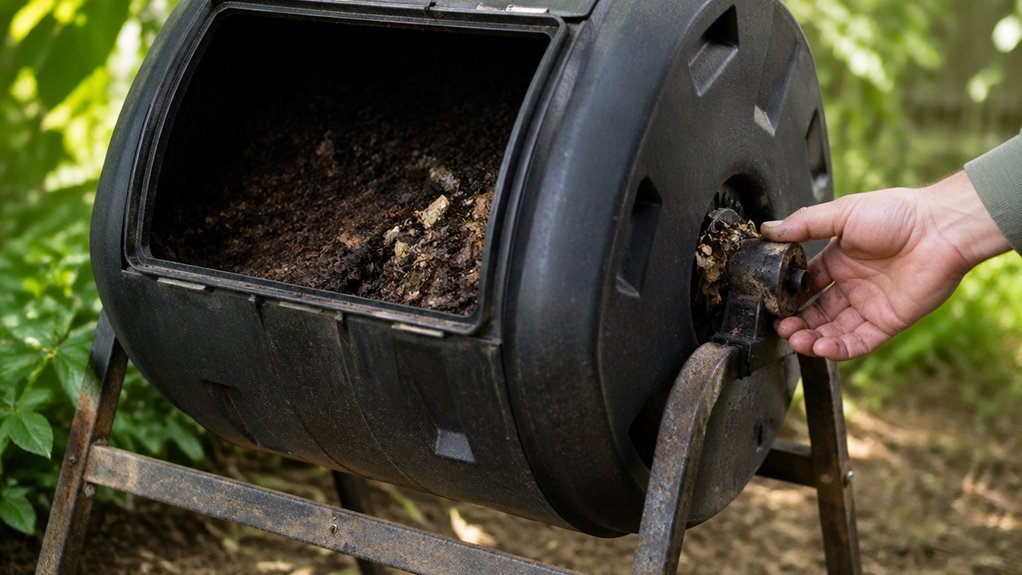
If your tumbler won’t spin, you’re probably over‑filling it, leaving no headspace for the drum to turn, or the material is too dry and compacted. Remove some of the load to create room, then add water gradually while the drum rotates until the mix feels like a wrung‑out sponge. Finally, check the bearings and axle for stuck debris or misalignment and tighten any loose hardware. Keep turning every few days, and you’ll see the fix in action.
Why Is My Compost Tumbler Not Spinning? Check for Over‑Filling
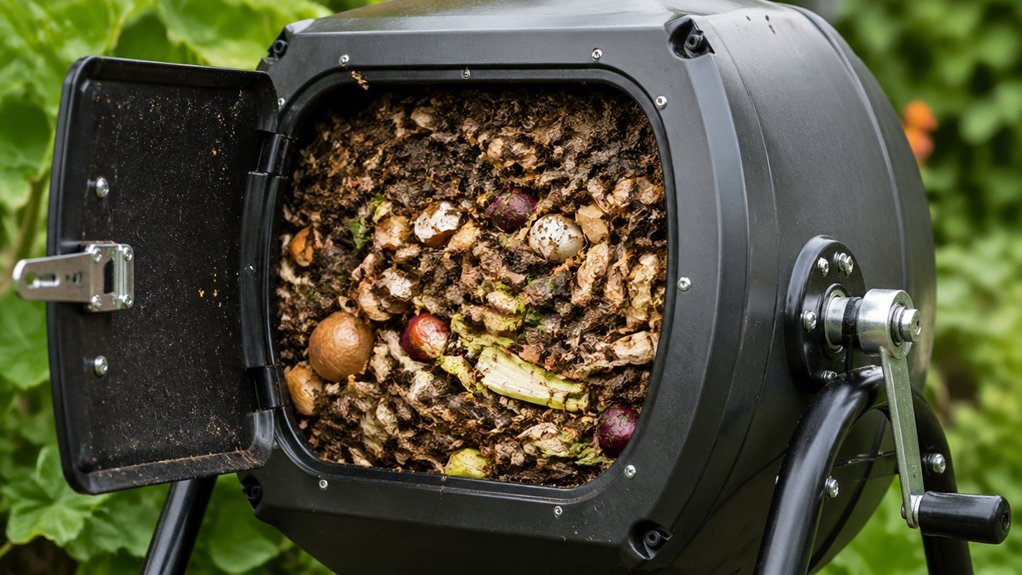
Why is your compost tumbler refusing to spin? You’ve likely over‑filled it, squeezing the drum up to the brim and eliminating vital headspace. Without enough air space, the material presses against the baffles, creating friction that stalls rotation. The packed load becomes unbalanced, so the drum wobbles and resists turning. Excess moisture from the overload can turn the mix into a sticky mass that seals the baffles, further choking the spin. To restore smooth movement, empty a portion of the contents, leaving a clear gap at the top. This restores balance, reduces friction, and gives the drum room to rotate freely, keeping your compost tumbler operating efficiently. Filter replacement and maintenance
Is the Drum Too Dry? How Much Water to Add for Proper Moisture?
After emptying some of the over‑filled compost, you may notice the remaining material is hard and dry, which can also prevent the drum from spinning smoothly. Dryness makes the texture compact, so the compost tumbler struggles to tumble and spin efficiently. Aim for a moist, sponge‑like feel—think of a wrung‑out sponge. Add water gradually while the drum rotates, checking the texture after each turn. If it still crumbles, sprinkle a little more and mix thoroughly. Soaking hard chunks briefly or tossing in damp brown waste and greens can restore balance and keep the spin lively. For best odor management, consider rotating with a lid that seals odors during the process and helps maintain moisture levels odor control feature. – Sprinkle water in thin layers while tumbling. – Test texture: it should clump, not fall apart. – Add moist brown waste or greens to boost moisture.
Are the Bearings or Axle Stuck? Quick Mechanical Checks
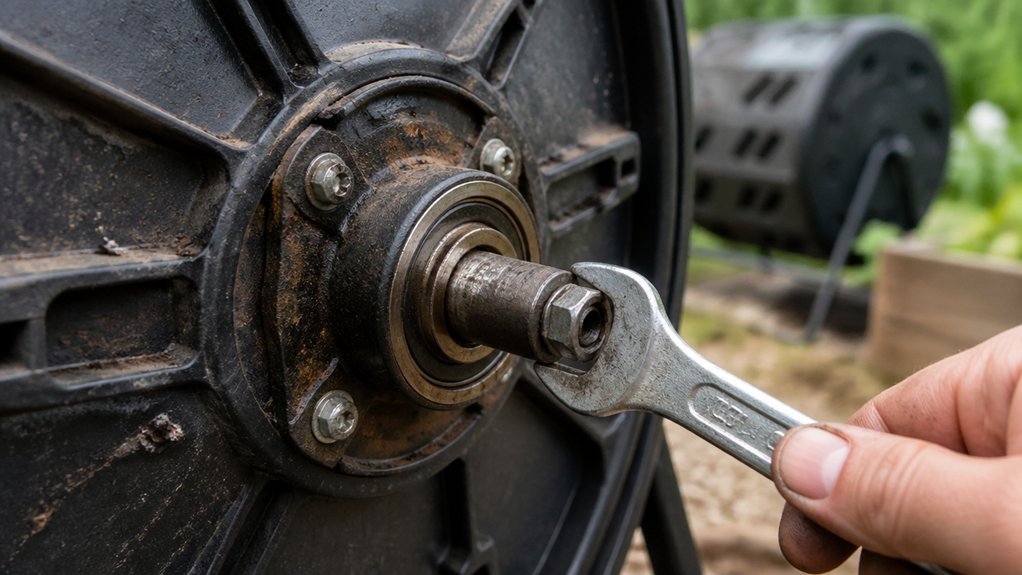
If the drum won’t turn, start by checking the bearings and axle for anything that might be stuck. Remove visible obstruction—packed material, sticks, or hard chunks—around the axle that could jam rotation. Spin the drum by hand; feel for roughness that binding. which for corrosion, wear, or seized races in the bearings. Verify the axle isn’t bent or misaligned, which creates uneven contact with the tumbler housing. Tighten all hardware—bolts, nuts, locking clips—to eliminate lateral play or slippage. After clearing debris, apply a lightweight, food‑safe lubrication to any dry or stiff surfaces. Re‑test the spin; smooth, unrestricted rotation means the mechanical checks have cleared the issue. A further quick check is to inspect for any loose or missing axle brackets and ensure alignment with the drum bearings bearing alignment.
How Often Should You Turn the Tumbler? Balancing Frequency and Heat
Turn every 3 days for regular aeration and heat stability.
Extend to every 5‑7 days when the batch is full or heat pockets are strong.
Shorten only if the temperature drops below the active zone.
Regular turning accelerates breakdown and helps prevent odors, while maintaining proper moisture balance.
Got Hard Compost Nuggets? Re‑hydrate and Blend Them for Better Use
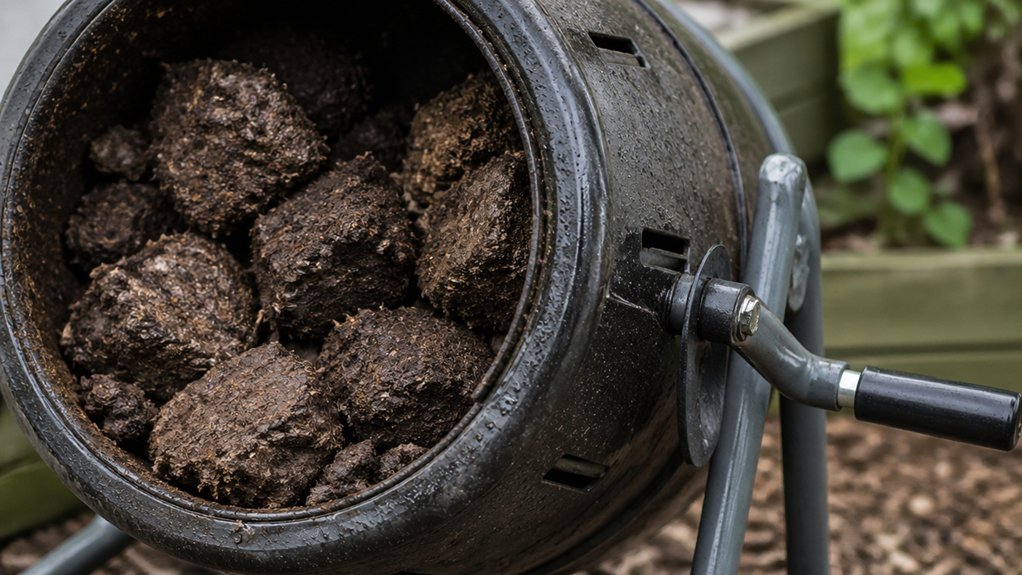
Why do hard compost nuggets keep forming, and how can you turn them back into a smooth, active mix?
In your compost tumbler, those hard compost nuggets signal low moisture. First, rehydrate by sprinkling water over the batch, then let it sit a few minutes. Turn the tumbler to spread the moisture, softening the clumps.
Next, blend and mix the softened material with extra greens and lighter browns. This boosts aeration, raises surface area, and speeds decomposition. Keep a brown‑to‑green ratio tilted toward browns to soak up excess moisture and prevent new nuggets.
After blending, give the tumbler a good spin to re‑introduce oxygen. The result is a uniformly moist, airy mix that decomposes efficiently. Continuous waste processing helps maintain steady results with multi-bin bokashi setups that support ongoing fermentation and compost tea collection.
Frequently Asked Questions
How Often Should a Compost Tumbler Be Turned?
You should turn your compost tumbler every two to three days while it’s actively decomposing, then shift to a three‑day cadence once it’s full, adjusting if temperatures rise too fast or stall.
What Are the 5 Mistakes That People Commonly Make When Composting With Worms?
You’re likely overloading greens, ignoring carbon‑rich browns, neglecting moisture, skipping proper chopping, and turning too often or not enough—each mistake creates compaction, odor, and a hostile environment for worms.
How Do I Know if My Compost Tumbler Is Too Wet?
You’ll know it’s too wet when the mix feels soggy, clumps together, and water pools at the bottom; it’ll smell sour, and the tumbler won’t turn easily. Add dry browns to balance.
What Are Common Composting Mistakes?
You’re adding too many greens, too little browns, over‑ or under‑watering, and large chunks. You also toss oily foods, meat, or seeds, and you skip regular chopping and turning, which all stall compost.
In Summary
If your tumbler won’t spin, start by easing the load—don’t overfill it. Check the moisture level; a dry mix needs a splash of water, while a soggy pile needs more dry material. Inspect the bearings and axle for rust or debris, and give them a quick clean or lubricate if needed. Rotate the drum regularly, but not too often, to keep heat building. Finally, break up any hard nuggets, re‑hydrate them, and blend them back in for smoother, faster composting.