
Balance your browns and greens by aiming for a 2:1 or 3:1 carbon‑to‑nitrogen ratio—mix dried leaves, wood chips, or shredded cardboard throughout the tumbler, then add fruit and veggie scraps in moderation; if it smells, pause greens, add more browns, and stir. Keep moisture in check by sprinkling dry browns over wet spots, turning regularly, and using a pinch of baking soda if needed. Boost aeration by turning the tumbler every few days, loosening the pile, and creating simple air‑channels; keep the lid sealed to prevent odors and pests, and you’ll discover even more tricks ahead.
Balance Browns & Greens – Quick C/N Fix to Stop Compost Tumbler Smells
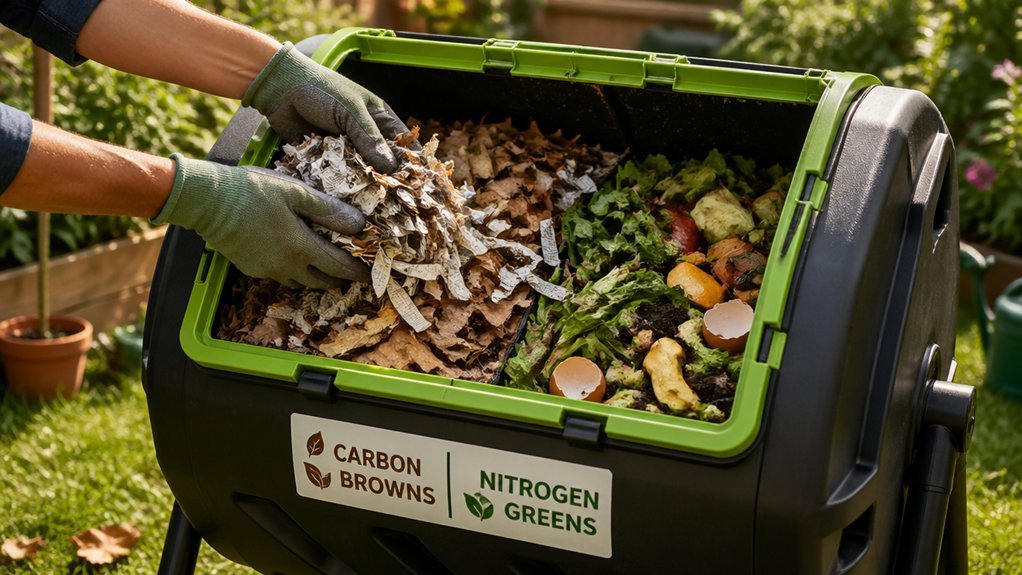
Ever wonder why your tumbler stinks? It’s usually a carbon‑nitrogen imbalance. Aim for a browns-to-greens ratio of roughly 2:1 or 3:1 to rebuild a carbon‑rich structure and curb anaerobic odors. Mix dried leaves, wood chips, shredded cardboard, or straw—your brown materials—throughout the interior, not just on the bottom. These browns boost aeration and soak up excess moisture, keeping the pile from turning soggy. Add fruit, vegetable scraps, and grass clippings—your green materials—in moderation; they supply nitrogen but can trigger ammonia smells if they dominate. When the scent spikes, pause green additions, toss in a larger handful of browns, and stir well. The improved balance restores airflow, stabilizes moisture, and silences the stink. carbon‑nitrogen balance is a core concept echoed across compact bokashi and traditional composting guides to explain odor control.
Control Moisture – Add Dry Browns, Keep the Tumbler Dry, and Use Baking Soda if Needed
Why does your tumbler feel soggy and smell? Excess compost tumbler moisture creates anaerobic pockets that turn your pile sour. First, add dry browns—dry leaves, wood chips, shredded newspaper—to absorb moisture and improve aeration. Layer browns over wet scraps, then stir vigorously for mixing for aeration; the dry material soaks up liquid and restores moisture balance. Keep the tumbler dry by turning it regularly, which distributes damp spots and lets excess water evaporate. If odor persists, sprinkle a little baking soda for baking soda odor control; it neutralizes smells without harming microbes. Test the pile with a moisture meter or a hand squeeze: it should feel like a wrung‑out sponge, not dripping. This routine maintains a healthy, odor‑free compost environment a 1-4 word phrase.
Boost Aeration – Turn the Tumbler, Loosen the Pile, and Create DIY Air‑Channels for a Fresh Smell
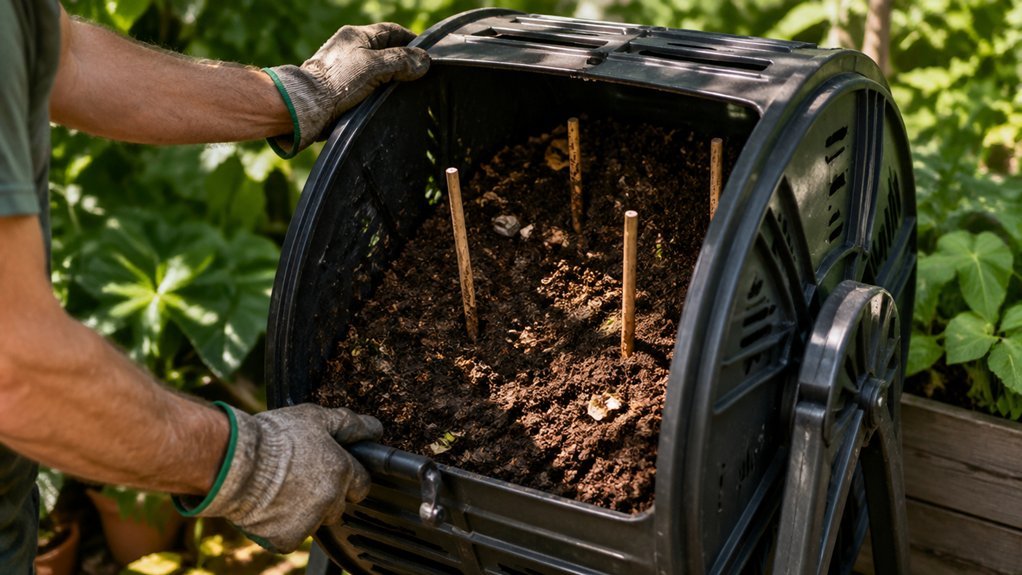
When you turn your compost tumbler every few days, you inject oxygen, breaks anaerobic zones, and keep the pile from turning sour. Turning creates fresh aeration, loosens the pile, and lets you shape DIY air channels that boost airflow and odor reduction. Balance browns and greens, watch moisture control, and keep the compost tumbler humming with clean smells. Regularly check the lid seals to prevent odors from escaping and pests from entering air exchange.
Frequently Asked Questions
Why Does My Compost Tumbler Stink?
You smell it because the pile’s nitrogen‑rich greens outweigh the browns, creating excess moisture and anaerobic conditions; the lack of oxygen lets sour, foul microbes dominate the decomposition.
How to Neutralize Compost Smell?
You neutralize the smell by adding dry browns, sprinkling baking soda, turning the tumbler frequently, and removing meat or dairy. Keep the mix 2 : 1 brown‑to‑green ratio for balanced, odor‑free compost.
What Is the Best Deodorizer for Compost Bins?
You’ll find baking soda works best; sprinkle a few tablespoons weekly, then mix in a thin newspaper layer and balance greens and browns. It neutralizes odors quickly while keeping the compost aerobic.
Do Compost Heaps Attract Rats?
Yes, they can. You’ll attract rats if you add meat, dairy, or oily scraps, keep the pile moist and uncovered, or let it sit dense and undeveloped. Seal, balance browns, and turn regularly.
In Summary
By balancing browns and greens, keeping the mix just moist enough, and boosting aeration, you’ll eliminate foul odors and keep your tumbler humming happily. A quick C/N check, a sprinkle of dry material or baking soda, and regular turning create a fresh‑smelling, efficient compost system. Stick to these three tricks, and your tumbler will stay clean, fast, and odor‑free.