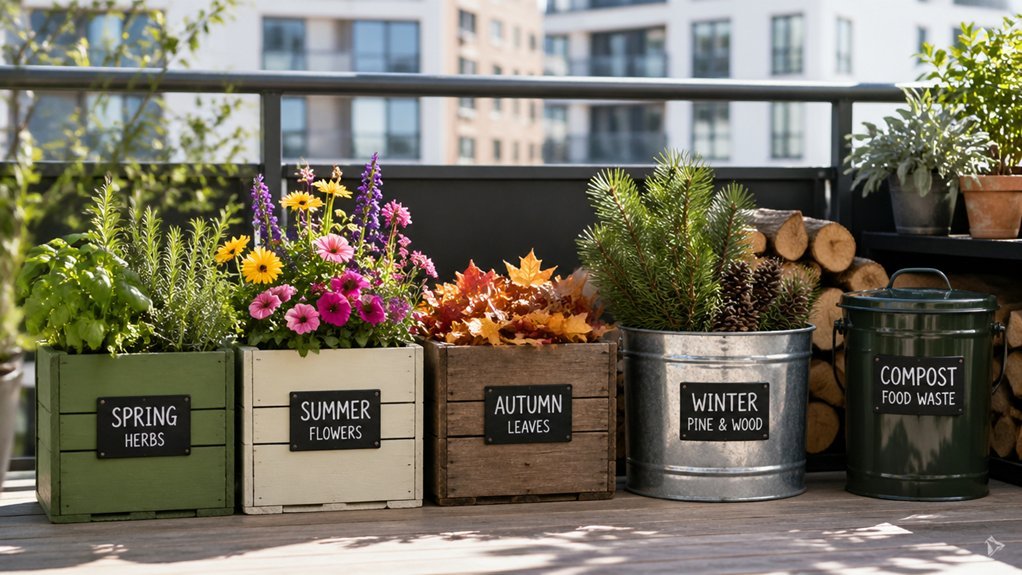
Pick tight‑fitting, stackable bins that match your balcony’s depth and label each with the season or plant type. Color‑code the lids—green for spring/summer, brown for fall/winter—and add waterproof stickers for instant ID. Before swapping, check sun exposure, refresh topsoil, and ensure drainage to keep odors out. Arrange front‑facing bins with sun‑loving plants and rear bins with shade‑tolerant ones, then follow a quarterly checklist to clean, inspect seals, and replace cracked lids. Keep these habits and you’ll master year‑round rotation.
How to Choose the Right Bins for Rotating Balcony Gardens
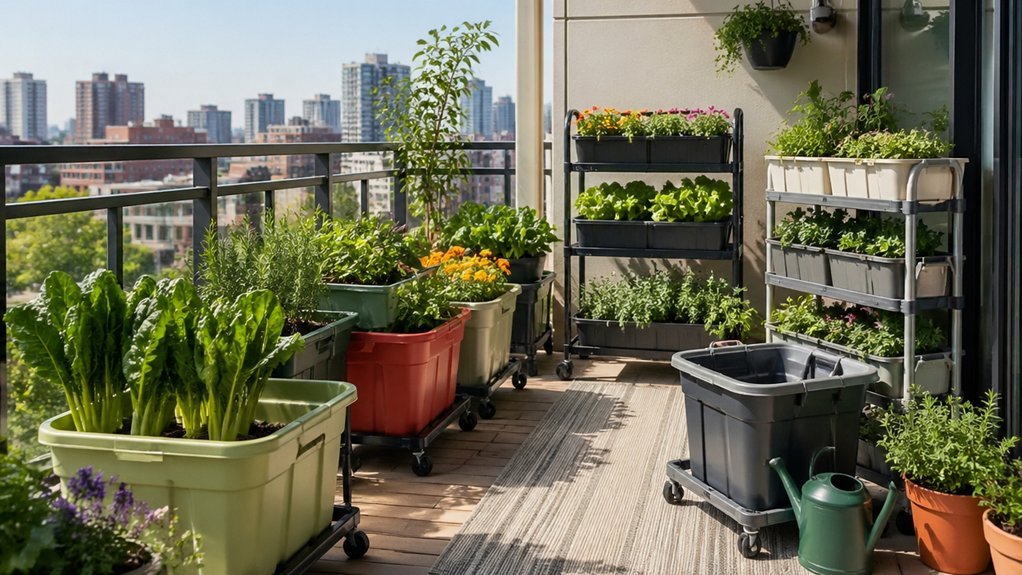
Choosing the right bins is the first step to a smooth, year‑round balcony garden. You’ll want clear bins with tight‑fitting lids so dust and moisture stay out while you can see what’s inside. Pair them with labeled bins that show the season or plant type—think “Spring: Herbs & Seedlings”—to make rotation a breeze. Size bins to match your balcony storage: shallow bins for herbs and seedlings, taller ones for lightweight pots and tools. Opt for stackable bins to maximize vertical space, and pick UV‑resistant material so sun exposure won’t crack lids. Use a season code color scheme, like green for spring/summer and brown for fall/winter, to spot current versus off‑season containers instantly. This setup keeps everything organized, protected, and ready for seamless seasonal swaps. A practical tip is to incorporate airtight features and moisture control to minimize odors and keep composting residues separate from other balcony storage seasonal organization and ensure a clean, low-maintenance rotation system.
Step‑by‑Step Process for Rotating Seasonal Plant Collections
When you start the rotation, map out your spring-summer layout—pick bulbs, pansies, and greens, then plan the fall-winter swap with kale, mums, and evergreens.
First, assess sun exposure and container sizes; place sun-loving species in front-facing bins and move shade-tolerant ones to the back.
Assess sun exposure and container size; position sun‑loving plants front, shade‑tolerant ones back.
Label each bin with the current season and its plant mix, then arrange them so the front-facing bins match the upcoming rotation plan.
Before you move anything, refresh the topsoil, add a compost layer, and check drainage to protect plant health.
After the swap, conduct a biannual assessment to review growth, adjust for weather shifts, and note any stressed plants for replacement in the next seasonal rotation a 1-4 word phrase to keep diverse plant health across cycles.
Cleaning and Preparing Bins Before Storage
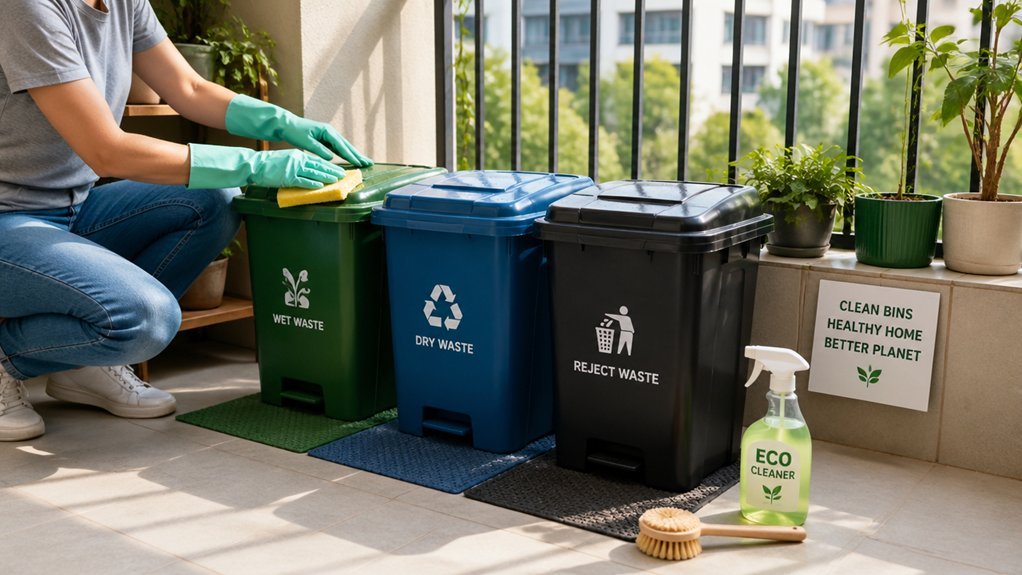
Ever wondered how to keep your balcony bins in top shape for next season? Start with a thorough cleaning and prep routine that guarantees dust protection and prevents moisture damage during storage. Wipe every surface, rinse removable liners, and dry all components before you rotate them into the seasonal storage area. Inspect for cracks, repair lids, and keep the bins stackable so they stay clean and ready for next year’s planting. Regularly check seals and moisture barriers to maintain long-term durability moisture control.
Labeling and Color‑Coding Your Bins for Quick Identification
After you’ve cleaned and inspected each bin, give them a visual system that lets you spot the right one in seconds. Use clear plastic bins with tight‑fitting lids for visibility, then apply labeling and color‑coding for instant identification. Write the season and contents on a waterproof label—e.g., “Winter: Coats & Heaters.” Pair each label with a colored sticker: blue for winter, green for spring, yellow for summer, orange for fall. This scheme boosts quick identification, streamlines storage organization, and simplifies rotation. Keep current‑season bins in the front zone and move back‑season bins to the rear as the season shifts. For durable, odor‑controlled options that resist moisture and rust, consider combining compact countertop designs with a dual‑chamber tumbler to maintain a steady supply of ready‑to‑use compost in challenging climates odor control features.
Maintaining a Rotation‑Friendly Layout in Your Storage Space
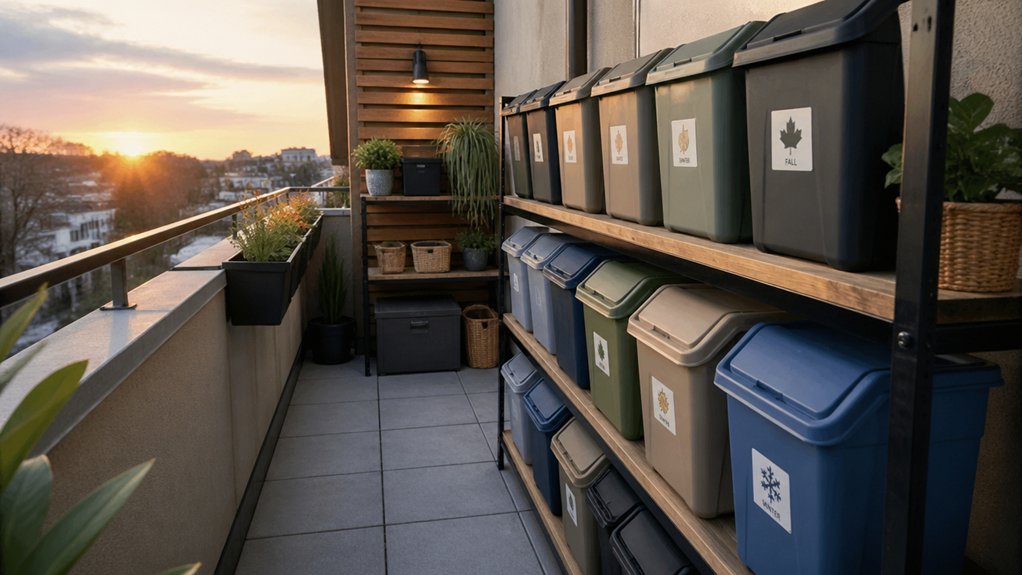
How can you keep your storage space efficient as the seasons change? You’ll want a rotation‑friendly layout that lets you swap front‑facing bins for the current season while pushing last season’s items to the back‑of‑unit placement. Regularly rotating by tray design and using clearly labeled, modular bins helps maintain a consistent workflow and reduces odor management challenges by keeping air flow considerations in mind 5-tray expandable system. Keep clear labeled bins visible, maintain a clean aisle, and update your seasonal checklist each quarter. This approach boosts accessibility and supports year‑round organization without extra hassle.
- Position front‑facing bins with spring/summer gear for the current season.
- Stash fall/winter items in back‑of‑unit placement, using sturdy, clear labeled bins.
- Preserve a clear walkway for easy access and quick rotation.
- Review and adjust the layout each season to sustain year‑round organization.
Frequently Asked Questions
How Often Should I Rotate Bins to Prevent Pest Buildup?
You should rotate your bins every two to three weeks, especially after heavy rains or when you notice odors. Regularly flipping and shaking them disrupts nests, keeping pests from establishing a foothold.
Can I Use the Same Soil Mix for All Seasonal Plants?
Yes, you can use the same soil mix for all seasonal plants, just ensure it’s well‑draining, nutrient‑rich, and adjusted for pH. Add compost or fertilizer as needed to keep each crop thriving.
What Temperature Range Is Safe for Stored Bins During Winter?
You should keep stored bins between 35°F and 55°F (2°C‑13°C); that range prevents freezing damage while avoiding overheating, ensuring your soil and roots stay healthy throughout winter.
Do I Need to Prune Roots Before Replanting in a New Bin?
Yes, you should prune the roots before replanting in a new bin. Trim away any dead, damaged, or overly long roots, and cut back the healthy ones just enough to fit the new container without crowding.
How to Protect Bins From UV Damage While Outdoors?
Cover your bins with UV‑resistant paint or a clear acrylic sealant, then wrap them in reflective tarp or shade cloth. Add a breathable, UV‑blocking cover when sun’s intense, and reapply sealant yearly.
In Summary
By picking the right bins, labeling them, and keeping your storage space organized, you’ll breeze through each season’s planting cycle. Clean, prep, and rotate your balcony bins with confidence, and your garden will stay thriving all year long. Enjoy the simplicity and the fresh, continuous harvest that comes from a well‑managed rotation system.