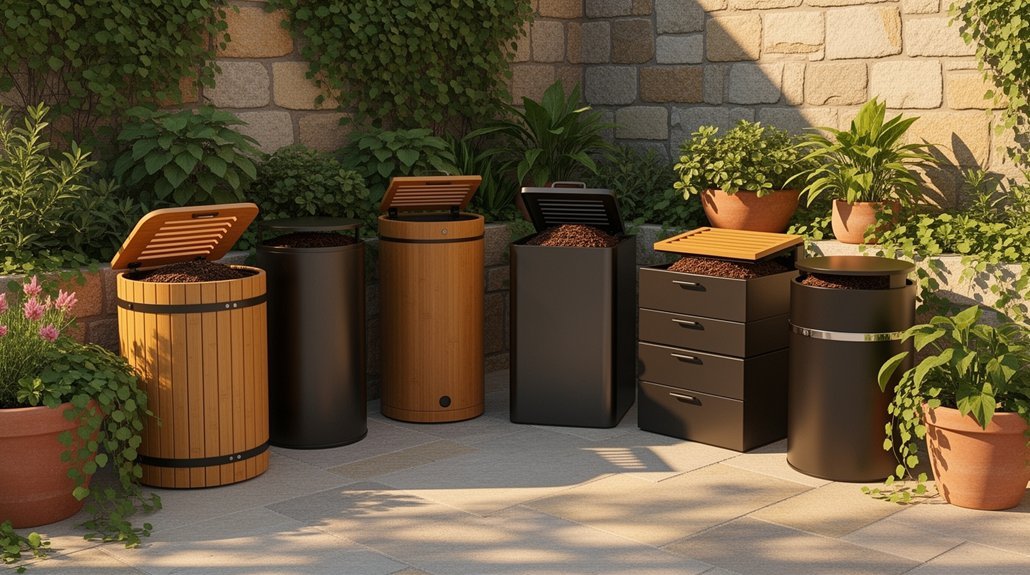
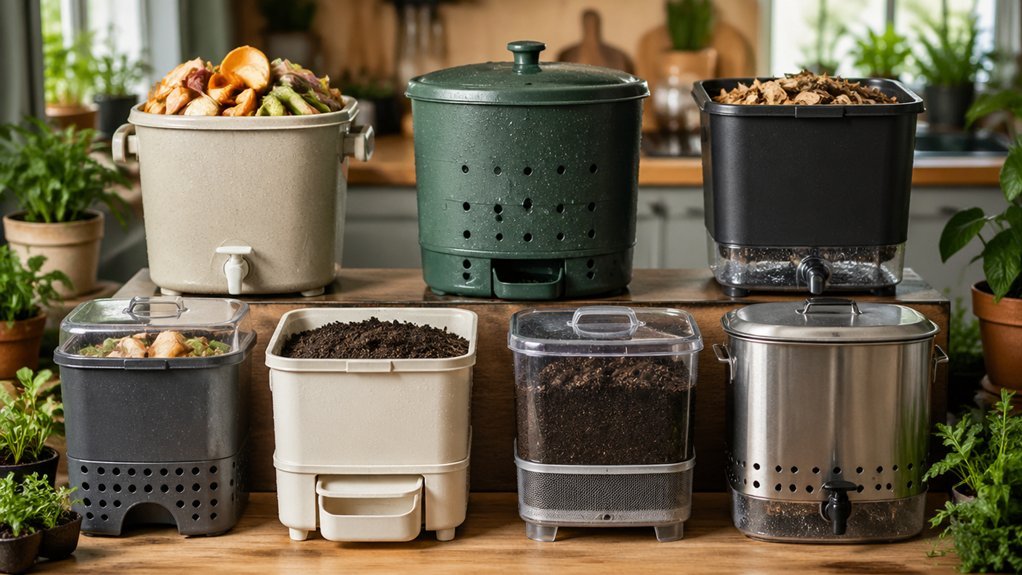
You’ll keep your indoor compost fresh and odor‑free by fixing drainage with seven proven tricks. Choose a bin that already has evenly spaced holes at the base, then add a perforated tray or mesh to let liquid flow away. Sprinkle a 2‑3‑inch layer of gravel or pebbles under a fine mesh to create an air gap. Set up a gravity‑feed pipe or funnel that channels leachate into a removable reservoir. Line the bottom with absorbent newspaper or coconut coir, and empty and clean the system weekly to prevent clogs and smells. Follow these steps and you’ll discover even more ways to boost aeration and speed decomposition.
Why Proper Drainage Is Crucial for Indoor Compost Bins
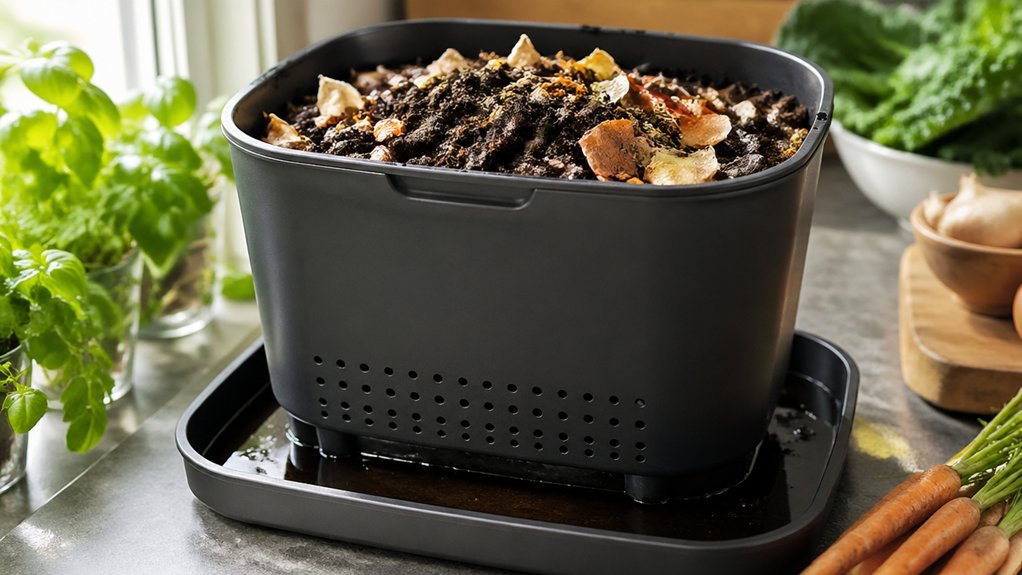
You’ll find that proper drainage is essential for indoor compost bins because it stops standing liquid from creating anaerobic conditions and foul odors.
When you install drainage holes and a water‑permeable base, leachate management redirects excess moisture, keeping layers from turning soggy and slowing decomposition.
This airflow also boosts aeration, allowing oxygen to reach microbes that break down organic matter efficiently.
A simple tarp or cardboard under the unit catches any stray leaks, protecting floors while you fine‑tune the system.
Double‑compartment designs further separate wet from dry material, preventing overflow and enhancing microbial activity dual chamber.
Pick a Bin That Has Built‑In Drainage Holes
Looking for a bin that keeps your compost dry? Choose one with built‑in drainage holes evenly spaced around the base. Those holes let excess liquid escape, supporting effective moisture management and preventing soggy layers. A good design routes the drained fluid into a built‑in reservoir or removable catch tray, keeping it away from food scraps and protecting countertops from leaks. Make sure the reservoir is easy to lift out and clean, which helps avoid mold and odor buildup. Even distribution of drainage holes promotes uniform release, so you won’t end up with pockets of wet waste. When you pick a bin with these features, you simplify maintenance and keep your indoor compost system healthy and odor‑free drainage design.
Layer a Perforated Tray or Mesh Base for Indoor Compost Bin Drainage
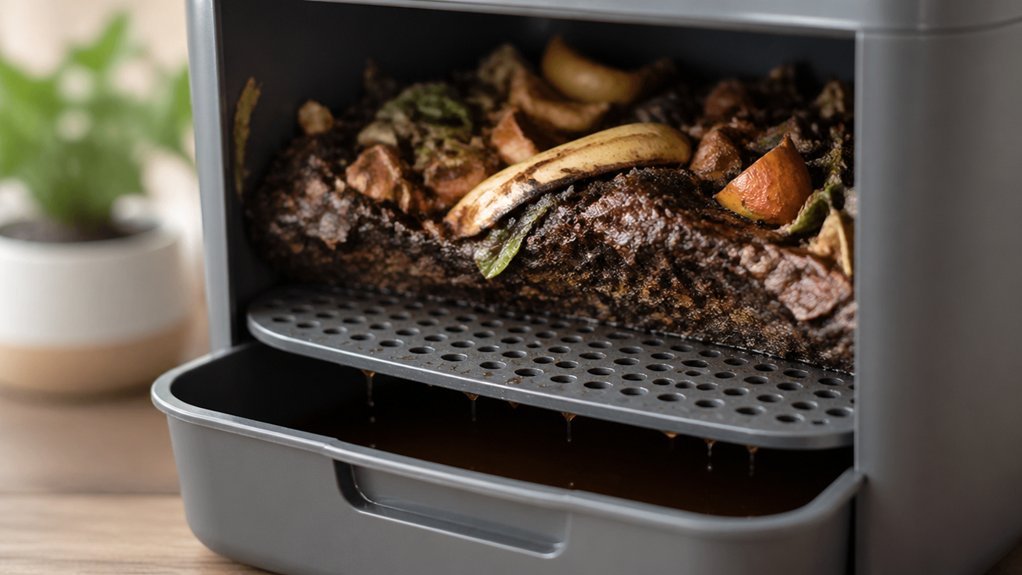
You’ll want to start by placing a perforated tray or mesh at the bottom of your bin so water can flow away from the compost. The evenly spaced holes keep the material airy while catching leachate, and a moisture‑absorbing liner underneath protects the bin from corrosion and odor. Just remember to check the openings regularly to avoid clogs and maintain steady drainage. Recyclable kraft corrugated construction supports easy handling and storage for green packaging options such as flat-packed boxes recyclable kraft corrugated for reuse and sustainability.
Layer Perforated Tray
A perforated tray or mesh base under your indoor compost bin does the heavy lifting for drainage, letting excess moisture slip away while still supporting the waste above. The tray’s holes create a clear path for water, keeping the bottom of your indoor compost bins dry and odor‑free. It also promotes air flow, which speeds decomposition and prevents anaerobic pockets.
Why you need a perforated tray:
- Effective drainage – moisture drains through the perforations, avoiding soggy buildup.
- Improved aeration – air circulates beneath the pile, accelerating breakdown.
- Easy maintenance – a snug, removable tray lets you dump and clean without hassle.
Make sure the tray fits tightly, sits flat, and can be lifted out for quick cleaning. This simple layer protects surfaces, reduces leaks, and keeps your compost thriving.
Add Mesh Base
Ever wondered how to keep your indoor compost bin dry without sacrificing aeration? Adding a mesh base under the compost creates an air‑filled drainage layer that separates wet scraps from the floor. The fine grid catches solids while letting liquids flow into a catch tray, speeding evaporation and promoting anaerobic prevention. Pair it with a shallow outer receptacle or tarp to protect surfaces, and lift the base regularly to clear sediments and avoid clogging.
| Feature | Benefit | Tip |
|---|---|---|
| Perforated mesh | Increases surface area | Choose fine enough grid |
| Drainage channel | Directs excess liquid away | Use a catch tray |
| Aeration boost | Reduces anaerobic pockets | Keep mesh clean |
| Easy inspection | Prevents buildup | Lift weekly |
| Compatibility | Fits most bin sizes | Trim to fit |
Add a Layer of Gravel or Pebbles to Create an Air Gap
Because the waste sits directly on the bin’s bottom, moisture can pool and odors can build up; adding a 2–3‑inch (5–7 cm) layer of gravel or pebbles creates an air gap that lifts the material, promotes drainage, and improves airflow. The gravel layer acts as an inert cushion, keeping damp waste from touching the base and allowing liquid to collect at the bottom where it can escape. Cover it with a fine mesh to stop debris from sinking while still letting water flow through. This simple step boosts aeration, reduces odor, and speeds up decomposition.
A 2‑3‑inch gravel layer creates airflow, drainage, and odor‑reducing aeration for compost bins.
Choose clean, uniformly sized gravel. Drainage focus Spread it evenly to a 2–3‑inch depth. Add a mesh screen on top before layering compost.
Set up a Gravity‑Feed Pipe or Funnel to Direct Liquids Into a Reservoir
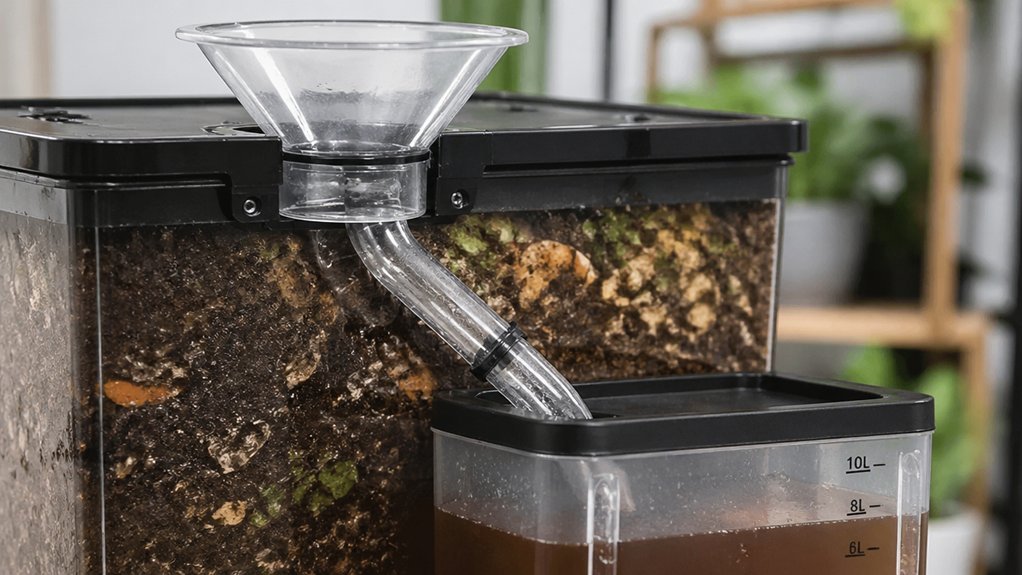
Pick a food-safe funnel material that won’t leach chemicals, then secure it firmly at the bin’s base so it stays in place as you add scraps. Also ensure the reservoir has a tight seal to prevent odors from escaping into the kitchen. charcoal filter
Choose Funnel Material
How do you keep your compost bin’s liquid mess under control? Choose a funnel material that’s non‑porous and easy to clean, because a smooth surface stops buildup and keeps your drainage system efficient. Stainless steel or high‑density plastic work best; they won’t absorb moisture, and they resist rust or warping. A well‑chosen funnel also lets you attach a sealed outlet that directs flow straight into a reservoir, minimizing leaks.
Stainless steel is fade‑proof and corrosion‑resistant, making it ideal for repeated use in damp environments. Non‑porous surface ensures liquids don’t wick into the material, reducing lingering odors and bacteria buildup. 3. Food‑grade silicone is flexible and creates tight seals, preventing leaks even with irregular fittings.
Position Funnel Securely
Secure the funnel directly over the bin’s lowest drainage point, then attach it to a sealed, leak‑proof reservoir positioned just below. Align the funnel’s wide mouth with the drainage outlet so gravity pulls every drop straight into the reservoir. Use a rigid, food‑safe funnel with a narrow spout to keep clogs at bay, and make sure the reservoir’s lid seals tightly to block odors and pests. Position the assembly on a stable surface; a rubber mat can prevent slipping. Check that the funnel sits flush against the bin to avoid gaps where liquid could escape. Periodically clear any debris from the funnel and drain line, especially after adding moist greens, to maintain a smooth, continuous flow. The setup should also accommodate easy removal for quick cleaning and maintenance, ensuring long‑term reliability drainage maintenance.
Collect Reservoir Efficiently
A gravity‑feed pipe or funnel is the simplest way to channel every drop from your compost bin straight into a sealed reservoir. By placing it at the lowest outlet, you let gravity‑fed drainage work passively, while a slight 1–2 % slope keeps flow steady and avoids back‑pooling. Seal the drainage reservoir with a removable cap or drain valve for easy emptying, and add a mesh screen at the funnel entrance for clog prevention.
- Install the pipe or funnel – connect directly to the bin’s lowest point.
- Create a gentle slope – ensure a 1–2 % decline toward the reservoir.
- Add a mesh guard – catch solids before they reach the reservoir.
These steps give you a clean, odor‑free system that collects liquid efficiently and stays clog‑free.
Line the Bin Bottom With Absorbent Materials (Newspaper or Coconut Coir)
Ever wondered why your indoor compost smells less when you line the bin bottom with an absorbent layer? An absorbent bottom captures leachate, keeps moisture from pooling, and supports airflow, so odors stay at bay. Newspaper wicks excess liquid away, while coconut coir holds just enough water to stay balanced. Replace the layer before it’s saturated to maintain moisture control and prevent pests. Pair the material with drainage holes and occasional turning for optimal drainage efficiency.
| Material | Key Benefits |
|---|---|
| Newspaper | Quick wicking, cheap, easy to replace |
| Coconut Coir | Retains moisture, improves aeration |
| Shredded Cardboard | Adds structure, moderate absorbency |
| Straw or Wood Chips | Boosts airflow, secondary drainage material |
Empty and Clean the Drainage System Regularly to Prevent Clogs and Odors
Keeping the absorbent layer in good shape means you also have to tend the drainage system itself. Empty it weekly, collect leachate, and wipe the tray to stop clogs and odors from building up. A quick inspection of holes and channels catches debris before it blocks flow.
Empty weekly, wipe the tray, and inspect holes to prevent clogs, odors, and drainage blockages.
- Check holes – Use a flexible brush or pipe cleaner to clear leaves, food particles, or mold.
- Rinse the tray – Remove it, rinse with warm water, and scrub any residue that could breed odors.
- Protect the floor – Place a waterproof tarp under the bin so any leaks stay contained and cleanup stays easy.
Balancing browns and greens reduces excess liquid, keeping the drainage system clear and your indoor compost fresh.
Frequently Asked Questions
What Can I Put in the Bottom of My Indoor Planter for Drainage?
You should layer coarse gravel or clay pellets, then add broken pottery shards or terracotta pieces, followed by a breathable fabric or mesh, and optionally mix in perlite or pumice for extra drainage.
How to Keep an Indoor Compost Bin Dry?
Keep the bin airy and balanced: add dry carbon layers, avoid overfilling, turn it weekly, place it on a tarp, and monitor moisture—aim for a wrung‑out sponge feel, adjusting with dry or wet scraps.
What Should I Put at the Bottom of My Compost Bin?
You should line the bin’s base with a layer of coarse material—like shredded cardboard, small sticks, or wood chips—then add a perforated tray or mesh to let excess liquid drain away.
How to Improve Drainage in Compost in Pots?
You’ll boost drainage by adding a coarse gravel layer, inserting a perforated tray, drilling evenly spaced holes near the pot’s base, and placing the pot on a slatted pallet or tarp to catch excess moisture.
In Summary
By keeping your indoor compost bin well‑drained, you’ll avoid soggy messes, nasty odors, and slow decomposition. Use a bin with built‑in holes, add a mesh or tray, sprinkle gravel, and set up a simple gravity‑feed funnel to channel excess liquid into a reservoir. Line the bottom with newspaper or coconut coir, and remember to empty and clean the system regularly. These quick steps keep your compost healthy, fast, and odor‑free.