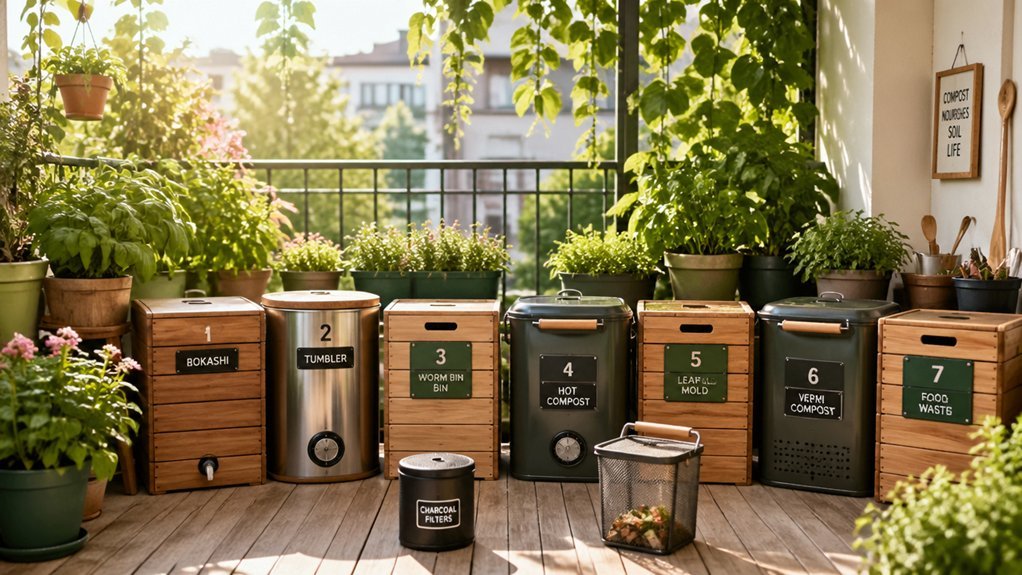
Pick a corner right by a window so the breeze dilutes any scent, and tuck the bin behind a plant shelf to keep it shaded and out of direct sun. Add a mesh divider inside to create air channels and block flies, then install a low‑profile trough under the railing for easy drainage. Raise the unit on a sturdy platform to keep balcony tiles dry, and stack a worm bin over a Bokashi bucket for extra odor control. Follow these steps and you’ll discover even more tricks for a truly smell‑free balcony.
Why Odor Control Is Essential for Balcony Compost
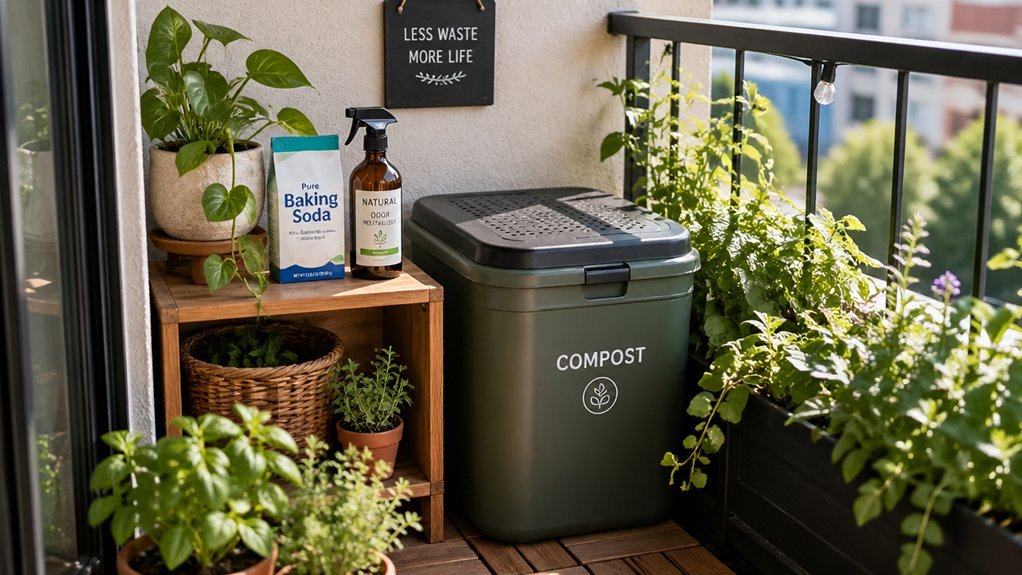
Because a balcony is a shared space, any foul smell from compost can quickly upset neighbors and even breach building regulations. You’ll notice that proper composting hinges on controlling odor, especially where airflow is limited. Layer greens and browns correctly, keeping the mix slightly dry to avoid anaerobic pockets that emit strong scents. Use a breathable lid or polyfill cover to block mold and flies while still letting fresh air circulate. Avoid meat, dairy, and oily scraps, as they accelerate rot and foul smells. Regularly turn the pile and drain any Bokashi leachate to maintain balance. By managing moisture and ensuring good airflow, you keep your balcony composting discreet, pleasant, and compliant with building rules. Filter Lifespan and routine replacement help sustain odor control without frequent overhauls.
Choose a Corner Near a Window for Natural Airflow
Pick a corner right by a window so the breeze can sweep through your compost and dilute odors. Keep the spot shaded from direct sun to stop overheating and moisture loss, which both fuel smells. Leave a small gap between the bin and the wall for easy side‑to‑side airflow and quick maintenance access. Placing the bin away from enclosed, non-ventilated areas helps maintain consistent airflow and odor control ventilation features.
Shadeed Window Placement
Ever wondered how a simple corner near a window can turn your balcony compost into a low‑odor powerhouse? By placing your indoor worm bin in that spot, you harness natural airflow for balcony composting. The window placement creates a constant air exchange, pulling odors away and letting fresh breezes circulate. This setup also aligns with odor containment strategies seen in compact bins that use sealed lids and carbon filters to manage smells in small spaces odor containment. You can keep moisture monitoring easy—warm drafts from the window give quick temperature cues, helping you adjust water levels before smells develop. Keep the area tidy and use a lightweight lid to shield against dust while still allowing ventilation. This setup balances light and cooler ambient temperatures, supporting microbes without overheating, and it turns a modest corner into an efficient, odor‑controlled compost hub.
Direct Sunlight Avoidance
Wondering why a sunny spot can ruin your balcony worm bin? Direct sunlight can overheat the compost bin, evaporating moisture and stressing the worms.
Choose a corner near a window that stays in shade most of the day. The window offers natural airflow, pulling cool air in while keeping the bin out of harsh glare.
Tuck the bin behind a railing or a plant screen to protect it from wind drying and pests, yet still allow cross‑ventilation.
If afternoon sun sneaks in, add a light shade cover or relocate temporarily to keep the temperature between 15–25 °C.
Consistent airflow and moisture control will curb odors and keep your balcony composting thriving.
Easy Access for Maintenance
A corner near a window gives you natural airflow and easy reach for weekly upkeep, keeping the compost bin cool and moist without harsh sun or wind. Positioning the setup in this spot lets you monitor moisture, turn the pile, and seal the lid quickly, which is key for odor control on a balcony. You’ll avoid drying out the material and keep the microclimate stable, so the compost stays healthy and the scent stays hidden from neighbors. Regularly checking the 500-millisecond response times of the best thermometers can also help you gauge readiness and odor potential in real time fast-response.
Hide the Compost Bin Behind a Plant Shelf to Shield It From Sun
Why not hide your compost bin behind a plant shelf? Position it in a shaded nook on the balcony, using a dense plant screen to block direct sun while still allowing ventilation. The shade keeps the compost cool, preventing wilting and overheating, which improves odor control. Choose tall potted plants that conceal the bin from neighbors yet let airflow circulate, maintaining steady temperatures. Ensure the shelf is raised enough for you to turn the pile without exposing it to sunlight. Direct any drainage away from the plant roots and balcony floor to avoid stains. This simple arrangement gives your balcony composting sun protection, better ventilation, and a cleaner, more discreet look. Regularly monitor for any odor buildup and adjust bran additions as needed to maintain an odor-neutral setup visual privacy.
Add a Mesh Divider for Better Aeration and Odor Containment

Ever thought a simple mesh divider could turn a smelly balcony bin into a fresh‑smelling, well‑aerated system? By inserting a fine‑mesh screen vertically inside your worm bin, you split wet greens from dry browns, creating 2–3 cm air channels that boost aeration and keep odors at bay. The mesh’s 1–2 mm openings stop flies while letting excess moisture and gases escape through existing ventilation holes. Clip or glue the divider in place, then rinse it regularly to avoid mold or fiber buildup. This cheap tweak transforms ordinary balcony composting into a cleaner, more efficient process.
A vertical fine‑mesh divider creates 2–3 cm air channels, cutting odors and flies while boosting aeration.
- Place mesh vertically to separate layers
- Use fine‑mesh (1–2 mm) for fly control
- Secure with clips or adhesive for stability
- Maintain 2–3 cm gaps for airflow
- Rinse often to preserve odor containment and ventilation
For added compatibility with standard bokashi setups, ensure the divider does not obstruct any existing drains or lids, and choose a material that tolerates moisture without degrading over time liner compatibility and supports easy removal for cleaning.
Install a Low‑Profile Trough Under the Railing for Easy Access & Drainage
You’ll fit a low‑profile trough snugly beneath the railing, letting gravity pull excess liquid away without extra effort.
The design gives you quick access to turn and layer compost while the built‑in drainage routes moisture into the soil or a hidden drip line.
This setup keeps bins cool, reduces odor, and can later become a planting bed for your finished compost.
Low‑Profile Trough Design
How can you keep a balcony compost bin both out of the way and easy to tend? Choose a low‑profile trough that slides under the railing, so you preserve floor space while staying within arm’s reach. Use weather‑resistant materials like PVC or treated timber to endure rain and sun. Tilt the trough slightly toward a drain or a collection bin, and seal it with a tight‑fitting lid that has a few removable vent holes for airflow. A shaded spot reduces temperature swings, keeping the compost active and odor control strong.
- Low‑profile trough fits under railings
- Weather‑resistant PVC or treated timber
- Slight slope for drainage toward a drain
- Removable lid with vent holes for odor control
- Shaded placement to moderate temperature.
Easy Drainage Access
One simple way to keep your balcony compost tidy is to slide a low‑profile trough beneath the railing, creating a discreet channel for excess liquid. The trough fits under typical rail heights and slopes 1–2 % so gravity pulls Bokashi runoff and worm tea straight away. Use a weather‑resistant material like concrete mortar or UV‑stable plastic, and attach a removable drainage cap at the far end to keep pests out while you clean. Position the outlet toward a hidden container or a garden‑ready bucket, letting you capture nutrient‑rich tea for plants. This setup prevents puddles, reduces odor, and makes maintenance a quick, mess‑free task, keeping your balcony composting system efficient and odor‑free.
Raise the Compost Bin on a Platform to Keep Tiles Dry
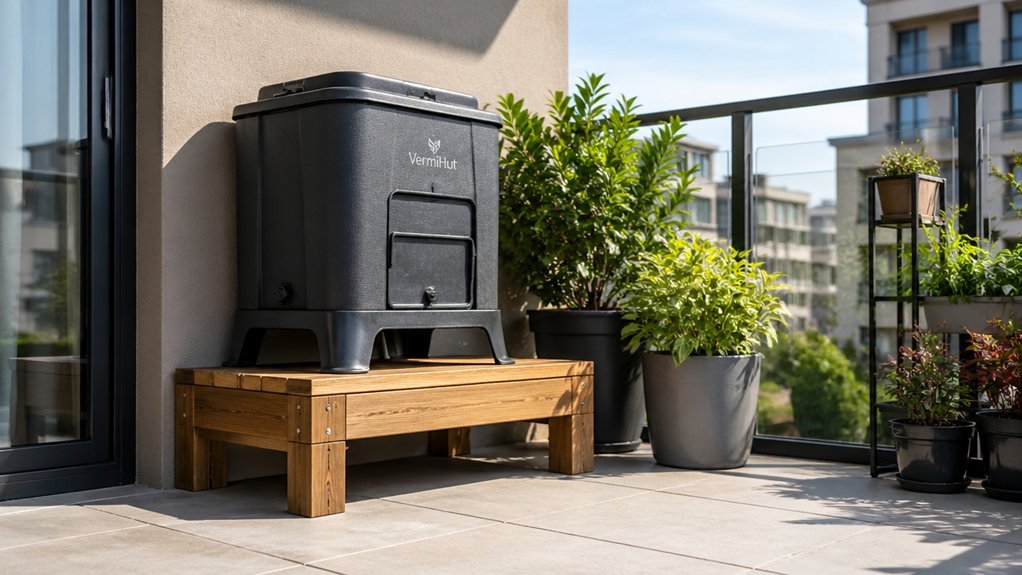
Ever wondered why your balcony tiles stay soggy after composting? A raised platform lifts your elevated compost bin off the surface, giving balcony balcony drainage a chance to work and preventing water pooling that fuels odor and pests.
- Choose a sturdy, level raised platform with at least a few inches of clearance for airflow.
- Position the platform in a shaded, sheltered spot to avoid direct sun and temperature swings.
- Ensure the structure can support the bin’s full weight and still allow easy turning.
- Keep the base dry; the raised design channels excess moisture away from tiles.
- Regularly check for any water pooling and adjust the platform’s legs if needed.
This simple tweak improves airflow, enhances odor control, and keeps your balcony tiles dry.
Stack a Worm Bin and a Bokashi Bucket for Flexible, Smell‑Free Composting
Raising the bin already keeps the tiles dry, but adding a worm bin on top of a Bokashi bucket takes odor control to the next level. You place the stacked worm bin and bokashi bucket in a sheltered mortar trough on your balcony, drilling tiny air holes in the worm‑bin lid and sides while sealing with polyfill to block flies.
Alternate greens and browns in the bokashi bucket, drain its tea weekly, and let the pre‑treatment composting process ferment scraps before they reach the worm bin.
The worms finish the aerobic breakdown, turning the pre‑compost into rich soil while the compact footprint keeps everything tidy. Regular moisture checks and light mixing keep the system earthy, pest‑free, and perfect for balcony composting.
Frequently Asked Questions
How to Compost Without the Smell?
You’ll keep it odor‑free by balancing greens and browns, adding plenty of dry material, drilling ventilation holes, stirring regularly, and avoiding meat or dairy. Keep the bin shaded, moist but not soggy, and empty excess liquid.
How Do I Compost on My Balcony?
You’ll set up a sealed bucket with a lid, add a layer of brown material, then greens, keep it moist, turn it every few days, and use worm castings or bokashi to avoid odors.
How Do the Amish Make Compost?
You won’t find Amish‑specific details here; the source discusses modern balcony composting only, so you can’t answer how the Amish make compost based on this material.
How to Start a No Smell No Hassle Compost Box in Your Living Room?
You’ll set up a ventilated box, line it with polyfill, add a dry base layer, then alternate green and brown scraps, keep moisture sponge‑like, stir every few days, and empty any liquid regularly.
In Summary
By picking a breezy corner, shielding the bin with a plant shelf, adding a mesh divider, installing a low‑profile trough, raising the container off wet tiles, and pairing a worm bin with a bokashi bucket, you’ll keep your balcony compost odor‑free. These simple tweaks let you recycle kitchen waste without sacrificing fresh air or aesthetics, turning even the smallest outdoor space into a clean, efficient composting hub.