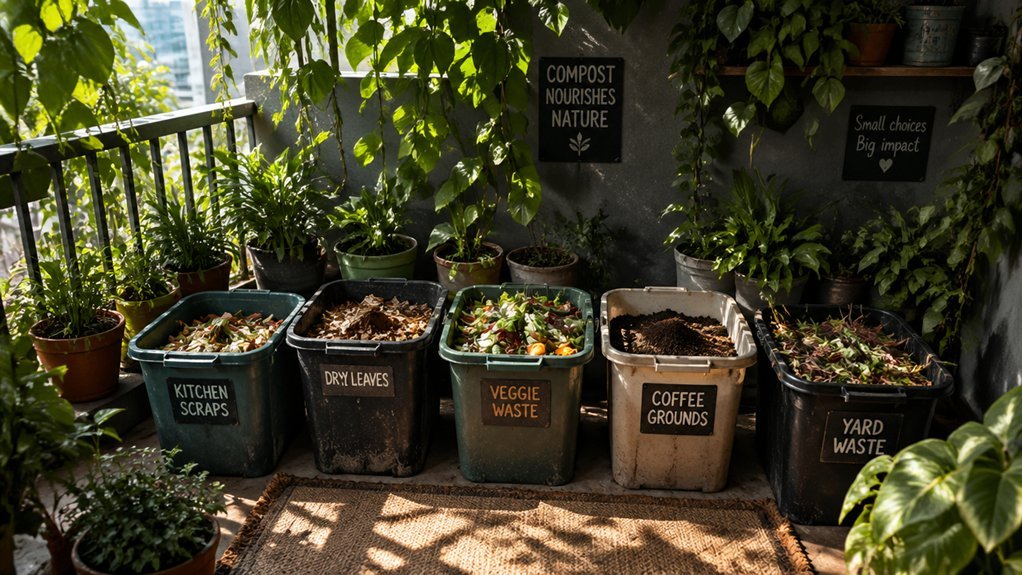
Pick a spot that gets gentle morning sun but cools under afternoon shade, like a balcony rail with a light tarp. Use a plant‑shelf corner where herbs and vines buffer moisture and give you easy access for turning. An overhead awning or pergola offers consistent shade while keeping airflow open. Position the bin near a faucet or drip line for simple, even watering. Finally, a privacy screen or trellis provides protected shade with ventilation. Keep reading for more details on each location.
Morning‑Sun/Afternoon‑Shade Spot: Ideal Heat for Balcony Compost
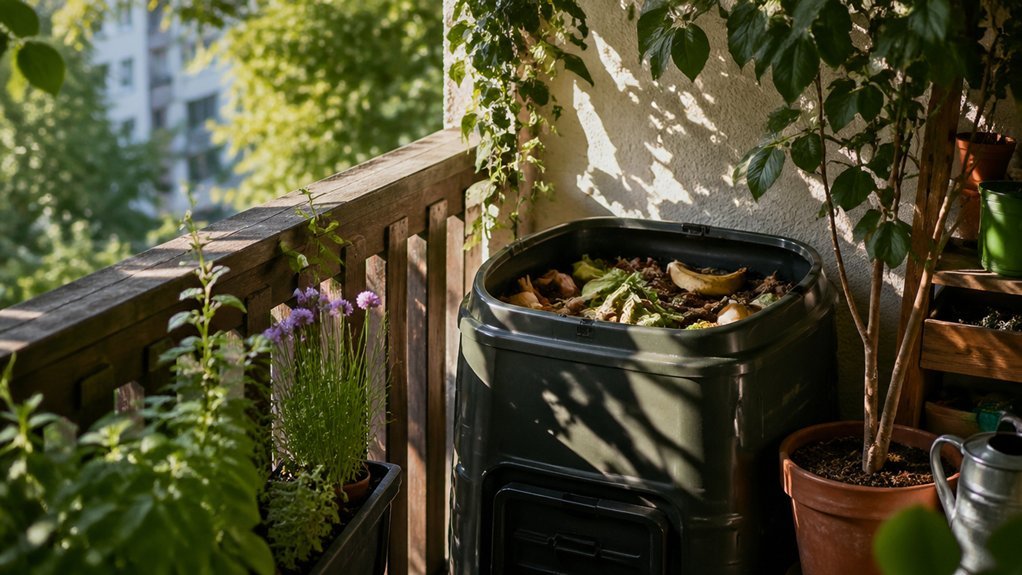
Why not let the morning sun give your balcony compost a gentle boost while the afternoon shade keeps it from overheating? You’ll notice the compost temperature rises just enough to jump‑start microbes, then the shade steadies it, preventing spikes that dry the pile. This partial sun balance also improves moisture retention; the morning heat evaporates a little, but the shade slows loss, keeping the mix damp enough for steady breakdown.
Use a lightweight cover or tarp during the brightest hours to trap warmth without sealing in excess heat. Position the bin where it catches the early rays and retreats into shade by lunch, and you’ll maintain a consistent, lively compost environment even on a cramped balcony. For safer, long‑term on‑counter use, ensure the container has a secure lid and odor control to keep pets and kids away secure lid and odor control.
Plant‑Shelf Corner: Easy Access + Natural Moisture
If you place your compost bin on a plant‑shelf corner, the surrounding foliage will naturally buffer moisture, cutting down on watering needs while keeping the pile from drying out. The partial shade from nearby potted herbs and trailing vines creates a stable micro‑climate that holds humidity without smothering the compost pile. Elevate the bin on a sturdy, vented shelf near the railing or wall so rainwater drips away and airflow stays gentle. Morning light filters in, keeping temperatures moderate, while strong winds stay blocked by the greenery. This setup lets you reach the pile easily for turning, and the natural moisture from the plants reduces how often you have to mist or water the compost.
Overhead Awning or Pergola: Consistent Shade & Airflow

Ever wondered how a simple awning or pergola can turn your balcony into a compost‑friendly zone? By installing an overhead shade, you create a microclimate that shields your balcony compost from harsh afternoon sun while still letting breeze drift through.
The consistent shade slows temperature spikes, keeping the pile moist and preventing crusting. Because the structure sits above, airflow remains unblocked, maintaining aerobic conditions and helping you turn the pile without compaction.
If your balcony catches morning light, the awning balances heat and moisture, extending active composting into cooler months. Just ensure enough ventilation beneath the pergola, and you’ll enjoy steady, healthy decomposition without overheating.
Water‑Source Adjacent Corner: Simple Irrigation for Compost
How close is your balcony to a faucet or drip line? If you can spot a water source nearby, set your balcony compost in that corner and simplify irrigation. A perforated hose or watering can lets you add moisture evenly, keeping the pile “moist but not soggy.”
Because shaded spots evaporate slower, you’ll need to water more often; the adjacent tap makes that quick and low‑effort. Aim for a soil‑like feel, checking with a finger or moisture meter. Ensure the area drains well and keep the water away from the bin’s walls to avoid splash odors or leaks. This setup gives you reliable moisture control, fuels microbial activity, and reduces the chance of a dry, inactive compost heap.
Privacy‑Screen/Trellis Spot: Protected Shade With Good Ventilation
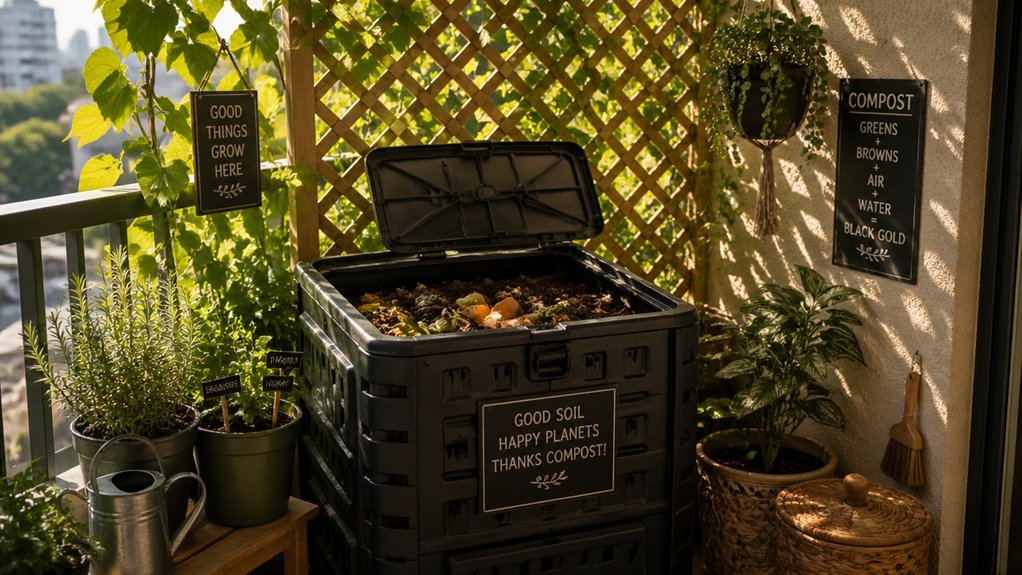
Where can you find a spot that shields your compost while still letting air circulate? A privacy screen or trellis on your balcony creates a protected shade zone that still offers ventilation for a shaded balcony compost. Position the screen to cast partial shade during the hottest hours, stabilizing temperature without plunging the pile into darkness. Choose light, breathable material so heat pockets don’t form and airflow stays strong. Leave a few inches of clearance between the compost bin and the screen; this gap lets you turn the pile easily and keeps odors at bay. Adequate ventilation behind the privacy screen reduces anaerobic risk and promotes faster decomposition, giving you a tidy, odor‑controlled compost setup that fits neatly into your balcony space. Regular turning with a corkscrew design helps maintain airflow and reduces odors over time rotation mechanism and can be done with a compact, manually operated aerator tool to suit small outdoor spaces.
Frequently Asked Questions
Is It Better to Have a Compost Pile in the Sun or in the Shade?
You’ll get faster breakdown in sun, but keep it moist; shade steadies moisture and temperature. For most balconies, aim for dappled light—enough warmth to speed microbes without drying the pile out.
How Do I Compost on My Balcony?
You start by choosing a compact, ventilated bin, adding balanced greens and browns, keeping it moist like a wrung‑out sponge, turning it regularly, shielding it from direct sun and rain, and checking moisture weekly.
What Three Items Should Not Be Placed in a Compost Pile?
You shouldn’t put meat, dairy, or oily foods; thick bones; or charcoal ash from treated wood or synthetic materials into your compost pile, because they attract pests, slow decay, and poison microbes.
Do Potato Peelings in Compost Attract Rats?
Yes, they can attract rats if you leave them exposed. Bury the peels under a thick layer of brown material, keep the bin sealed, and turn regularly to mask odors and deter rodents.
In Summary
By picking the right spot—morning sun with afternoon shade, a plant‑shelf corner, an awning or pergola, a water‑source adjacency, or a privacy screen with good airflow—you’ll keep your balcony compost happy and thriving. The right balance of light, moisture, and ventilation speeds decomposition, cuts odor, and yields richer soil for your container garden. Choose one that fits your space, and watch your compost turn waste into gold.



Leave a Reply