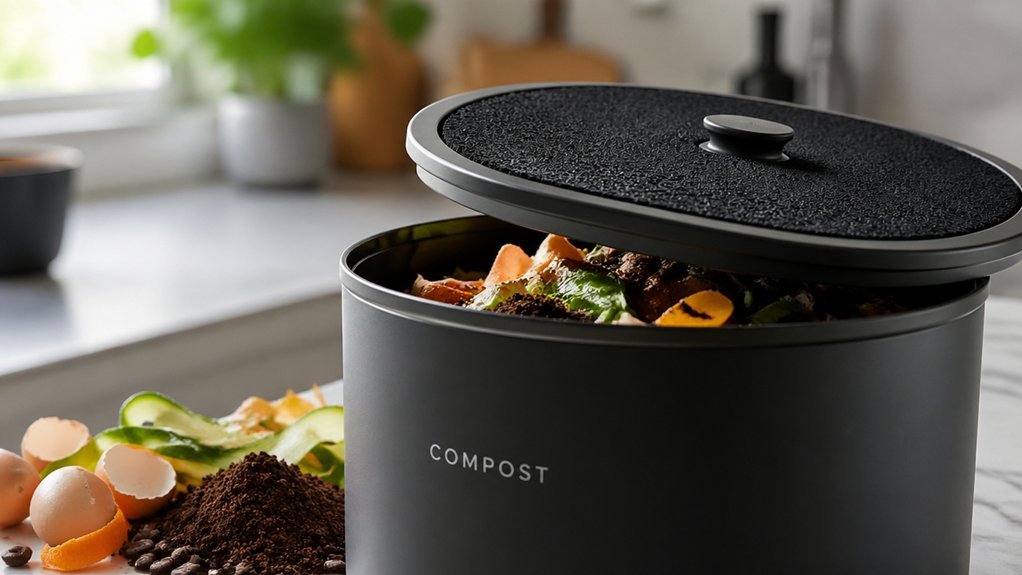
You’ll love how activated carbon filters zap kitchen compost smells because their ultra‑porous grains give you massive surface area to adsorb ammonia, sulfides, and VOCs at the molecular level instead of just masking them. The tiny pores trap odor molecules, keeping the bin and kitchen fresh. Pick a round filter up to 7.25 in, 0.4 in thick with 20‑micron particles, and replace it every 2–3 months or sooner if smells return. Pair it with browns and regular stirring for best results, and you’ll discover even more tips ahead.
How Activated Carbon Neutralizes Kitchen Compost Odors
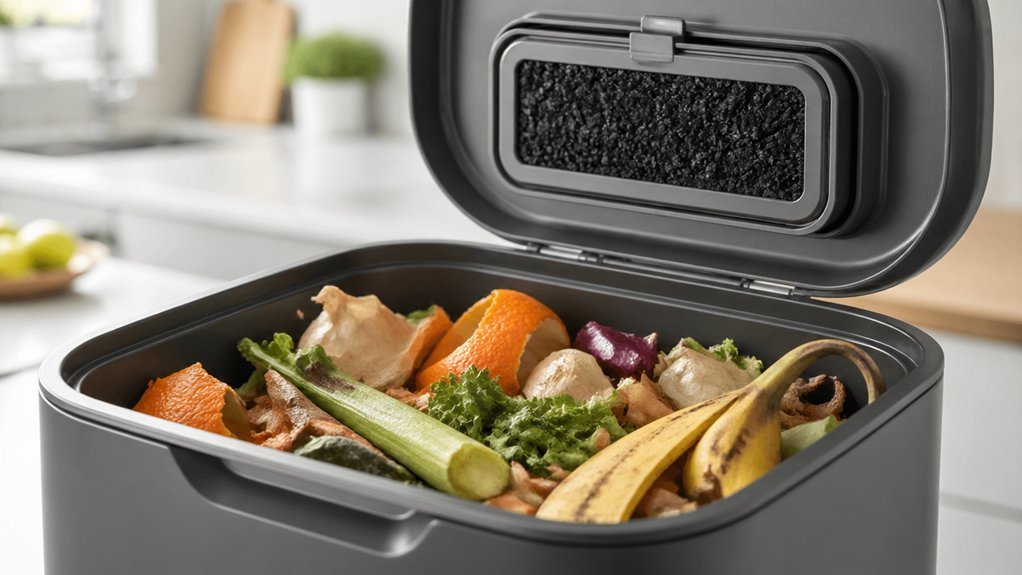
Ever wonder why your kitchen compost smells less like a landfill? You’re probably using activated carbon, a powerful odor‑control tool that works through adsorption. When kitchen composting releases ammonia, sulfur compounds, or other volatile gases, the carbon’s porous surface grabs these molecules, binding them instead of letting them drift out. Because adsorption occurs on the surface, the odors are neutralized at a molecular level, keeping your kitchen fresher.
The best results come from high‑surface‑area, thermally activated carbon placed in a semi‑enclosed bin where airflow is limited enough for gases to contact the filter. Just remember to swap the carbon filters every two to four months—or sooner if you notice a drop in airflow—to maintain peak odor control.
How Its Porous Structure Adsorbs Ammonia, Sulfides, and VOCs
Why does a kitchen compost bin stay fresh? Because the activated carbon’s porous structure grabs odor molecules before they drift into your kitchen. Its millions of microscopic pores create a massive surface area where adsorption happens instantly, binding ammonia, sulfides, and VOCs directly to the carbon.
You’ll notice fresher air as the filter neutralizes odors at the source, not by masking them. This direct capture keeps your bin odor‑free and your kitchen pleasant. The carbon filters used in many ceramic crocks are designed for odor control in 4–6 month lifespans, depending on use and odor load filter maintenance and some models include dual-filter systems for enhanced performance.
Choosing the Right Activated Carbon Filter for Countertop Bins
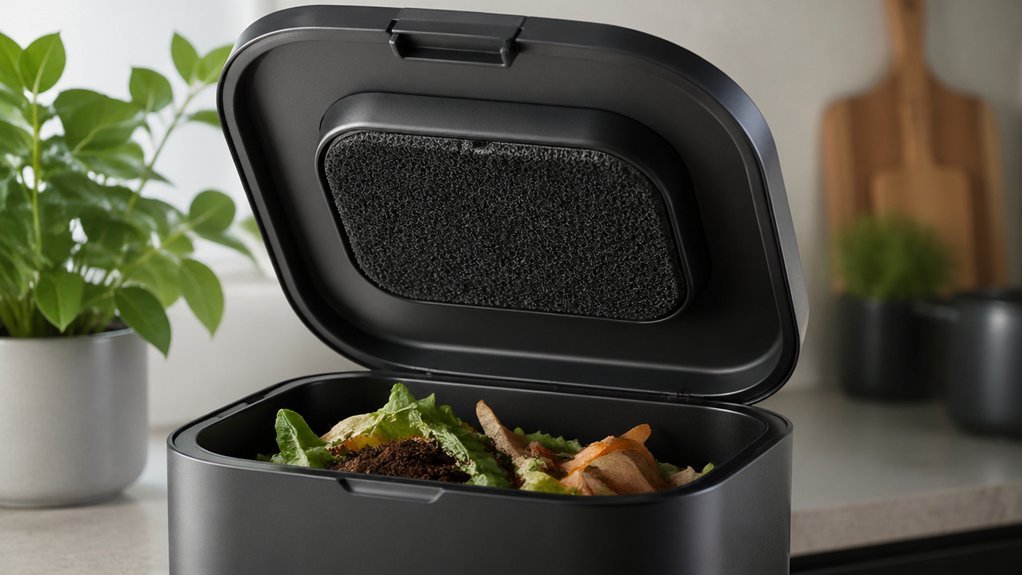
What should you look for when selecting an activated carbon filter for a countertop compost bin? First, check that the filter fits up to 7.25 inches round and uses 0.4 inches dense carbon with a 20-micron particle size; this ensures strong filtration without choking airflow. Choose thermally activated carbon with a high surface area and uniform grain size for optimal adsorption of odors. Follow the installation guidance: keep the filter dry, align the arrow upward, and remove any protective stickers before inserting it. Position it snugly in the bin’s slot so air passes evenly through the material. Finally, plan for replacement every 2-3 months, or sooner if you notice a return of odors or reduced airflow. This routine keeps your countertop bins smelling fresh.
When, How, and How Long to Keep Your Compost Carbon Filter
Choosing the right filter is only half the battle; knowing when to replace it and how long it will last keeps your kitchen compost bin odor‑free. Activated carbon filters work best when you swap them every 2–3 months, or sooner if odors creep back, airflow drops, or the filter darkens. Regular replacement also helps maintain the filter life indicator’s accuracy and overall performance. filter maintenance
Tips for Pairing Activated Carbon Filters With Browns and Maintaining Your Bin
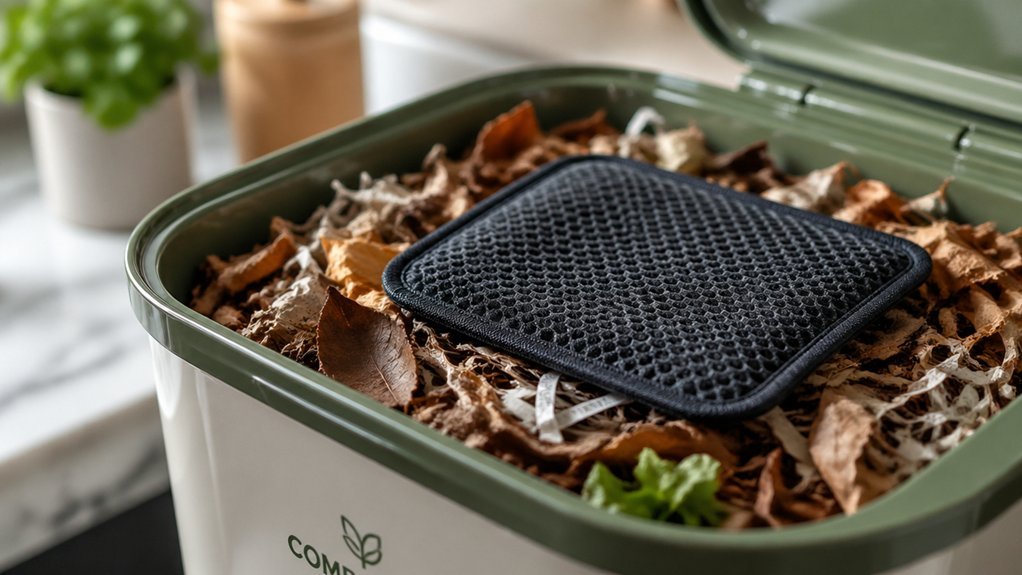
Ever wondered how to keep your kitchen compost bin smelling fresh while maximizing efficiency? Pair activated carbon filters with browns to tackle odors at the source. First, add a generous layer of brown material—shredded newspaper, cardboard, or dried leaves—right after each batch of kitchen scraps. The browns absorb excess moisture, improve airflow, and balance the nitrogen‑rich greens, which lets the filtration system work harder. In indoor composting setups, this combo neutralizes ammonia and sulfur compounds more effectively than a filter alone. Keep the browns moist but not soggy, and replace the carbon filter every two to three months. Finally, stir the bin weekly to maintain aeration and prevent odor buildup. Regular filter replacement and a cut-to-fit approach help ensure a snug fit and ongoing odor control for standard bin sizes odor control.
Frequently Asked Questions
What Is the Best Carbon for Compost?
You should choose thermally activated, high‑surface‑area carbon—like coconut‑shell or premium wood‑based carbon—because its abundant microscopic pores adsorb odors efficiently, last longer, and keep your kitchen compost fresh.
What Three Items Should Not Be Placed in a Compost Pile?
You should keep meat, dairy, and oily foods out of your compost pile because they attract pests, create foul smells, and slow decomposition, making the process messy and ineffective.
What Is the Disadvantage of a Charcoal Filter?
You’ll find that charcoal filters need frequent replacement because they saturate quickly, and they can restrict airflow if overpacked, which may slow compost aeration and reduce odor‑control efficiency.
Can Carbon Filters Be Composted?
You can’t compost carbon filters; they’re made of activated charcoal that doesn’t break down biologically, so you should replace them and dispose of the spent filter in regular trash.
In Summary
By now you’ve seen how activated carbon tackles kitchen compost smells, why its porous structure traps ammonia, sulfides, and VOCs, and how to pick the right filter for your countertop bin. Keep the filter fresh by swapping it regularly, and pair it with a brown‑rich mix to balance moisture. With these steps, your compost stays odor‑free, efficient, and ready for the next round of kitchen waste.