Load your bin with carbon‑rich browns like dry leaves, shredded cardboard, straw, or sawdust to boost the C/N ratio and soak up excess nitrogen that fuels ammonia smells. Layer these dry materials between kitchen scraps, turn the pile every few days, and keep it loose so air can flow. Add extra bulking agents if it gets compacted, and use a breathable tarp or pallets for drainage. If you keep these steps, you’ll discover even more tricks to stay odor‑free.
Stop Indoor Compost Odor With Carbon‑Rich Browns
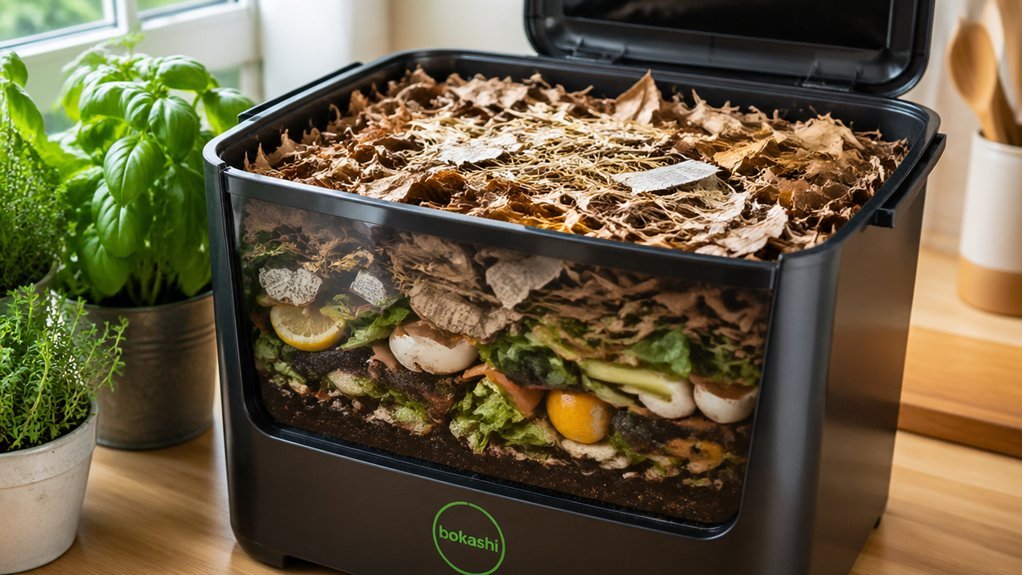
Ever wondered why your indoor compost smells like a trash bin? You can tame compost odors by loading carbon‑rich browns into the mix. Dried leaves, shredded cardboard, straw, and other browns boost the C/N ratio, soaking up excess nitrogen that fuels ammonia smells. Those bulkier carbon sources also create pockets for aeration, letting aerobic microbes thrive and suppress sour, anaerobic odors. Layer greens and browns, alternating thin strips of kitchen scraps with generous handfuls of sawdust or newspaper. After each addition, turn the pile to keep the structure loose and the airflow steady. This simple routine restores odor control, balances moisture, and keeps your indoor compost fresh without extra chemicals. Replacement Filters help maintain odor control by ensuring the environment stays balanced over time.
Keep Indoor Compost Airflow Strong
How can you keep your indoor compost breathing? Strong airflow stops compost smells before they spread. Start by layering dry leaves or shredded cardboard between greens; these browns create pockets for ventilation. Aim for a 2:1 or 3:1 browns‑to‑greens mix so the pile stays loose and aeration stays constant. Regular turning helps maintain this structure and keeps oxygen moving through the mix airflow maintenance. Every few days, turn the heap to break up compaction and reopen air pathways. If you notice a slowdown, add carbon‑rich bulking agents like sawdust or extra shredded cardboard to boost structure. Set aside dedicated aeration days, then fluff and turn the pile thoroughly. This routine keeps oxygen flowing, prevents anaerobic pockets, and maintains a fresh, odor‑free indoor compost.
Manage Moisture to Prevent Indoor Compost Odor
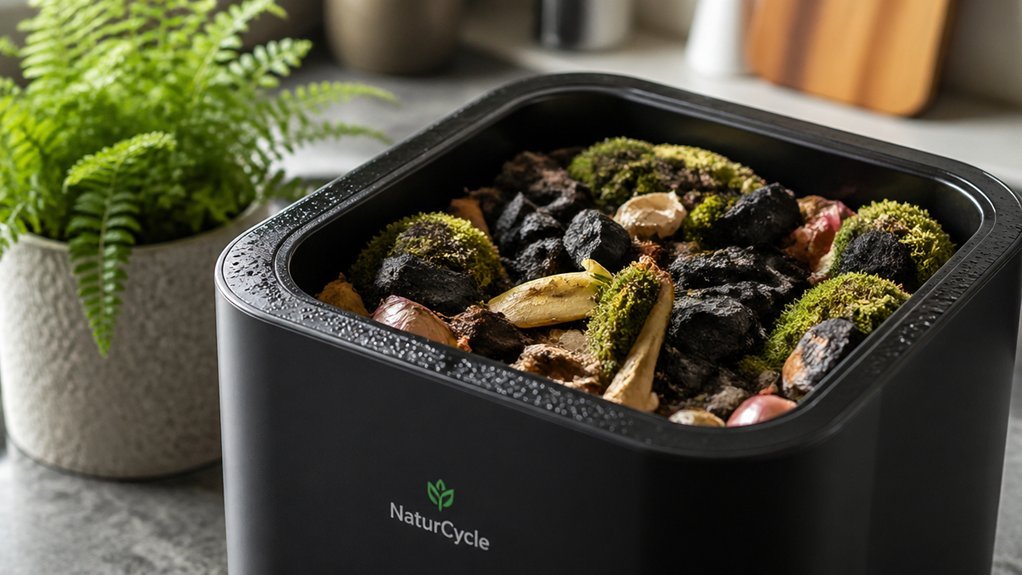
Strong airflow alone isn’t enough if the pile stays soggy; excess moisture creates anaerobic spots that emit sour, ammonia‑like smells. To keep your compost pile fresh, practice moisture control by balancing wet compost with plenty of brown materials. Add dry leaves, shredded cardboard, or other carbon‑rich scraps whenever kitchen scraps drip. These absorb excess water, improve texture, and boost aeration. Turn the pile thoroughly every few days to mix air throughout and dry out pockets. In damp weather, place the bin on wood pallets for drainage and cover it loosely with a breathable tarp. If a batch of scraps is especially watery, spread them on a tarp to dry before re‑adding. This routine cuts odor and maintains a healthy, aerobic environment. Regular maintenance with dishwasher‑safe components and odor control features from compact grinders can further enhance odor management, especially in indoor setups like small apartments. odor control
Add an Activated‑Carbon Filter to Your Indoor Compost Bin
Wondering how to trap those stubborn smells before they drift into your living space? You can add an activated carbon filter to your indoor compost bin for instant odor elimination. Choose a high‑quality carbon filter, preferably thermally activated coconut‑shell granules, and place it where airflow exits the bin. The porous activated carbon will adsorb VOCs, sulfur compounds, and ammonia, preventing them from reaching your nose. Ensure the filter sits behind a vent or fan so fresh air pushes gases through the carbon surface. Replace the filter every 2–3 months, or sooner if you notice reduced airflow or lingering odor. This simple upgrade keeps your compost bin fresh while maintaining a healthy indoor compost environment.
Frequently Asked Questions
How Do You Fix Smelly Compost?
You fix smelly compost by adding more browns, turning it regularly for airflow, keeping moisture balanced, excluding meat or dairy, and inserting an activated‑carbon filter to trap odor‑causing gases.
How Do You Deodorize Compost?
You deodorize compost by adding a layer of high‑quality activated carbon, balancing greens and browns, keeping the bin moist but not soggy, and regularly turning to promote airflow and prevent odor buildup.
What Is a Natural Accelerator for Compost?
You’ll accelerate compost by adding fresh coffee grounds, shredded newspaper, or banana peels—they’re nitrogen‑rich, break down quickly, and boost microbial activity, speeding up decomposition and reducing odor.
Does the Smell of Compost Go Away?
Yes, the smell fades when you keep the pile aerobic. Turn it regularly, add dry browns, and manage moisture; the odors will dissipate as microbes work efficiently.
In Summary
By loading your bin with carbon‑rich browns, keeping airflow brisk, and watching moisture levels, you’ll slash the stink. Slip in an activated‑carbon filter for that extra nose‑neutralizing boost, and your indoor compost will stay fresh, efficient, and odor‑free. Enjoy the benefits of a clean, thriving compost system without the unpleasant aromas.