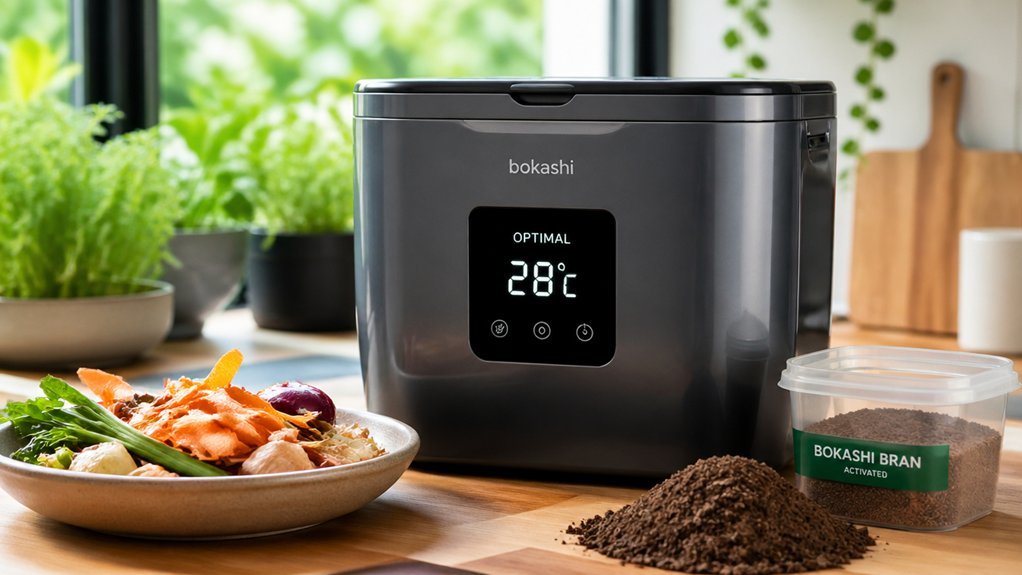
Keep your bokashi bin at a steady 20 °C (68 °F) for happy EM microbes and fast, odor‑free fermentation. Place the bin in a stable indoor spot away from windows, radiators, and drafts—think a pantry shelf or cabinet. Use a thermometer probe at 40‑60 % of the bin height and a moisture meter to aim for about 50 % moisture, adjusting with carbon bulking material or light water sprays as needed. Log temperature and moisture daily, and if it gets cold, wrap the bin or add a gentle heat source while keeping vents clear. Follow these steps and you’ll master temperature control, then discover even more tips for winter shipping and outdoor transition.
Why 20 °C Is the Sweet Spot for Bokashi Bin Temperature Control
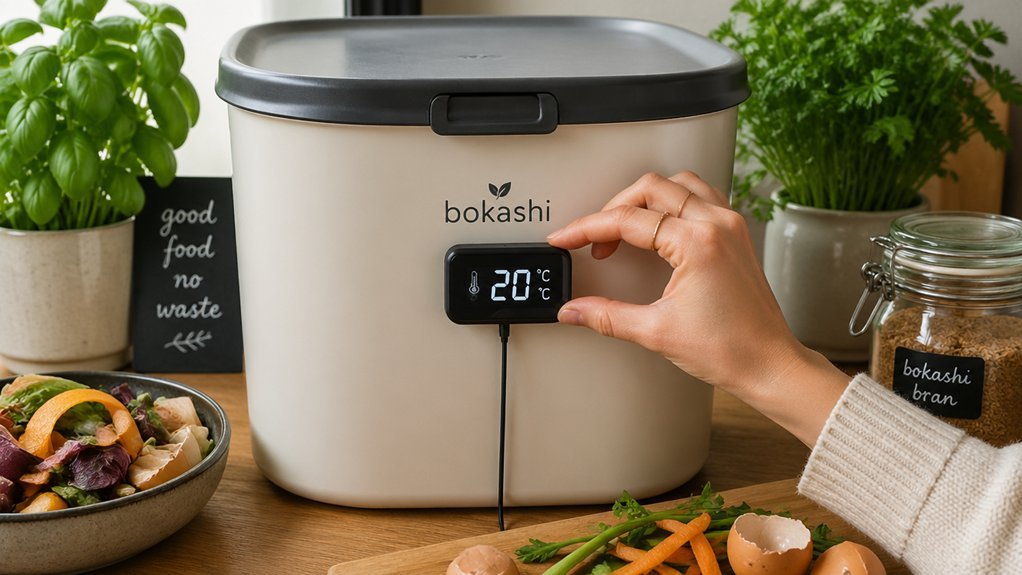
Why does 20 °C work so well for bokashi? At roughly 20°C, the Bokashi bin temperature mirrors normal room temperature, creating a stable environment where fermentation proceeds steadily. EM microbes thrive in this mild, anaerobic setting, breaking down kitchen waste without the heat spikes that can occur at higher temperatures. Because the bin stays near 20°C, you avoid thermal stress that would otherwise inhibit microbial activity. Regular monitoring and a consistent ambient temperature help maintain this balance during ongoing fermentation odor control.
Choose the Best Indoor Spot for Bokashi Bin Temperature Control
Where should you put your bokashi bin to keep it at the ideal 20 °C? Choose a spot with stable indoor placement—away from windows, radiators, and direct sunlight—so ambient temperature stays near 20 °C.
Choose a stable indoor spot—away from windows, radiators, and direct sunlight—to maintain 20 °C.
A kitchen cabinet or pantry shelf works well, as long as the area isn’t drafty. Keep the bin out of direct sun to protect EM microbes from overheating, and avoid heat sources that could dry out the bran.
If the room cools, move the bin closer to a gentle heater or a warm hallway to sustain the fermentation phase.
Monitor condensation daily; use a moisture‑absorbing pad or a small drainage tray for moisture control and condensation management, maintaining roughly 50 % moisture for optimal bokashi bin temperature. Jar Compatibility And Sizing
Simple Ways to Boost Warmth Without Over‑Heating
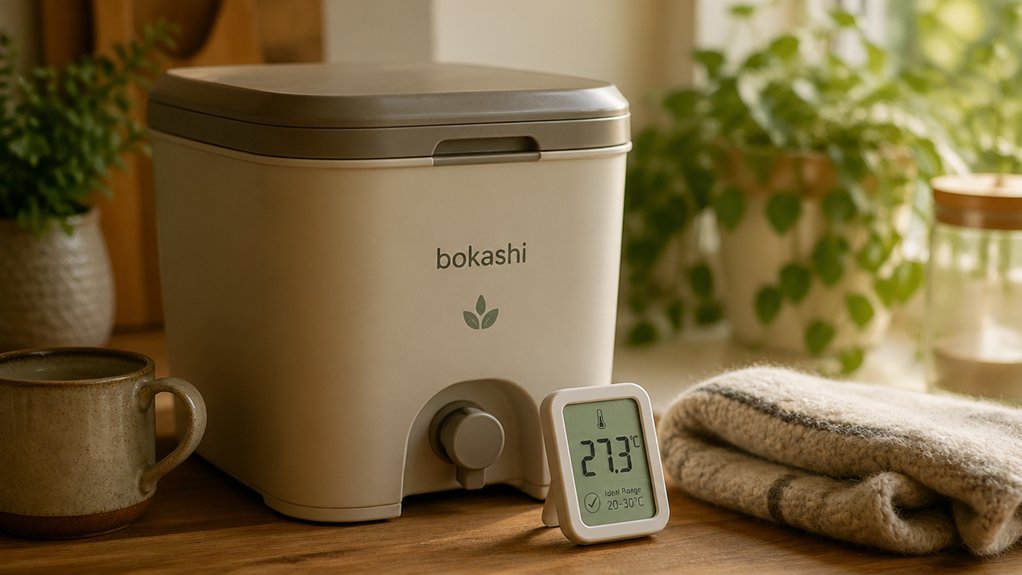
Curious how to keep your bokashi bin cozy without scorching it? You can fine‑tune bokashi bin temperature by managing ambient temperature, insulation, and airflow. Small tweaks let you enjoy warmth without overheating while preserving moisture balance.
- Wrap the bin in an insulation jacket to trap heat, but keep vents clear for proper vent maintenance.
- Position the bin near a gentle heat source, such as a radiator on low, avoiding direct sunlight or hot appliances.
- Reduce vent opening in cold spells to retain warmth, then reopen when the room warms up.
- Add a thin layer of dense carbon‑rich material (e.g., shredded newspaper) to generate gentle heat and support moisture balance.
- Monitor ambient temperature; aim for around 20 °C (68 °F) to keep microbes active without drying out the mix.
- Maintaining a stable environment can also help minimize odor and improve decomposition efficiency temperature stability and is a practical consideration when selecting a bin with airtight lids and effective filtration.
Tracking Temperature & Moisture: Tools & Daily Checks
You’ll start by placing a thermometer in the middle of the waste, away from the lid, to capture the true bin temperature.
Next, run a quick squeeze test or use a moisture meter each day to keep the content around 50% moisture, adjusting with dry carbon or a splash of water as needed.
Finally, jot the readings in a simple log template so you can spot trends and tweak the setup before problems arise.
Thermometer Placement Guide
How can you guarantee your bokashi bin stays in the sweet spot for fermentation? You’ll need precise bokashi bin temperature data, so focus on smart thermometer placement. Insert the probe deep enough to capture central microbial activity but keep it away from the lid and drainage to avoid surface heat bias. Add a second sensor near the top vent to log ambient temperature and check insulation. Track moisture readings alongside temperature to spot drying or excess wetness. Record daily values and compare them to the fermentation temperature range, aiming for steady warmth with spikes up to 36–66 °C. Probe depth: 40‑60 % of bin height Avoid lid and drainage contact Top‑vent sensor for ambient temperature Pair humidity sensor for moisture readings Daily log against target fermentation temperature range sensor placement importance
Moisture Meter Routine
Now that you’ve locked in accurate temperature readings, grab a moisture meter and start checking the bin’s humidity each day. Aim for roughly 50 % moisture content; that level fuels microbial activity while keeping the bin’s warmth stable. During each aeration or turning session, run the moisture meter and note the reading alongside the temperature control data. If the meter shows excess wetness, sprinkle in carbon bulking material and aerate again; if it reads low, spray water lightly and re‑aerate to boost moisture. Watch for a brief temperature dip after turning—heat should rebound within a couple of days. Consistent monitoring readings let you fine‑tune inputs, sustain steady warmth, and keep decomposition fast and efficient. Continuous monitoring supports effective odor management and helps maintain stable conditions for faster processing.
Daily Data Log Template
A concise daily log keeps your Bokashi bin’s temperature and moisture in check, letting you spot trends before they become problems. You’ll record the date, ambient room temperature, bin internal temperature, and any condensation/overheating signs. A quick moisture check follows, and you note aeration frequency and any bran addition or ventilation tweaks. This routine turns raw data into actionable insight, keeping fermentation steady. Internal bin stability and the balance of greens and browns also influence performance in balcony setups.
Extending Bokashi Bin Fermentation in Cold Weather
Ever wondered why your bokashi slows down in winter? Cold weather drops the temperature of the anaerobic process, so microbes reproduce sluggishly. To keep bokashi fermentation humming, focus on temperature control and warmth retention.
Pack dense kitchen scraps—like shredded carrots or cabbage—near the bin’s bottom; they generate heat as they decompose. Cover the lid tightly, and if you have a second bucket, nest the first inside to create an insulating pocket.
Add extra bokashi bran when you sense the bin’s temperature slipping below 55 °F; the extra inoculum jump‑starts activity. Store the bran in a cool, dry spot to preserve its microbes. Odor Control
Draining Bokashi Tea: Avoid Heat Loss & Odor
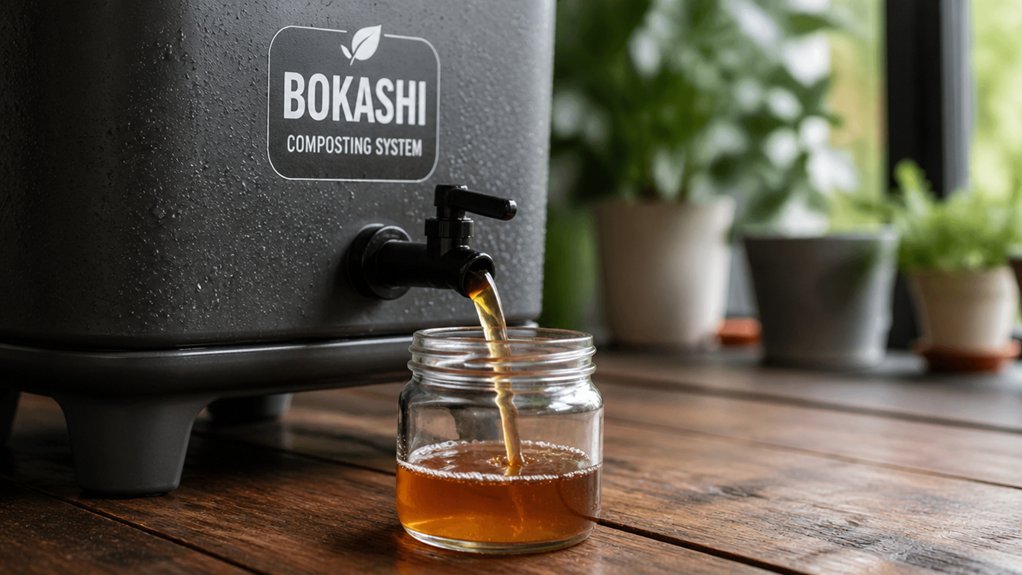
Wondering how to keep your bokashi bin fresh while preventing heat loss and nasty odors? Draining bokashi tea is key to maintaining steady bin temperature and robust fermentation. Regularly empty the liquid—at least weekly, or every 1–2 days for high‑moisture waste—to control moisture and stop odor spikes.
Dilute the tea before feeding plants or pouring it down drains to avoid salt buildup, but you can also use undiluted tea sparingly to suppress algae. A clear, dark brown‑black liquid free of food scraps signals healthy microbes and stable heat retention.
- Drain weekly, or more often for wet loads
- Capture and store the tea in a sealed container
- Dilute 1:5 for garden use, or apply undiluted in tiny doses
- Clean the bin’s spout to prevent residue buildup
- Monitor bin temperature after each drain to ensure fermentation stays active
How to Keep Bokashi Bin Microbes Safe When Shipping in Winter?
How can you guarantee your bokashi microbes survive the winter shipping journey? Start by selecting a carrier that offers temperature‑controlled cargo zones. Keep the bin in an insulated box, and place a small heat pack if the forecast dips below freezing. Store the package in heated warehouses whenever possible, ensuring the temperature stays above 0 °C but below 30 °C, the sweet spot for EM activity. Avoid direct sunlight and any heat source that could overheat the bin. Pack the bokashi bran at room temperature, and never let it freeze—freezing kills microbes and reduces effectiveness. Label the box “temperature‑sensitive” and request the carrier to treat it as a perishable item. These steps protect the microbes and preserve the bin’s fermentation power during winter shipping.
Transitioning From Indoor Fermentation to Outdoor Composting
After protecting your microbes during winter shipping, you’ll need to move the fully fermented bokashi from the indoor bin to the garden. The indoor fermentation stage may have kept the bokashi temperature slightly above freezing, but the outdoor compost transition will expose it to cooler, aerobic conditions. Ensure the anaerobic fermentation is complete; a longer winter fermentation helps maintain a stable pre‑compost temperature and prevents freezing. When you bury the material, soil microbes will repopulate it, speeding up breakdown.
Bury fully fermented bokashi outdoors after ensuring temperature stays above 5 °C for optimal microbial activity.
- Keep the pre‑compost warm by adding an extra bokashi bucket during indoor fermentation.
- Extend the fermentation period by a few days if the temperature drops.
- Verify the pre‑compost temperature stays above 5 °C before moving outdoors.
- Bury the material in spring when the soil is moist and active.
- If freezing occurs, sprinkle extra bokashi bran in spring to revive microbes.
Frequently Asked Questions
What Is the Main Problem With Bokashi Composting?
You’re fighting anaerobic instability; temperature swings or cold kill the EM microbes, slowing fermentation, causing odors, and yielding incomplete compost unless you keep the bin warm and sealed.
Do Potato Peelings in Compost Attract Rats?
Yes, if you leave potato peels exposed in your compost they’ll emit strong smells that attract rats; keep them sealed, buried, or processed in a closed bokashi system to deter rodents.
Can I Put Toilet Paper Rolls in My Compost?
Yes, you can compost toilet paper rolls if they’re plain cardboard, shredded or torn for faster breakdown. Avoid coated, inked, or soiled rolls, and mix them with nitrogen‑rich waste to balance your compost.
What Is the Best Temperature for Bokashi?
You should keep your bokashi bin around 20 °C (68 °F). That steady, room‑temperature warmth speeds microbial activity, while avoiding extremes—under 10 °C slows fermentation, and over 50 °C harms the microbes.
In Summary
You’ve learned why 20 °C is ideal, how to pick the right spot, and simple tricks to keep the bin warm without overheating. With daily temperature and moisture checks, you can extend fermentation even in cold weather, drain bokashi tea properly, and protect microbes during winter shipping. Finally, transition smoothly from indoor fermentation to outdoor composting, and your bokashi system will stay efficient, odor‑free, and productive year‑round.